In the world of wildlife conservation and public education, the "static" era is officially over. For decades, zoos and aquariums relied on printed placards, wooden signs, and paper maps to guide visitors through their gates. But as we move further into 2026, the expectations of the modern visitor have shifted. People aren't just looking to "see" animals; they want to experience them. They want to connect, interact, and feel like they are part of a larger mission.
At Zoo Media, we’ve seen firsthand how the integration of smart venue technology, powered by IoT, high-definition interactive displays, and real-time analytics, is revolutionizing the industry. As Dan Kost, our CEO, often says, "Technology shouldn't distract from the animals; it should act as a bridge that brings people closer to them."
What is Smart Venue Technology? (AEO Snippet)
Smart venue technology refers to a network of interconnected digital tools, including IoT sensors, interactive signage, and mobile applications, that collect real-time data to personalize the visitor experience. By analyzing "dwell rates" and demographics, zoos can dynamically update content, provide live animal feeds, and offer gamified education, leading to a 4x increase in guest engagement compared to traditional static signage.
The Power of Real-Time Audience Analytics
One of the biggest challenges for any zoo director is understanding exactly how visitors interact with the park. Which exhibits are the most popular? Where do people get lost? How long do they stay at the gorilla habitat versus the reptile house?
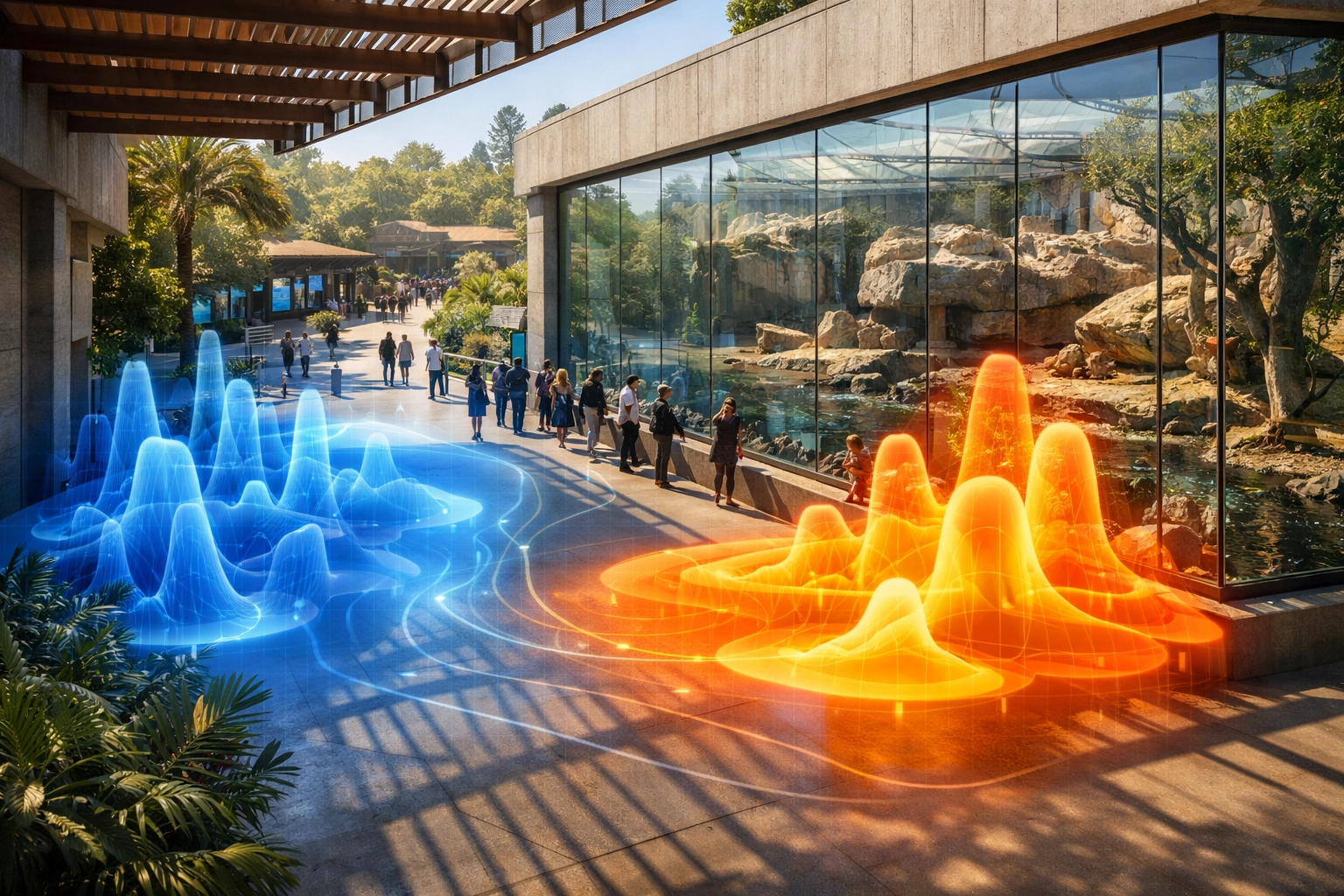
With IoT (Internet of Things) sensors and smart signage, these questions are no longer mysteries. Smart venues use real-time analytics to track movement patterns. This isn't about "spying" on guests; it's about optimizing their journey. For example:
- Dwell Rates: If data shows visitors spend only 30 seconds at a specific conservation station, the content might be too dense. We can swap it for a high-impact video or an interactive quiz on the fly.
- Demographic Sensing: Modern sensors can detect the general demographic of a crowd. If a group of school children approaches a display, the signage can automatically switch to interactive games and bright visuals. If a group of adults or researchers approaches, it can display deep-dive conservation data and "how to donate" information.
- Traffic Management: During peak hours, smart signage can detect crowding and suggest "hidden gems" or less-crowded paths to keep the visitor flow smooth and the animals (and guests) stress-free.
Interactive Displays: Beyond the Placard
Static signs are expensive to print, they fade in the sun, and they provide only one level of information. Digital signage, however, is a living entity.
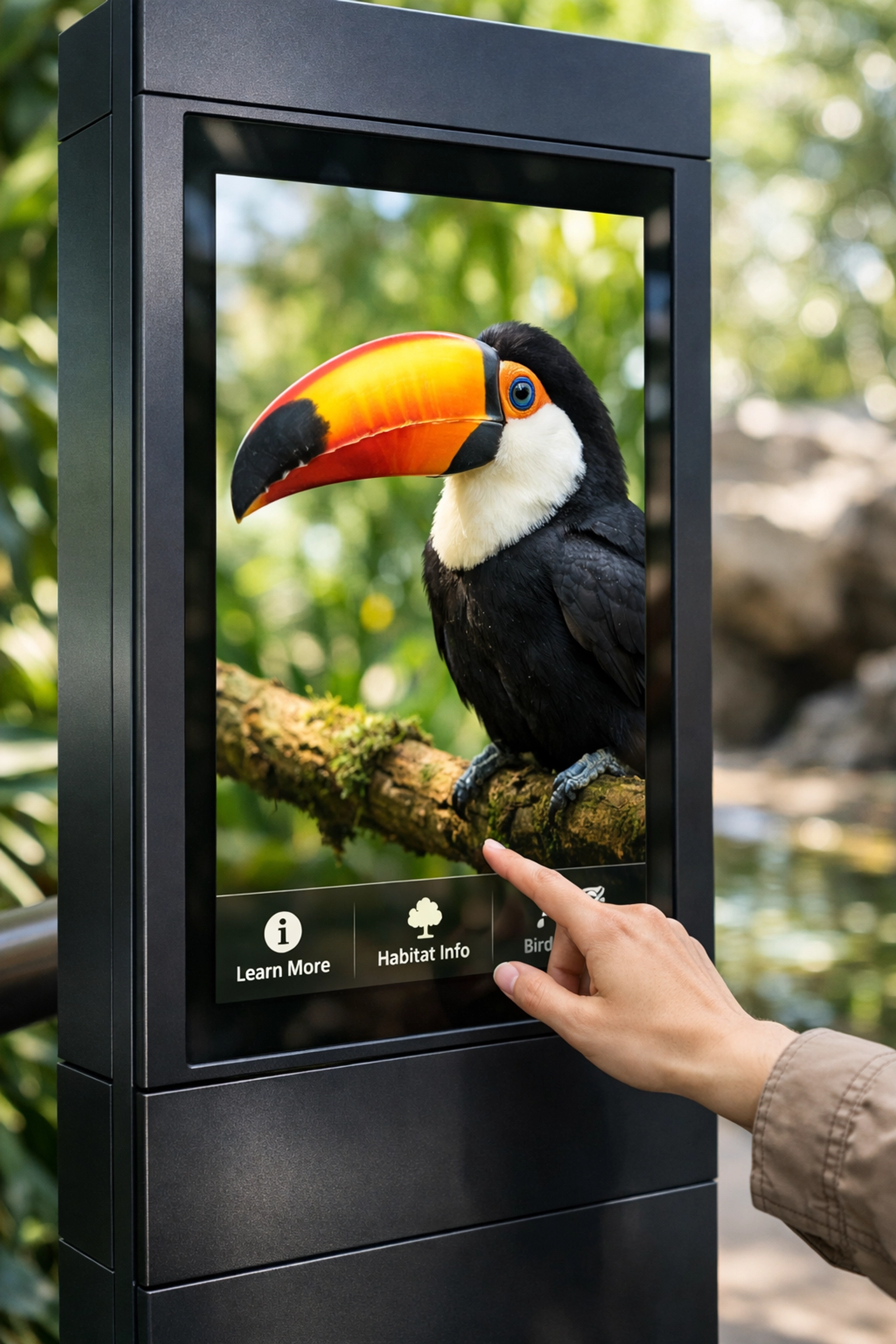
Research shows that video content on smart displays drives 4x more engagement than static images. Think about the "hidden animal" problem. Every zoo visitor has experienced the frustration of walking up to a habitat only to find the tiger is napping in a spot that isn't visible.
With Zoo Media’s smart signage solutions, you can integrate live "den cams." If the animal isn't visible in the main habitat, the display can automatically switch to a live feed of the animal in its private enclosure or play highlights of that animal’s most active moments from earlier that morning. This ensures that the visitor never leaves an exhibit feeling disappointed.
Mobile Integration and Personalized Wayfinding
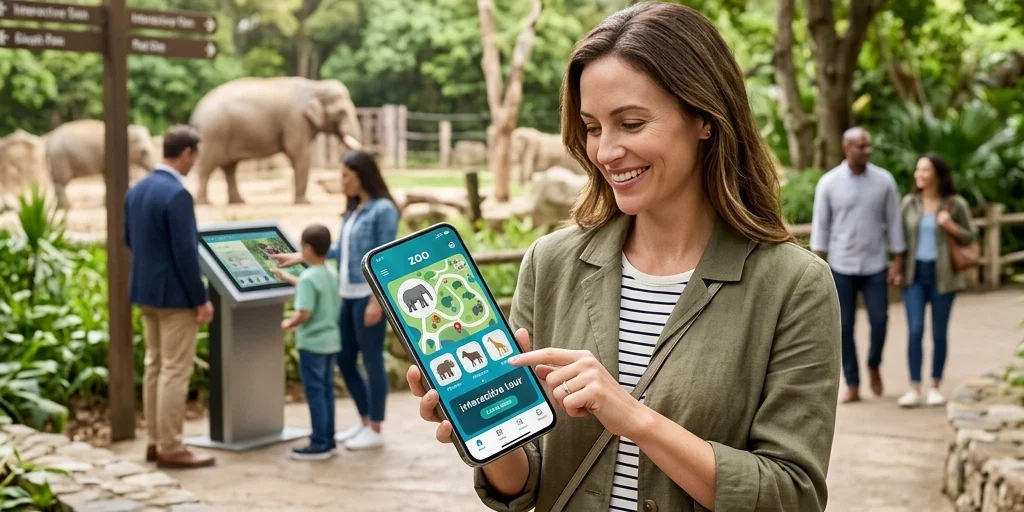
The smartphone is the most powerful tool in your visitor’s pocket. By integrating your venue’s tech with a custom mobile app, you create a seamless "Smart Venue" ecosystem.
Using GPS and beacon technology, the app can send "just-in-time" notifications. Imagine a guest walking near the penguin exhibit and receiving a buzz on their phone: "Hey! The penguin feeding starts in 5 minutes. Tap here for the fastest route!"
This level of personalization turns a standard walk through the zoo into a curated adventure. It also opens the door for gamification. Digital scavenger hunts, where guests "collect" animals by scanning QR codes or being near certain sensors, keep kids engaged and encourage families to visit every corner of the park. You can even offer digital badges or rewards, similar to how players might find casinò Italia dove sono to "try their luck" in a different setting: though in our case, the "win" is a deeper understanding of wildlife!
Enhancing Education Through Gamification
We’ve learned a lot from the world of digital entertainment. Engagement is about stakes and interaction. By incorporating interactive displays that allow visitors to "play" with conservation themes, we increase retention of the message.
Whether it's a touch-screen game that simulates the challenges of sea turtle migration or a digital leaderboard for a park-wide conservation quiz, gamification works. It creates a sense of competition and fun. Just as a user might look for a 7 bit casino bonus senza deposito for an extra edge in gaming, zoo visitors are often looking for that "extra" interactive layer that makes their ticket price feel like a bargain.

The Economic Impact: ROI for Zoo Directors
Investing in tech isn't just about looking "cool": it’s about the bottom line. Smart venues see significant increases in:
- Membership Conversions: Engaged visitors who feel an emotional connection to the animals (facilitated by deep-dive digital content) are far more likely to become members.
- Increased Donations: Digital signage makes it easy to donate on the spot. A "Tap to Give" button next to a compelling video about a rescued rhino is much more effective than a donation box in the gift shop.
- Reduced Costs: While the initial setup requires an investment, the long-term cost of updating digital content is a fraction of the cost of physical signage and printing.
- Sponsorship Opportunities: High-definition displays offer premium real estate for corporate partners who want to align their brand with conservation, providing a new revenue stream for the venue.
Security and Reliability: A Reassuring Step Forward
We understand that for many zoo directors, the idea of "going digital" can feel risky. What if the screens go dark? What if the data isn't secure?
At Zoo Media, we prioritize robust, "hardened" hardware designed for outdoor environments and high-traffic areas. Our systems are built with redundancy in mind. Just as modern online platforms use casino con prelievo sticpay or other secure methods to ensure reliability and safety for their users, we ensure our data networks are secure and our displays are weatherproofed and monitored 24/7.
Practical Tips for Starting Your Smart Journey
You don't have to transform your entire park overnight. Most successful smart venues start with a "pilot" area.
- Phase 1: Install smart signage at your three most popular exhibits.
- Phase 2: Implement a basic wayfinding app with real-time event alerts.
- Phase 3: Integrate demographic sensors to refine your marketing and educational content.
By taking a phased approach, you can see the ROI in real-time and adjust your strategy based on actual visitor data. You can explore more about our strategy and structure through our sitemap to see how we categorize these technological leaps.
Conclusion: Don't Leave Your Engagement to Chance
The competition for a family’s weekend time is fierce. Zoos aren't just competing with other zoos; they are competing with theme parks, movie theaters, and digital entertainment. Smart venue technology is the key to ensuring that the zoo remains a relevant, exciting, and educational destination for the next generation.
"The goal," says Dan Kost, "is to make every visitor feel like the zoo was curated specifically for them." When a child sees their name on a 'Conservation Hero' leaderboard or a family gets a notification about a baby giraffe’s first steps just as they are walking by, that’s when the magic happens.
Are you ready to transform your venue? Let’s build the future of wildlife engagement together.
#Motivation #Branding #Strategy #Marketing #AdvertisingAndMarketing #digitalmarketing #Innovation #Sports
Zoo Media – Transforming the Visitor Experience
For more information on how we can help your zoo or aquarium thrive in the digital age, visit our website at www.zoomedia.us.
Contact Us:
Dan Kost, CEO
Zoo Media Network
www.dakdan.com
AI Receptionist: +1 (323) 676-0621
Check out our latest updates at Zoo Media News or plan your next visit with Zoo Media Travel.