By: Victoria Teresa Alescio
Zoo Media | Wildlife Feature
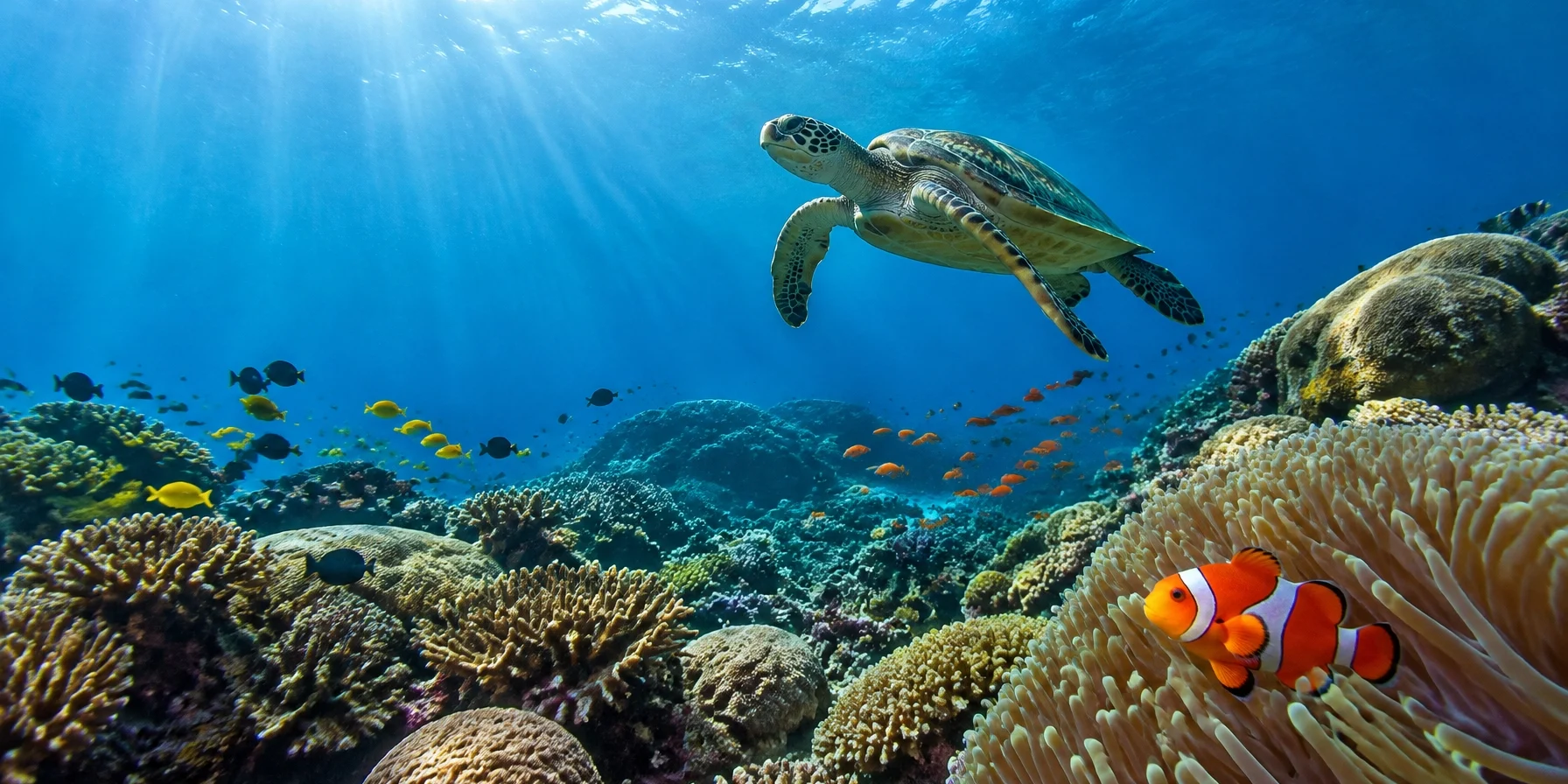
Beneath the surface lies a world filled with extraordinary creatures, vivid colors, and intricate relationships. Aquariums invite visitors to explore that world up close, from clownfish sheltering among sea anemones to sea turtles gliding through the water and jellyfish drifting like living lanterns.
Each animal has a role in its ecosystem. Learning those stories can turn a memorable aquarium visit into something more: a reason to care about the health of the ocean.
Quick answer: Aquariums help people discover ocean life and can contribute to marine conservation through education, research, animal care, habitat restoration, and partnerships. Visitors and organizations can support ocean health by reducing plastic waste, choosing sustainable seafood, and backing science-based conservation.
A World Full of Discovery
Fish come in thousands of shapes, sizes, and colors. Some move through sunlit coral reefs; others live in the cold, deep ocean, where sunlight rarely reaches. Their differences are more than a visual spectacle: they reflect adaptations to particular habitats and roles in the food web.
The clownfish is a familiar example. Its bright orange body and white bands make it easy to recognize, but its relationship with a sea anemone is the bigger story. The fish lives among the anemone’s stinging tentacles, gaining shelter from predators. The anemone may benefit from food scraps and other interactions. It is a small-scale reminder that ocean life is built on connections.

Aquariums can help visitors notice these relationships, not just identify the animals. A good exhibit connects an animal to its habitat: what it eats, what depends on it, and what changes when its environment is under stress. That context makes a trip more meaningful for families and gives educators, media teams, and sponsors a natural opportunity to support learning.
A practical idea for aquariums: Pair a high-interest animal exhibit with a simple “What helps this habitat?” message. Add an interactive prompt, a short educator-led talk, or a QR code linking to a trusted conservation resource. Keep the action specific and realistic; visitors are more likely to remember one useful step than a wall of alarming facts.
Why Marine Conservation Matters
Oceans face overlapping pressures, including plastic pollution, warming waters, and damage to coral reefs. These challenges affect marine animals and the habitats that provide food, shelter, and breeding grounds.
Coral reefs are especially vulnerable to heat stress. When ocean temperatures remain unusually high, corals can bleach, losing the tiny algae that provide much of their energy. Bleaching does not always mean a coral is dead, but prolonged or repeated stress makes recovery harder.
The Global Coral Reef Monitoring Network’s 2025 report describes climate-driven marine heatwaves as the primary driver of global declines in hard coral cover. NOAA reported that, from January 2023 through September 2025, bleaching-level heat stress affected about 84.4% of the world’s coral reef area, with mass bleaching documented in at least 83 countries and territories (NOAA Coral Reef Watch).
A separate IUCN Red List of Ecosystems assessment warns that 96% of assessed shallow-water coral reef ecosystems could be classified as Critically Endangered by 2075 when future climate projections are included. Based on observed changes alone, the assessment puts that share at 24%. A stark difference that underscores both the risk and the importance of action.

Plastic pollution is another serious concern. The United Nations Environment Programme estimates that 19–23 million tonnes of plastic waste leak into aquatic ecosystems each year, including rivers, lakes, and seas (UNEP). Plastic can entangle wildlife, be mistaken for food, and break into smaller pieces that are difficult to remove. Cutting unnecessary single-use plastics and improving waste systems are practical parts of the response.
Ocean warming and pollution are large-scale problems, but local choices matter too. Cleaner waterways, responsible fishing, well-managed coastal development, and effective marine protected areas can reduce pressure on ecosystems. None is a magic fix; together, they help give habitats a better chance to recover.
How Aquariums Can Support Conservation and Research
Aquariums can contribute to conservation in more ways than displaying animals. Many participate in research, rescue and rehabilitation, habitat restoration, breeding programs, and long-term monitoring. Their work varies by institution and species, but partnerships help connect public education with field science.
For example, The Florida Aquarium reported that a collaborative effort in the Florida Keys produced 61,000 elkhorn coral larvae and 101 genetic crosses in 2026. The Aquarium said some larvae would be raised at its Coral Conservation and Research Center, while others went to partner institutions. Coral restoration takes time and careful follow-up; producing young corals is one step in a much larger effort.
Research can also happen beyond coral nurseries. In 2026, Aquarium of the Pacific described its scientific divers’ work with Reef Check to survey coral reefs in Hawaiʻi and kelp forests in Southern California. Standardized surveys help build long-term records of fish, invertebrates, algae, and habitat conditions. Useful evidence for scientists and resource managers.

Aquariums can make this work easier to understand by showing how research connects to an animal or habitat visitors have just seen. A coral-restoration display, for example, can explain what scientists are monitoring, what challenges remain, and how local partners contribute.
Ideas for aquarium teams and sponsors:
- Make the science visible: Use short exhibit labels, video, or scheduled talks to explain research in plain language.
- Build a useful sponsorship: Connect a brand partnership to a specific educational or conservation activity, with clear claims and transparent reporting.
- Offer a next step: Direct visitors to credible resources, local volunteer opportunities, or practical waste-reduction guidance.
- Measure engagement honestly: Track participation, scans, or program attendance without implying those numbers prove conservation impact.
For advertisers and agencies, the strongest aquarium campaigns respect the setting. A message should enhance the visitor experience, fit the conservation story, and avoid making environmental promises the sponsor cannot substantiate. The ocean is impressive enough without a marketing claim doing acrobatics.
Explore, Discover, Protect
Every underwater animal has a story worth discovering. A clownfish and an anemone show how species can depend on one another. A coral nursery shows how research and collaboration can support restoration. Long-term reef surveys show why careful observation matters.
Visitors can help by making informed choices and supporting organizations doing credible conservation work. Aquariums can help by connecting exhibits to research and action, while brands can contribute through thoughtful, transparent partnerships. The goal is not to make every visitor an ocean expert before they leave. It is to make the next conservation choice easier to understand.
Zoo Media: Bringing Wildlife Wonders to Life.
Protect Our Oceans, Protect Our Future.
Frequently Asked Questions
Why are coral reefs important?
Coral reefs provide habitat for many marine species and support coastal communities through benefits such as fisheries, tourism, and natural protection from waves. Their health matters to both ocean ecosystems and people.
What causes coral bleaching?
Bleaching often happens when unusually warm water stresses corals. The coral expels the algae living in its tissues, which provide much of its food and color. A bleached coral is not necessarily dead, but it is under stress and may die if conditions do not improve.
How do aquariums help marine conservation?
Aquariums may support research, animal rescue and rehabilitation, breeding and restoration programs, habitat monitoring, and public education. The work differs by institution; check an aquarium’s own conservation pages for details about its programs and outcomes.
What can visitors do to help protect ocean life?
Visitors can reduce avoidable single-use plastics, dispose of waste properly, learn about sustainable seafood, and support reputable conservation and research organizations. At an aquarium, look for specific guidance linked to the animals and habitats on display.
How can brands partner responsibly with aquariums?
Start with the aquarium’s educational and conservation priorities. Choose a partnership that benefits visitors, use evidence-based environmental claims, and agree on clear measures for participation and reporting.
Sources and Further Reading
- Global Coral Reef Monitoring Network: Status of Coral Reefs of the World: 2025
- NOAA Coral Reef Watch: Global Bleaching Event Status
- IUCN: Coral Reef Ecosystems and Risk of Collapse
- UNEP: Marine Litter and Plastic Pollution
- The Florida Aquarium: Coral Conservation Collaboration
- Aquarium of the Pacific: Reef Check Monitoring Partnership
Connect with Zoo Media
For conversations about aquarium visitor experiences, education, media, and responsible brand partnerships, visit www.dakdan.com or contact the AI Receptionist at +1 (323) 676-0621.
Dan Kost, CEO
Zoo Media | Zoo Media Network
#ZooMedia #WildlifeConservation #DiscoveringZoos #NewAdventures #Motivation #Branding #Strategy #Marketing #AdvertisingAndMarketing #digitalmarketing #Innovation #Sports #MarineConservation #Aquariums #CoralReefs #OceanHealth