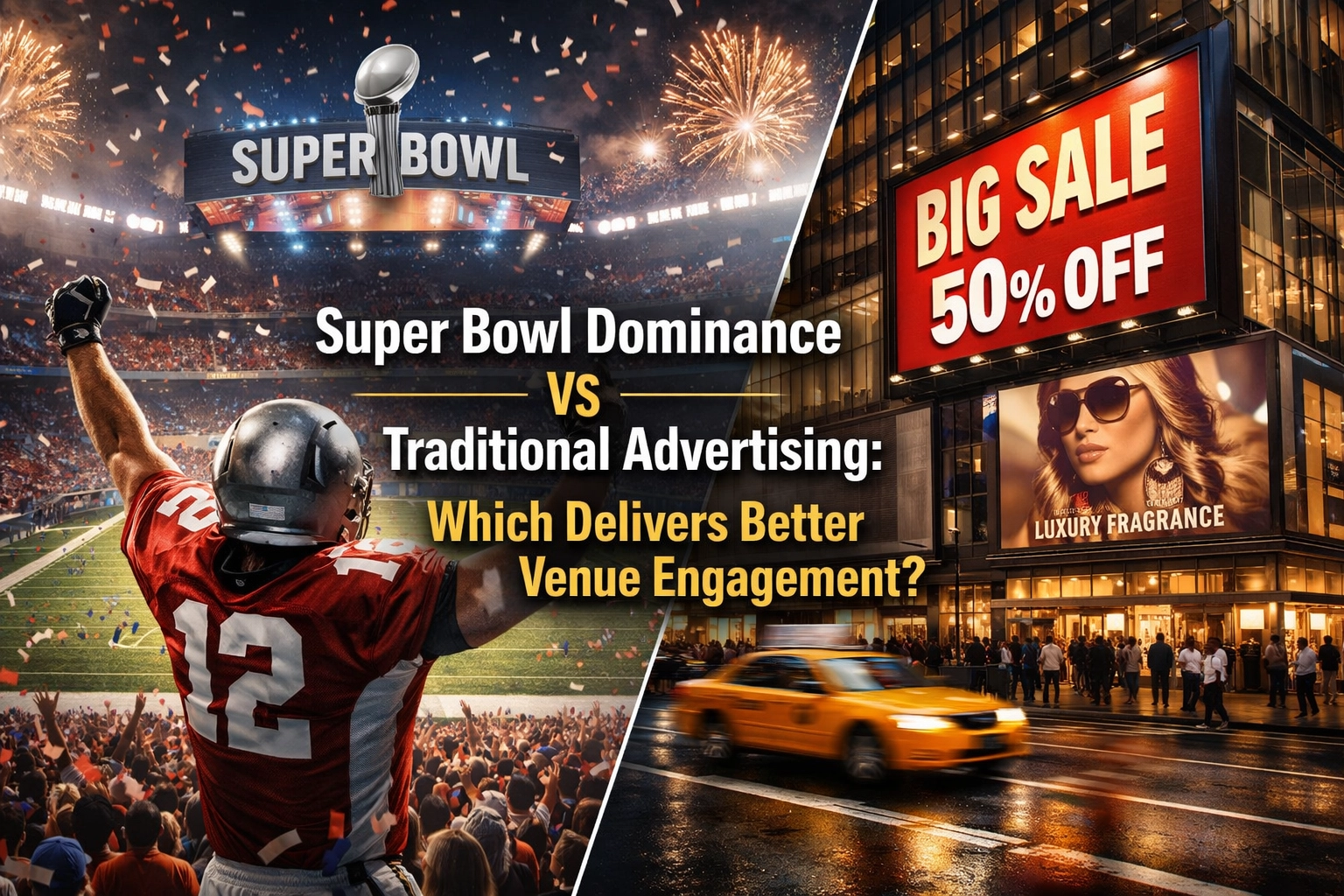
Every year, brands shell out millions for 30 seconds of Super Bowl airtime. And every year, marketing teams debate whether it's worth it. But here's the thing, when you look at the numbers from Super Bowl 2026, the conversation shifts from "is it worth it?" to "how can we replicate this kind of engagement everywhere else?"
Let's break down what actually happened during the 2026 Super Bowl and compare it to traditional advertising approaches. Spoiler alert: the gap is massive.
The Super Bowl Advertising Machine: By The Numbers
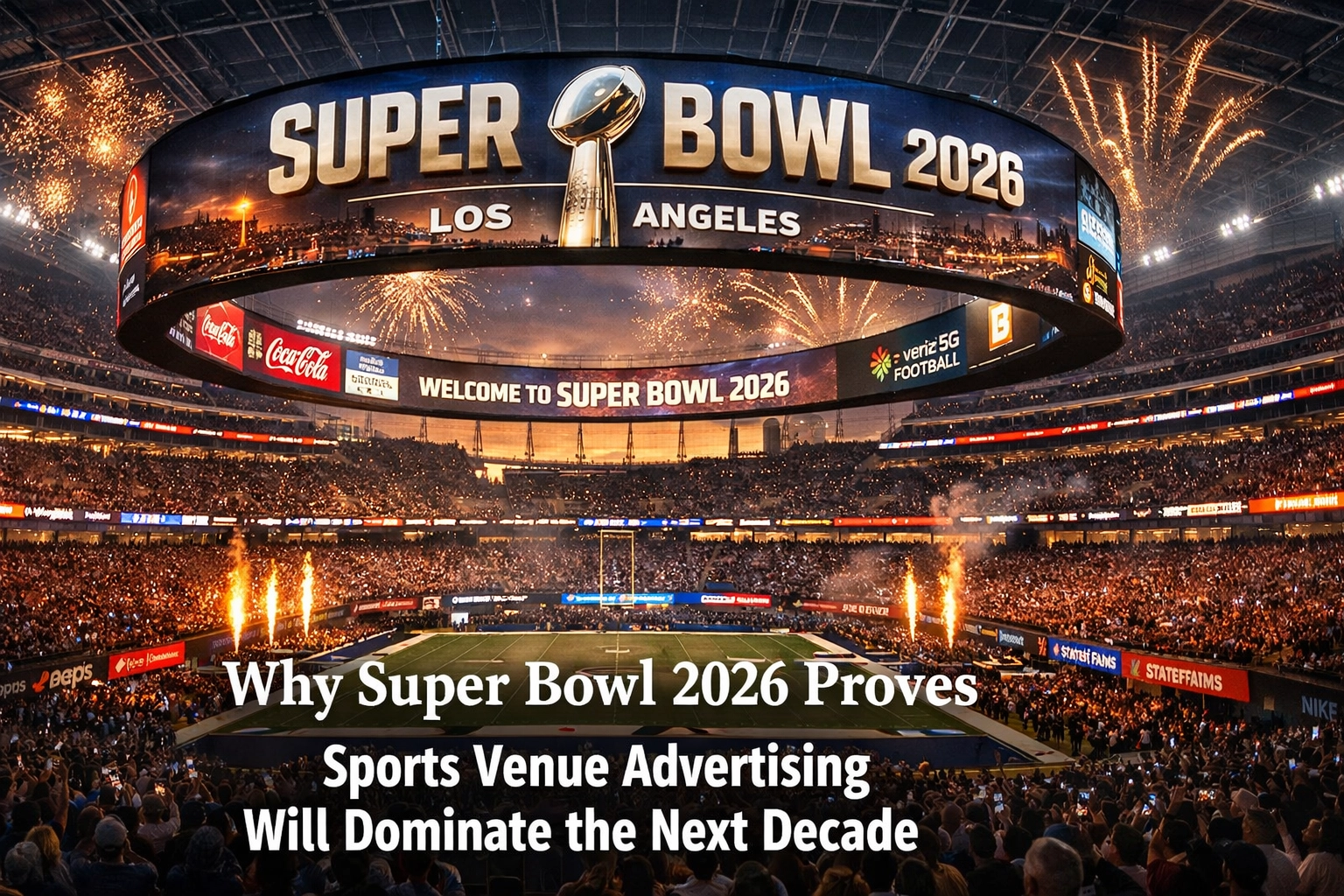
Super Bowl 2026 wasn't just another game, it was a cultural phenomenon that generated 124.9 million viewers, with peaks hitting 137.8 million in the second quarter. That's not just a large audience; it's a rare moment when the entire country is watching the same thing at the same time.
But here's where it gets interesting: 62% of viewers tuned in as much for the ads as for the game itself. Think about that for a second. When was the last time your target audience actively looked forward to seeing your advertisements?
The engagement didn't stop at passive viewing either. 48% of viewers reported changing their opinion about a brand because of a Super Bowl ad. That's not just reach, that's actual attitude shift, the holy grail of advertising effectiveness.
And the ripple effects? The game generated $550 million in earned media value on social media, extending the impact far beyond those 124.9 million pairs of eyeballs watching the broadcast.
Traditional Advertising: The Fragmented Reality
Now let's talk about traditional advertising in 2026. We're looking at a landscape that's fundamentally different from what it was even five years ago.
Traditional TV commercials reach smaller, more fragmented audiences. A prime-time network show might pull 5-10 million viewers on a good night. Radio ads reach local markets in the thousands or tens of thousands. Print? Let's just say newspaper circulation isn't what it used to be.
Digital display ads have their own challenges. The average click-through rate for display advertising hovers around 0.05-0.1%. Banner blindness is real, and ad blockers are everywhere.
The engagement metrics tell an even starker story. While Super Bowl ads have people leaning into their screens, traditional ads are often background noise: something to skip, mute, or scroll past.
The Venue Engagement Revolution
Here's where things get really interesting for brands looking to capture that Super Bowl magic year-round: venue engagement.
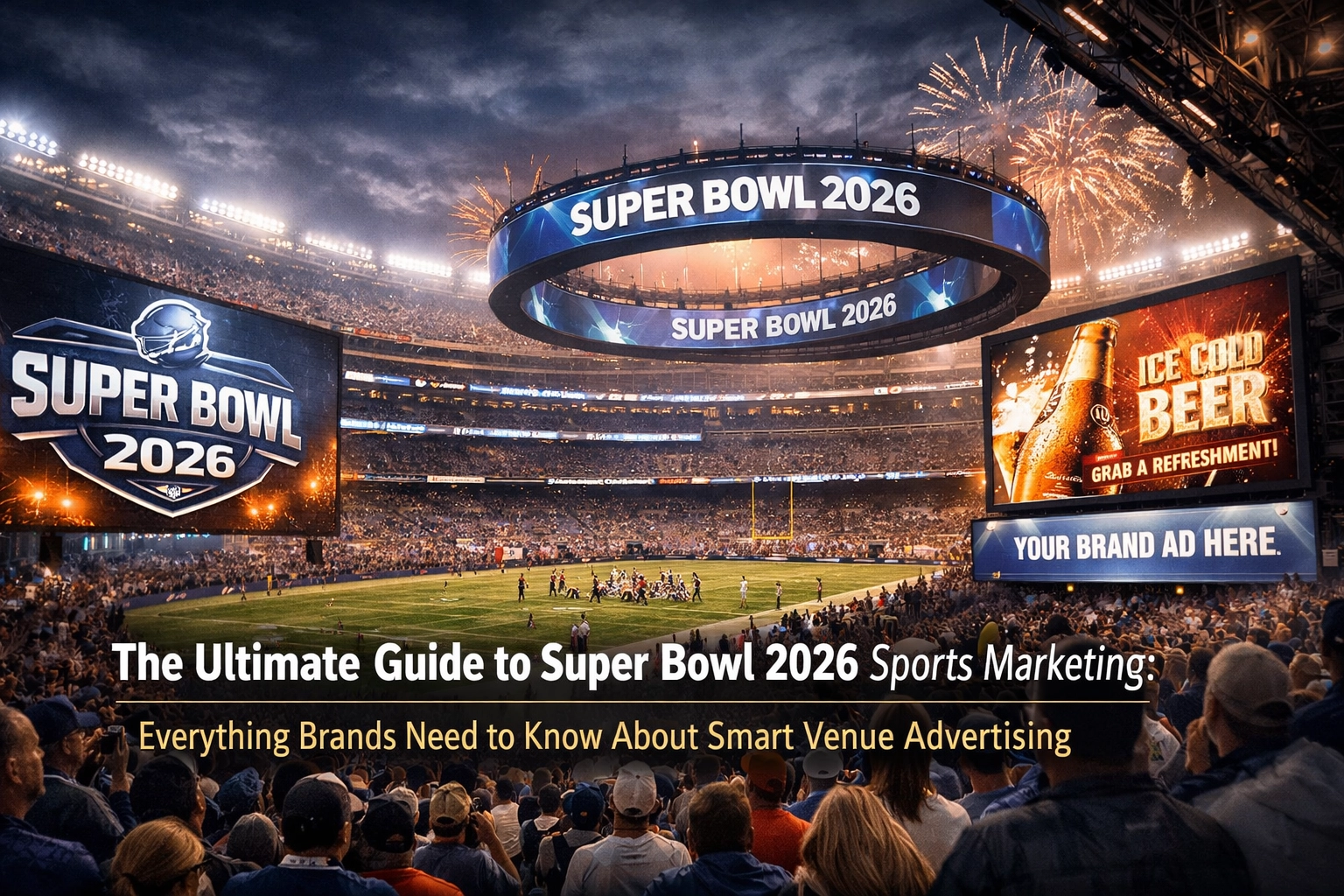
Think about it. The Super Bowl isn't just a TV broadcast: it's an experience. The stadium, the jumbotrons, the atmosphere, the digital integration, the social sharing happening in real-time. It's multimedia, multi-sensory, and most importantly, it's happening in a space where people are already engaged and receptive.

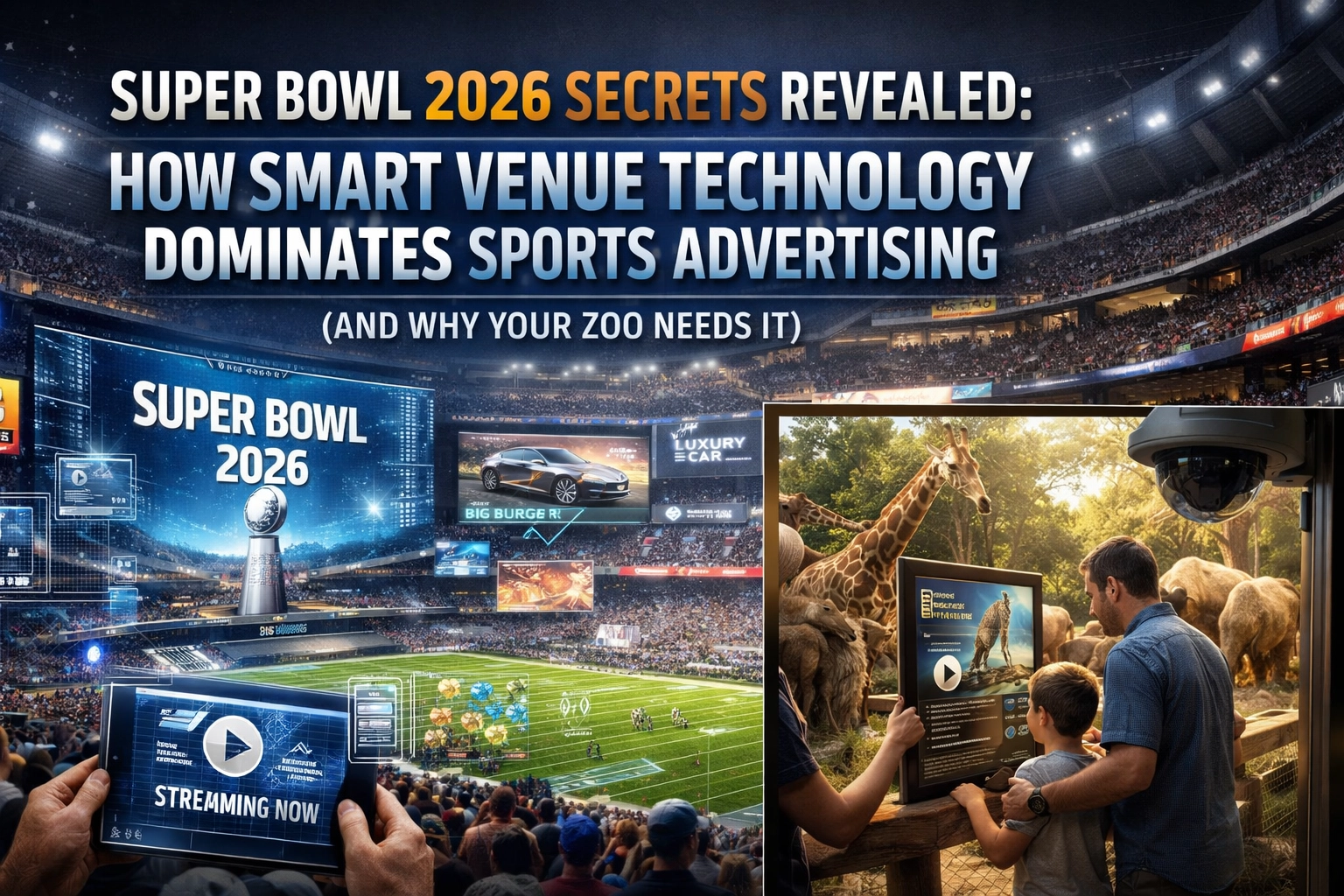
This is where companies like Zoo Media are changing the game. Instead of fighting for attention in crowded digital feeds or hoping someone doesn't change the channel during your TV spot, venue advertising puts your brand directly in front of audiences who are already engaged with the experience around them.
Why Venue Technology Beats Traditional Every Time
1. Captive, Engaged Audiences
When someone's at a sporting event, concert, or zoo, they're not multitasking. They're present. They're experiencing. Your billboard or jumbotron ad isn't competing with their phone, their second screen, or the skip button.
2. Emotional Context
People attending live events are in heightened emotional states. They're excited, entertained, making memories. Advertising that appears in these contexts benefits from positive emotional transfer: your brand becomes part of the good time they're having.
3. Impossible to Block
You can't install an ad blocker on a digital billboard. You can't skip the jumbotron during a timeout. The advertising is integrated into the environment in a way that feels natural rather than intrusive.
4. Scale Meets Precision
Modern venue technology allows for the kind of scale you'd expect from traditional media, but with the targeting and measurement capabilities of digital. Different messages for different games, different times of day, different audience demographics: all possible with smart venue technology.
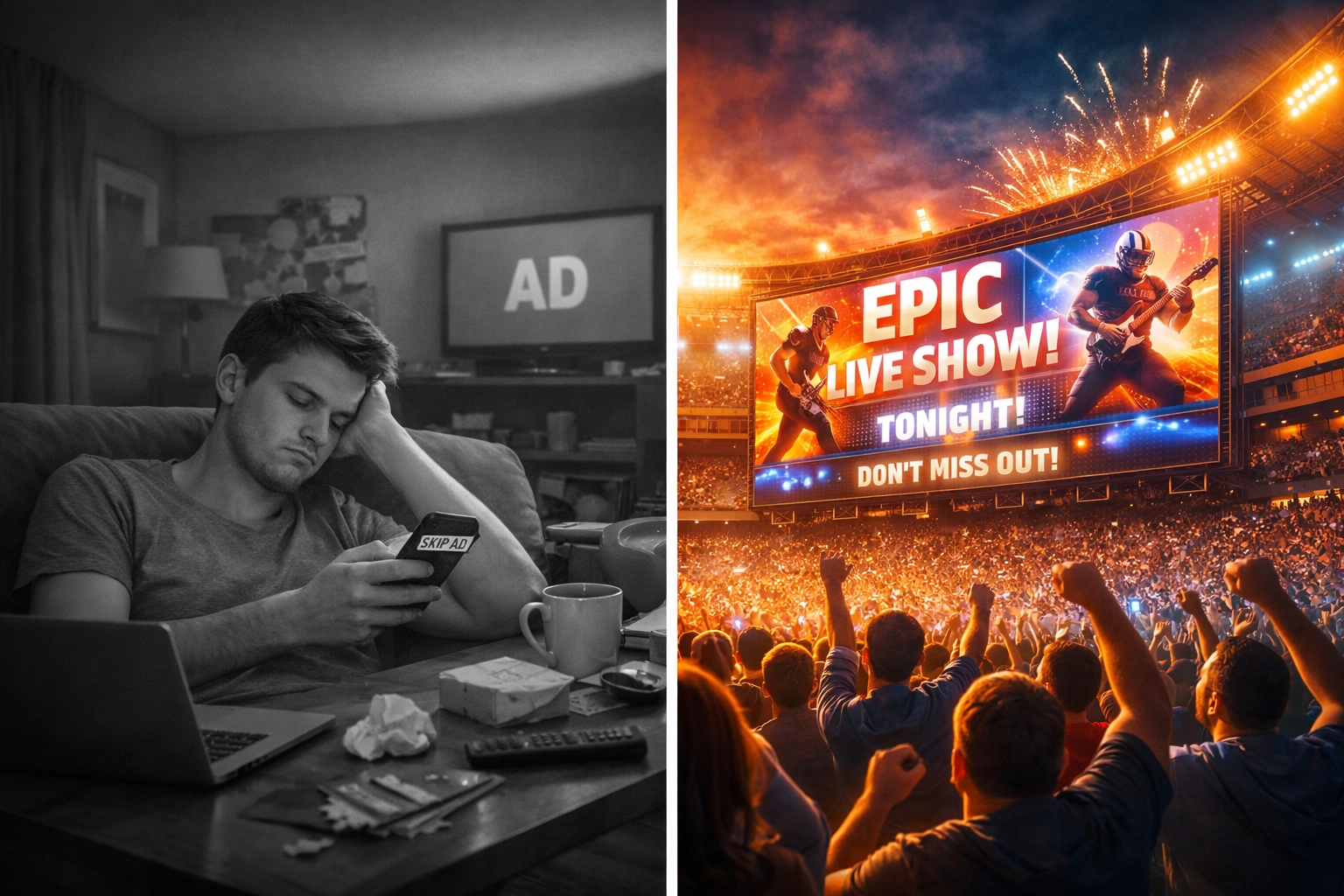
The Zoo Media Approach: Bringing Super Bowl Energy Everywhere
At Zoo Media, we've been studying what makes Super Bowl advertising so effective and figuring out how to deliver that same impact through venue advertising technology.
Our approach combines:
- Digital billboards that deliver dynamic, attention-grabbing content
- Jumbotron networks that create shared experiences for live audiences
- Smart venue technology that allows for real-time content optimization
- Integrated digital networks that extend the reach beyond the physical venue
The result? Advertising that feels less like an interruption and more like part of the experience.
Want to see this in action? Check out how modern venue technology is transforming the advertising landscape:
https://www.youtube.com/watch?v=l6J-0zileKE
The Data Doesn't Lie
Let's get back to those Super Bowl numbers for a second. 64 brands ran spots during the 2026 game, and top-performing ads used integrated strategies combining QR codes, live integrations, and celebrity endorsements to drive search lift and social engagement.
Here's what's crucial: 49% of viewers streamed the game, meaning the viewing experience was already multiplatform. The most successful advertisers understood this and created campaigns that worked across connected TV, social media, and mobile devices.
This is exactly the kind of integrated, multi-touchpoint approach that modern venue advertising delivers: but it delivers it consistently, not just once a year.
Making the Switch: What Smart Brands Are Doing
Forward-thinking brands aren't choosing between Super Bowl ads and venue advertising: they're using venue advertising to extend and amplify the impact of their big-game investments.
Here's the strategy:
- Create buzz with Super Bowl creative
- Extend the campaign through venue advertising networks that reach millions more engaged consumers throughout the year
- Measure and optimize using the kind of real-time data that venue technology provides
- Build consistent brand presence in environments where your audience is already paying attention
The brands winning right now understand that venue engagement isn't a replacement for Super Bowl advertising: it's how you get that Super Bowl level of engagement every single week.
The Bottom Line
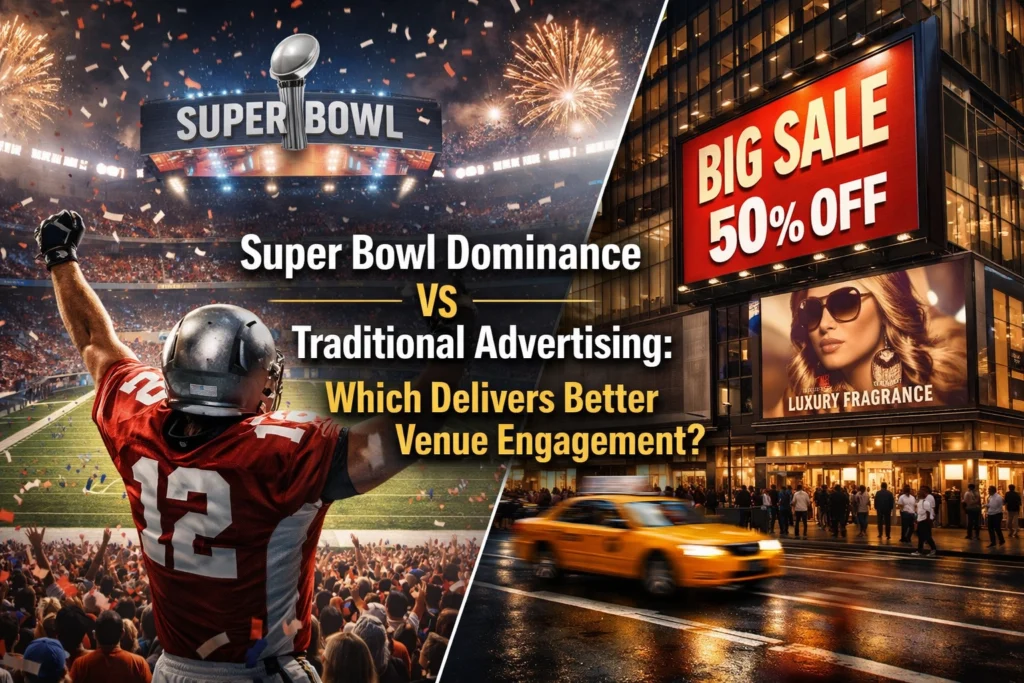
Super Bowl advertising delivers incredible results because it captures massive audiences in a moment of shared attention and engagement. Traditional advertising struggles because audiences are fragmented, distracted, and armed with skip buttons.
Venue advertising: especially when powered by modern technology like Zoo Media's digital networks: gives you the best of both worlds: the captive, engaged audiences of the Super Bowl experience combined with the consistency, measurability, and scalability of digital advertising.
You don't need to wait until February to reach millions of engaged consumers. You just need to meet them where they're already showing up, paying attention, and ready to engage.
Ready to bring Super Bowl-level engagement to your brand year-round? Visit Zoo Media to discover how our innovative advertising solutions are transforming venue engagement.
For partnership inquiries, contact Dan Kost, CEO at www.dakdan.com or call our AI Receptionist at +1 (323) 676-0621.
#Sports #AdvertisingAndMarketing #Innovation #Marketing #Strategy #Branding #DigitalMarketing #Motivation