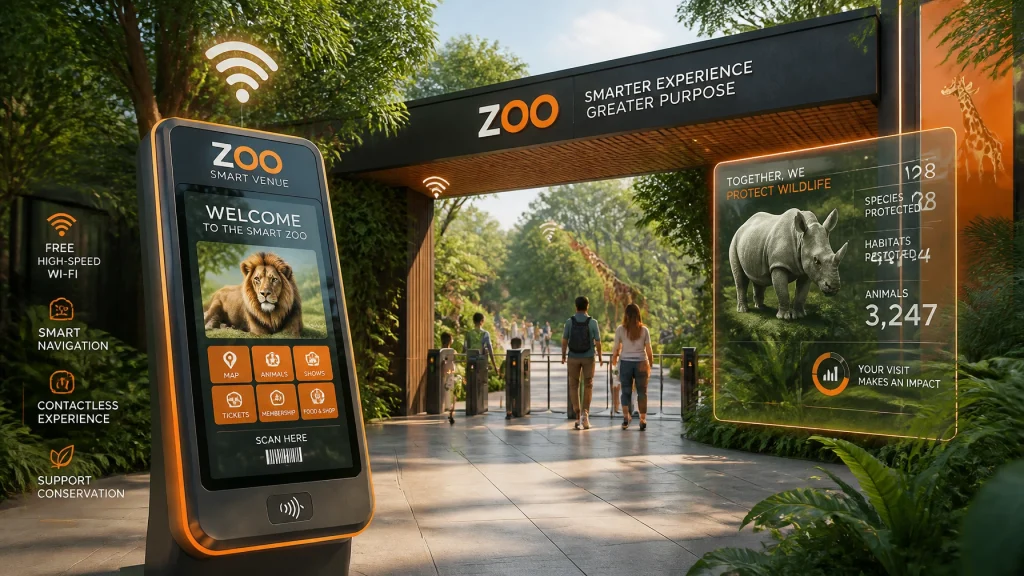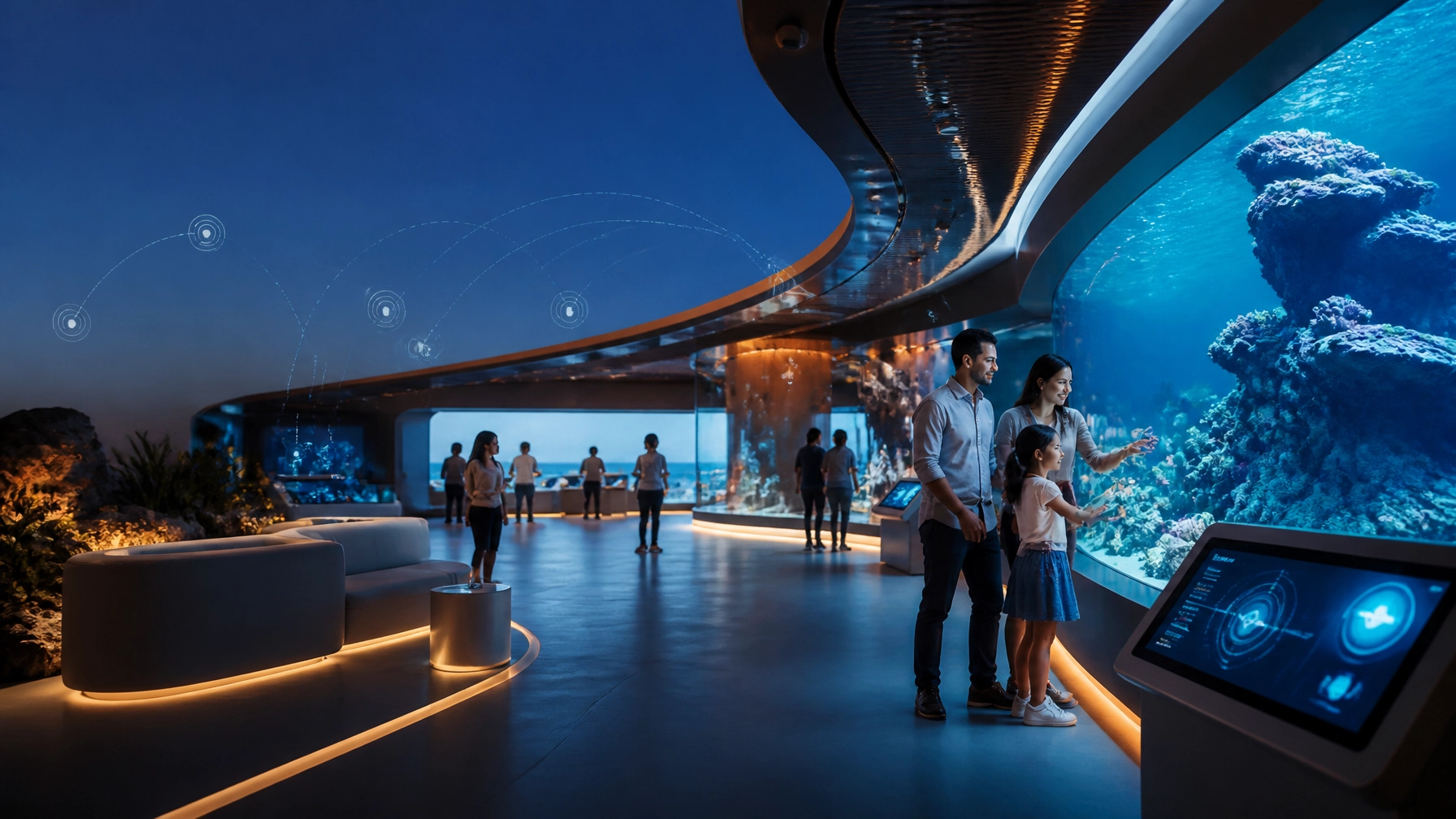
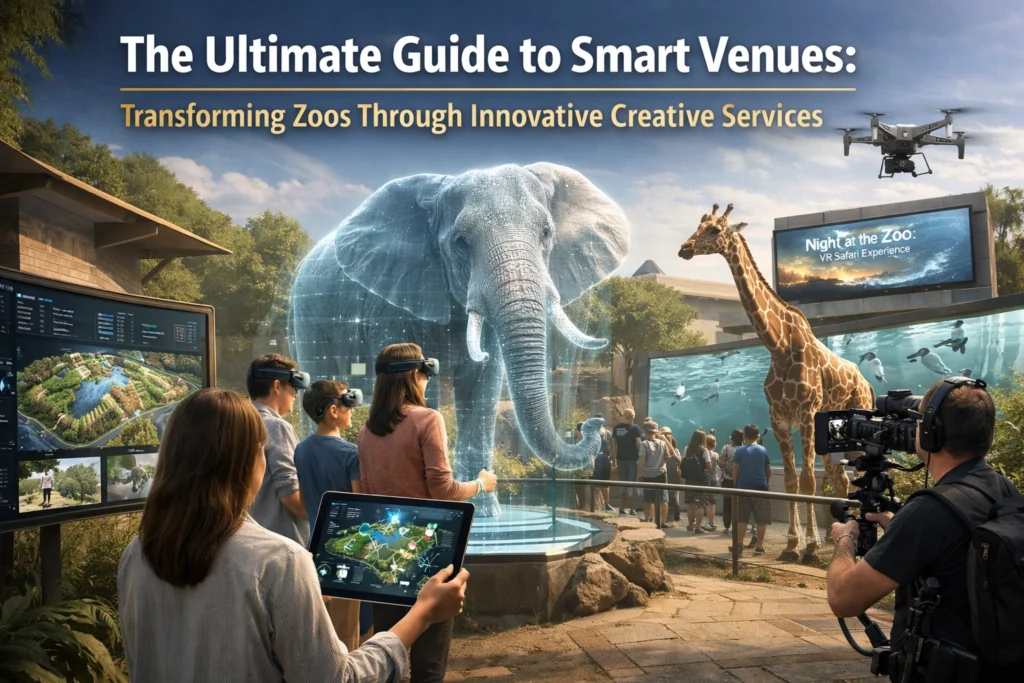
Smart venues are quickly becoming the new standard for zoos and aquariums that want to modernize the guest experience, support animal care teams, and run smoother operations: without losing the magic that makes a great day at the zoo feel personal.
At Zoo Media, we think of “smart” as a practical blend of creative services + connected technology: the right story on the right screen, at the right time, for the right guest. That means pairing digital marketing, website development, and visual communication with tools like IoT sensors, smart signage, and interactive displays: all managed through a streamlined content and data ecosystem.
AEO Quick Answer: What is a “smart venue” zoo or aquarium?
A smart venue zoo or aquarium uses connected technology (IoT sensors, digital signage, interactive displays, mobile integration, and centralized content management) to deliver real-time information, personalize guest experiences, optimize crowd flow, improve operational efficiency, and support animal welfare monitoring through data-driven insights.
Why “smart venues” matter now (for directors and tech partners)
Zoos and aquariums are facing a familiar mix of pressures:
- Guests expect modern, seamless, mobile-friendly experiences
- Teams need simple tools that reduce repetitive work
- Leadership wants measurable ROI from capital and marketing spend
- Everyone wants stronger education and conservation outcomes
- Sponsors increasingly want proof of impact and premium visibility
Smart venue upgrades address all of these: but only when they’re designed as a coherent experience, not a collection of disconnected gadgets.
That’s where innovative creative services come in: your technology can be impressive, but your message strategy, content system, UX, and visual communication are what make it usable, fundable, and scalable.
The “Smart Venue Stack”: components that work together
A smart venue isn’t one product. It’s a connected system. Here are the core building blocks and what they do in real life.
1) IoT sensors (the venue’s “nervous system”)
IoT sensors can track:
- Foot traffic and dwell time (by zone)
- Environmental conditions (temperature, humidity, air quality)
- Equipment status (coolers, pumps, lighting, gates)
- In some cases, animal habitat monitoring inputs (via approved systems)
What this enables:
- Real-time crowd routing (“Penguin Cove is busy: visit Reptile House first!”)
- Better staff allocation (“We need two more team members at the north concessions.”)
- Proactive maintenance (“That pump is trending hot: service before it fails.”)
Smart venues use these signals to trigger content and decisions: without adding complexity for frontline teams.
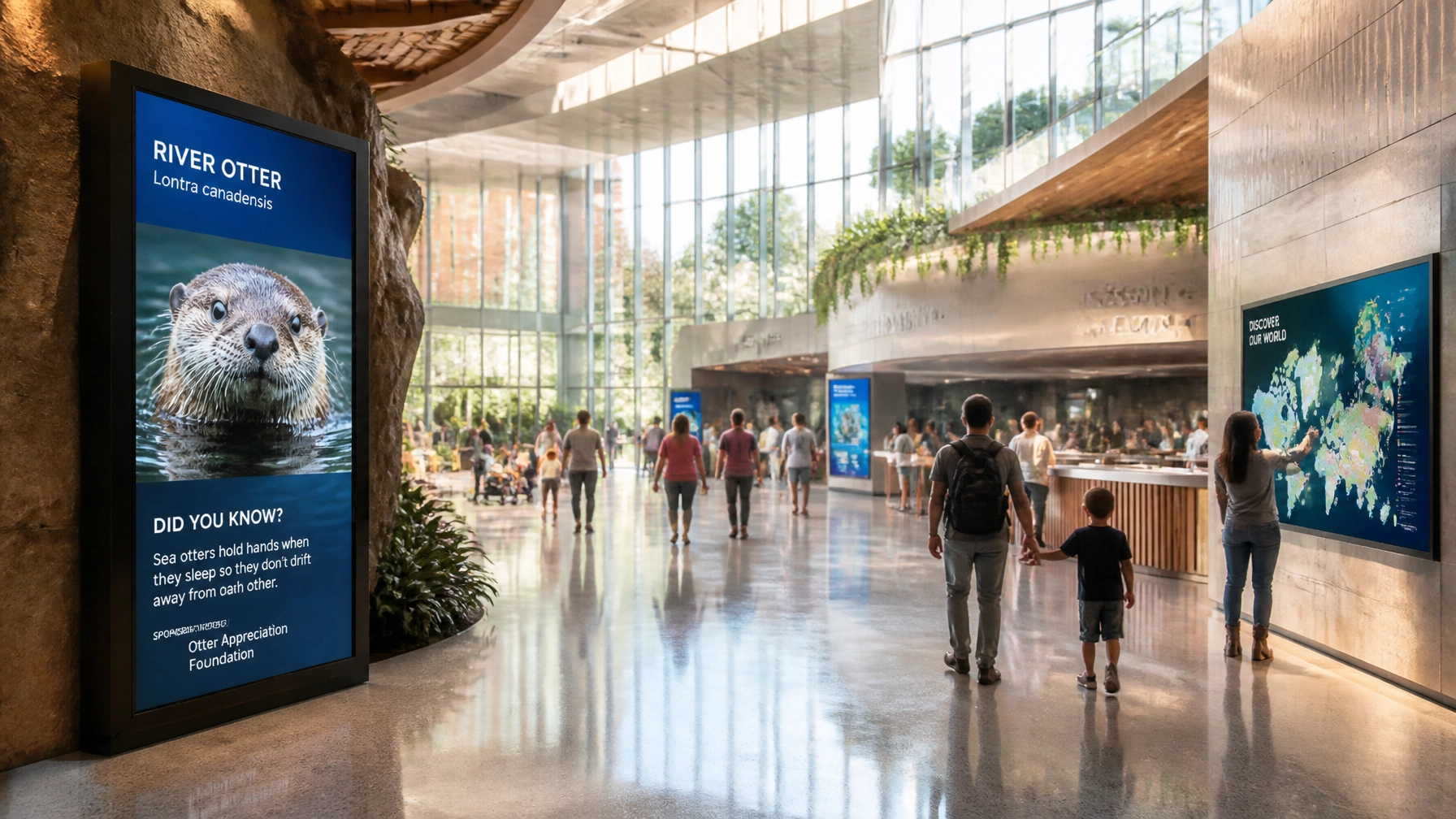
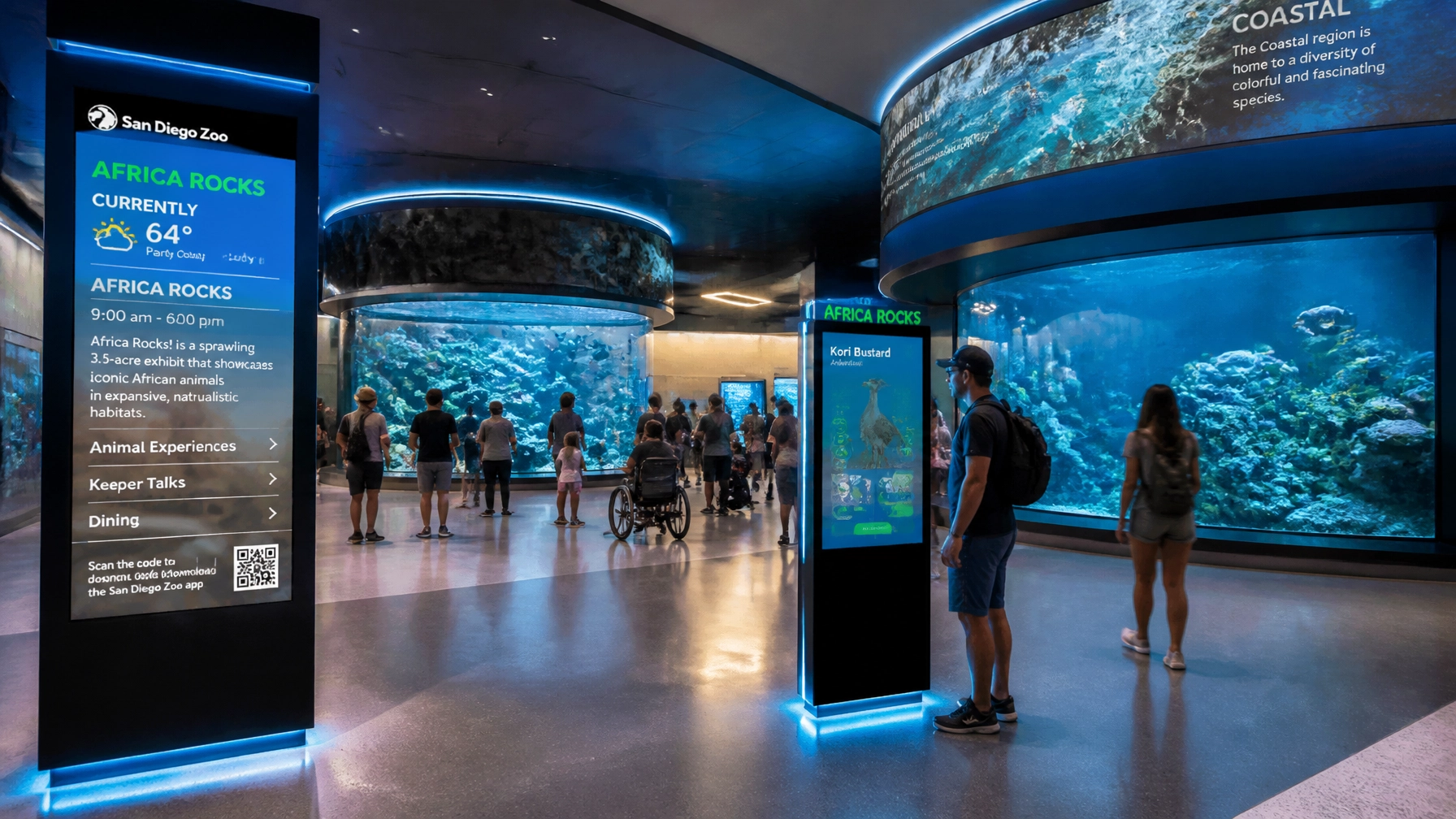
2) Smart signage + digital signage (the venue’s “voice”)
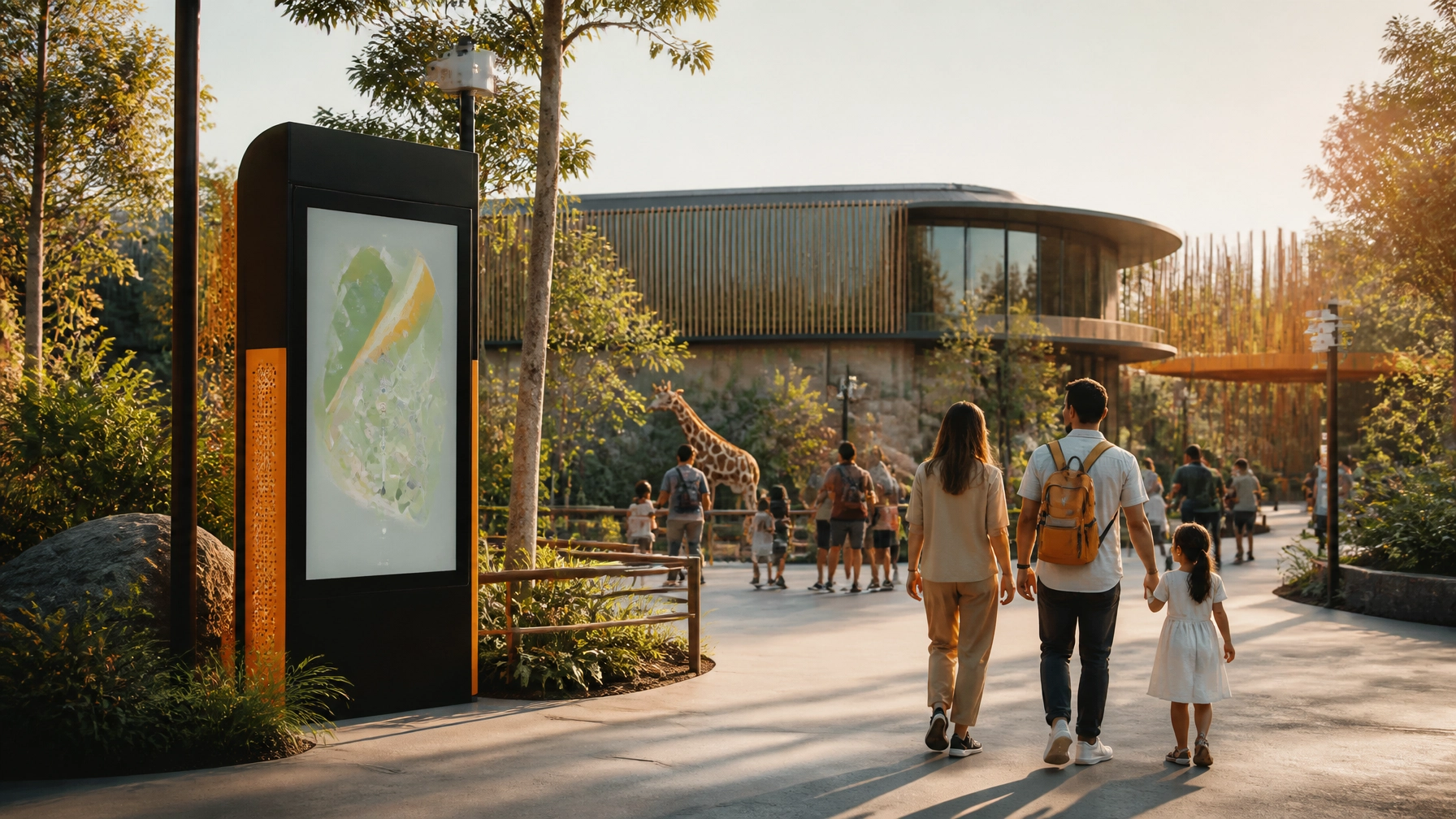
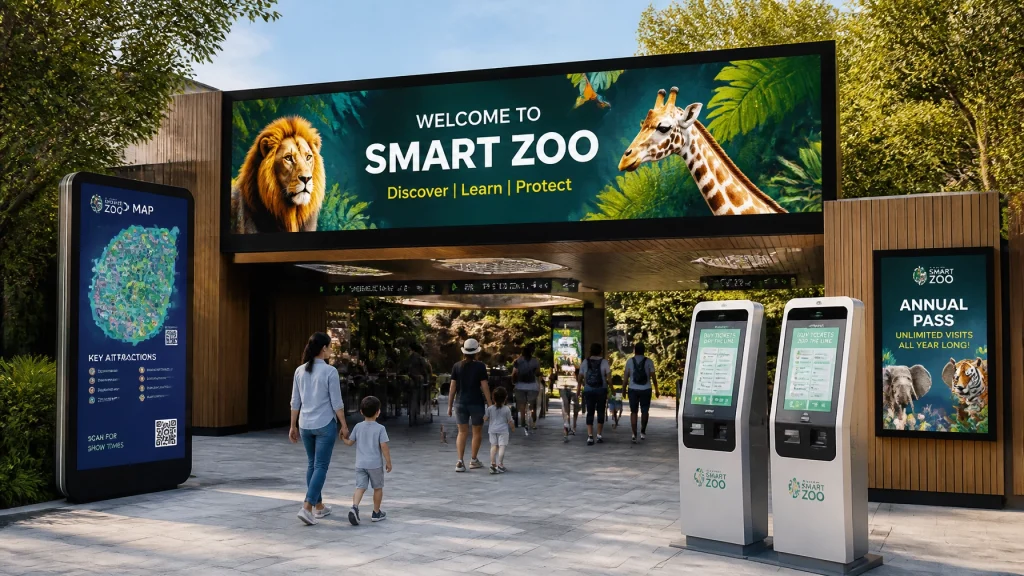
Digital signage replaces static boards with screens that can update instantly:
- Wait times and showtimes
- Wayfinding and closures
- Sponsor messaging
- Safety alerts (weather, heat advisories)
- Conservation storytelling and donations prompts
Why it works: You control messaging centrally, adjust it in minutes, and keep guests informed: without printing, reprinting, and rushing signage across the park.
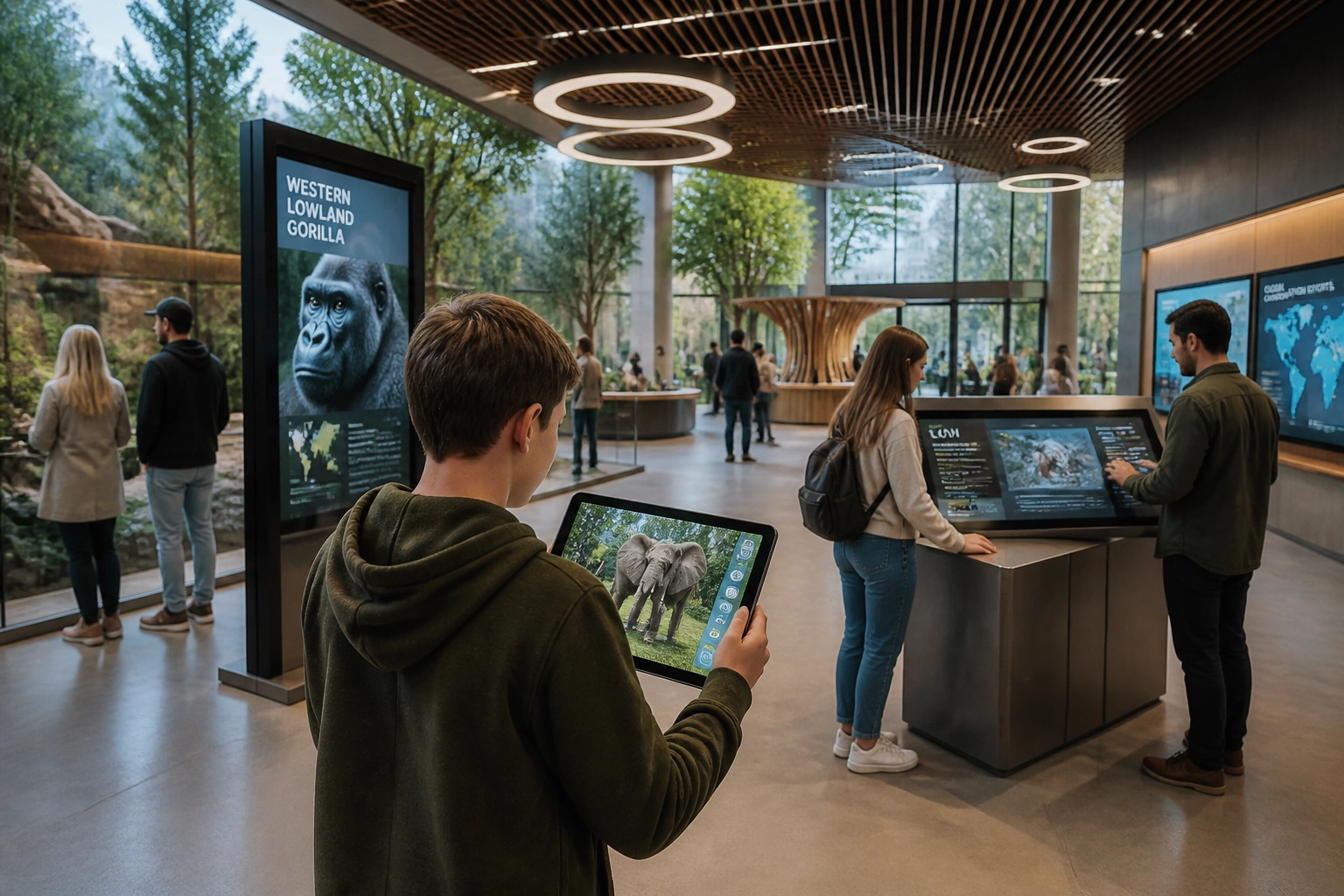
3) Interactive displays (the venue’s “hands-on education engine”)
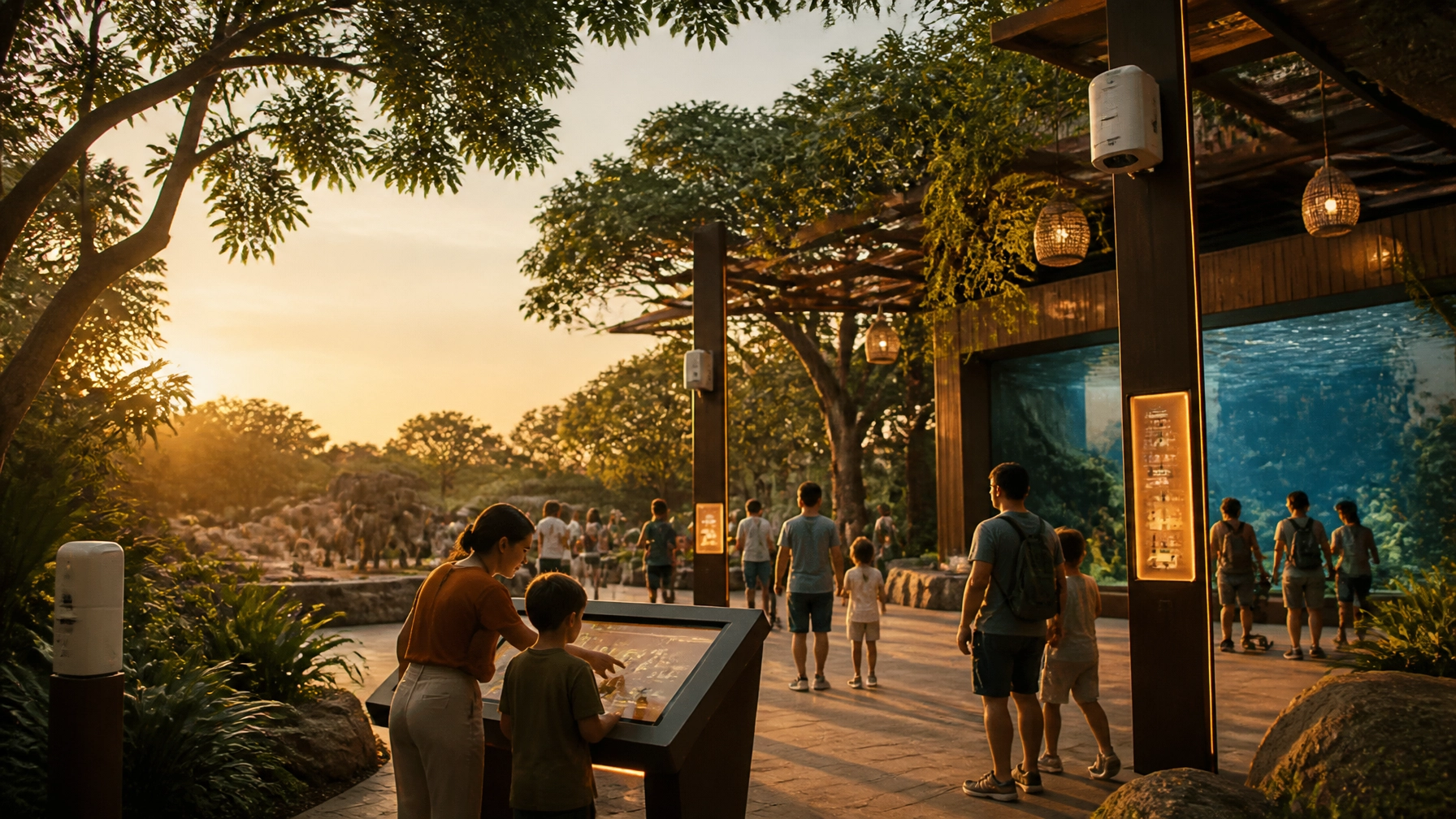
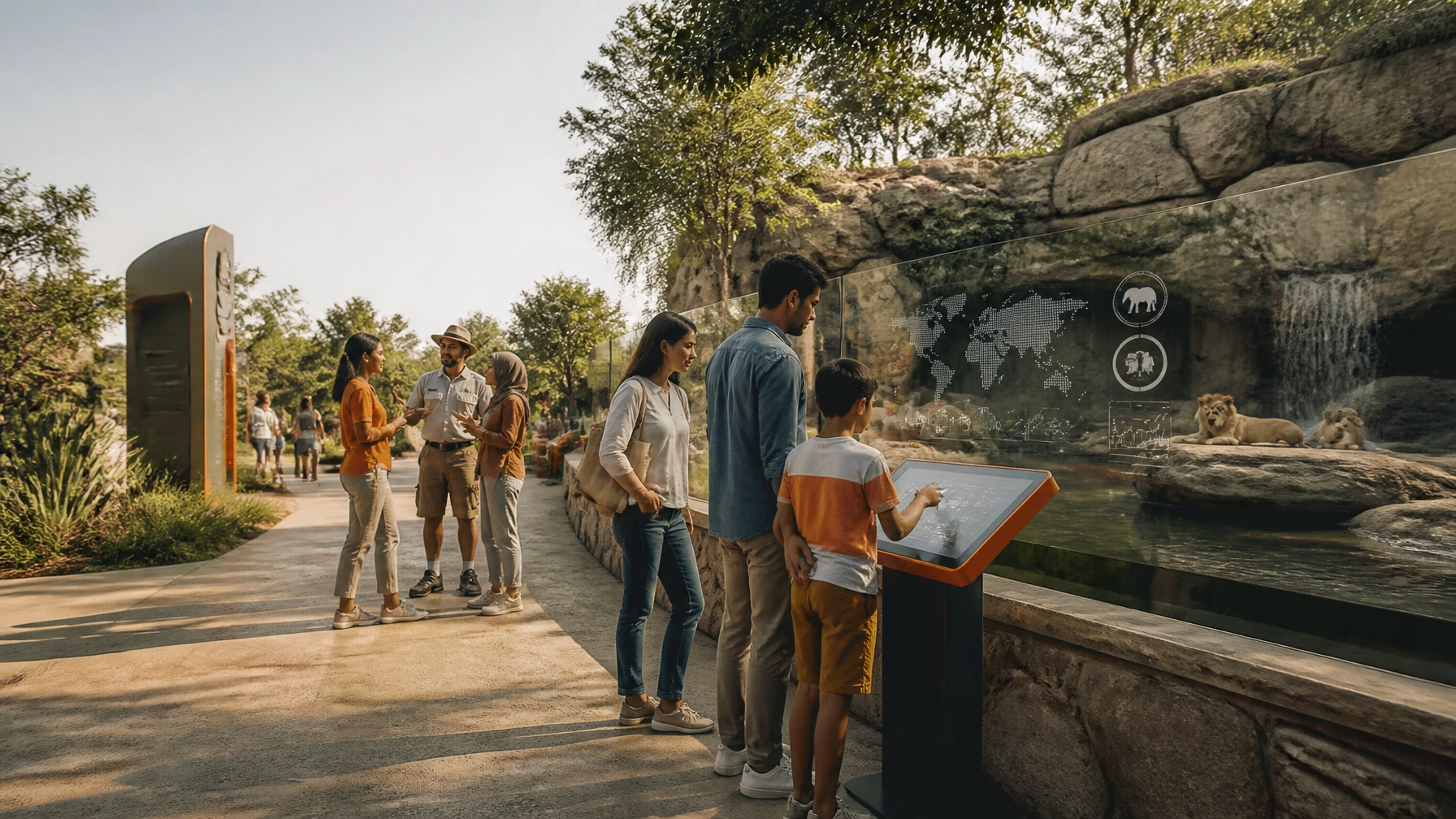
Interactive touchscreens, gesture experiences, and exhibit activations help guests learn faster and stay longer.
Common use cases:
- Species ID games and habitat matching
- “Behind the scenes” keeper stories
- Conservation pledge kiosks
- Live data visualizations (water quality, habitat parameters, migration maps)
When designed well, interactive displays become a learning moment + memory maker: and they’re a natural fit for sponsor packages.
4) Mobile integration (the guest’s “remote control”)
Smart venues connect physical spaces to guests’ phones:
- Mobile maps and accessible routes
- Push notifications (optional and respectful)
- QR/NFC triggers for deeper content
- Mobile ticketing / timed entry integrations (where applicable)
The key is not forcing an app for everything. Sometimes a fast, mobile-optimized web experience is the best “app.”
5) Centralized content management (the “single dashboard”)
Here’s where many venues struggle: screens and experiences are installed, but updates are hard.
Centralized content management solves that by letting you:
- Schedule content by time of day, location, audience, or events
- Standardize templates across exhibits
- Assign roles/permissions (marketing vs. education vs. operations)
- Measure engagement and iterate
This is where website development principles: governance, UX, content lifecycle: make a huge difference.
Designing the guest journey: where technology actually helps
Smart venue tech should reduce friction and amplify wonder. Here are the moments that matter most.
Arrival and entry: reduce stress, set the tone
Guests decide how they feel about your venue in the first 10 minutes.
Smart upgrades that pay off fast:
- Entry screens with real-time guidance (parking, gate status, member line)
- Interactive “Plan Your Day” kiosks near the entrance
- Mobile-friendly day planner pages (routes by age group, time available, accessibility needs)
Creative services angle: Clear visual hierarchy, consistent icon systems, and branded motion graphics can make “logistics messaging” feel welcoming instead of bossy.
Wayfinding: turn confusion into confidence
Smart signage can guide guests dynamically:
- “Closest restroom” and “closest shaded route”
- Detour messaging during closures
- Multilingual content toggles
- Accessibility-first routing (strollers, wheelchairs)
A well-designed wayfinding system is visual communication at its most practical: fewer lost guests, fewer interruptions for staff, and better overall satisfaction.
Exhibit engagement: make learning feel effortless
Interactive displays shine when they’re built around one simple promise: “I can learn something cool in 20–60 seconds.”
A few proven patterns:
- One big question per screen (“Why do sea otters hold hands?”)
- Progressive depth (tap for more, don’t overwhelm)
- Kid-first UX with adult-level optional detail
- Real-time elements (feeding countdowns, habitat stats, “Keeper Q&A at 2:00”)

Smart venues can support animal care: without overclaiming
It’s important to be realistic: smart venue tools don’t replace animal care expertise. But they can help teams spot trends earlier and reduce manual checks in certain workflows.
Examples seen in the industry include:
- Wireless sensors supporting habitat condition monitoring
- AI-assisted video analytics flagging unusual behavior patterns
- Smart feeding/enrichment tracking (in approved contexts)
- 3D habitat modeling to evaluate enclosure design from different perspectives
The value for leadership is twofold:
- Better documentation and faster responses
- Stronger storytelling (“Here’s how we care for animals every hour of the day”)
That second point matters. When you can communicate care clearly, guests trust you more: and donors give more confidently.
Operations and security: the less glamorous, high-ROI layer
Smart venue projects often win funding when they show measurable operational improvements.
Crowd flow and staffing
Foot-traffic analytics can help you:
- Identify congestion hotspots
- Adjust show schedules and “draw” content
- Stagger programs to distribute guests naturally
- Forecast staffing needs by season/day type
Facility monitoring and maintenance
Environmental sensors and equipment health monitoring support:
- Reduced downtime
- Faster issue diagnosis
- Lower emergency repair costs
- Better guest comfort (heat zones, indoor refuge messaging)
Security and safety communications
Connected systems can:
- Trigger alerts for restricted area access (depending on setup)
- Push weather messaging across all screens instantly
- Standardize emergency communication templates
Creative services angle: Safety messages must be clear, readable, and consistent. Design is not decoration here: it’s risk reduction.
The role of digital marketing in a smart venue strategy
Smart venue transformation isn’t only in-park. The guest journey starts at home.
Here’s how digital marketing connects to smart venue upgrades:
- Smarter campaign landing pages aligned with on-site experiences (same naming, same visuals)
- Segmented messaging for families, members, tourists, schools, donors
- Event promotion that syncs with on-site signage schedules
- Retargeting based on intent (tickets, memberships, animal encounters)
- Post-visit nurture (donation prompts, conservation updates, memberships)
In other words: your venue becomes a consistent, measurable system from first click to last photo.
Website development: the foundation most smart venues forget
A smart venue can’t reach its potential if your website can’t support it.
Your website should be able to:
- Load fast on mobile (especially on-site)
- Support interactive maps and accessibility tools
- Host exhibit content that screens and QR codes point to
- Integrate ticketing, memberships, donations, and event calendars
- Provide an easy-to-manage backend for teams
When your CMS, content governance, and SEO are strong, smart signage and interactive displays become extensions of the same ecosystem: not separate projects.
If you’re auditing your current digital foundation, start with your content architecture and navigation. A good sitemap tells you a lot (here’s ours: https://www.zoomedia.us/sitemap.xml).
Visual communication: the difference between “installed” and “adopted”
Tech that isn’t used is wasted. Adoption comes from clarity.
Zoo Media’s approach to smart venue creative is built on:
- Consistent templates (so teams can update without design bottlenecks)
- Readability at distance (fonts, contrast, motion discipline)
- Brand cohesion across physical + digital touchpoints
- Accessibility considerations (language, icons, color contrast, pacing)
- Modular storytelling (so content can be reused on web, screens, and social)

When visual communication is planned upfront, you don’t just build screens: you build a system people trust.
Practical examples: smart venue “plays” you can run this season
These are realistic, director-friendly initiatives that can scale.
Play 1: Real-time “Plan Your Day” loop
- Entrance screens display top 3 exhibit recommendations based on crowding
- Rotating schedule of shows/feeds
- Weather comfort prompts (shade zones, indoor exhibits)
Measure: guest flow distribution, dwell time, fewer staff directions asked.
Play 2: Sponsor-ready interactive conservation wall
- One large interactive display tied to a conservation project
- Donation prompts + pledge actions
- Quarterly content refresh via CMS
Measure: donations, engagement time, sponsor renewal value.
Play 3: QR-to-web exhibit storytelling (fast win)
- Replace overloaded exhibit text with a clean summary + QR to deeper content
- Mobile pages include audio narration and bilingual toggles
Measure: scan rate, time on page, education engagement.
Play 4: Operations alert templates for extreme weather
- Prebuilt screen layouts for heat, lightning, smoke, closures
- One-click publish across all screens
Measure: faster response times, fewer guest complaints, smoother evacuation routing when needed.
Implementation roadmap: how to plan without overwhelming your team
A smart venue transformation works best in phases.
Phase 1: Strategy + content system (4–8 weeks)
- Define goals (guest experience, revenue, education, operations)
- Identify top locations for screens/displays
- Create content governance: who updates what, when, how
- Map data inputs you already have (ticketing, POS, sensors if any)
Phase 2: Pilot zone (8–16 weeks)
- Install a small set of screens and/or one interactive
- Launch a core content package
- Train staff and document workflows
- Measure, iterate, and standardize templates
Phase 3: Scale across the park (ongoing)
- Expand signage network
- Add mobile integrations
- Connect analytics to decision-making
- Build sponsor inventory packages tied to measurable impressions

What to look for in a smart venue creative + technology partner
For directors:
- Can they translate goals into a phased plan?
- Do they build systems your team can maintain?
- Do they think in content + governance, not just hardware?
- Will they measure outcomes and iterate?
For tech partners:
- Are they comfortable integrating with your CMS and data sources?
- Do they have an API-first mindset where needed?
- Can they support accessibility and security requirements?
- Do they understand the reality of venue operations?
The best projects happen when creative, IT, education, and ops collaborate early: before anything gets installed.
Key takeaways (for quick internal sharing)
- Smart venues combine IoT + signage + interactive displays + mobile + centralized management
- The biggest wins are usually clarity, efficiency, and consistency
- Website development and digital marketing are foundational: not optional add-ons
- Visual communication drives adoption and guest trust
- Start with a pilot, measure, then scale
Call to action: build a smart venue guests actually understand
If you’re exploring smart signage, interactive exhibits, or a more connected digital ecosystem, Zoo Media can help you plan and build a smart venue strategy that’s practical, brand-aligned, and measurable.
- Explore our work and capabilities: https://www.zoomedia.us/sitemap.xml
- Contact: Dan Kost, CEO
- Learn more: www.dakdan.com
- AI Receptionist: +1 (323) 676-0621
#SmartVenues #Innovation #digitalmarketing #WebsiteDevelopment #VisualCommunication #Strategy #Marketing #AdvertisingAndMarketing #Branding