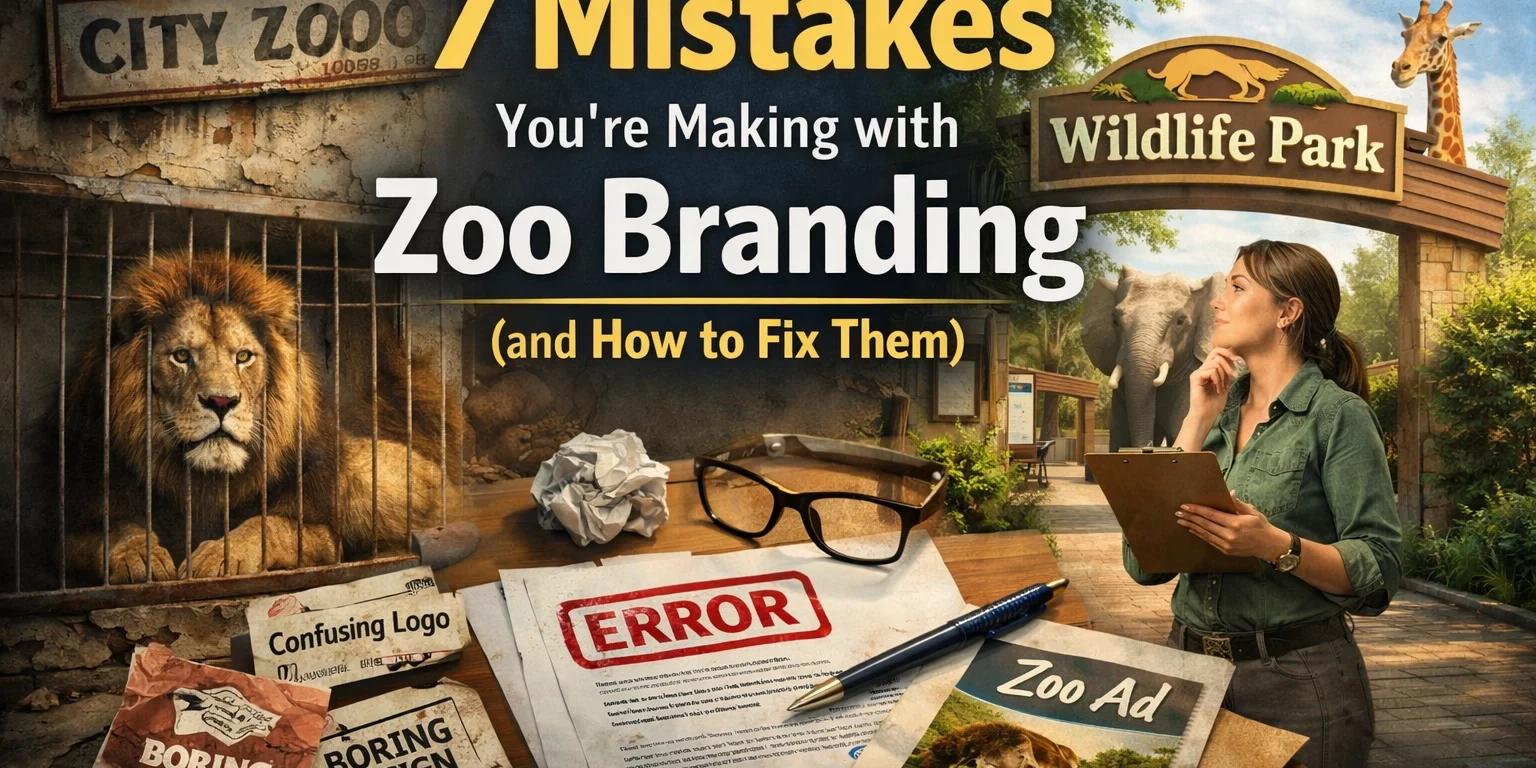
Let's be honest: branding a zoo isn't like branding a tech startup or a coffee shop. You're dealing with live animals, conservation missions, educational goals, and families who just want to see penguins waddle around. It's complicated. And somewhere between trying to sound conservation-minded and family-friendly, many zoos end up with an identity crisis that confuses everyone.
If your zoo's brand feels like it's trying to be everything to everyone (and succeeding at being nothing to no one), you're not alone. Here are seven branding mistakes we see zoos making all the time: and more importantly, how to fix them.
1. Launching Your Rebrand Before Everyone's on the Same Page
Picture this: You've spent months developing a beautiful new brand identity. The logo is fresh, the colors are vibrant, and you're ready to unveil it to the world. There's just one problem: half your board thinks you're still a zoo, and the other half insists you're now a "conservation society."

This happens more often than you'd think. Organizations rush to go public with rebranding efforts before internal stakeholders are aligned on what the brand actually means. Palm Beach Zoo learned this lesson the hard way when they discovered that while donors connected with their conservation mission, average visitors had no idea what a "conservation society" even meant.
The Fix: Before you change a single thing externally, get your messaging locked down internally. Run workshops with staff, board members, and key stakeholders. Make sure everyone can articulate what your brand stands for in the same way. Detroit Zoo spent over two years conducting 50+ stakeholder interviews and nearly 200 public surveys before finalizing their rebrand. That's not overkill: that's doing it right.
2. Forgetting That Your Brand Lives in the Everyday Experience
Your brand isn't just your logo. It's not your color palette or your fancy new tagline. Your brand is what a visitor experiences when they can't find a bathroom, when a staff member helps their kid spot a hiding tiger, and when they're trying to navigate a confusing map.
Too many zoos treat branding as a visual exercise and forget that every touchpoint matters. Shedd Aquarium got this right by evolving their brand without even changing their logo: they focused on creating consistent experiential principles that sparked curiosity and conservation action at every turn.
The Fix: Audit your entire visitor experience. Mystery shop your own zoo. What does your signage say about your brand? How do your staff interact with guests? Is your website as welcoming as your entrance? Your corporate identity should inform everything from your trash can designs to your employee training programs.

3. Using Jargon That Only Insiders Understand
Conservation. Biodiversity. Species management. Enrichment programs. These terms mean something to you, but to a family planning their weekend, they're about as exciting as reading a biology textbook.
Denver Zoo faced this when testing their use of "Alliance" in their name. Focus groups revealed that while the term resonated with some audiences, others found it confusing or even off-putting. The lesson? Words matter, and what makes sense in a board meeting doesn't always translate to your target audience.
The Fix: Test your messaging with real people who aren't zoo professionals. Ask them to explain back to you what your brand promises. If they can't do it in simple terms, neither can your visitors. Translate your mission into language that connects emotionally. Instead of "biodiversity conservation," try "protecting the animals our kids' kids will want to meet."
4. Trying to Be Everything to Everyone
Here's a tough truth: Your donors want to support serious conservation work. Your casual visitors want to see cute animals and grab an overpriced ice cream. Your school groups need educational content. Your members want exclusive perks. And you're trying to speak to all of them with one voice.
The result? A watered-down brand that doesn't strongly appeal to anyone.

The Fix: Define your primary brand position, then create thoughtful sub-messaging for different audiences. Your visual communication should remain consistent, but your tone and content can flex. A social media post can be playful and family-focused, while your annual report can dive deep into conservation impact. The key is maintaining a cohesive thread that ties everything together: your brand's core promise.
5. Neglecting Digital Brand Consistency
Your physical zoo might have gorgeous branded signage and uniforms, but what about your digital presence? Is your Instagram aesthetic completely different from your website? Does your email newsletter look like it came from a different organization than your mobile app?
In 2026, your digital brand is often a visitor's first interaction with your zoo. If that experience is inconsistent or outdated, you've already lost them before they even consider buying tickets.
The Fix: Create comprehensive brand guidelines that specifically address digital applications. How should your brand look on social media? What filters or editing styles are on-brand? How should your website navigation reflect your brand architecture? Work with a branding agency that understands both creative services and digital marketing strategies to ensure consistency across every channel.
6. Underestimating the Research Phase
We get it: research isn't sexy. You want to jump straight to designing that gorgeous new logo. But skipping thorough research is like building a house without checking if the ground is solid first.
The most successful zoo rebrands invest heavily in understanding their audiences, competitive landscape, and internal culture before touching a single design element. This isn't just conducting a few surveys: it's deep ethnographic research, extensive stakeholder interviews, and competitive analysis.

The Fix: Dedicate real time and resources to research. If Detroit Zoo spent two years on their rebrand, smaller zoos should still allocate several months minimum. Interview diverse stakeholder groups: long-time members, first-time visitors, donors, staff at every level, local community members, and even people who've never visited your zoo. Ask why. Then ask why again. The insights you gain will inform every branding decision that follows.
7. Treating Your Rebrand as a One-Time Project
You've launched your beautiful new brand. The press release went out. The new website is live. The signage is up. You're done, right?
Wrong. A brand isn't a project with a completion date: it's a living thing that needs constant care and evolution. The zoos and aquariums with the strongest brands treat them as ongoing strategies, not finished products.
The Fix: Build brand stewardship into your organizational culture. Assign someone (or better yet, a team) to be brand guardians who ensure consistency and evolution. Schedule regular brand audits: at least annually: to assess how well you're living your brand promise. Stay flexible enough to adapt your brand expression as audience expectations and cultural contexts shift, while keeping your core brand promise consistent.
Your Next Steps
Branding a zoo or aquarium is complex work that sits at the intersection of mission-driven purpose and visitor-focused experience. It requires balancing conservation credibility with family fun, educational value with entertainment, and global impact with local community connection.
The good news? Once you get it right, a strong brand becomes your most powerful tool for driving visitorship, earning donor support, and making real conservation impact.
If you're recognizing your zoo in any of these mistakes, don't panic. The fact that you're aware of these issues means you're already ahead of organizations still in denial. Start with one area: maybe it's aligning your stakeholders or auditing your visitor experience: and build from there.
And if you need help navigating the complexity of zoo branding, that's exactly what we do at Zoo Media. We understand the unique challenges of marketing zoos and aquariums because it's all we think about. From corporate identity development to comprehensive digital marketing strategies, we help zoos create brands that are as remarkable as the animals they protect.
Ready to fix your zoo's branding mistakes? Reach out to Dan Kost, CEO at www.dakdan.com or call our AI Receptionist at +1 (323) 676-0621. Let's create a brand that makes both conservation and commerce possible.
#Branding #Strategy #Marketing #AdvertisingAndMarketing #digitalmarketing #Innovation #CreativeServices #ZooBranding #VisualIdentity