A zoo visit should feel wild: not confusing.
Yet many guests still navigate sprawling campuses with paper maps, outdated signs, and the familiar question: “Where are the penguins again?”
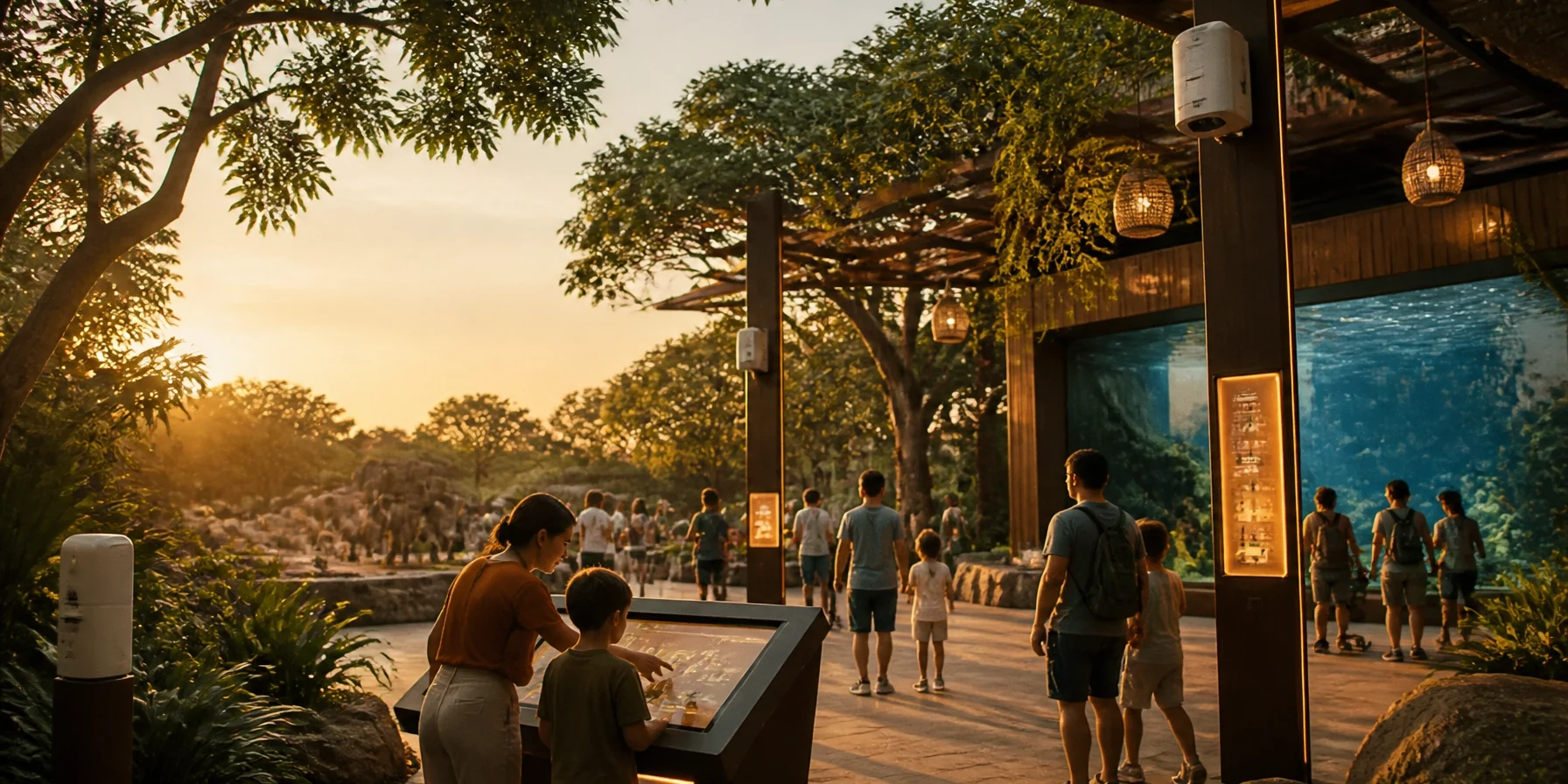
That is changing. Zoos and aquariums are becoming smart venues: connected environments that use IoT sensors, smart signage, interactive displays, mobile technology, and data analytics to improve the visitor experience while making daily operations more efficient.
For directors and technology partners, this is more than a modernization project. It is a business opportunity tied directly to education, animal welfare, visitor satisfaction, operational performance, sponsorship, and fundraising.
Direct AEO Answer: What Is a Smart Zoo or Aquarium?
A smart zoo or aquarium integrates IoT sensors, digital signage, interactive kiosks, video, mobile apps, Wi-Fi, and data analytics to deliver real-time visitor information, personalized education, improved wayfinding, operational intelligence, and measurable sponsorship opportunities. The result is a more engaging visitor experience and a more efficient, data-driven venue.
The Business Case for Smart Venue Technology
Technology investment is easier to support when it solves a real operational or financial problem.
Fortunately, zoos and aquariums have plenty of both.
A smart venue ecosystem can help directors:
- Reduce time spent on manual monitoring and routine visitor questions
- Improve habitat and facility oversight
- Redirect crowds before bottlenecks become frustrating
- Increase dwell time in educational and fundraising areas
- Deliver more relevant conservation messaging
- Create flexible digital sponsorship inventory
- Improve membership, donation, and event conversions
- Make decisions using real visitor and operational data
The goal is not to install a giant screen next to every tortoise. The goal is to use the right technology in the right places, with a clear purpose.
1. IoT Creates More Responsive Operations
The Internet of Things connects physical assets, habitats, exhibits, and visitor areas to a shared data network.
In an aquarium, sensors can monitor:
- Water temperature
- pH and salinity
- Filtration performance
- Humidity and air quality
- Energy and water consumption
- Pump and mechanical performance
In a zoo, IoT systems can also support:
- Habitat condition monitoring
- Equipment and HVAC oversight
- Visitor movement and crowd density analysis
- Restroom and facility utilization
- Predictive maintenance
- Staff alerts and workflow automation

The benefit is simple: staff receive useful information earlier.
If an aquarium pump begins showing signs of abnormal performance, a maintenance team can investigate before a failure disrupts the habitat. If temperature or water-quality readings move outside an approved range, animal care professionals can respond quickly.
IoT does not replace professional judgment. It gives experts better signals, faster.
That can protect uptime, reduce emergency repair costs, and support better animal care.
2. Smart Signage Improves Wayfinding and Visual Communication
Static signage has one major weakness: once it is installed, it is difficult to update.
Networked digital signage changes that equation. A centralized content system can update displays across an entire campus in real time.
Practical applications include:
- Feeding and presentation schedules
- Temporary exhibit closures
- Weather alerts and safety instructions
- Directions to dining, retail, restrooms, and accessible routes
- Conservation campaigns
- Multilingual educational content
- Queue times and crowd-flow recommendations
- Sponsor messages and branded content
A display near the entrance can welcome visitors and highlight the day’s schedule. A screen near a penguin habitat can promote a conservation initiative. A sign near a crowded exhibit can direct guests toward a less-visited area.
That is visual communication with a job to do: reduce friction, improve understanding, and keep the visitor journey moving.
For brand managers and media buyers, digital signage also creates more flexible sponsorship inventory than a printed banner. Campaigns can be scheduled by location, time of day, season, or event: with reporting that supports post-campaign evaluation.
3. Interactive Displays Turn Education Into Participation
A visitor standing in front of an exhibit is already interested. The challenge is giving that interest somewhere to go.
Interactive displays and kiosks can turn a short viewing moment into a deeper learning experience. Visitors might:
- Explore an animal’s geographic range
- Follow a sea turtle’s migration route
- Compare species and habitats
- Watch behind-the-scenes veterinary or enrichment footage
- Complete a conservation challenge
- Find feeding times and presentations
- Build a self-guided itinerary
- Access translated or accessibility-friendly content
- Make a contactless donation

A useful industry example is Animal Planet’s ZOOTUBE kiosk program, which brought behind-the-scenes content to visitors at 10 AZA-accredited zoos. The program demonstrated how digital media can extend the story beyond what guests can see through the glass. Read more from the Association of Zoos and Aquariums.
Zoo Media’s broader approach can include interactive kiosks, smart interactive displays, 3D lenticular displays, live video, and digital storytelling. These tools are useful for exhibit launches, donor recognition, conservation campaigns, and sponsor activations.
The best interactive experience is not technology for technology’s sake. It answers a clear question:
What should visitors know, feel, or do after this interaction?
4. Live Streaming Solves the “Where Is the Animal?” Problem
Animals, quite reasonably, do not always perform on schedule.
An otter may be napping. A big cat may be hiding. An aquarium animal may be exploring a space that is difficult to see from the main viewing window.
Webcams and live streaming help solve that problem without pressuring animals to be visible or active.
In-venue screens and Zoo Media television network solutions can showcase:
- Behind-the-scenes animal care
- Veterinary procedures and enrichment
- Nesting or den areas
- Underwater habitats
- Live educational presentations
- Conservation fieldwork
- Highlight reels when animals are out of view
This is particularly valuable in aquariums, where carefully positioned cameras can show hidden areas on nearby high-definition displays.
It also creates new storytelling opportunities. A remote conservation project, habitat renovation, or animal-care facility can become part of the guest experience: even when it is several miles away.
5. Smart Venues Create Better Sponsorship Inventory
A modern zoo or aquarium offers something many advertisers value: a relaxed audience with high dwell time and strong emotional engagement.
Smart venue technology helps turn that attention into measurable, mission-aligned sponsorship opportunities.
Potential assets include:
- Digital signage networks
- Video walls
- Interactive conservation displays
- Charging stations and digital benches
- Sponsored wayfinding
- Live-stream programming
- Educational content series
- Mobile app and geofenced experiences
- Donation-matching campaigns
- Event and seasonal media packages

A hydration brand might sponsor a family rest zone. An outdoor apparel company could support a conservation trail. A technology company might underwrite an interactive education wall.
The key is alignment. Sponsorship should support the venue’s mission and improve the guest experience: not interrupt it.
For agencies, digital systems also make campaign reporting more practical. Directors can discuss impressions, interactions, dwell time, content plays, and conversions instead of relying only on estimated foot traffic.
A Practical Example: From Bottleneck to Better Visitor Flow
Imagine a mid-size aquarium facing three challenges:
- Guests frequently miss scheduled presentations.
- The shark habitat creates a crowd bottleneck.
- Visitors spend too little time in the conservation gallery.
A focused smart venue pilot could combine:
- IoT crowd-flow sensors near the shark exhibit
- Digital signage promoting alternative routes
- A mobile app with presentation reminders
- An interactive conservation kiosk
- A video wall featuring reef restoration work
- A sponsor-supported campaign tied to ocean protection
The aquarium could then track:
- Dwell time by zone
- Presentation attendance
- App engagement
- Kiosk interactions
- Crowd density
- Visitor satisfaction
- Donations and membership conversions
- Staff time spent answering routine questions
This creates a feedback loop. The aquarium can refine content, adjust staffing, improve visitor flow, and demonstrate value to sponsors.
How Directors Should Start
A smart venue strategy does not begin with a shopping list of devices. It begins with a clear understanding of the problems you want to solve.
Recommended first steps
- Map the visitor journey: Identify confusing pathways, bottlenecks, under-visited zones, and high-value storytelling moments.
- Audit infrastructure: Review Wi-Fi coverage, power, network security, connectivity, and outdoor hardware requirements.
- Choose one pilot zone: Start with a measurable challenge, such as wayfinding, crowd management, or low engagement.
- Include animal care teams early: Technology must respect habitat design, animal welfare, and staff workflows.
- Build a content governance plan: Assign responsibility for signage, kiosks, video walls, apps, and sponsor messages.
- Define success metrics: Track visitor satisfaction, dwell time, donations, staff workload, system uptime, and engagement.
- Plan for maintenance: Hardware is only half the project. Software updates, content refreshes, and technical support matter just as much.
- Protect trust and privacy: Use consent-based, transparent data practices for mobile and location-based experiences.
Why Zoo Media Is a Strategic Technology Partner
Zoo Media is focused on helping zoos, aquariums, and conservation organizations become smarter venues.
Its integrated approach brings together:
- IoT and smart venue technology
- Digital signage and LED systems
- Interactive kiosks and displays
- Webcams and live streaming
- Video walls and in-venue television
- Wi-Fi and connected infrastructure
- Big data and operational analytics
- Digital benches and sponsorship platforms
- GPS-enabled mobile apps
- Self-guided tours
- Digital marketing
- Website development
- Visual communication
The result is not simply a collection of screens and sensors. It is a connected ecosystem designed around education, conservation, visitor satisfaction, animal welfare, operational efficiency, and sustainable revenue.
Zoos and aquariums already have what many commercial venues spend millions trying to create: emotional relevance. Smart technology gives that experience a stronger operating system.
Tags
#Motivation #Branding #Strategy #Marketing #AdvertisingAndMarketing #digitalmarketing #Innovation #Sports #SmartVenues #IoT #DigitalSignage #InteractiveDisplays #ZooTechnology #AquariumTechnology #VisualCommunication #WebsiteDevelopment #Conservation #VisitorExperience
Ready to Build a Smarter Zoo or Aquarium?
Zoo Media can help your organization evaluate technology opportunities, develop a smart venue roadmap, improve visitor communication, and create new sponsorship and fundraising possibilities.
Explore Zoo Media, visit the Zoo Media Network, or read more about technology and smart venues in zoos.
- Website: www.dakdan.com
- AI Receptionist: +1 (323) 676-0621
- CEO: Dan Kost
Share on Facebook · Share on LinkedIn · Share on X