AEO snippet: Smart technology turns zoos and aquariums into intelligent venues by connecting IoT sensors, digital signage, interactive displays, visitor data, and digital services. The result is a more engaging guest experience, more efficient operations, stronger conservation education, and new sponsorship opportunities.
A zoo or aquarium visit has always been about discovery. But today’s visitors also expect clear directions, timely updates, engaging stories, accessible information, and a digital experience that does not feel like it was designed in the era of paper maps.
That is where the smart venue comes in.
For zoo and aquarium directors, technology partners, brand managers, media buyers, and creative directors, the opportunity is bigger than adding a few screens. A well-designed smart venue connects the physical environment with digital tools that improve visitor experience, animal care, operational efficiency, and revenue performance.
In other words: less “Where is the penguin exhibit?” and more “Here is the best route, the next feeding time, and a conservation story worth remembering.”
What Makes a Zoo or Aquarium “Smart”?
A smart zoo or aquarium uses connected technology to gather information, respond to changing conditions, and deliver relevant content to staff and visitors.
The technology stack may include:
- IoT sensors monitoring water quality, temperature, humidity, air quality, and equipment performance
- Digital signage for wayfinding, schedules, conservation campaigns, and sponsorship messaging
- Interactive displays that support education and deeper engagement
- Mobile websites and apps for maps, tickets, events, accessibility, and personalized content
- Analytics platforms that reveal visitor movement, dwell time, and content performance
- High-speed Wi-Fi, cloud platforms, and content management systems that connect the venue
The key is integration. A screen operating in isolation is just a screen. A screen connected to live schedules, visitor data, conservation content, and a central content management system becomes part of an intelligent venue.
1. IoT Improves Animal Care and Operational Efficiency
Behind the scenes, IoT technology can help teams monitor the conditions that matter most.
In an aquarium, connected sensors can track water temperature, pH, salinity, oxygen levels, and filtration performance. In a zoo, sensors can monitor environmental conditions in aviaries, reptile houses, indoor habitats, and specialized care areas.
When a reading moves outside an approved range, the system can alert the appropriate staff member. This helps teams respond more quickly and reduces the need for repetitive manual checks.

IoT can also support predictive maintenance. Pumps, chillers, HVAC systems, lighting, and filtration equipment can report their condition in real time. Instead of waiting for a critical system to fail, maintenance teams can identify unusual patterns and schedule service earlier.
That delivers practical benefits:
- Fewer unexpected equipment failures
- Reduced exhibit downtime
- More efficient staff workflows
- Better documentation for compliance and reporting
- Greater protection for sensitive habitats
- More time for animal care, enrichment, and conservation work
Technology does not replace animal care professionals. It gives them better information, faster alerts, and fewer avoidable administrative tasks.
2. Interactive Displays Turn Education into Participation
Static interpretation still has a place, but interactive technology gives visitors more ways to explore a subject.
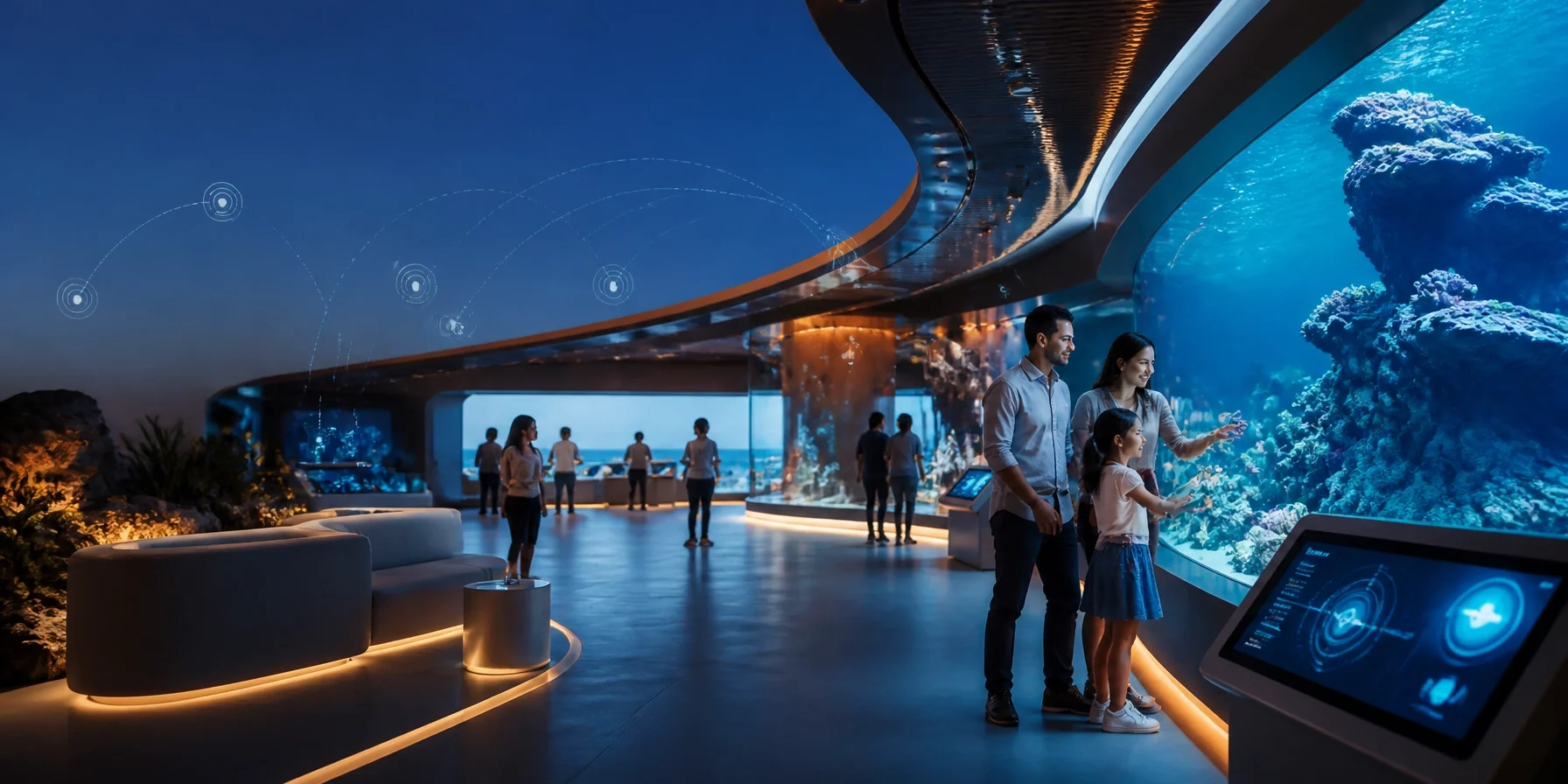
A touchscreen, projection wall, motion-sensitive installation, or touchless interface can help guests investigate animal behavior, ecosystems, migration, climate science, or conservation programs at their own pace.
The best interactive displays answer three questions:
- What should the visitor notice?
- What should the visitor learn?
- What should the visitor feel or do next?
For example, a penguin exhibit could allow visitors to explore migration routes, compare body temperatures, or see how changing ocean conditions affect food sources. A rainforest exhibit might use motion sensors to reveal nocturnal species as visitors move through the space.

This is where visual communication becomes especially important. The technology should support the story, not compete with the animals. Clear hierarchy, readable design, strong imagery, sound management, accessibility features, and intuitive prompts all influence whether visitors use an interactive or walk past it.
Industry examples show how this approach is developing. Zoo Media’s coverage has highlighted Mandai Exploria’s RFID-enabled multimedia installations, Shedd Aquarium’s immersive storytelling environments, and Shoushan Zoo’s use of high-speed connectivity and AI infrastructure. These examples demonstrate that smart venue technology can blend education, entertainment, and operational insight.
The lesson is simple: build experiences around a mission, not around a gadget.
3. Smart Signage Makes the Venue More Helpful: and More Valuable
Digital signage is one of the most visible elements of a smart venue.
Networked screens and kiosks can display:
- Live feeding and keeper-talk schedules
- Temporary exhibit closures
- Weather and safety updates
- Accessible routes
- Digital maps and wayfinding
- Conservation campaigns
- Animal facts and live habitat information
- Membership, donation, retail, and food-service messages
- Carefully selected sponsor content
Unlike printed signs, digital displays can be updated centrally. That means a marketing or operations team can change messaging across the campus without printing, installing, and removing physical materials.

Smart signage can also help distribute visitor traffic. If one area is crowded, signage can suggest alternative routes or promote nearby exhibits with shorter wait times. At Lincoln Park Zoo, industry coverage has described the use of outdoor kiosks and networked displays to decentralize orientation and improve circulation beyond the entrance.
For brand managers and media planners, this creates a more flexible sponsorship environment. A conservation partner might sponsor an interactive ocean exhibit. A regional business could support a wayfinding zone. A sustainability-focused brand might fund a water-quality education campaign.
The important distinction is relevance. Visitors are more likely to respond positively when sponsorship is connected to the venue’s mission and adds value to the experience.
4. The Digital Journey Starts Before the Visitor Arrives
A smart venue does not begin at the ticket gate.
Responsive website development can connect pre-visit planning with the on-site experience. Visitors may use a mobile website to purchase tickets, review accessibility information, plan a route, check event schedules, reserve dining, or learn about current exhibits.
Once on site, the same digital ecosystem can support:
- Mobile-friendly maps
- Show and feeding reminders
- Multilingual content
- Audio descriptions
- Sensory guides
- Digital scavenger hunts
- Conservation quizzes
- Membership prompts
- Post-visit follow-up
Research and industry examples increasingly point toward an end-to-end visitor journey. Accesso’s coverage of connected ticketing and visitor services describes how ticketing, retail, food and beverage, education, and post-visit communication can work together rather than operate as disconnected systems.
For zoos and aquariums, this creates a clearer path from first visit to repeat visit, membership, donation, or conservation advocacy.
For advertisers, it creates more meaningful touchpoints across the customer journey. Digital marketing can connect campaigns across search, social, website content, on-site displays, email, and connected TV. The physical venue becomes part of a broader media strategy: not an isolated placement.
A Practical Smart Venue Roadmap
Going fully connected overnight is unnecessary. A phased approach is usually more practical.
Phase 1: Establish the foundation
- Audit Wi-Fi and network coverage
- Identify critical habitats and equipment
- Review current signage, websites, ticketing, and visitor data
- Define privacy, cybersecurity, and accessibility requirements
- Bring animal care, education, operations, IT, and marketing teams into the planning process
Phase 2: Pilot one high-value area
Choose an exhibit or pathway with a clear challenge, such as:
- High traffic but low dwell time
- Frequent visitor confusion
- A complex conservation message
- Manual monitoring requirements
- Strong sponsorship potential
Measure the results before expanding.
Phase 3: Connect content and data
Use a central content management system to manage displays, schedules, campaigns, and emergency messaging. Connect approved sensor data where appropriate, and establish clear ownership for content updates.
Phase 4: Scale what works
Expand successful pilots across additional habitats, guest services, sponsorship zones, and digital marketing campaigns.
Track meaningful KPIs, including:
- Visitor satisfaction
- Dwell time
- Interactive engagement
- App or mobile-web usage
- Membership conversions
- Donation activity
- Equipment downtime
- Staff response times
- Sponsorship revenue
- Repeat visitation
Technology Should Serve the Mission
The smartest zoo or aquarium is not the one with the most screens. It is the one that uses technology thoughtfully.
Smart technology should make animal care more informed, staff workflows more efficient, visitor journeys more accessible, conservation stories more memorable, and partnerships more valuable.
That is the opportunity Zoo Media helps develop: connecting IoT, smart signage, interactive displays, digital marketing, website development, and visual communication into a practical smart venue strategy.
Ready to explore what connected technology could do for your zoo or aquarium?
- Visit www.dakdan.com
- Explore Zoo Media
- Review additional smart venue insights on ZooMediaNetwork.com
- Contact the AI Receptionist: +1 (323) 676-0621
- Connect with Dan Kost, CEO
#Motivation #Branding #Strategy #Marketing #AdvertisingAndMarketing #digitalmarketing #Innovation #Sports #SmartVenues #ZooTechnology #AquariumTechnology #IoT #DigitalSignage #VisualCommunication #WebsiteDevelopment #ConservationMarketing