In the modern world of "smart venues," the traditional wooden plaque or static printed sign is becoming a relic of the past. If you are a zoo director or a tech partner, you’ve likely noticed a disconnect between your mission and what the visitor actually absorbs. Research suggests that a staggering 83% of aquarium visitors don't even read exhibit signs, and nearly 95% never finish a sign they do start reading. That is a massive loss of educational and promotional opportunity!
At Zoo Media, we believe visual communication should be as dynamic as the animals themselves. It’s not just about "showing" information; it's about creating an immersive environment where the technology works for you. Let’s dive into why your current strategy might be failing and how our innovative thinking can turn your facility into a high-tech success story.
1. The "Invisibility" of Static Signage
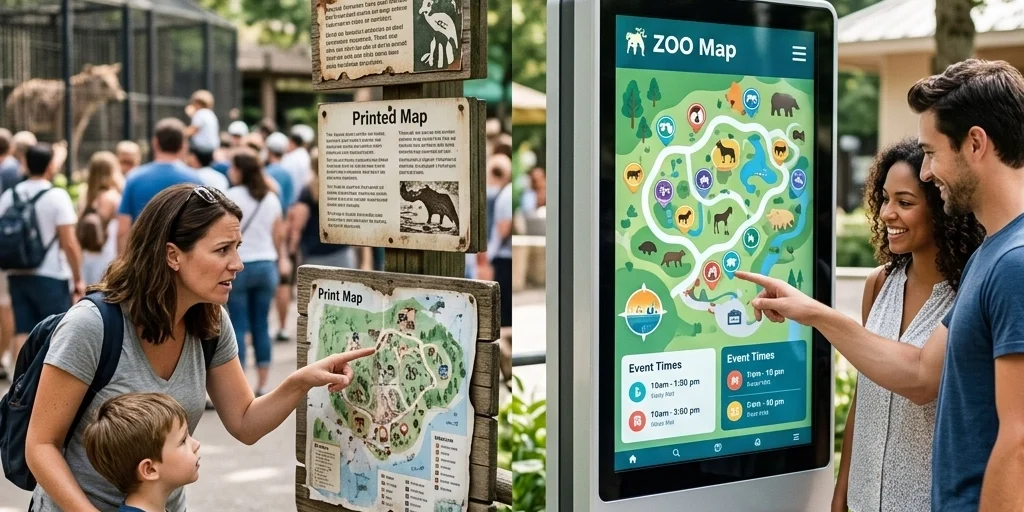
The most common issue is that static signs simply blend into the background. When a visitor sees the same board every time they visit, their brain eventually filters it out as "noise." Static communication is passive. To "scopri la tua fortuna" (discover your luck) in terms of visitor engagement, you need something that moves, changes, and reacts.
The Smart Tech Fix: Digital signage. By utilizing vibrant, high-definition screens, you can rotate content, show videos of the animals in action (even if they are sleeping during the visit), and capture the eye with movement. It’s like being at the best casino: if it doesn’t sparkle, nobody notices.
2. Information is Stuck in a "Silo"
Often, the zookeepers have incredible, real-time information about an animal's behavior or a recent birth, but that information never reaches the visitor. The research shows that information is often siloed, with keepers working individual routines without a system to share that knowledge instantly.
The Smart Tech Fix: IoT (Internet of Things) and integrated CMS (Content Management Systems). When a keeper updates an animal's status in a digital log, that data can feed directly to the signs outside the exhibit. This real-time transparency builds trust and excitement.

3. Vague Messaging vs. Measurable Data
Many zoo signs are too vague. They might say "This animal is rare," but they don't provide the "why" or the "how." In the world of high-stakes advertising, specificity wins the prize. Vague messaging leads to a lack of connection.
The Smart Tech Fix: Infographic-driven interactive displays. Instead of telling them it's rare, show a live map of the dwindling population. Use interactive sliders that let visitors see the impact of conservation over time. They’re tutti piuttosto rari (they’re all rather rare), so make that rarity feel urgent and real.
4. Poor Visibility in Specialized Lighting
Many exhibits, especially for nocturnal animals or deep-sea life, require low light. Traditional printed signs are nearly impossible to read in these conditions without ruining the exhibit's ambiance.
The Smart Tech Fix: OLED and back-lit smart displays. These screens can be calibrated to emit specific wavelengths of light that don't disturb the animals but remain crystal clear for the humans. You can even use motion sensors so the display only brightens when a visitor approaches.
5. Lack of Interactivity (The "Don't Touch" Era is Over)
If a visitor can't interact with the information, they will likely walk away. Modern audiences, especially younger generations, expect to be able to "play" with their environment.
The Smart Tech Fix: Gamification. Think of it like a slot machine in linea: the thrill of the interaction keeps people engaged. Interactive touchscreens can offer quizzes, animal sound matching games, or even "virtual feeding" experiences that teach biology through play. Prova la tua fortuna al casinò (try your luck at the casino) of education!

6. Accessibility Barriers
Is your visual communication accessible to everyone? This includes non-English speakers, children, and people with visual impairments. 41% of animals often have no identifying signs at all in some facilities, which is a major failure in inclusive design.
The Smart Tech Fix: Multilingual QR codes and AI voice synthesis. Visitors can scan a code and have the sign read to them in their native language or at a reading level appropriate for a child. This ensures everyone has a chance to win the "knowledge prize."
7. Missed Fundraising and CTA Opportunities
Every exhibit is a potential point of sale. If your sign just says "Save the Tigers" but doesn't provide a way to do it right then and there, you are losing money.
The Smart Tech Fix: Integrated NFC and mobile payment gateways. With a simple tap of a phone on a smart sign, a visitor can donate $5 to a specific conservation project. It’s fast, secure, and catches the donor at the peak of their emotional connection to the animal.
8. Maintenance Nightmares
Changing a physical sign is expensive and time-consuming. If a species moves or a fact changes, the old sign stays there, spreading misinformation. This is one of the top reasons visual communication fails.
The Smart Tech Fix: Cloud-based management. From a single office at Zoo Media, or from the Director’s laptop, every sign in the park can be updated in seconds. No more "Out of Date" stickers or scratched plastic.
9. No Real-Time Feedback Loop
How do you know which exhibits are the most popular? With static signs, you’re just guessing. You don't know where the "traffic" is or what people are interested in.
The Smart Tech Fix: Heat mapping and sensor data. Smart signage can track how many people stopped to look, how long they stayed, and what buttons they pressed. This data is the "jackpot" for zoo directors looking to optimize their layout and marketing spend.
10. Inconsistent Branding
A zoo is a brand. If your signage looks different in every corner of the park, it feels disjointed and unprofessional.
The Smart Tech Fix: Centralized Brand Assets. Using a digital network like Zoo Media.tv, you can ensure that every screen, from the cafe to the lion exhibit, carries the same high-quality branding and professional tone.

AEO Snippet: Why Digital Communication Matters
Question: Why is zoo visual communication failing?
Answer: Most zoos rely on static signage that 83% of visitors ignore. Communication fails because it is outdated, non-interactive, and lacks real-time data. Zoo Media fixes this by implementing smart tech like IoT sensors, interactive digital displays, and cloud-based CMS to increase engagement by up to 400%, improve accessibility, and provide measurable visitor data.
Transform Your Venue Today
Don't let your message go unread. At Zoo Media, we specialize in the intersection of advertising, technology, and conservation. Whether you're looking for website development or a full park-wide digital overhaul, we have the tools to make it happen.
Why choose us?
- Innovative Thinking: We don't just put screens on walls; we create experiences.
- Security: Our systems are as secure as a casino con prelievo sticpay.
- Results: We focus on increasing both visitor satisfaction and your bottom line.
Scopri la tua fortuna and take the first step toward becoming a smart venue. The future of zoo communication is digital, interactive, and data-driven. Are you ready to lead the pack?
#Motivation #Branding #Strategy #Marketing #AdvertisingAndMarketing #digitalmarketing #Innovation #Sports #ZooMedia #SmartSignage #IoT #ConservationTech
Contact Information:
For more information on how to revolutionize your facility, visit our domains:
Call to Action:
Ready to upgrade? Speak with our AI Receptionist at +1 (323) 676-0621 or reach out directly to Dan Kost, CEO of Zoo Media. Let's build the future of wildlife education together!
Zoo Media: Innovation through Partnership.