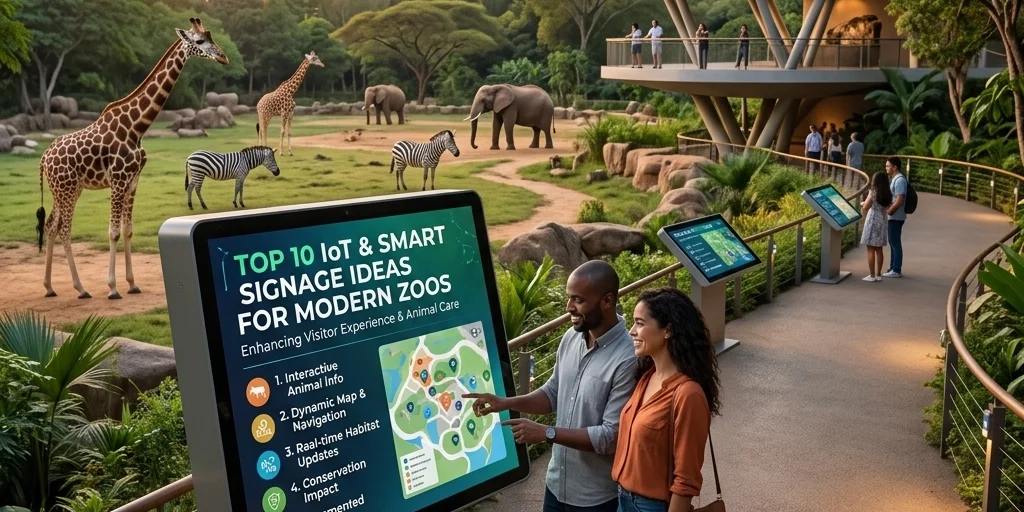
The landscape of wildlife conservation and public education is shifting rapidly. Gone are the days when a static wooden sign and a paper map were enough to satisfy a visitor’s curiosity. Today, we live in an era of "Smart Venues," where technology bridges the gap between humans and the natural world. For zoo and aquarium directors, staying ahead means embracing the Internet of Things (IoT) and smart signage to create immersive, educational, and high-revenue environments.
At Zoo Media, we specialize in transforming traditional spaces into high-tech hubs through innovative digital marketing and visual communication. If you are looking to elevate your guest experience, here are the top 10 IoT and smart signage ideas that are defining the modern zoo.
1. Interactive Digital Signage with "Hidden Camera" Feeds
One of the most common frustrations for zoo visitors is the "hidden animal syndrome." Animals, rightfully so, often prefer to nap in shaded, secluded corners of their enclosures. This is where smart signage saves the day. By integrating high-definition live feeds from "den cams" directly into your digital displays, you can show visitors what’s happening behind the scenes.
When the animal is active, the screen can display live footage. When they are sleeping, the system can automatically pivot to a "Highlight Reel" of the animal playing or eating from earlier that morning. This keeps guests engaged and significantly increases dwell time at each exhibit.
2. IoT Sensor Networks for Flow Optimization
Understanding how visitors move through your park is crucial for both safety and revenue. IoT sensors can be deployed to track foot traffic in real-time, creating "heat maps" of visitor density.
Why does this matter?
- Crowd Control: If the lion exhibit is reaching peak capacity, your digital wayfinding signs can automatically update to suggest a "Hidden Gem" exhibit on the other side of the park.
- Staffing: Deploy extra staff to concession stands or restrooms that are seeing a sudden surge in traffic.
- Marketing: Use the data to determine the best locations for new gift shops or snack carts based on high-dwell areas.

3. Contactless Smart Donation Kiosks
The way people give has changed. Carrying cash is becoming a rarity, especially among younger demographics. To maximize your conservation efforts, you need to remove the friction from the donation process.
Strategically placed smart kiosks at emotional high points: such as the exit of a rescued sea turtle exhibit: allow guests to make a contribution with a simple tap of their phone or watch. By integrating Apple Pay, Google Pay, and even cryptocurrency options, you can capture impulse generosity that would otherwise be lost. You can learn more about our integrated solutions at Zoo Media.
4. Augmented Reality (AR) Storytelling
Imagine a visitor pointing their smartphone at a digital sign and seeing a 3D digital overlay of a prehistoric ancestor of the animal they are currently viewing. Augmented Reality (AR) brings a layer of magic to the educational experience.
Through smart signage triggers, you can offer interactive narratives that allow visitors to "see" through the eyes of a predator or visualize the migration path of a bird across continents. This level of engagement turns a passive walk through the zoo into an active, unforgettable adventure.
5. AI-Powered Conservation Dashboards
Transparency builds trust. Modern donors want to see exactly how their money is being used. AI-powered conservation dashboards can be displayed on large-format screens throughout the park, pulling real-time data from the field.
These dashboards can show:
- The number of animals rehabilitated this year.
- Real-time funding levels for specific global projects.
- Live updates on protected acreage in the wild.
By showing the impact of your work through visual communication, you create a stronger bond with your visitors and encourage repeat visits and long-term support.
6. Real-Time Data Analytics and Dwell Time Tracking
Knowledge is power. By utilizing IoT-enabled displays, you can collect granular data on customer behavior. How long does the average family stay at the primate house? Do they read the "Fast Facts" or watch the video content?
This data allows for hyper-targeted website development and marketing strategies. If data shows that visitors spend 15 minutes at the polar bear exhibit but only 2 at the penguins, you can adjust your content strategy to boost engagement where it’s lacking.
7. WiFi-Enabled Mobile Engagement Stations
In a modern zoo, connectivity is no longer optional. WiFi-enabled stations do more than just provide internet; they act as a portal for guest engagement. When a guest connects to your network, you can offer a branded landing page that features:
- Interactive maps.
- Daily schedules for animal feedings.
- Exclusive mobile-only discounts for the gift shop.
These stations allow for opt-in marketing that respects privacy while providing the zoo with valuable business intelligence.

8. Interactive Touchscreen Exhibits with Quizzes and Games
Gamification is one of the most effective tools for education. Interactive touchscreens allow children and adults alike to test their knowledge.
- Quizzes: "Can you match the track to the animal?"
- Games: "Sort the diet of a giant panda."
- Language Options: With a single tap, the entire display can switch from English to Spanish or Mandarin, making your zoo accessible to international tourists.
9. Unified Content Management System (CMS)
Managing dozens or hundreds of screens across a massive park can be a nightmare without the right technology. A Unified CMS allows your team to update every screen in the park simultaneously.
Need to announce a "New Baby Gorilla" alert? One click, and every screen in the zoo displays the news. An emergency weather alert? The system can override all current content to provide safety instructions instantly. This level of control is essential for modern venue management.
10. Personalized Location-Based Digital Signage
Using Bluetooth Low Energy (BLE) beacons and IoT sensors, your signage can become personalized. If a visitor has your zoo app, the signage they walk past can greet them or remind them that the sea lion show they "favorited" starts in 10 minutes just around the corner.
This level of personalization creates a premium experience that makes every visitor feel like a VIP. It’s about more than just technology; it’s about creating a connection.

The ROI of Innovation
Investing in smart technology isn't just about looking modern; it's about the bottom line. Integrated IoT and smart signage systems have been shown to:
- Increase visitor dwell time by up to 30%.
- Boost on-site spending through targeted promotions.
- Significantly raise the volume of small-batch donations.
- Improve educational retention for students and families.
Modernizing your facility is a journey, and you don't have to walk it alone. From digital marketing to custom visual communication tools, the team at Zoo Media is here to help you navigate the future of wildlife attractions.
Summary of the Smart Zoo Experience
| Technology | Benefit |
|---|---|
| IoT Sensors | Optimizes crowd flow and staff deployment. |
| Smart Signage | Solves "hidden animal" issues with live feeds. |
| AR/VR | Increases educational engagement and "wow" factor. |
| Smart Kiosks | Drives frictionless donations and revenue. |
| Unified CMS | Ensures consistent branding and emergency readiness. |
Whether you are managing a local aquarium or a world-renowned zoological park, the integration of these technologies is the key to remaining relevant in a digital-first world. Don't let your park become a relic of the past: turn it into a venue of the future.
About Zoo Media
Zoo Media is a leader in the advertising and technology space, dedicated to the success of zoos and aquariums worldwide. We provide a full suite of services, including digital signage networks, website development, and strategic marketing. Our mission is to support conservation through innovation.
Connect with us:
- Website: www.zoomedia.us
- Corporate Network: www.zoomedianetwork.com
- Inquiries: www.dakdan.com
- AI Receptionist: +1 (323) 676-0621
- CEO: Dan Kost
#Motivation #Branding #Strategy #Marketing #AdvertisingAndMarketing #digitalmarketing #Innovation #Sports #ZooMedia #IoT #SmartSignage #ConservationTech #SmartVenues #VisualCommunication #DanKost #ZooMediaNetwork
This blog post is part of our daily series on the evolution of the zoo and travel industry. For more updates, visit Zoo Media News and Zoo Media Television Network.