In the competitive world of modern attractions, transforming your zoo or aquarium into a "smart venue" isn't just a luxury: it’s a necessity. At Zoo Media, we see it every day: directors and tech partners jumping into the digital deep end, only to find they’re swimming in circles. Technology should enhance the magic of the animal kingdom, not distract from it.
As Dan Kost, CEO of Zoo Media, often says, innovation is about more than just buying the newest gadget; it’s about how that gadget tells a story. Whether you are looking to boost visitor engagement or streamline your visual communication, avoiding these common pitfalls will save you time, money, and a lot of headaches.
The Direct Answer: What are the common mistakes in zoo smart technology?
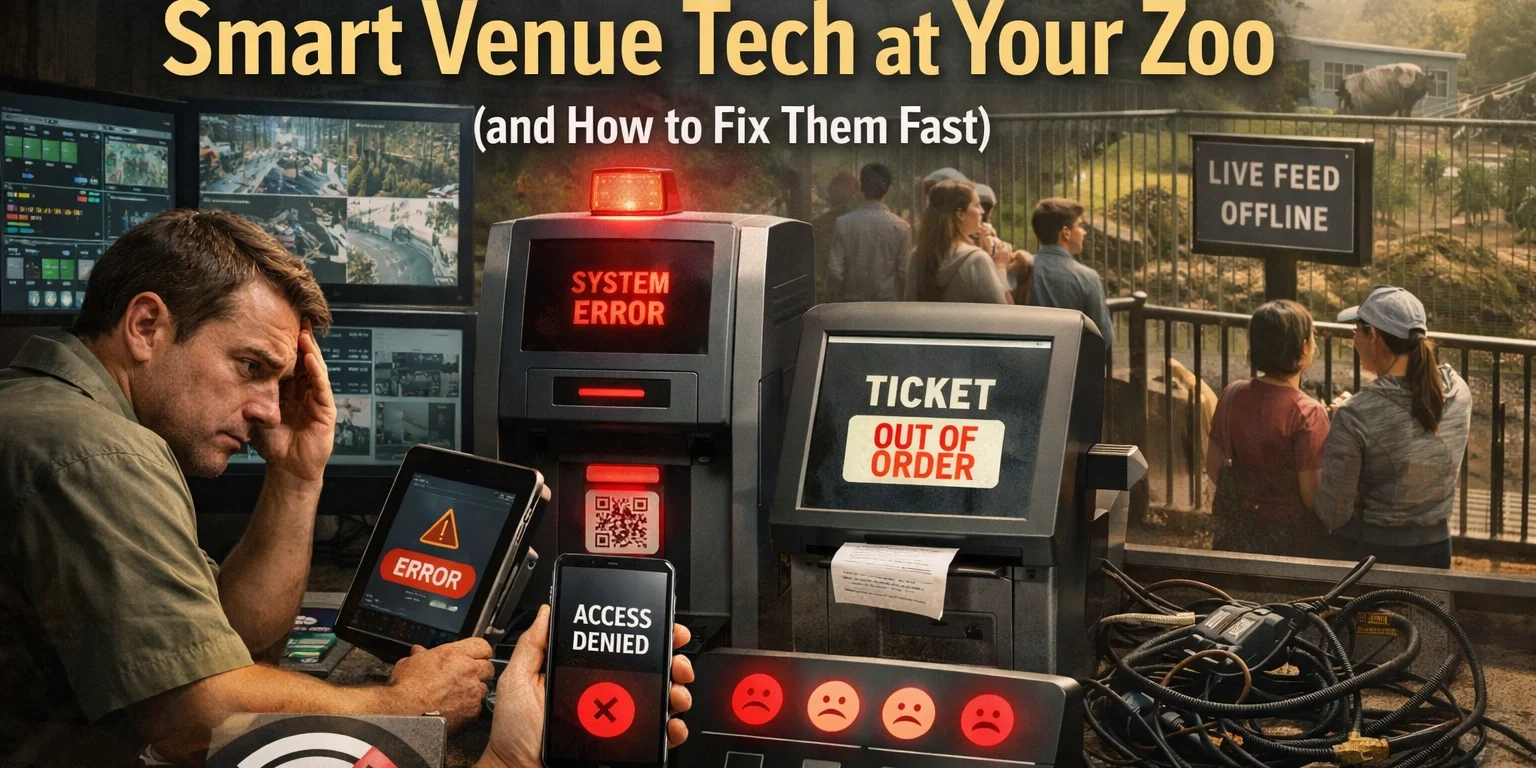
The most common mistakes in zoo smart technology implementation include information overload on displays, failing to integrate real-time IoT data, prioritizing hardware over a software strategy, neglecting animal welfare in interactive designs, poor physical placement of screens, omitting a digital layer in master plans, and lack of cross-channel interactivity. Fix these by adopting a visitor-centric "digital bridge" approach that prioritizes layered content and seamless integration.
1. The "Encyclopedia" Trap: Information Overload
We get it. You have decades of incredible conservation data and species history. You want to share every biological fact about the Sumatran tiger. But dumping a textbook onto a 55-inch touchscreen is a recipe for "TL;DR" (Too Long; Didn't Read). Visitors are there for an experience, not a research project.
The Fix: Use progressive disclosure. Layer your content using intuitive UI design. Start with a catchy headline and a stunning visual. If a visitor is intrigued, let them tap to "Dive Deeper." This way, the information is accessible to everyone, from a curious toddler to a PhD student. Keep it punchy, keep it visual, and remember that sometimes, less is more.
2. Treating Digital Screens Like Static Posters
One of the biggest missed opportunities is ignoring real-time data. If your digital sign says the sea lion presentation starts at 2:00 PM, but it was moved to 2:30 PM due to a maintenance issue, and the sign doesn't update: you’ve lost the visitor's trust. Many venues treat smart signage as "TVs on walls" rather than dynamic communication hubs.
The Fix: Integrate IoT (Internet of Things) sensors and your internal database. Your displays should update dynamically with weather alerts, animal activity, and even crowd density maps. Imagine a sign that says, "It’s feeding time at the Penguin Coast: head there now for the best view!" That is the power of a true smart venue.

3. Hardware-First, Strategy-Second
It’s easy to get seduced by 4K transparent OLEDs or giant LED walls. But if you spend your entire budget on the "box" and $0 on what goes inside the box, you’re in trouble. A beautiful screen running a clunky, non-responsive website is a waste of your investment.
The Fix: Start with a digital strategy. Focus on website development and content creation that is optimized specifically for the hardware environment. The technology should "disappear" so that the storytelling takes center stage. At Zoo Media, we believe the software is the soul of the machine. Don't let your "soul" be an afterthought.
4. Neglecting Animal Welfare in Interactive Design
In the rush to be "interactive," some zoos implement tech that encourages poor visitor behavior. Screens that encourage kids to tap on glass or make loud noises to "activate" an animal's digital bio can create stress for the real animals nearby.
The Fix: Design your interactive experiences as a "digital bridge." Use dedicated kiosks located away from sensitive habitats. Use thermal cameras or hydrophone recordings (sound from underwater) to let visitors "see" and "hear" animals without disturbing them. You can even create interactive games that teach conservation while keeping the noise levels down.
5. The "Sunlight and Height" Oversight
It sounds simple, but you’d be surprised how many screens are installed under skylights where the glare makes them unreadable, or mounted at a height where a 6-year-old can’t reach the buttons. If they can’t see it or touch it, they won't use it.
The Fix: Conduct a thorough environmental design audit. Consider light levels throughout the day and ensure ADA accessibility. Sometimes, simply rotating a screen 45 degrees or adding a specialized anti-glare coating can increase engagement by over 40%. "Try your luck" with a different angle before committing to a permanent mount!

6. Missing the "Digital Layer" in Master Plans
Many zoos spend years and millions of dollars on physical master plans: pathways, enclosures, and cafes: while completely ignoring the digital visitor journey. They think they can "add the tech later." This leads to messy wiring, poor Wi-Fi coverage, and missed opportunities for data collection.
The Fix: Every physical pathway needs a digital counterpart. Incorporate hardware-free indoor/outdoor wayfinding and operational heat mapping from day one. When you build with a "digital-first" mindset, you ensure your facility isn't outdated by the time the ribbon is cut.
7. Fragmented Messaging Across Channels
If your Instagram says one thing, your website says another, and the kiosk at the front gate says a third thing, your brand loses its punch. Passive content that doesn't invite the visitor to do something is a missed conversion.
The Fix: Create a unified "Brand Bible" for all digital touchpoints. Implement interactive elements like digital kiosks for visitor voting on conservation projects or augmented reality (AR) overlays. Ensure your digital marketing efforts flow seamlessly from the smartphone in the visitor's pocket to the 80-inch screen in the lobby.
Bonus Tip: Gamify the Experience
People love to win. Whether it’s a badge for visiting all the exhibits or a high score on a conservation quiz, gamification drives engagement. Don't be afraid to take inspiration from the world of online gaming to keep your visitors coming back. While we aren't running a casino, the psychology of "winning" and "rewards" is a powerful tool for education.
Why Zoo Media?
At Zoo Media, we don't just sell screens; we build ecosystems. Our innovative thinking and cutting-edge technology transform traditional zoos into world-class smart venues. We understand the unique challenges of the advertising and attraction industry, and we are here to help you navigate the digital jungle.
Discover your fortune in the digital age by partnering with a team that knows both the tech and the animals. Let's make your zoo the smartest venue on the map.
#Motivation #Branding #Strategy #Marketing #AdvertisingAndMarketing #digitalmarketing #Innovation #Sports
Contact Us Today
Ready to fix your tech mistakes and start engaging your visitors like never before? Reach out to the experts.
Zoo Media Network
www.zoomedia.us | www.dakdan.com
Dan Kost, CEO
AI Receptionist: +1 (323) 676-0621
Check out our other divisions for specialized support:
Experience the future of conservation. Experience Zoo Media.