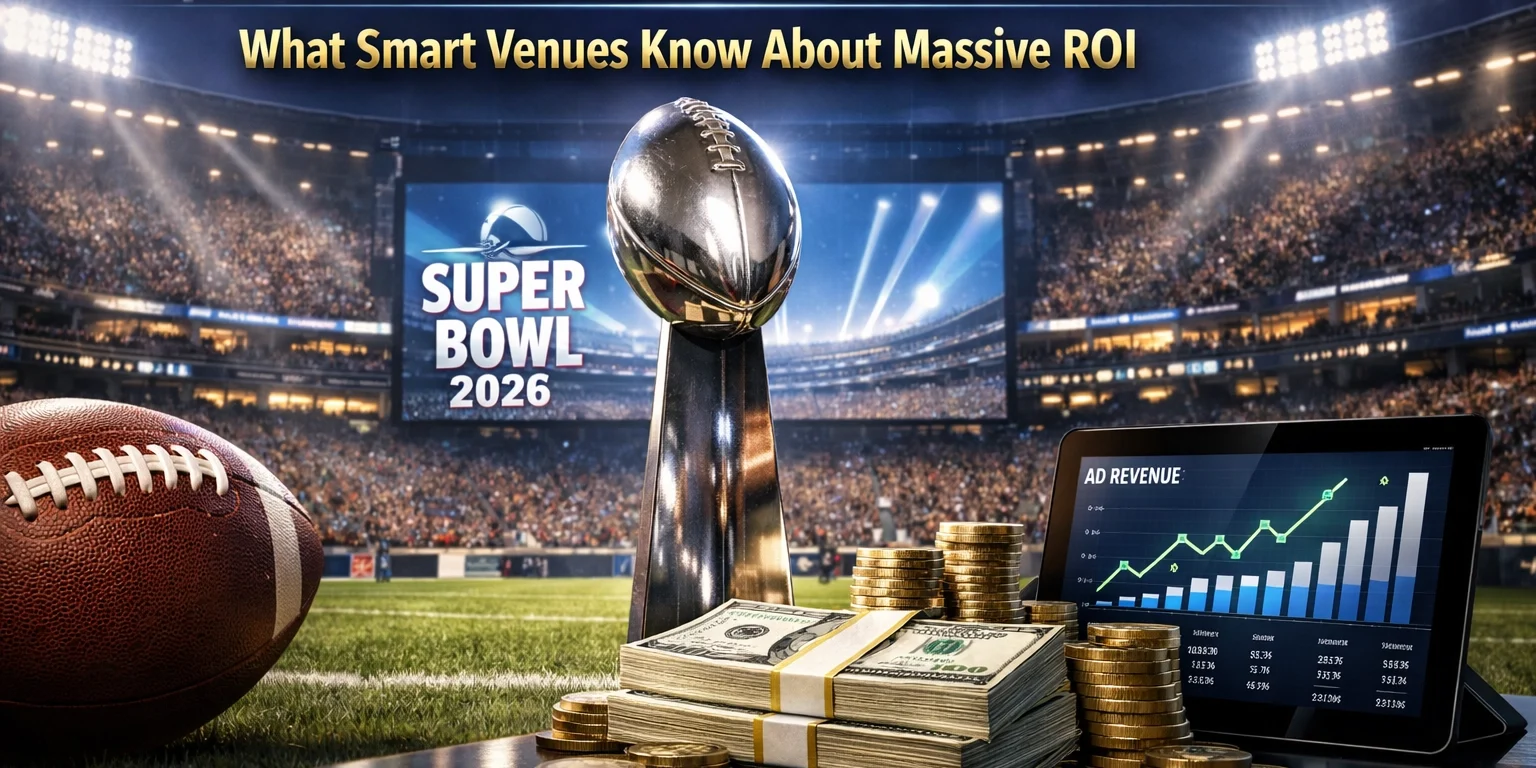
Let's talk about the elephant in the room: $8 million for a 30-second Super Bowl commercial. And that's just the baseline. Premium placements? We're talking $10 million or more.
For most venues, zoos, aquariums, and even mid-sized brands, that price tag isn't just steep, it's impossible. But here's what smart venue directors and marketing teams are realizing in 2026: the real advertising gold isn't about buying that one expensive TV spot. It's about understanding why the Super Bowl works and applying those same principles to your own captive audiences.
The Super Bowl Effect: What Makes It Work
Before we dive into how smart venues are winning at advertising ROI, let's break down what makes Super Bowl advertising so powerful. It's not magic, it's mathematics.
The Super Bowl delivers 123 million engaged viewers in one concentrated window. That's attention, scale, and cultural relevance all rolled into one package. But here's the secret that venue operators are starting to understand: you already have that same captive audience dynamic.
When families visit your zoo or aquarium, they're not scrolling through their phones (well, not as much). They're present. They're engaged. They're in a positive emotional state. Sound familiar? That's exactly what Super Bowl advertisers pay millions to achieve.
The Three-Phase Campaign Approach (And How Venues Can Use It)
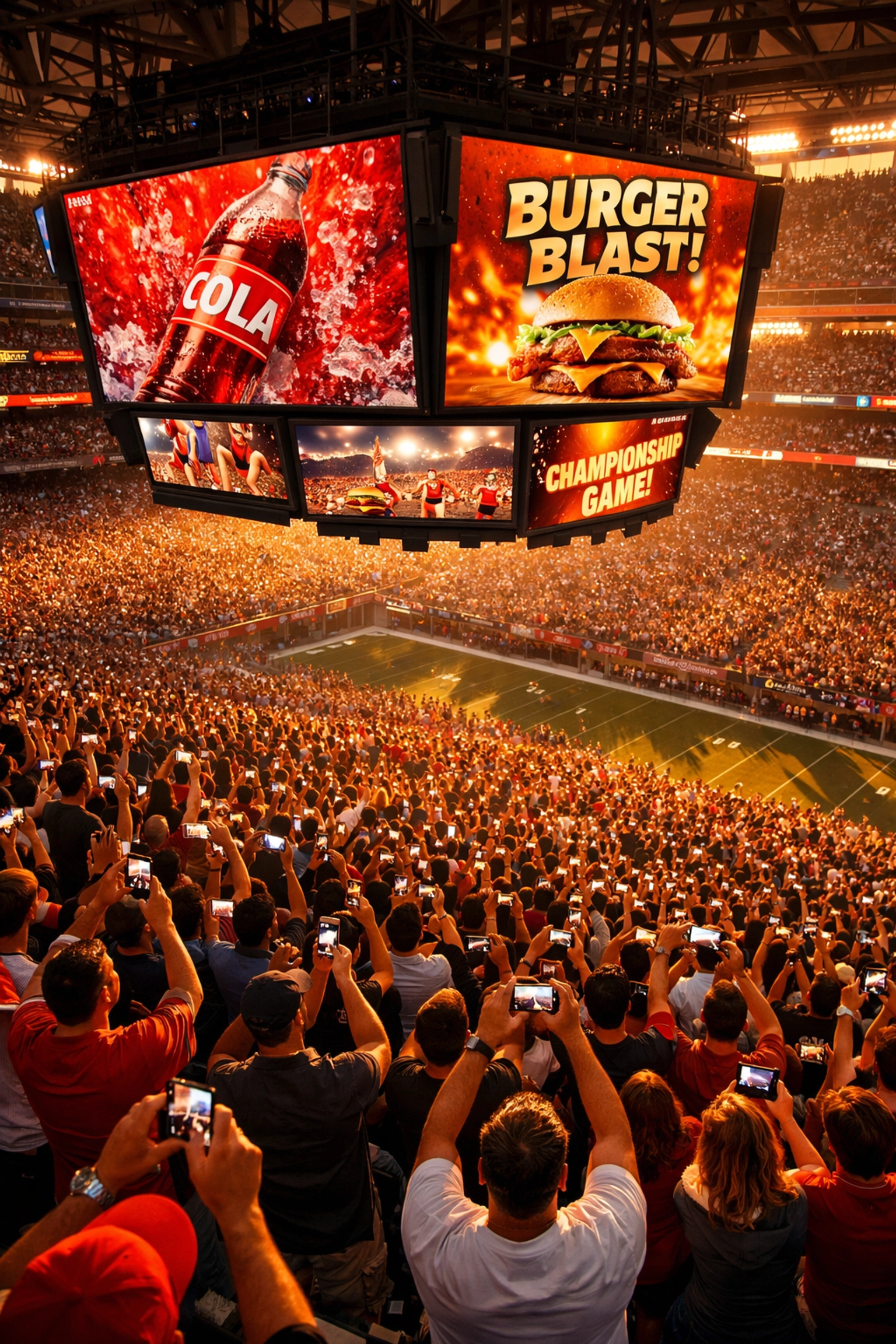
Super Bowl advertisers in 2026 aren't just buying a 30-second spot anymore. They're running sophisticated three-phase campaigns that maximize every dollar.
Phase 1: Pre-Game Build-Up (Weeks Before)
Top brands start building awareness 3-4 weeks before the big game through social media, influencer partnerships, and teaser content. The cost-per-click during this phase is 16-30% more efficient than during Super Bowl week itself.
For venues, this translates to: promote your on-site advertising opportunities before peak season. Get sponsors lined up early, create anticipation through your digital channels, and prepare your jumbotrons and digital billboard networks for maximum impact.
Phase 2: Game Day Execution
This is where real-time optimization happens. Brands monitor trending conversations, jump on viral moments, and adjust messaging on the fly. The highest visibility and engagement happen right here.
In venue terms: your peak visitation days ARE your Super Bowl. Summer weekends, spring break, holiday periods: these are when your digital advertising networks should be running at full capacity with dynamic, engaging content.
Phase 3: Post-Game Follow-Through
Smart advertisers don't stop when the game ends. They retarget audiences, extend conversations, and build long-term brand relationships.
Venues need the same approach: capture visitor data, follow up through email campaigns, and keep sponsors engaged beyond their initial campaign period.
The Authenticity Revolution
Here's something that changed the game in 2026: polished, overly-produced ads are falling flat. Audiences respond to authenticity over polish.
The top-performing Super Bowl ads this year: like AI.com with 9.1X median engagement: succeeded because they felt genuine. User-generated content, behind-the-scenes footage, and real stories beat fancy CGI every time.
This is HUGE for venues. You don't need a Hollywood production budget to create compelling advertising content. What you need is:
- Real visitor reactions and experiences
- Genuine conservation stories
- Behind-the-scenes animal care moments
- Staff and volunteer testimonials
Your jumbotrons and digital billboards can showcase authentic content that resonates deeper than any slick corporate video. And that authenticity translates directly to better sponsor ROI.
The Influencer Partnership Play
Carl's Jr. crushed it this year with influencer Alix Earle, achieving 91% follower growth and 47% engagement rates. Influencer-driven campaigns on social platforms achieved up to 70% cost efficiency compared to traditional advertising.
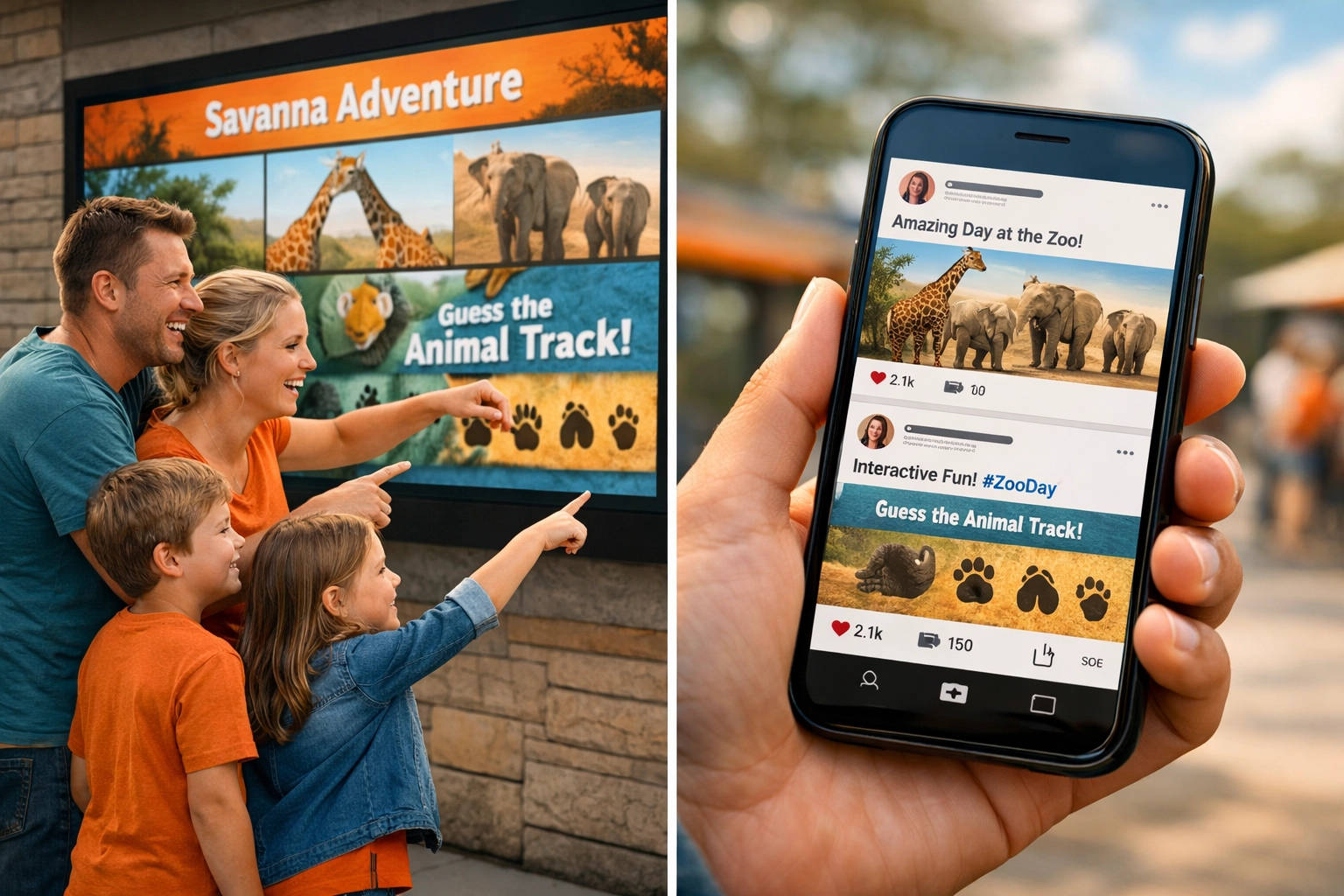
Here's how smart venues are applying this lesson: partner with conservation influencers, family lifestyle creators, and local personalities to amplify your advertising reach. When sponsors see that their message is being shared by trusted voices with engaged audiences, the ROI conversation changes completely.
And here's where Zoo Media's approach becomes game-changing. Check out this video that breaks down how innovative venue advertising actually works:
Watch: Zoo Media's Innovative Advertising Solutions
The video shows exactly how venues can leverage modern technology: from digital billboard networks to interactive jumbotrons: to create advertising experiences that rival major sporting events in terms of audience engagement and sponsor value.
Social Media: The Cost-Efficiency Champion
Want to know something wild? A month-long TikTok campaign costs less than a single second of Super Bowl television airtime.
That's not a typo. One second.
This is why the smartest venue operators are building robust social media strategies that complement their on-site advertising networks. Your physical billboards and jumbotrons create awareness and impact during visits. Your social channels extend that reach, create shareability, and give sponsors multi-platform presence.
The combination is powerful: physical + digital, on-site + online, momentary + memorable.
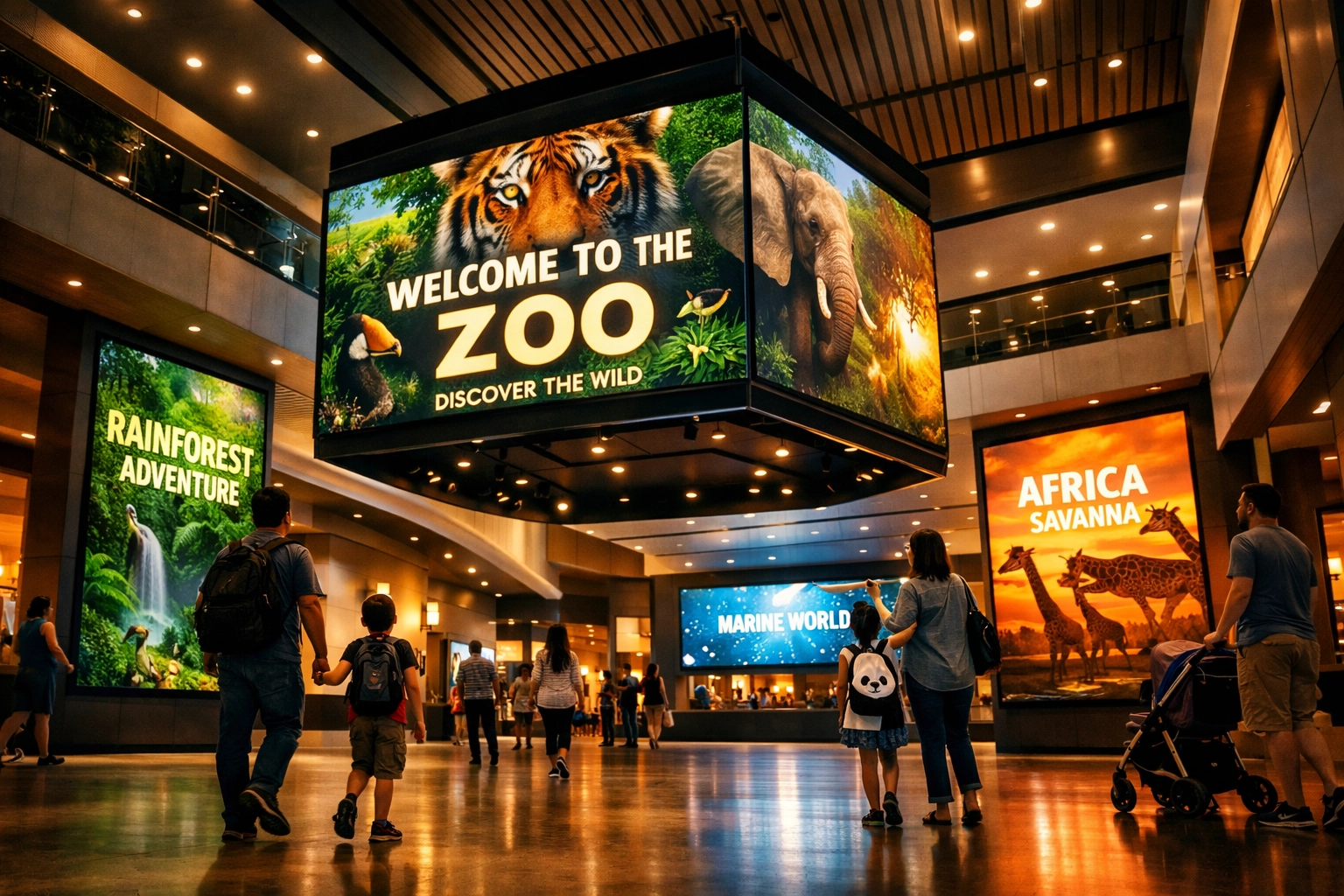
Nostalgia Works (And Venues Have It In Spades)
Nostalgia-driven messaging increased 7% in Super Bowl 2026 ads, and there's a reason: emotional connection drives ROI.
Venues are sitting on goldmines of nostalgia potential. Multi-generational family visits, childhood memories of first animal encounters, conservation stories that span decades: this emotional currency is advertising gold.
Smart sponsors know this. They want to associate their brands with these positive, lasting memories. When you can offer advertising placements that tap into that emotional reservoir: whether through digital billboards near popular exhibits or jumbotron content during feeding times: you're offering something TV commercials can't replicate.
The Real ROI Secret: Captive + Engaged Audiences
Let's bring this full circle. Super Bowl advertisers pay $8 million because they're reaching 123 million people who are:
- Actively watching (not passively consuming)
- In a positive emotional state
- Talking about what they're seeing
- Sharing content in real-time
Your venue delivers the exact same dynamic on a smaller but more sustainable scale:
- Visitors are actively exploring (not distracted)
- They're in a positive, recreational mindset
- They're discussing exhibits and experiences
- They're taking photos and sharing moments
The difference? You can offer this to sponsors every single operating day, not just once a year.
Technology Makes The Difference
Here's where venues often miss opportunities: outdated advertising infrastructure.
Static billboards from 2015. Basic jumbotrons that only show animal facts. Limited digital capabilities.
Meanwhile, Super Bowl advertisers are using real-time optimization, programmatic buying, and dynamic creative. The technology gap creates an ROI gap.
This is exactly what Zoo Media helps solve. Modern digital advertising networks for venues aren't just screens: they're strategic platforms that can:
- Rotate multiple sponsor messages throughout the day
- Adjust content based on time, weather, and crowd size
- Track engagement and provide sponsors with real metrics
- Integrate with mobile apps and social media campaigns
- Create interactive experiences that visitors actually remember
What Smart Venues Are Doing Right Now
The venues winning at advertising ROI in 2026 are:
Thinking Like Media Companies: They're not just running facilities: they're operating media networks with valuable audience reach.
Investing in Technology: Modern digital billboard systems and jumbotron networks that can deliver dynamic, data-driven content.
Building Multi-Platform Strategies: Combining on-site advertising with social media amplification and influencer partnerships.
Focusing on Authenticity: Creating genuine, story-driven content that resonates emotionally.
Measuring Everything: Providing sponsors with real metrics: not just "we had 500,000 visitors" but detailed engagement data.
Pricing Based on Value: Moving away from arbitrary sponsorship packages to ROI-based pricing that reflects true advertising value.

The Bottom Line
You don't need an $8 million budget to create Super Bowl-level advertising impact. You need the right strategy, the right technology, and the right mindset.
Every venue with consistent visitation is sitting on an undermonetized advertising goldmine. The question isn't whether you have valuable advertising inventory: you absolutely do. The question is whether you're leveraging it effectively.
Smart venues in 2026 understand that they're not competing with the Super Bowl for ad dollars. They're offering something complementary and, in many ways, more valuable: sustained, repeated, highly engaged audience exposure in environments where people are primed to make positive brand associations.
That's not just good advertising. That's smart business.
Ready to unlock your venue's advertising potential? Discover how Zoo Media's innovative technology solutions can transform your visitor experience and sponsor ROI. Visit zoomedia.us or call our AI Receptionist at +1 (323) 676-0621 to speak with CEO Dan Kost and the team about building your venue's modern advertising network.
#SuperBowl2026 #VenueAdvertising #SmartVenues #AdvertisingROI #DigitalMarketing #SportsMarketing #Innovation #ZooMedia #MarketingStrategy