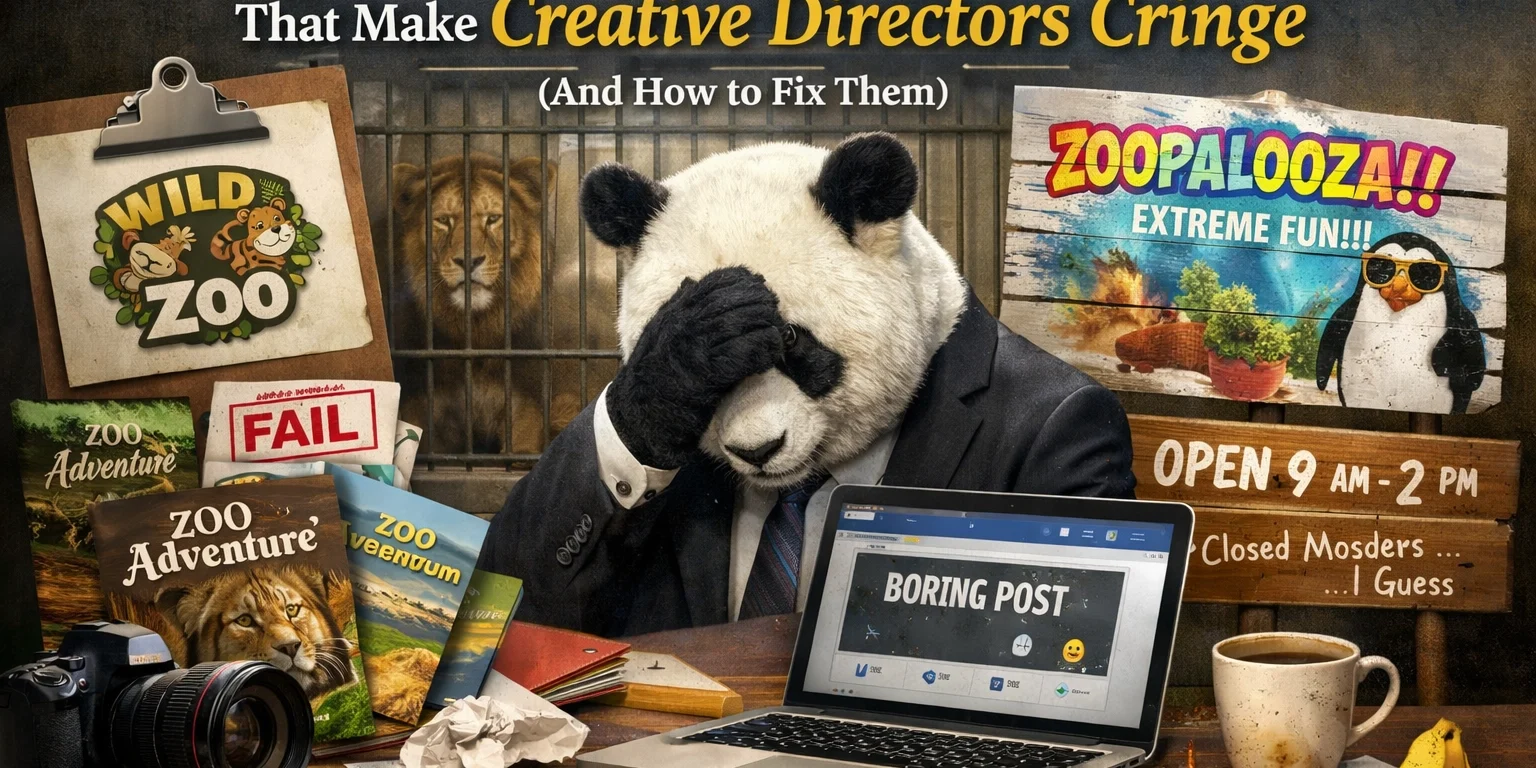
Look, we've all seen them. Those zoo brands that make you wonder if anyone on the creative team has ever actually visited a zoo: or worked with a professional branding agency for that matter. As creative directors and brand managers, we know the difference between a roaring brand identity and one that's more of a whimper.
Let's dive into the seven most common zoo branding mistakes that make creative professionals cringe, and more importantly, how to fix them before your stakeholders start asking uncomfortable questions.
1. The "Every Animal Ever" Logo Syndrome
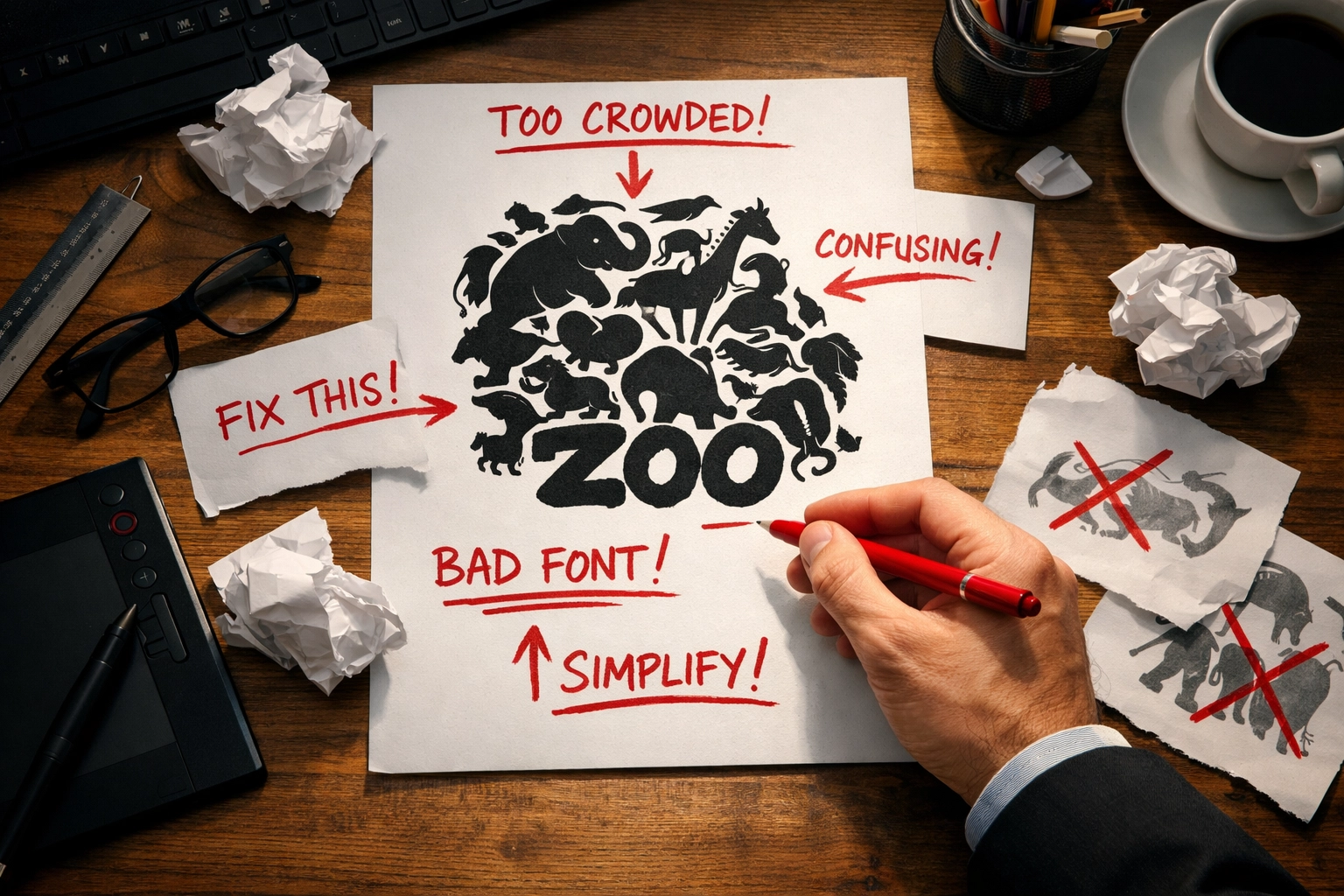
You know the one. It's a logo that tries to cram an elephant, giraffe, lion, penguin, and probably a butterfly into one chaotic visual mess. The thinking goes: "We have lots of animals, so let's show them all!"
Why It's Cringe-Worthy: This approach violates every principle of effective visual communication. Logos need to be scalable, memorable, and work across multiple touchpoints: from billboards to mobile apps. A cluttered logo fails at all three.
The Fix: Choose one strong visual element that represents your zoo's unique identity. Is your conservation program focused on a specific species? Do you have a geographical advantage? Your corporate identity should communicate a single, powerful idea. Think about how the best branding agencies approach this: they distill complex organizations into simple, memorable marks.
2. Typography That Screams "2003 Called"
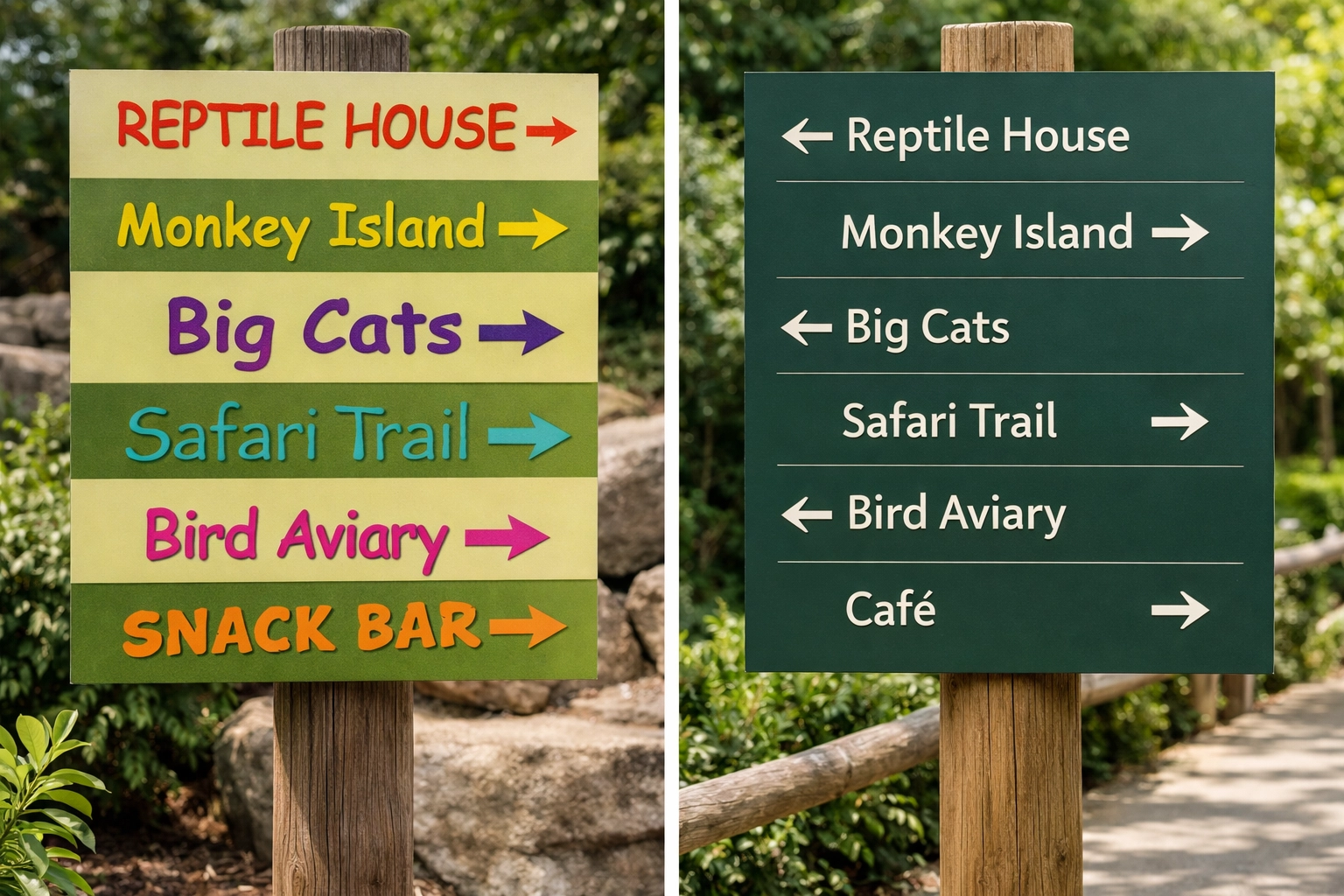
Comic Sans for kids' areas. Papyrus for the reptile house. That generic "safari" font everywhere else. If your typography choices could be described as "Microsoft Word default templates," we have a problem.
Why Creative Directors Cringe: Typography is the voice of your visual identity. Outdated or inappropriate typefaces communicate that your organization isn't keeping pace with modern expectations. In a world where visitor experience extends to Instagram posts and mobile apps, your font choices matter more than ever.
The Fix: Invest in a proper typeface system. Work with creative services professionals to select fonts that balance personality with professionalism. Your primary typeface should be distinctive but readable across all sizes and applications. Pair it with complementary fonts for hierarchy and visual interest: but keep the system simple and consistent.
3. Color Palettes Borrowed From a Jungle Juice Cocktail
Neon green, electric blue, hot pink, and sunshine yellow all fighting for attention? That's not a brand palette: that's a migraine waiting to happen.
Why It Fails: While zoos are vibrant places, your brand colors need strategic thinking. Color psychology influences visitor perception, and a chaotic palette suggests a disorganized experience. Professional branding agencies know that restrained palettes often make stronger statements.
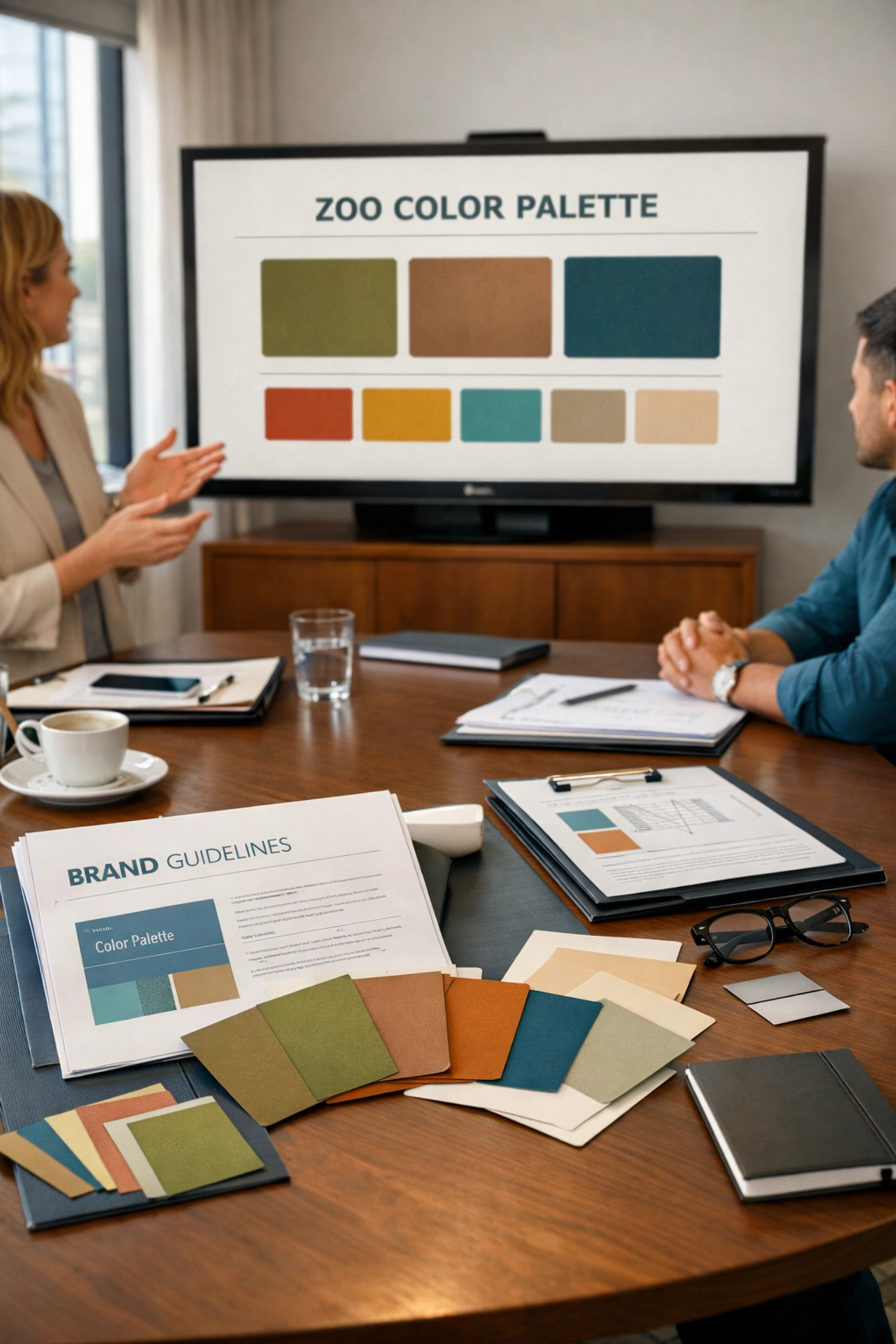
The Fix: Develop a cohesive color system with 2-3 primary colors and 2-3 accent colors. Consider your zoo's unique positioning: are you focused on conservation (earth tones), marine life (blues and teals), or children's education (brighter but still sophisticated hues)? Your colors should work harmoniously across signage, print materials, and digital platforms.
4. Inconsistent Brand Application Across Touchpoints
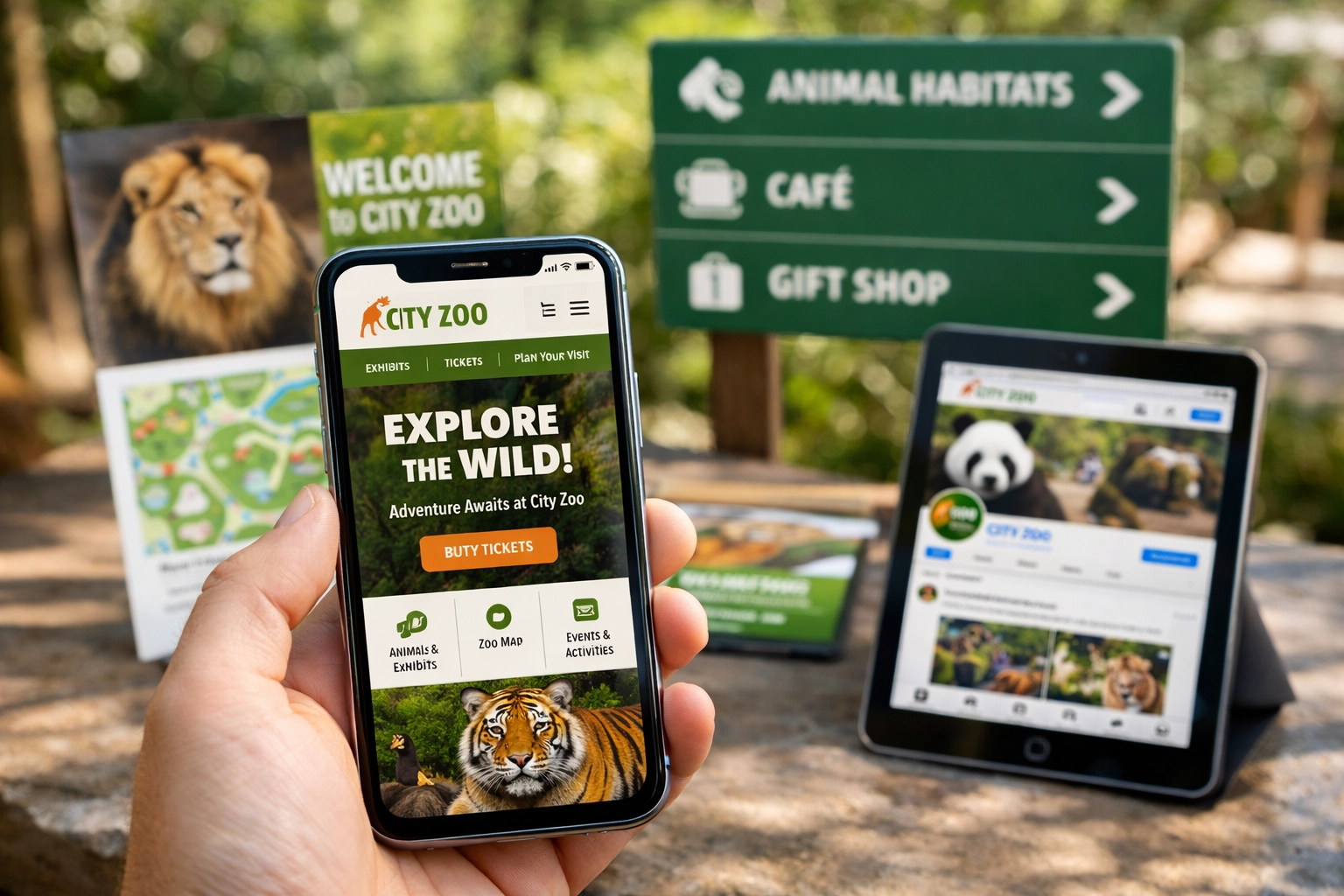
The website looks like it was designed in a different decade than your printed brochures. Your social media graphics use completely different styles than your wayfinding signage. Your email newsletters? Don't even get us started.
Why It's a Problem: Brand inconsistency erodes trust and recognition. Visitors should experience a seamless visual identity whether they're planning their trip online, navigating your grounds, or sharing their experience on social media.
The Fix: Create comprehensive brand guidelines that cover every conceivable application. This isn't just a logo sheet: it's a living document that shows exactly how your brand should appear across print, digital, environmental graphics, merchandise, and more. If you're working with advertising agencies or creative partners, these guidelines ensure everyone's working from the same playbook.
5. Ignoring the Digital-First Reality
Your printed map is beautiful, but your mobile experience is an afterthought. Your Instagram feed looks like it's managed by someone's nephew. Your website requires three clicks to find admission prices.
Why Creative Directors Facepalm: We're in 2026. The visitor journey starts on mobile devices, and your digital brand expression matters as much: if not more: than your physical presence. A gorgeous entrance sign won't save you if your Google Business listing looks abandoned.
The Fix: Approach your brand as a digital-first system. Ensure your visual identity works beautifully at small sizes and on screens. Develop social media templates that maintain brand consistency while allowing flexibility for timely content. Your website should be the hero of your brand ecosystem, not an afterthought. Partner with creative services teams who understand responsive design and user experience.
6. Generic Messaging That Could Apply to Any Zoo
"Come see amazing animals!" "Fun for the whole family!" "Educational experiences!" If your brand messaging could be copied and pasted onto any zoo's website without changing a word, you've got a differentiation problem.
Why It Matters: In a competitive entertainment landscape, generic messaging is invisible messaging. Your brand needs to communicate what makes YOUR zoo worth visiting over alternatives: whether that's other zoos, theme parks, or staying home and streaming nature documentaries.
The Fix: Dig deep into what makes your institution unique. Maybe it's your conservation partnerships, your breeding programs, your geographic location, or your educational approach. Develop a brand voice that reflects this positioning and resonates with your target audiences. Work with branding agencies who understand audience segmentation and can help craft messaging that converts browsers into visitors.
7. Forgetting That Branding Is About Experience, Not Just Visuals
You've got a pretty logo, nice colors, and consistent fonts. Great! But if visitors arrive to find faded signage, confusing wayfinding, unmotivated staff, and dirty facilities, your beautiful brand system means nothing.
Why This Is The Ultimate Cringe: Brand managers and creative directors understand that corporate identity extends beyond visual elements. Your brand is the sum total of every touchpoint, interaction, and experience. A disconnect between brand promise and brand delivery is the fastest way to erode trust.
The Fix: Treat your brand as a holistic system that encompasses visual identity, messaging, customer service, facilities, and culture. Train staff on brand values. Ensure maintenance standards reflect your brand positioning. Create internal guidelines that help everyone: from directors to seasonal staff: understand their role in delivering the brand promise. This is where strategic partnerships with comprehensive creative services providers can help align every aspect of your operation.
Making Your Zoo Brand Roar
Here's the truth: fixing these mistakes isn't about following trends or copying what other institutions are doing. It's about understanding your unique value proposition and expressing it consistently across every touchpoint.
The best zoo brands tell compelling stories. They position their institutions as essential community resources, conservation leaders, and unforgettable experience destinations. They understand that modern branding requires expertise across visual communication, digital strategy, and experience design.
Whether you're launching a rebrand, refreshing an existing identity, or just looking to tighten up your brand applications, the investment in professional creative services pays dividends in visitor engagement, community support, and long-term sustainability.
Ready to Elevate Your Zoo's Brand?
At Zoo Media, we specialize in helping zoos and aquariums develop brand identities that resonate with modern audiences while honoring their conservation missions. Our team understands the unique challenges of institutional branding and the importance of creating systems that work across diverse applications.
Don't let your brand become another cringe-worthy example. Let's create something that makes creative directors stop and take notice: for all the right reasons.
Contact us today:
Visit zoomedia.us to learn how we can help transform your brand identity.
Call our AI Receptionist at +1 (323) 676-0621
Connect with Dan Kost, CEO, to discuss your branding challenges.
For more insights on creative branding, digital marketing strategies, and visual communication, explore our resources at www.dakdan.com.
#Branding #Strategy #Marketing #AdvertisingAndMarketing #digitalmarketing #Innovation #CreativeServices #VisualIdentity #ZooBranding #BrandManagement