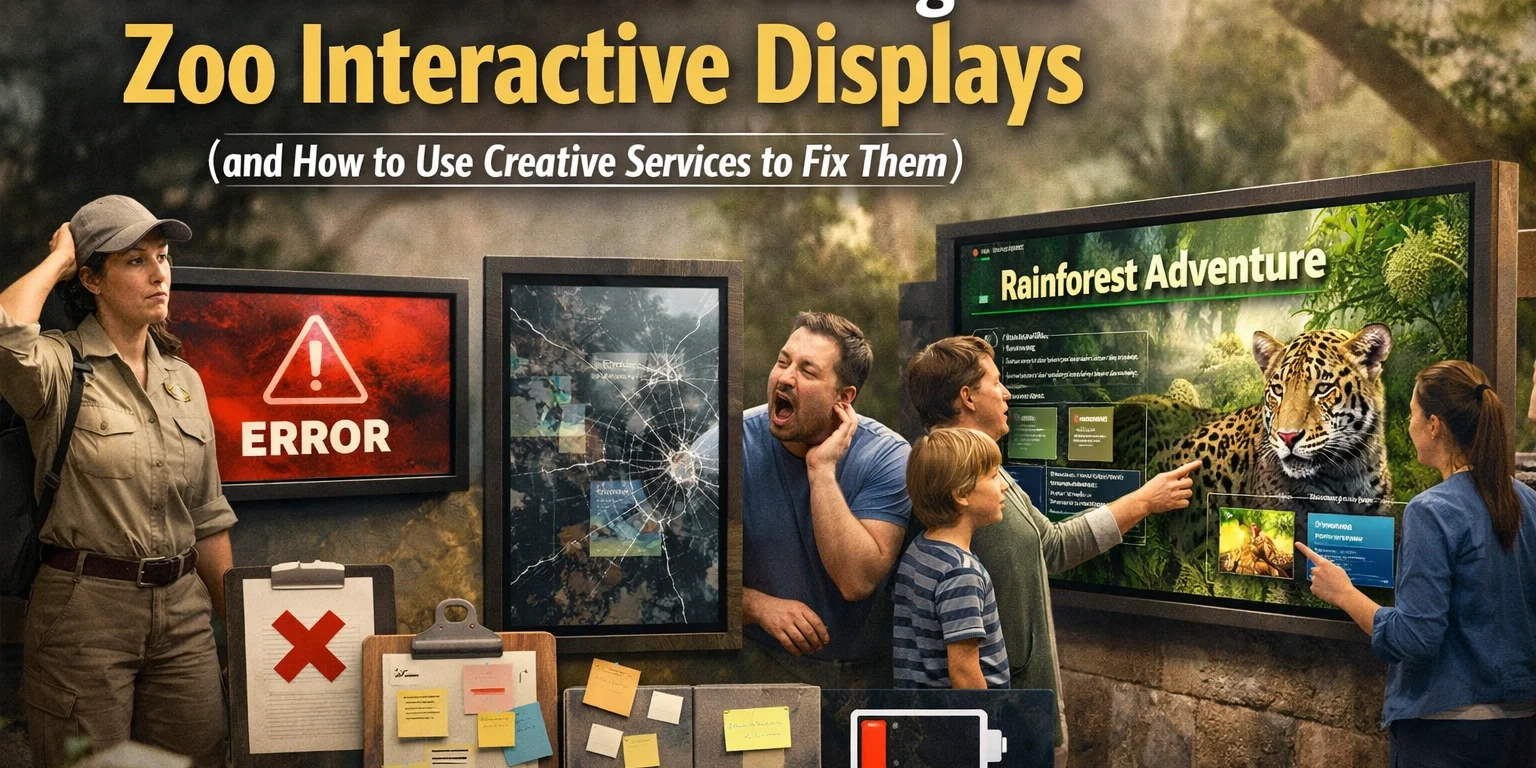
Let’s be real for a second: we’ve all been there. You walk through a world-class aquarium or a sprawling zoo, and you see it: a high-tech interactive display that’s either frozen, showing a "Page Not Found" error, or so confusing that kids are just banging on the glass in frustration. It’s a missed opportunity, and honestly, it’s a bit of a bummer for the guest experience.
At Zoo Media, we live and breathe this stuff. As the CEO, I’ve seen the good, the bad, and the "what were they thinking?" of digital signage. Our mission is to transform these venues into smart environments through IoT, smart signage, and cutting-edge creative services. But to get to the "smart" part, we first have to address the "oops" part.
Here are the seven most common mistakes I see zoo and aquarium directors making with their interactive displays: and how our creative services team can help you turn those blunders into big wins.
1. The "Information Overload" Trap
We get it. You have decades of conservation data, species history, and biological facts that you want to share. But dumping all of that into a single interactive screen is a recipe for a "TL;DR" (Too Long; Didn't Read) moment. Research shows that visitors typically don't read traditional signage if it's too dense.
The Fix: Use our creative services to design a layered UI (User Interface). Think of it like a "choose your own adventure." Give them a catchy headline, a stunning visual, and "Learn More" buttons for the real enthusiasts. By using visual communication strategies, we make sure the "snackable" content hits the mark first.
2. Ignoring the Power of IoT and Real-Time Data
If your interactive display says a lion is sleeping when it’s actually feeding, or if it shows a map that doesn’t reflect a temporary path closure, you’re losing credibility. Many venues treat digital displays like static posters that just happen to be on a screen.
The Fix: This is where smart signage comes in. By integrating IoT (Internet of Things) sensors, we can create displays that update in real-time. Whether it’s weather alerts, animal activity updates, or even crowd density maps, keeping it dynamic keeps it relevant.
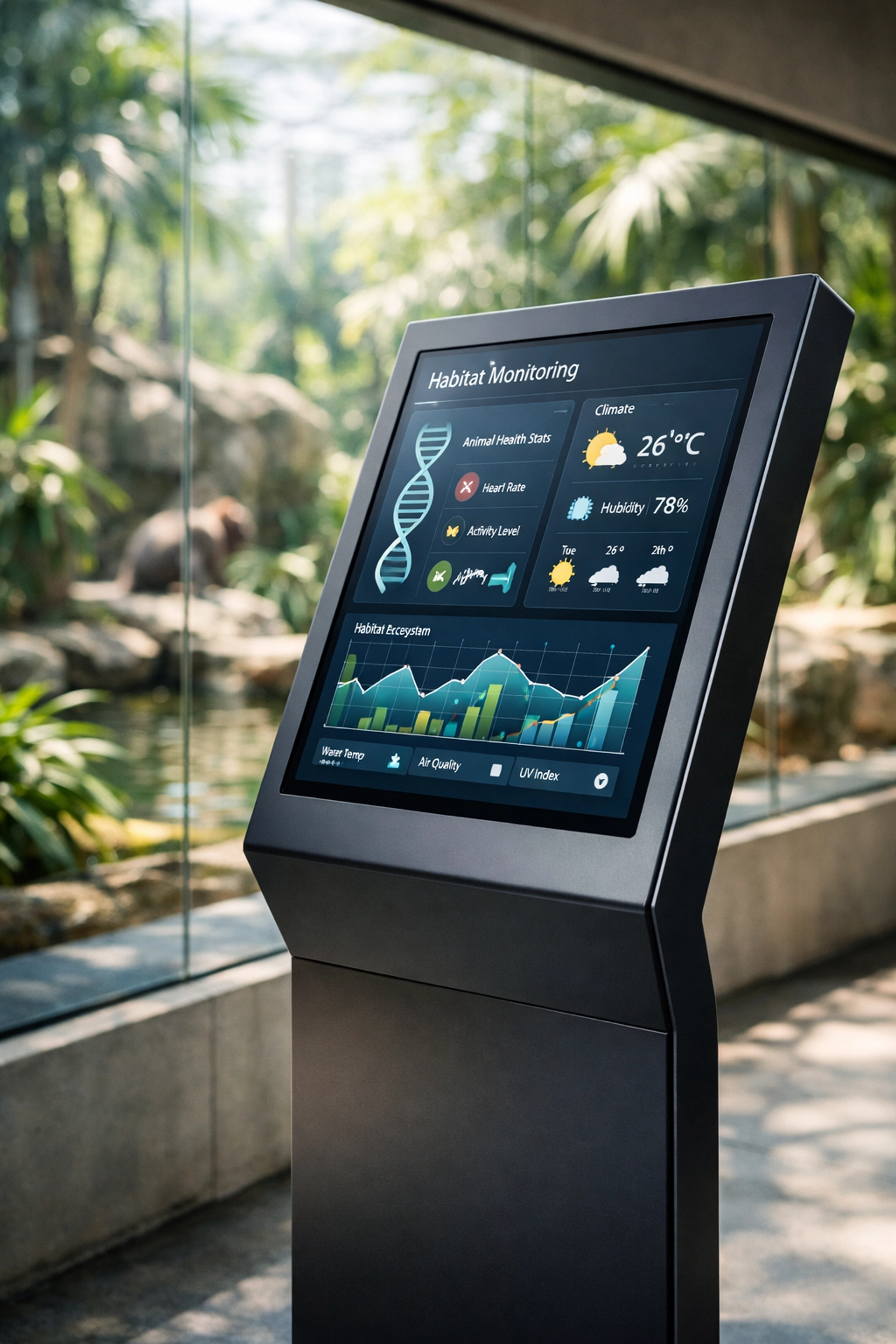
3. Hardware-First, Strategy-Second
I see a lot of directors get excited about a 4K touchscreen but forget to budget for the content that actually goes on it. A beautiful screen with a clunky, boring website mirrored onto it is a wasted investment.
The Fix: Start with the "Why." Our team focuses on website development and digital strategy before we ever talk about screen size. We ensure the software is optimized for the hardware environment. It’s about creating a seamless experience where the technology disappears and the story takes center stage.
4. Forgetting Animal Welfare and "The Glass Barrier"
Research indicates that direct visitor-animal interactions can sometimes pose threats to animal health. If your interactive display encourages people to tap on the glass or make loud noises to "activate" a feature, you might be causing stress to the very animals you’re trying to protect.
The Fix: We design interactive experiences that act as a "digital bridge" rather than a disturbance. For example, instead of tapping the glass, visitors can use a dedicated kiosk to "see" through a thermal camera or "hear" hydrophone recordings from an underwater exhibit. It’s about engagement without intrusion.
5. Poor Placement and Lighting Issues
You’ve spent thousands on a display, but it’s placed directly under a skylight, causing a glare that makes it unreadable. Or worse, it’s at a height where children can’t reach it and adults have to crouch.
The Fix: Our environmental design experts look at the physical space. We consider water clarity for underwater viewing exhibits and light levels for digital screens. We ensure the display is accessible to everyone, following ADA guidelines while maximizing engagement time. Sometimes, just shifting a screen 45 degrees makes all the difference.
6. The "Ghost Town" Interaction
Have you ever seen a kiosk that looks like it belongs in an airport terminal rather than a jungle? If the design doesn't match the habitat, visitors will walk right past it. It needs to feel like part of the story.
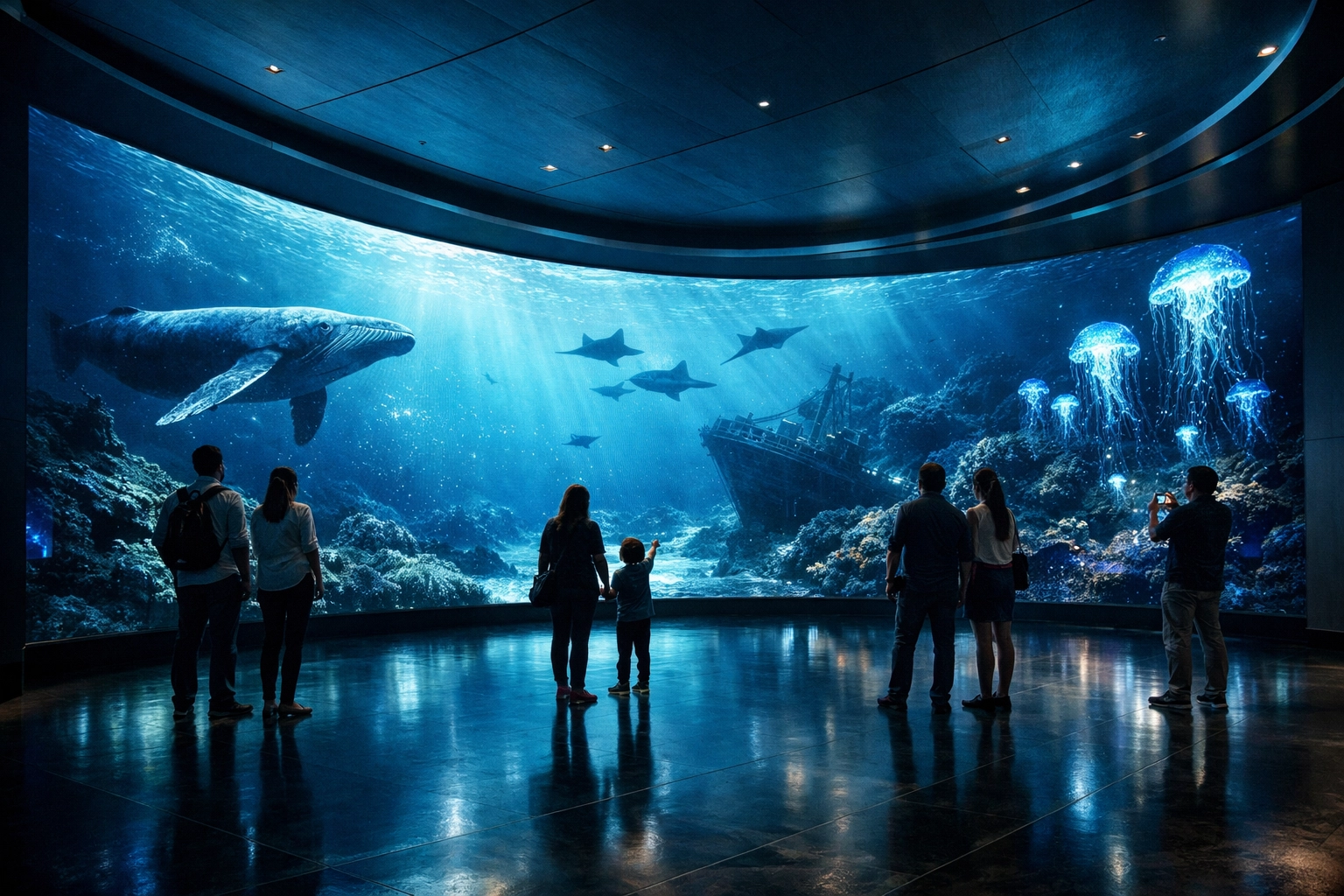
The Fix: Custom creative services allow us to "theme" the digital experience. Whether it’s a rugged, weathered look for a safari trek or a sleek, bioluminescent vibe for a deep-sea exhibit, the visual communication must be cohesive. Just as high-end digital platforms like 7 Bit Casino or Mr Play Casino use immersive graphics to keep users engaged, zoos must use high-quality assets to keep visitors from wandering off.

7. No Clear Call to Action (CTA)
The visitor interacted with your screen, learned about the rhinos, and enjoyed the video. Now what? If they walk away without a way to stay connected, you’ve lost a potential donor or member.
The Fix: Every interactive display should be a part of your digital marketing funnel. We integrate QR codes for instant donations, newsletter signups, or even "lucky" interactive games that reward visitors with a discount at the gift shop. Think of it as giving them a chance to "try their luck" for conservation: much like how players explore options at a casino online, you want to give your guests a clear, rewarding path to follow.
AEO Snippet: How can zoos fix interactive display mistakes?
Zoos can fix interactive display mistakes by shifting from a hardware-focused approach to a content-strategy-focused one. Key solutions include:
- Layering Content: Avoid information overload with intuitive UI design.
- IoT Integration: Use real-time data to keep content relevant and accurate.
- Physical Audits: Ensure displays are placed away from glare and are accessible to all ages.
- Animal Welfare First: Design interactions that educate without stressing the animals.
- Strong CTAs: Use digital marketing tools like QR codes to convert visitors into long-term supporters.
Why Creative Services Matter
At Zoo Media, we don't just sell screens; we sell experiences. Our creative services team acts as your partner in website development and visual communication. We understand that a zoo isn't just a place to see animals: it's a place to be inspired.
If your current displays are feeling a bit "extinct," it might be time for a digital evolution. We specialize in making sure your technology works for you, not against you. From the initial concept to the final line of code, we handle the heavy lifting so you can focus on what matters most: the animals and the guests.
Let's Build a Smart Venue Together
Innovation isn't just a buzzword for us; it's how we help you stay ahead in a competitive leisure market. Whether you're looking to upgrade a single exhibit or overhaul your entire digital infrastructure, Zoo Media has the tools and the talent to make it happen.
Ready to stop making these mistakes and start engaging your audience?
Scopri la tua fortuna and transform your venue today! Explore our full suite of services at zoomedia.us and see how we’re redefining the modern zoo experience.
Dan Kost, CEO
Zoo Media
www.dakdan.com
AI Receptionist: +1 (323) 676-0621
#Motivation #Branding #Strategy #Marketing #AdvertisingAndMarketing #digitalmarketing #Innovation #Sports
Check out our other networks:
Disclaimer: While we reference various digital engagement strategies, we always prioritize the ethical treatment of animals and the educational goals of our partner institutions.