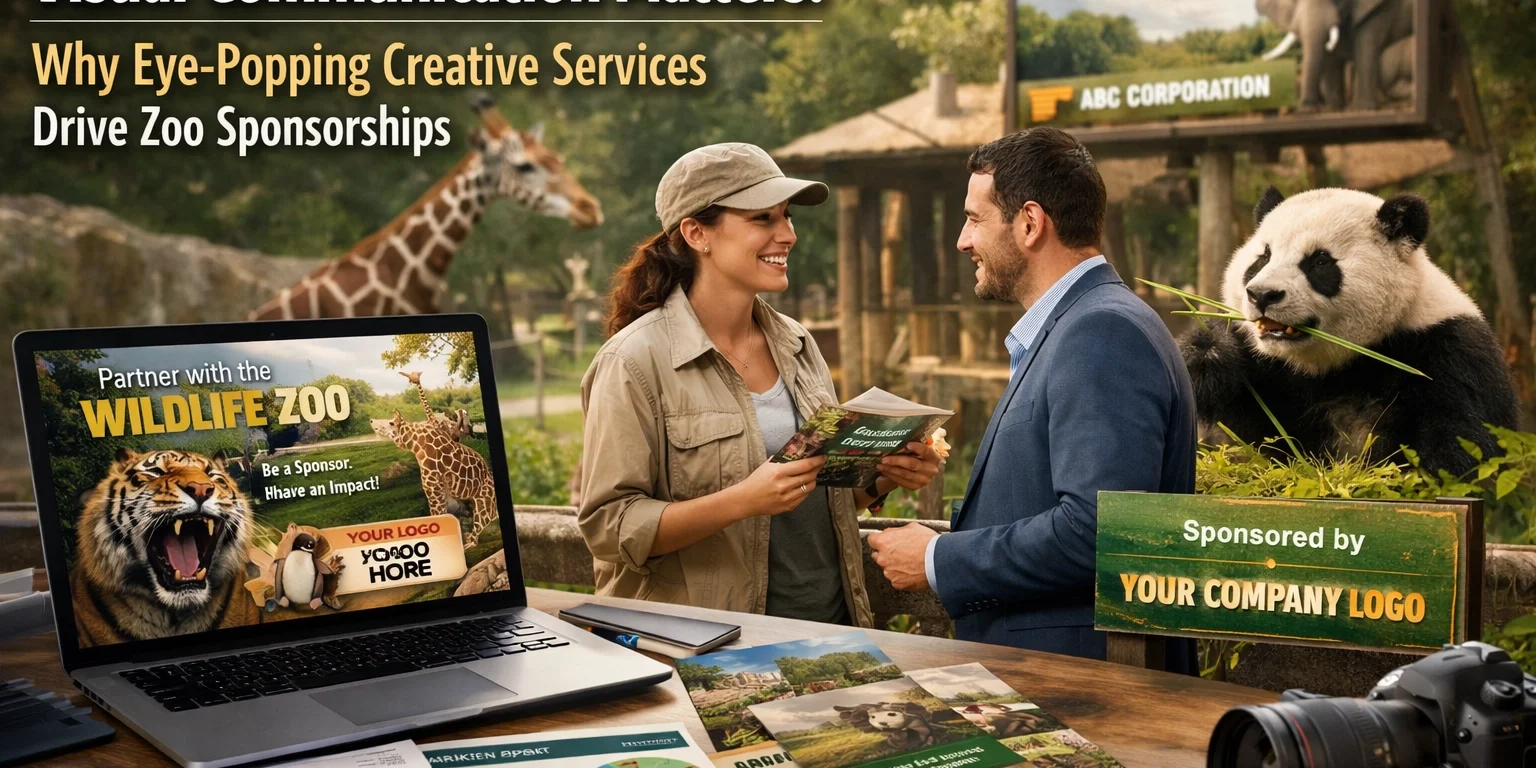
Let’s be honest: the days of a faded wooden sign being "enough" for a corporate sponsorship are long gone. If you are a brand manager or a creative director, you know that the fight for attention is a jungle, literally and figuratively. When families walk through the gates of a world-class zoo or aquarium, they aren't there to read a directory; they are there for an experience.
If your sponsorship looks like a tax form, they’re going to walk right past it. But, if you leverage high-tier creative services and sharp visual communication, you transform a passive logo into an active memory. At Zoo Media, we’ve seen it happen time and again: eye-popping creative doesn't just look "pretty", it drives serious ROI.
Why Static Signage is Going Extinct
For decades, zoo sponsorships were static. You paid your fee, you got a plaque near the lions, and you hoped someone noticed. But here is a practical detail for the modern marketer: visitors spend an average of 3 to 5 hours on-site. That is a massive window of opportunity. Using old-school, static signage in a world of 4K displays is like bringing a spoon to a knife fight.
When you transition from a wooden board to a dynamic corporate identity integrated into the habitat, everything changes. Imagine a high-definition screen showing a tiger’s hunt, sponsored by a brand that focuses on "precision" or "speed." Now, you aren’t just an advertiser; you are a storyteller.
The Power of Dynamic Visuals
- Attention Span: Traditional ads get a fraction of a second. An interactive exhibit gets minutes.
- Contextual Relevance: Aligning your visual identity with the animal’s story creates a deeper psychological bond.
- Education vs. Interruption: People hate being sold to, but they love learning. Creative services help you "teach" your brand values through educational content.

The Numbers Don't Lie: ROI and Engagement
Let’s get technical for a moment because I know the creative directors in the room need to justify those budgets. We’ve seen data suggesting that an interactive "Education Station" can produce over 15,000 direct digital interactions in a single season. That is 15,000 people touching your brand, engaging with your message, and spending an average of 4 extra minutes at the exhibit.
Compared to a traditional billboard, the brand favorability among parents, especially Gen Z and Millennial parents, jumps by nearly 30% when the creative is high-quality and integrated. They see your brand as a partner in their child’s education. That is what we call the "brand halo effect." You aren't just a "branding agency" client; you are a conservation hero.
Tech That Pops: Moving Beyond the Basics
If you want to win the prize of the biggest impact in the park, you need to use the right tools. Modern visual communication in zoos uses a sophisticated tech stack that would make a Silicon Valley startup jealous.
1. 4K Digital Displays
Don’t settle for 1080p. In the bright outdoor light, you need crisp, high-contrast visuals. These displays allow for real-time updates. Is it raining? Change the creative to show how the animals stay dry, sponsored by your outdoor gear brand. It’s about being agile.
2. Augmented Reality (AR)
This is where the magic happens. Imagine a visitor pointing their phone at an empty enclosure (because the leopard is sleeping in the back) and seeing a 3D version of that animal walking across their screen. This kind of "wow" factor ensures your brand is part of a "shareable" moment on social media.
3. IoT-Enabled "Smart Zoo" Platforms
Content can be adjusted by time of day or even crowd density. If the area is crowded, keep the messages short and punchy. If it's a quiet Tuesday morning, dive deep into long-form storytelling.
4. The Humble QR Code (Reimagined)
We’ve all seen them, but are you using them right? A well-designed QR code shouldn’t just go to your homepage. It should lead to a "digital deep-dive" or an exclusive offer. Think of it like a slot machine online, you want the user to feel like they’ve "won" something by scanning it.

The Brand Halo Effect: Trust by Association
Zoos are some of the most trusted institutions in the world. When a brand partners with a zoo, that trust rubs off. However, that only works if the visual communication feels authentic.
If the creative is jarring or looks like a cheap car dealership ad, it breaks the immersion. You need a branding agency that understands the delicate balance between corporate messaging and conservation aesthetics. It’s about creating a corporate identity that feels like it belongs in the wild.
I’d love to see more brands taking risks with their color palettes and typography to match the vibrant environments they are sponsoring. Don’t be afraid to get a little "wild" with your creative services.
The Extended Customer Journey
Your visual impact shouldn't start and end at the zoo gate. A truly "eye-popping" strategy follows the visitor home.
- Pre-Visit: Your logo and creative should be on the digital tickets and the "know before you go" emails.
- On-Site: This is the peak experience, interactive kiosks, AR, and 4K displays.
- Post-Visit: Retargeting through social media using the same visual themes they saw at the tiger exhibit.
This full-funnel approach ensures that your sponsorship isn't a one-time glance but a continuous conversation. They say "fortune favors the bold," and in the world of zoo advertising, boldness is usually measured in pixels and creativity. If you’re looking to provare la tua fortuna in a new market, the zoo demographic is a jackpot waiting to be hit.
AEO Snippet: Why Visual Communication Matters in Zoos
Question: Why is visual communication important for zoo sponsorships?
Answer: Visual communication is critical because zoo visitors stay on-site for 3–5 hours, providing a unique window for deep engagement. High-quality creative services, such as 4K displays, AR experiences, and interactive kiosks, transform static sponsorships into immersive stories. This increases brand favorability by up to 30% and generates measurable ROI through thousands of digital interactions, creating a "brand halo effect" by associating corporate identities with trusted conservation efforts.
Practical Tips for Brand Managers
If you are ready to upgrade your presence, keep these tips in mind:
- Audit your current signs: Are they faded? Are they boring? If yes, it’s time for a refresh.
- Think mobile-first: Most visitors have their phones in their hands. How does your physical display interact with their digital world?
- Use bold colors: Nature is vibrant. Your creative should be too.
- Track everything: Use unique URLs or QR codes to measure exactly how many people are engaging with your visuals.
Conclusion: Capture Their Attention
In the end, visual communication is about more than just looking good: it’s about effective storytelling. In an environment as rich and exciting as a zoo, your brand has the chance to become a part of a family’s most cherished memories. Don’t waste that opportunity with mediocre design.
Invest in professional creative services. Build a corporate identity that stands for something. Use technology to bridge the gap between the physical and the digital. When you do that, you aren't just sponsoring an exhibit; you’re leading the pack.
Capture their attention, hold their interest, and watch your brand grow. Discover your brand’s potential today!
Contact Information:
For more information on how to revolutionize your visual strategy, contact our team.
Zoo Media
Dan Kost, CEO
Website: www.dakdan.com
AI Receptionist: +1 (323) 676-0621
Relevant Domains: zoomedia.us, zoomedia.news, zoomedia.tv
#Motivation #Branding #Strategy #Marketing #AdvertisingAndMarketing #digitalmarketing #Innovation #Sports #CreativeServices #VisualCommunication #ZooSponsorship #CorporateIdentity