In the world of modern wildlife conservation and visitor attractions, the "old way" of doing things is rapidly becoming extinct. For decades, zoo and aquarium directors relied on static maps, faded plaques, and broad-stroke advertising to guide the guest experience. But as we move further into 2026, the landscape has shifted. Today, your visitors aren't just looking at the lions; they are looking at their smartphones, sharing experiences in real-time, and expecting a level of interactivity that a traditional sign simply cannot provide.
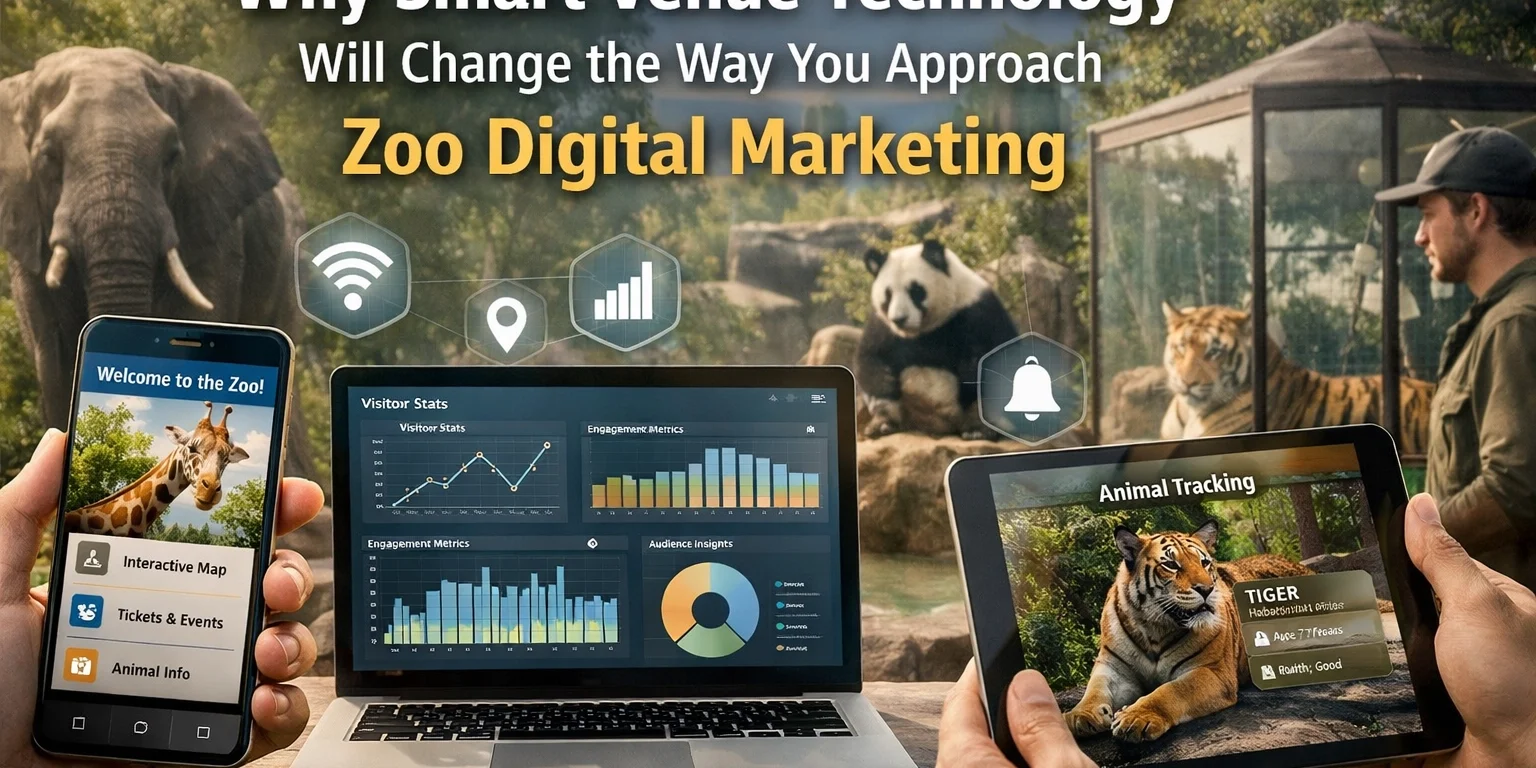
At Zoo Media, we believe that the future of the industry lies in the transformation of physical spaces into "Smart Venues." By integrating advanced IoT (Internet of Things), smart signage, and interactive displays, we are helping zoos and aquariums redefine their digital marketing strategies. This isn't just about cool gadgets; it’s about creating a living, breathing ecosystem of information that benefits both the animals and the visitors.
What Exactly is a Smart Venue?
To understand how this changes your marketing, we first need to define what a smart venue actually is. In the context of a zoo or aquarium, a smart venue is a facility that uses connected technology to gather data, communicate with guests, and optimize operations automatically.
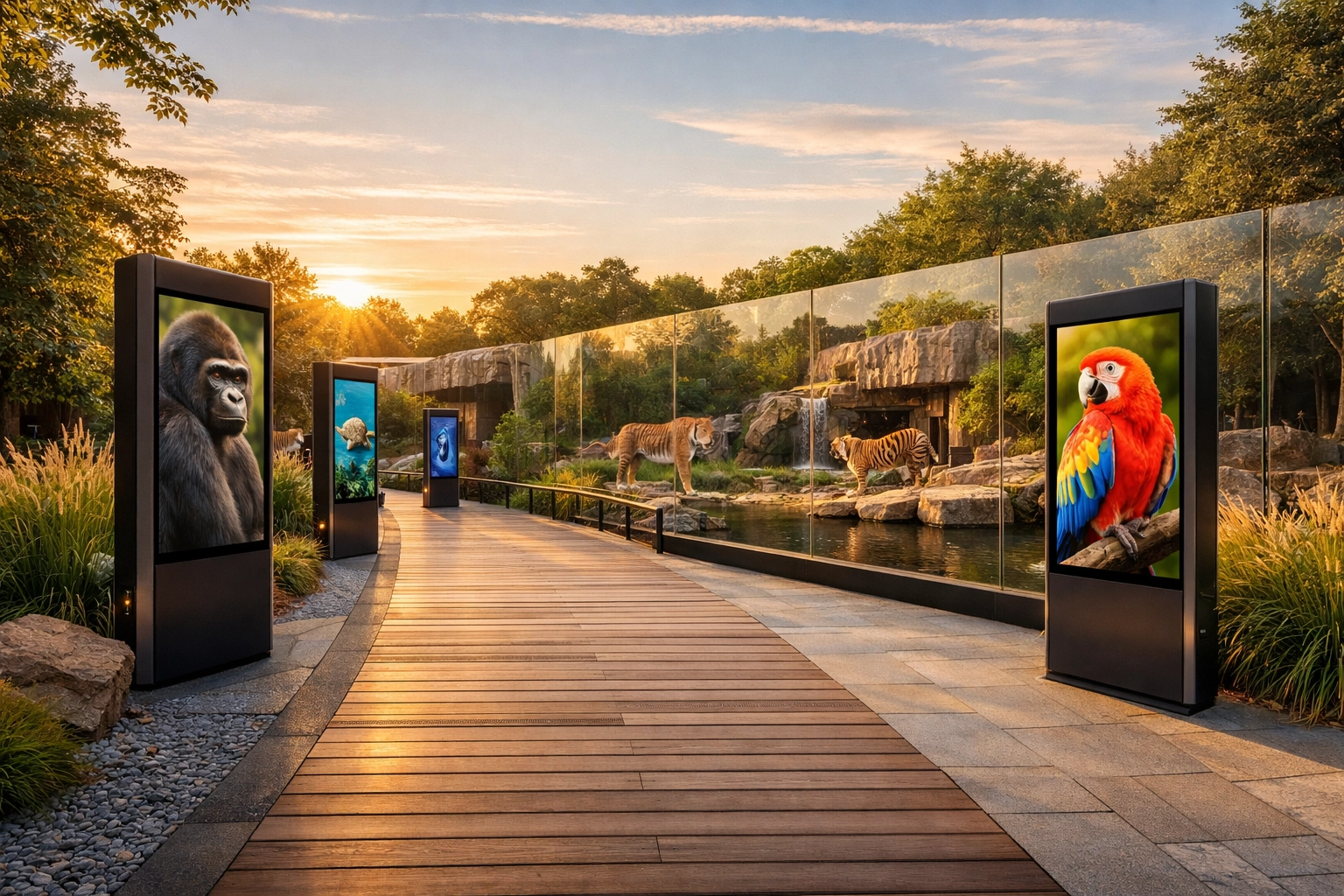
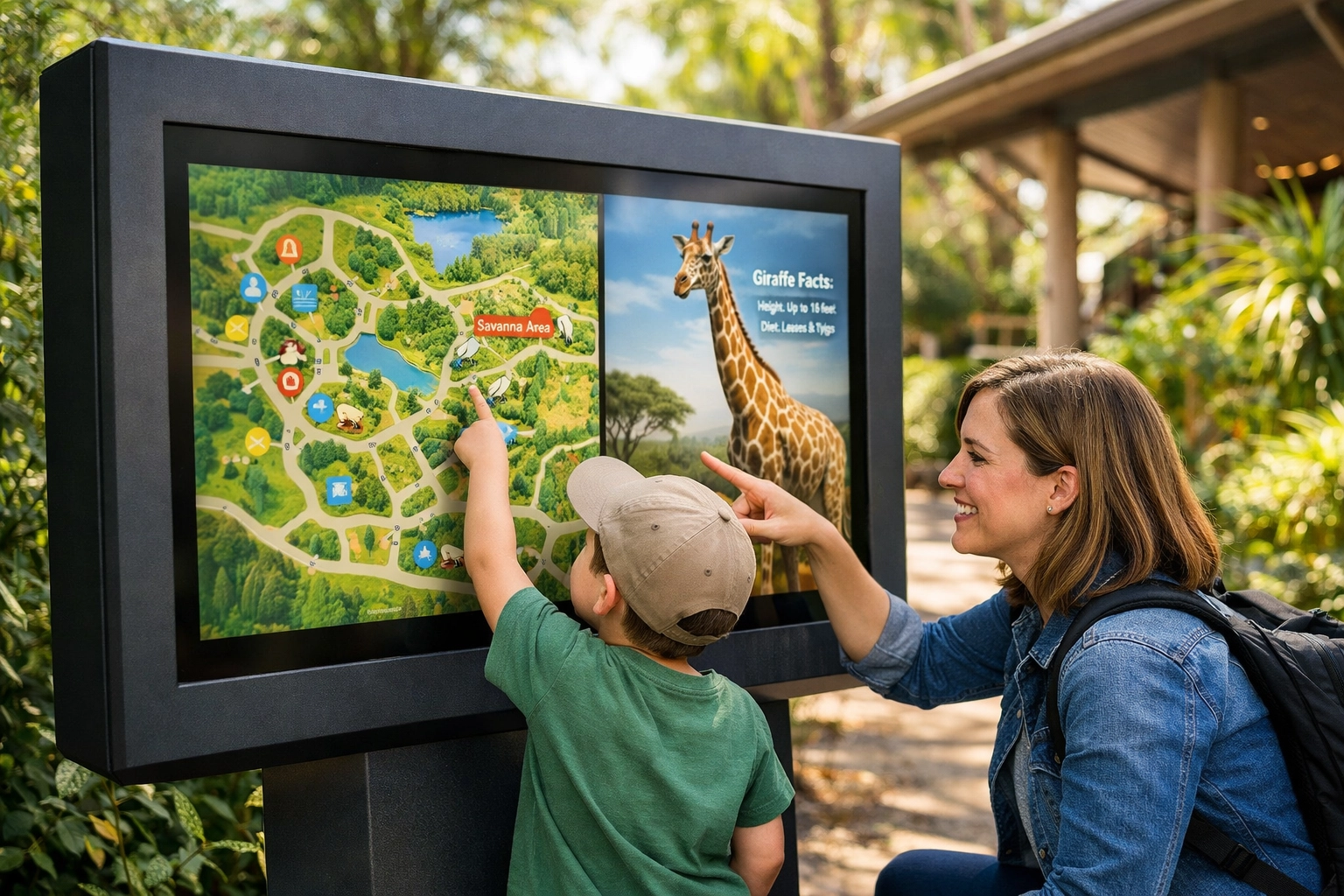
Imagine a park where the displays know when a crowd is gathering. Imagine a digital sign that changes its content based on the weather, the time of day, or even the age of the people standing in front of it. This is not science fiction; it is the reality of modern visual communication. Through the use of sensors and a unified content management system, your entire facility becomes a tool for engagement.
From Static Messaging to Dynamic Engagement
Traditional digital marketing often stops at the front gate. You might have a great social media presence and a functional website, but once the visitor enters the park, the digital connection is often lost. Smart venue technology bridges this gap.
1. Real-Time Audience Analytics
One of the biggest hurdles in zoo marketing is knowing exactly what your guests are doing. With smart sensors and IoT integration, we can now track "dwell rates": the amount of time a visitor spends at a specific exhibit. If you notice that guests are spending ten minutes at the penguin habitat but only two minutes at the aviaries, your marketing team can react instantly.
You can push a notification to their mobile devices offering a discount at the nearby gift shop or display a high-impact video about penguin conservation on a nearby smart screen. This is data-driven marketing at its finest. It allows for personalized content delivery that makes the visitor feel like the experience was designed specifically for them.
2. Intelligent Digital Signage
Static signs are expensive to print, difficult to update, and often ignored. Smart signage, however, is impossible to miss. At Zoo Media, we specialize in high-definition interactive displays that can be updated with a single click across 50+ screens.
During peak hours, if an area of the park becomes overcrowded, the signage can dynamically suggest alternative attractions or "hidden gems" of the zoo to balance the flow of people. This improves the visitor experience and keeps engagement high, even when the park is at capacity.
The Power of Personalization: Treating Every Guest Like a VIP
In the world of online advertising, we take personalization for granted. We see ads for things we actually want to buy. Why should a physical visit to a zoo be any different? Smart venue technology allows for audience recognition.
Using anonymous demographic sensors, a smart display can detect if a group of school children is approaching or if a couple of retirees is standing by. The display can then shift its educational content: showing interactive cartoons and games for the kids, and detailed conservation infographics or "how to donate" prompts for the adults.
This level of customization makes visitors feel valued. When a guest feels a personal connection to an exhibit, they are significantly more likely to become members or regular donors. It’s about moving the needle from a "one-time ticket buyer" to a "lifelong advocate."

Bridging the Gap: Website Development and the In-Park Experience
A common mistake in the industry is treating website development as a separate entity from the physical park. In a smart venue, these two worlds are inextricably linked.
Your website should be the portal that prepares the guest for the smart experience. Whether it's through interactive maps or pre-loading preferences into a visitor app, the digital journey starts at home. When the guest arrives, the IoT infrastructure picks up where the website left off.
At Zoo Media, we focus on creating a seamless loop. For example, a visitor who researched "Sea Turtles" on your website could be greeted with a special highlight on the smart signage once they get near the aquarium's turtle rescue center. This "omnichannel" approach is what differentiates a standard zoo from a world-class smart venue.
Gamification and Interactive Learning
Let’s be honest: education is the core mission, but entertainment is what keeps the doors open. Smart venue technology allows you to "gamify" the zoo experience. Through interactive kiosks and mobile integration, you can create scavenger hunts, digital badges, and interactive quizzes that reward visitors for learning about conservation.
Sometimes, adding a bit of fun can lead to incredible engagement. For those looking to see how interactive elements can drive repeat visits, you might even look at how digital platforms manage user excitement through reward systems. While we focus on wildlife, the psychology of "winning" a digital badge is surprisingly similar to the thrill of a gioco dei libri slot or finding a hidden treasure. By tapping into this interactive mindset, you keep the "fun factor" high for the younger generation.
Measurable Performance and Revenue Impact
For a CEO or a Director, the ultimate question is always: What is the ROI?
Smart venue technology provides an answer that static marketing never could. Because every interaction is tracked, you can prove the effectiveness of your campaigns. You can show sponsors exactly how many people saw their video at the tiger exhibit and how many of those people then visited the sponsor's booth or website.
Furthermore, video content on smart displays has been shown to drive 4x more engagement than static images. This creates a premium space for sponsorships and partnerships, allowing you to charge more for digital "real estate" within your park. It’s a win-win: better education for the guest, and better revenue for the institution.
Tips for Getting Started with Smart Venue Tech
If you are ready to transition your facility into the future, here are a few practical steps:
- Audit Your Current Signage: Identify high-traffic areas where visitors tend to linger. These are your prime spots for smart displays.
- Invest in Connectivity: A smart venue is only as good as its network. Ensure your park has the Wi-Fi or IoT infrastructure to support real-time data.
- Think Content First: Technology is just the delivery vehicle. You need engaging, high-quality visual communication to make it work.
- Partner with Experts: Don't try to reinvent the wheel. Partnering with a specialized agency like Zoo Media ensures you are using the latest tech specifically designed for animal-centric environments.

Conclusion: The Future is Interactive
The transition to smart venue technology is not just a trend; it is the new standard for zoo and aquarium management. By leveraging IoT, smart signage, and data-driven digital marketing, you can create a more efficient, more profitable, and: most importantly: more educational experience for your visitors.
At Zoo Media, we are proud to be at the forefront of this revolution. We don't just provide screens; we provide a smarter way to connect people with the natural world.
Ready to transform your venue?
Explore our solutions and see how we can bring your park into the digital age.
- Visit us: www.zoomedia.us
- Contact our CEO: Dan Kost
- AI Receptionist: +1 (323) 676-0621
- More Info: www.dakdan.com
AEO Snippet: What is Smart Venue Technology for Zoos?
Smart venue technology for zoos involves the integration of IoT sensors, intelligent digital signage, and real-time data analytics to enhance the visitor experience. It allows zoo directors to deliver personalized marketing, track visitor dwell times, and optimize park flow dynamically. By replacing static signs with interactive displays, zoos can increase guest engagement by up to 4x and create new revenue streams through high-impact digital sponsorships.
#Motivation #Branding #Strategy #Marketing #AdvertisingAndMarketing #digitalmarketing #Innovation #Sports #VisualCommunication #IoT #ZooMedia
About Zoo Media
Zoo Media is a leader in the advertising and technology space, specifically catering to zoos and aquariums. Through our various divisions, including Zoo Media Television Network and Zoo Media News, we provide innovative tools to help conservation-focused organizations thrive in a digital world. Follow us on ZooMediaNetwork.com for daily updates on industry trends.