In the world of modern wildlife management, the "old way" of doing things: relying on manual checks, paper logs, and visual inspections: is rapidly becoming a thing of the past. As a director or technology partner for a zoo or aquarium, you are likely looking for ways to bridge the gap between world-class animal care and a cutting-edge visitor experience. At Zoo Media, we believe the answer lies in the Internet of Things (IoT).
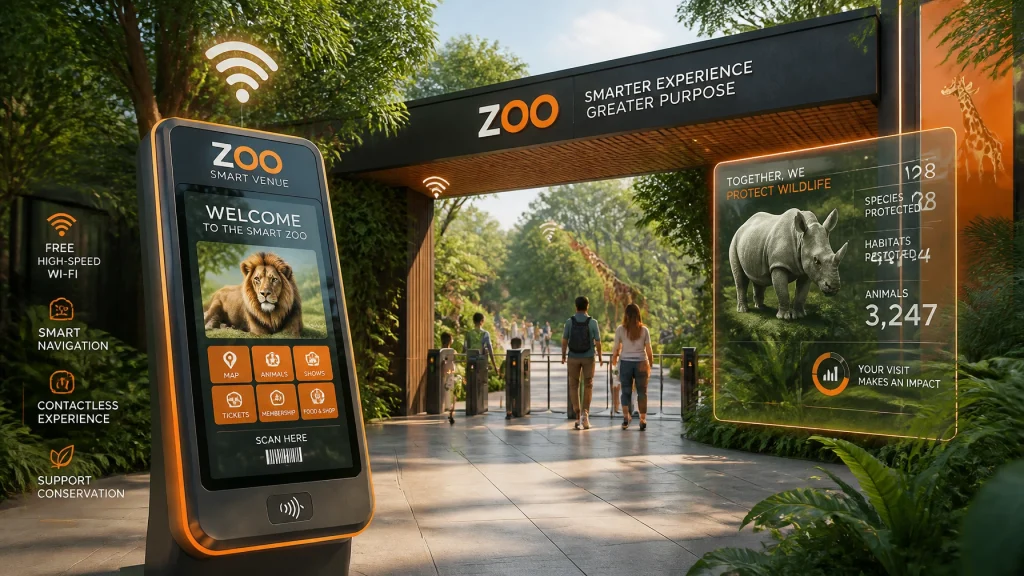
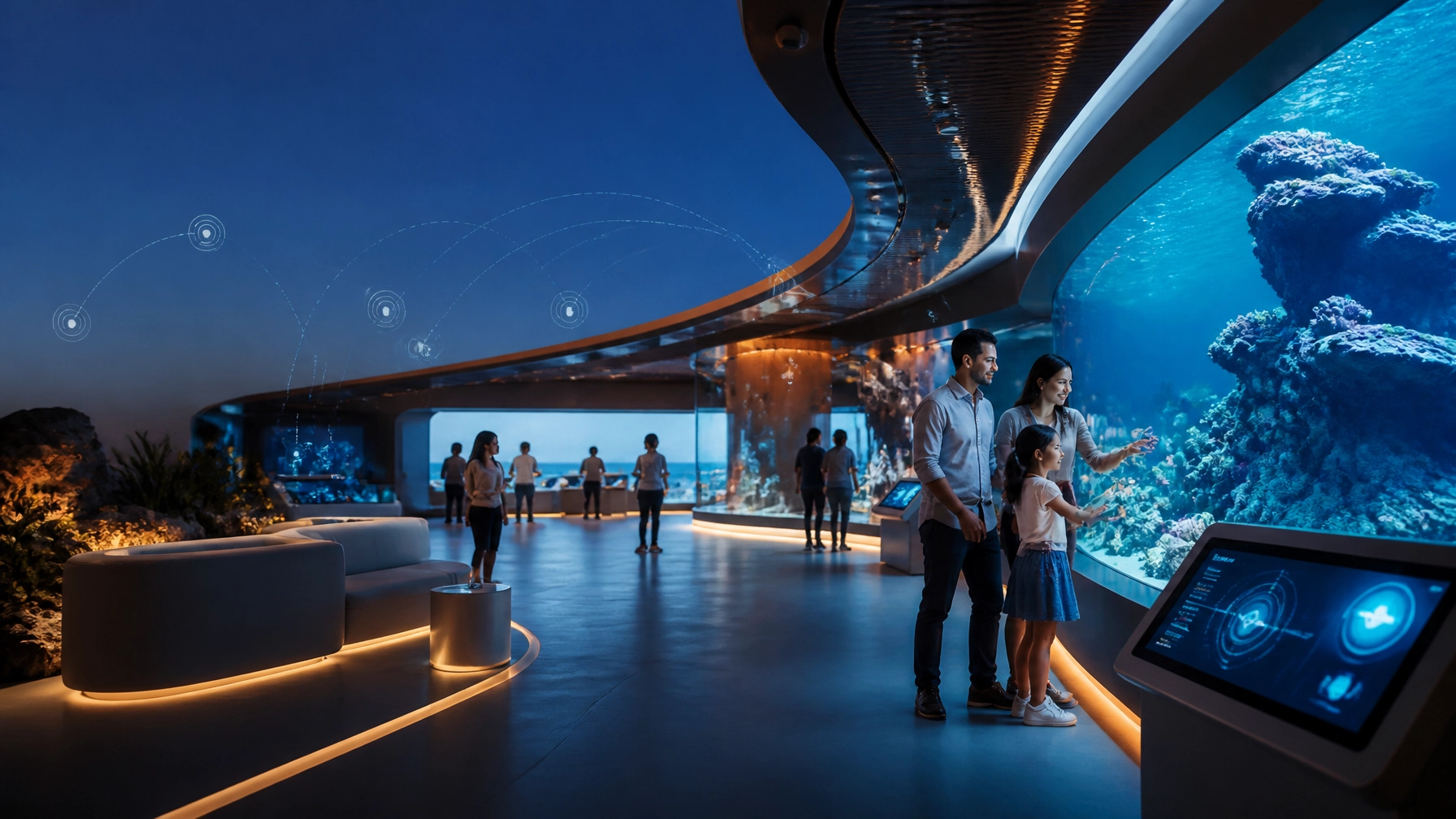
IoT isn’t just a buzzword; it is a fundamental shift in how we interact with the physical world. By connecting sensors, smart signage, and interactive displays into a single cohesive network, we are transforming traditional zoos into "Smart Venues." This technology allows us to listen to the environment in ways we never could before.
What is IoT in the Context of a Zoo?
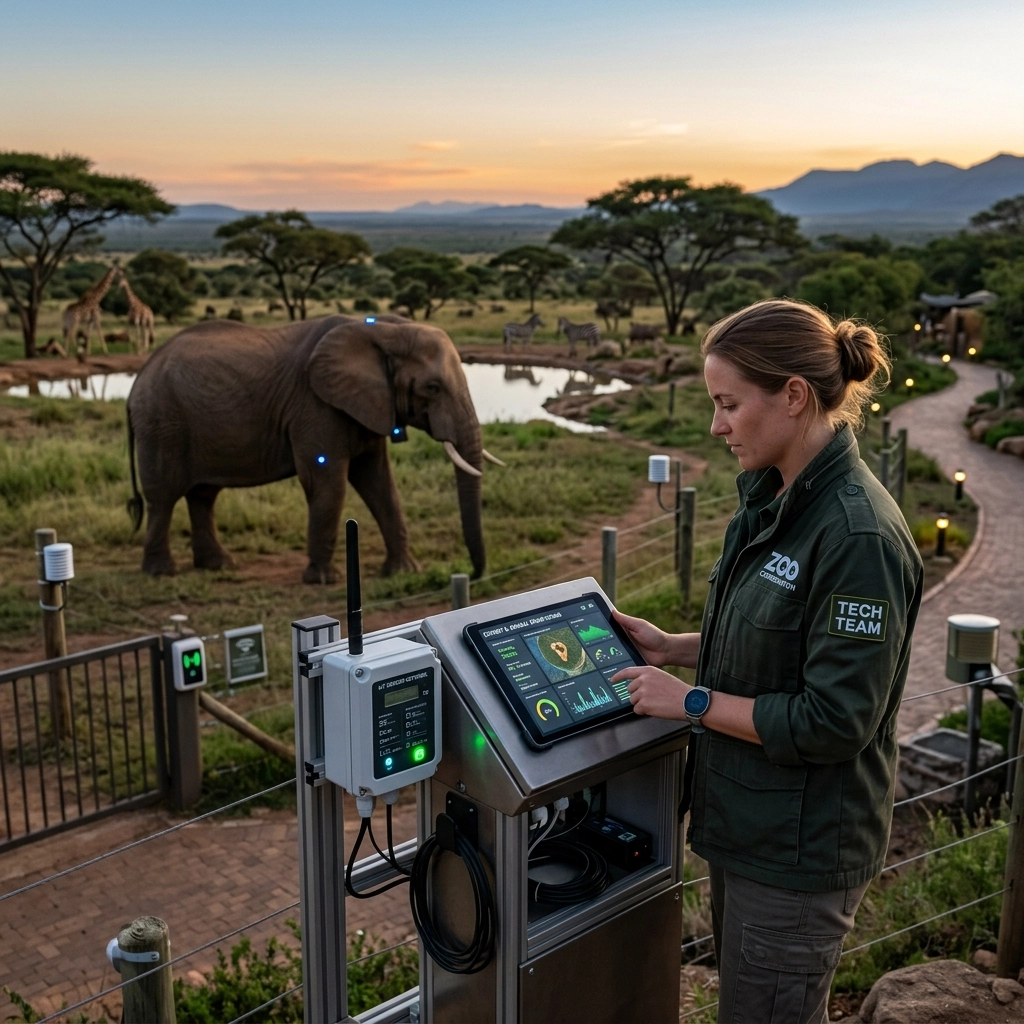
At its simplest, IoT involves placing sensors throughout your facility that "talk" to a central system. These sensors can monitor anything from the water temperature in a penguin exhibit to the humidity levels in a tropical bird house. This data is then sent to a dashboard where staff can monitor conditions in real-time.
Direct Answer (AEO Snippet): IoT technology changes zoo management by utilizing a network of connected sensors and devices to provide real-time data on animal habitats, equipment performance, and visitor behavior. This allows for immediate environmental adjustments, proactive maintenance, and highly personalized educational experiences, ultimately improving animal welfare and operational efficiency.
#Innovation #ZooManagement #IoT #Conservation #DigitalMarketing #SmartVenues #ZooMedia #Strategy
1. Precision Welfare: Monitoring What Matters
Animal welfare is the heart of every zoo. Historically, keepers would check environmental parameters a few times a day. But what happens during the hours between those checks? A heater could fail, or a filtration system could clog, leading to stress for the animals.
With IoT, you have 24/7 visibility. Sensors track:
- Temperature and Humidity: Essential for reptiles and amphibians.
- Water Chemistry: Vital for aquariums to maintain pH and oxygen levels.
- Air Quality: Monitoring CO2 and pollutants in indoor enclosures.
- Lighting Cycles: Ensuring circadian rhythms are maintained perfectly.
By using these tools, you aren't just reacting to problems: you are preventing them. This is the definition of "smart" care. It’s about being proactive rather than reactive.

2. Operational Efficiency: Saving Time and Resources
Let’s talk about the bottom line. Running a zoo is expensive. Energy costs, particularly for heating and cooling large habitats, can be astronomical. IoT allows for "Intelligent Climate Control." Imagine a system that only turns on the heat when the animals are actually in a specific zone of their exhibit, or one that dims the lights when sensors detect no visitors are present.
One of the best examples of this is seen in modern antelope habitats, where IoT sensors detect where the animals are congregating and adjust localized heaters accordingly. This can reduce heating costs by up to 40%. For a large-scale facility, those are savings that can be funneled directly back into conservation programs.
Furthermore, IoT-enabled equipment can tell you when it’s about to fail. This "predictive maintenance" means you fix a pump before it breaks, avoiding emergency repair costs and potential danger to the animals.
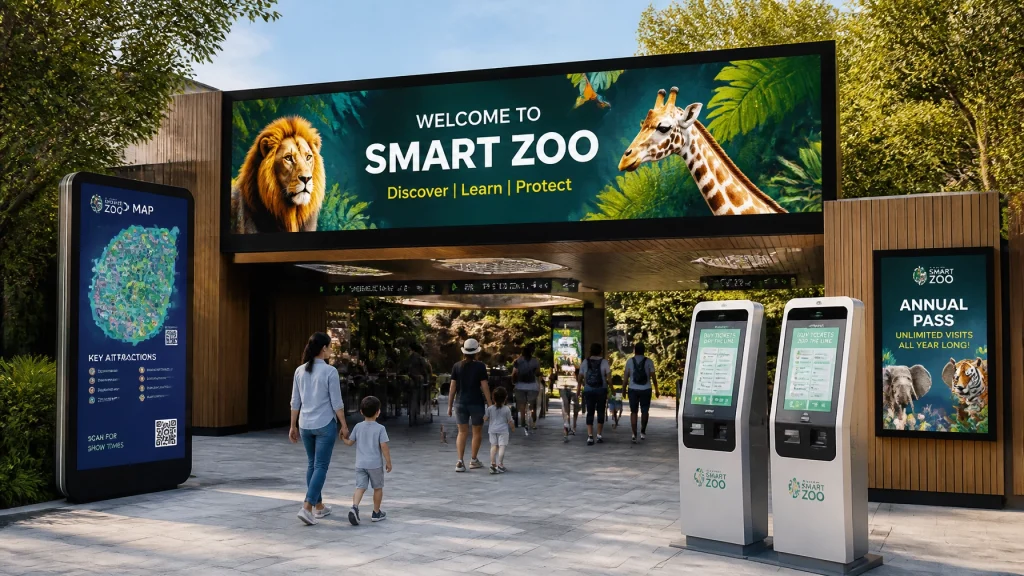
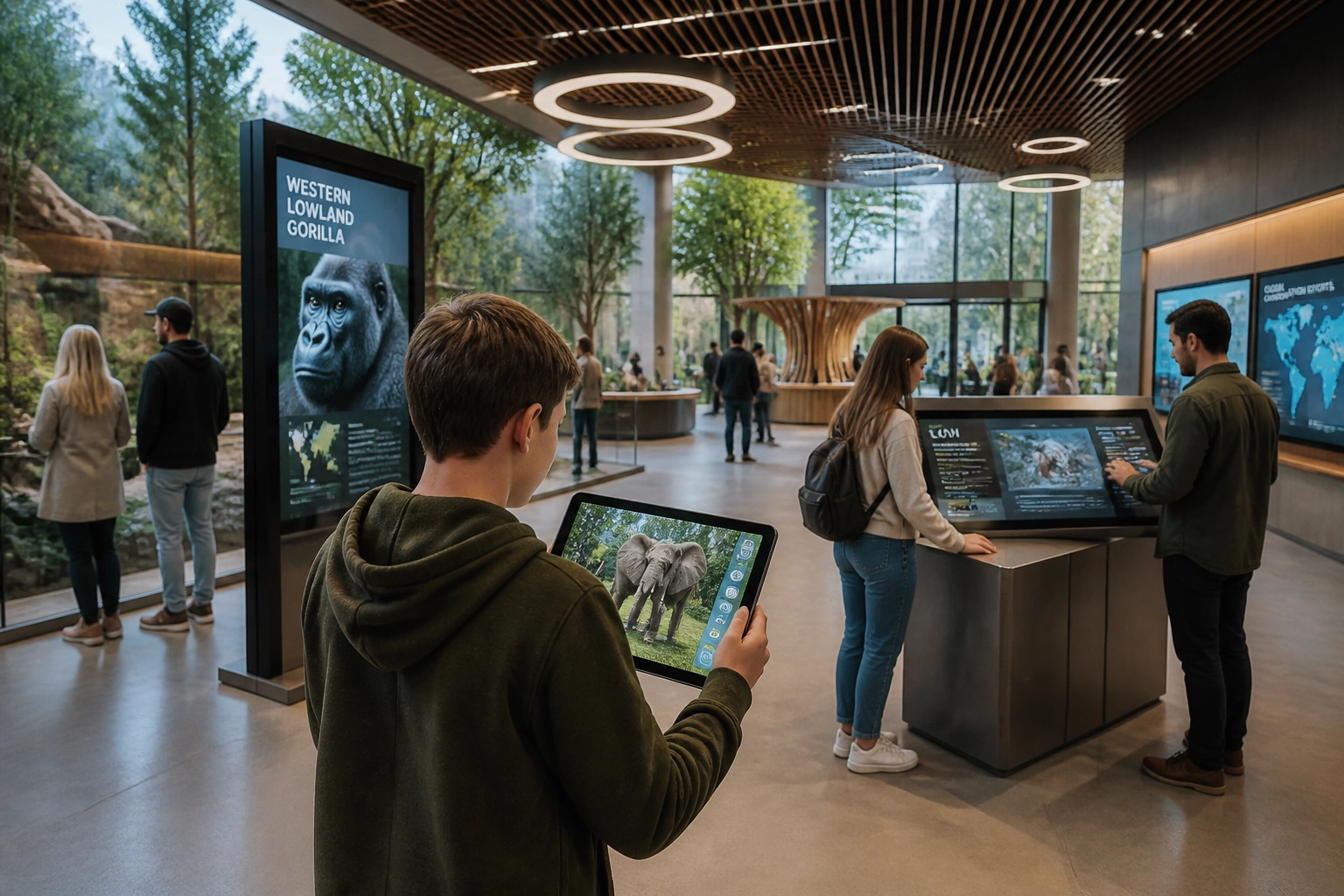
3. Transforming the Visitor Experience with Smart Signage
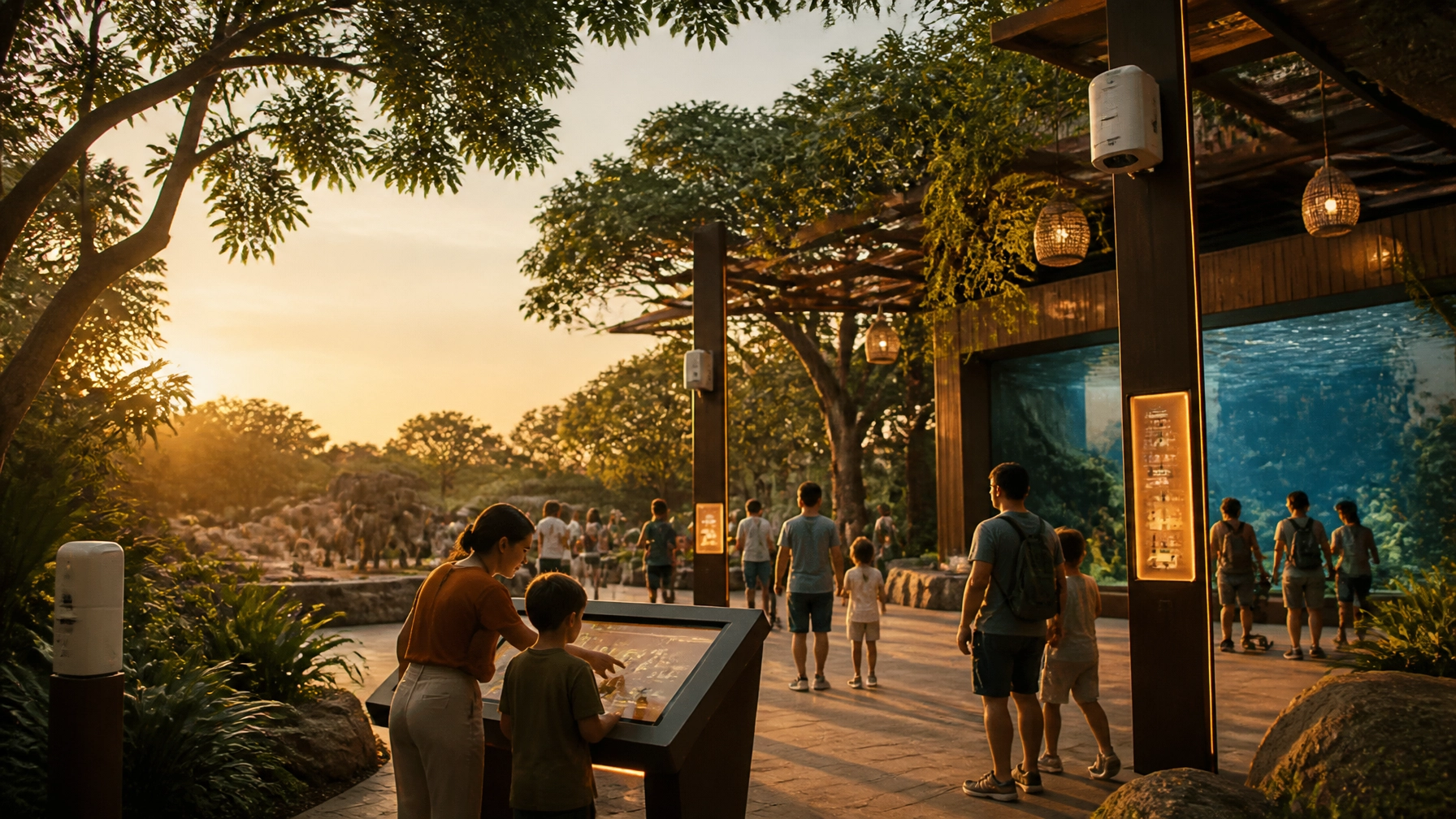
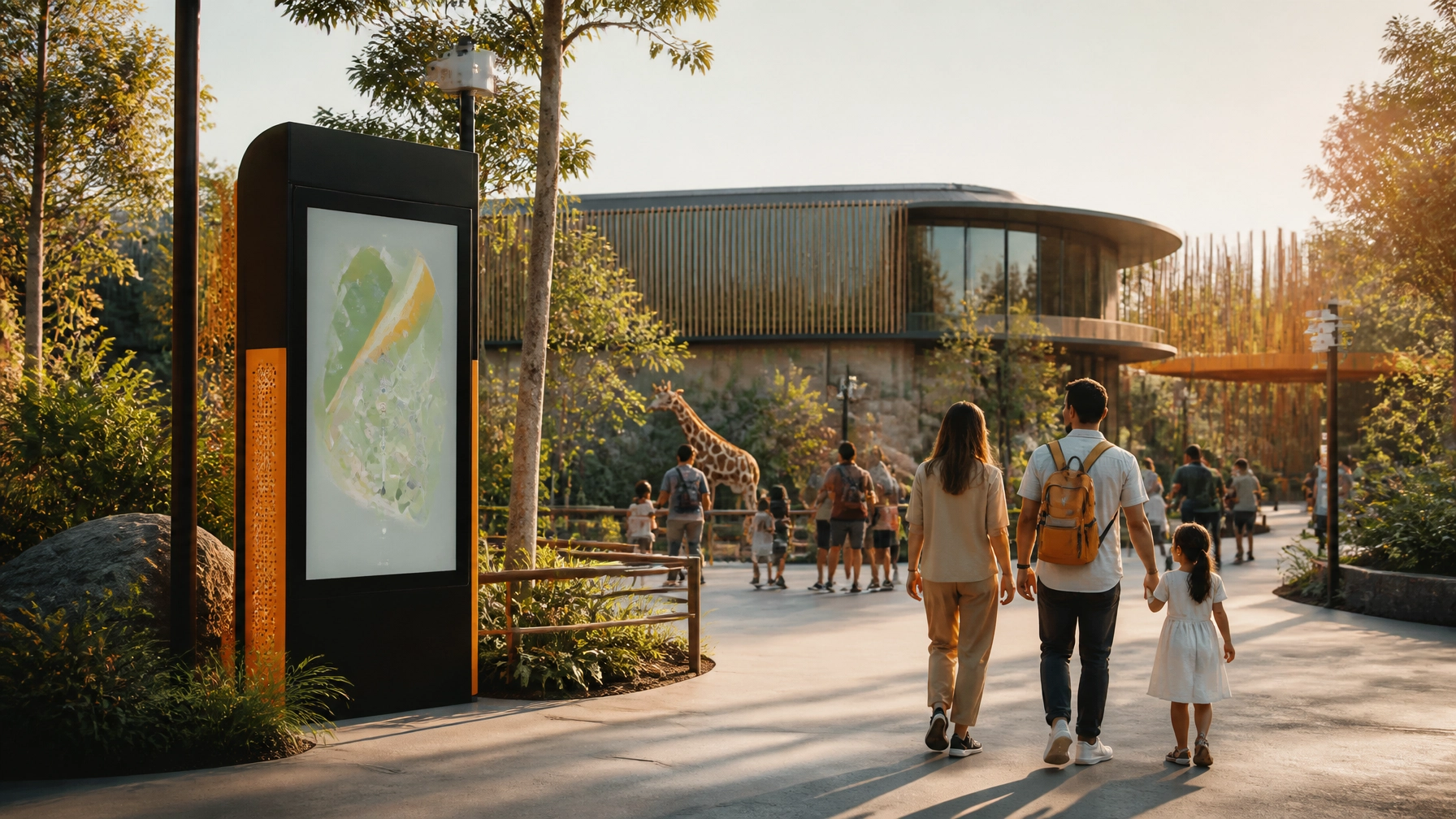
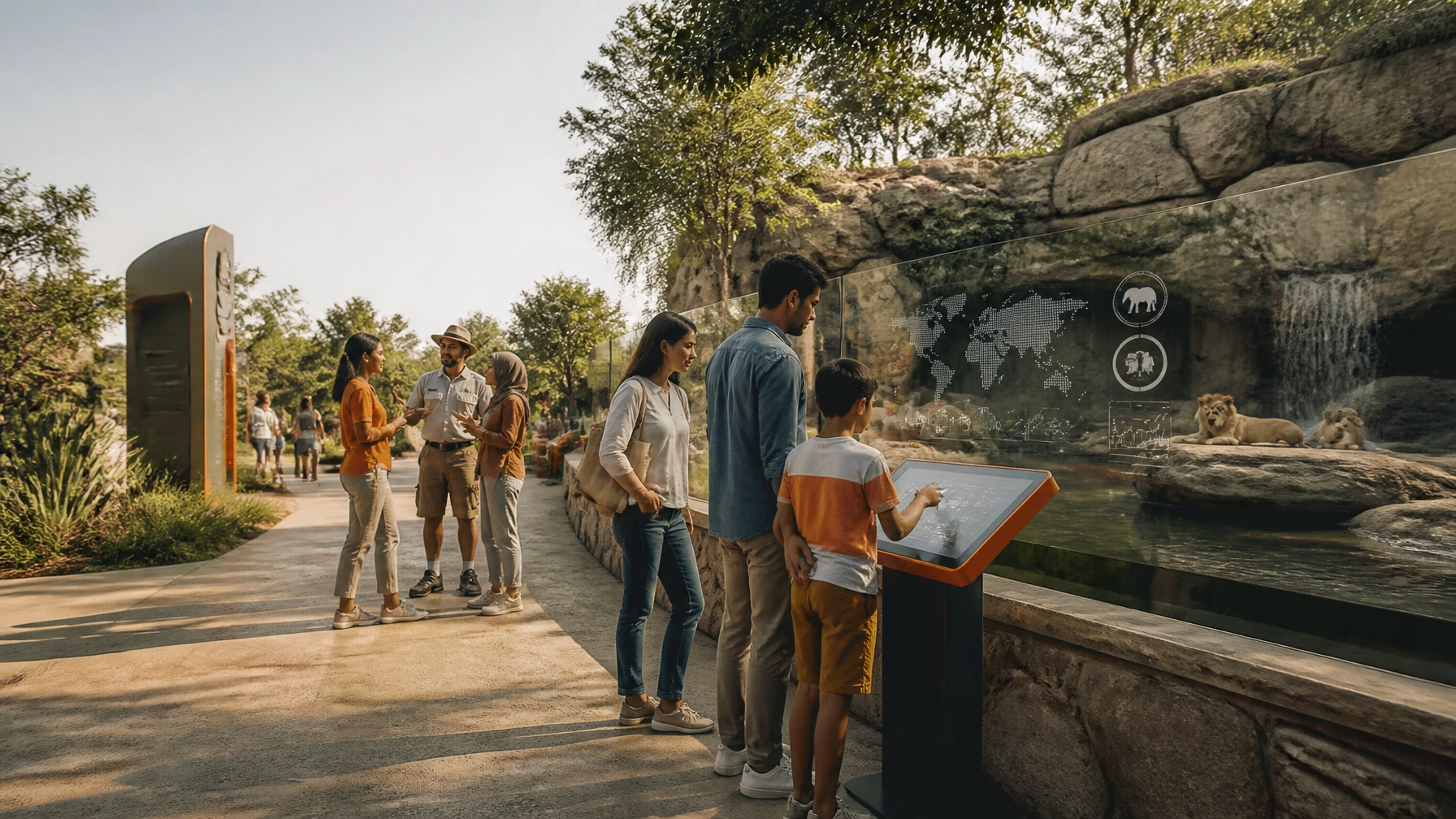
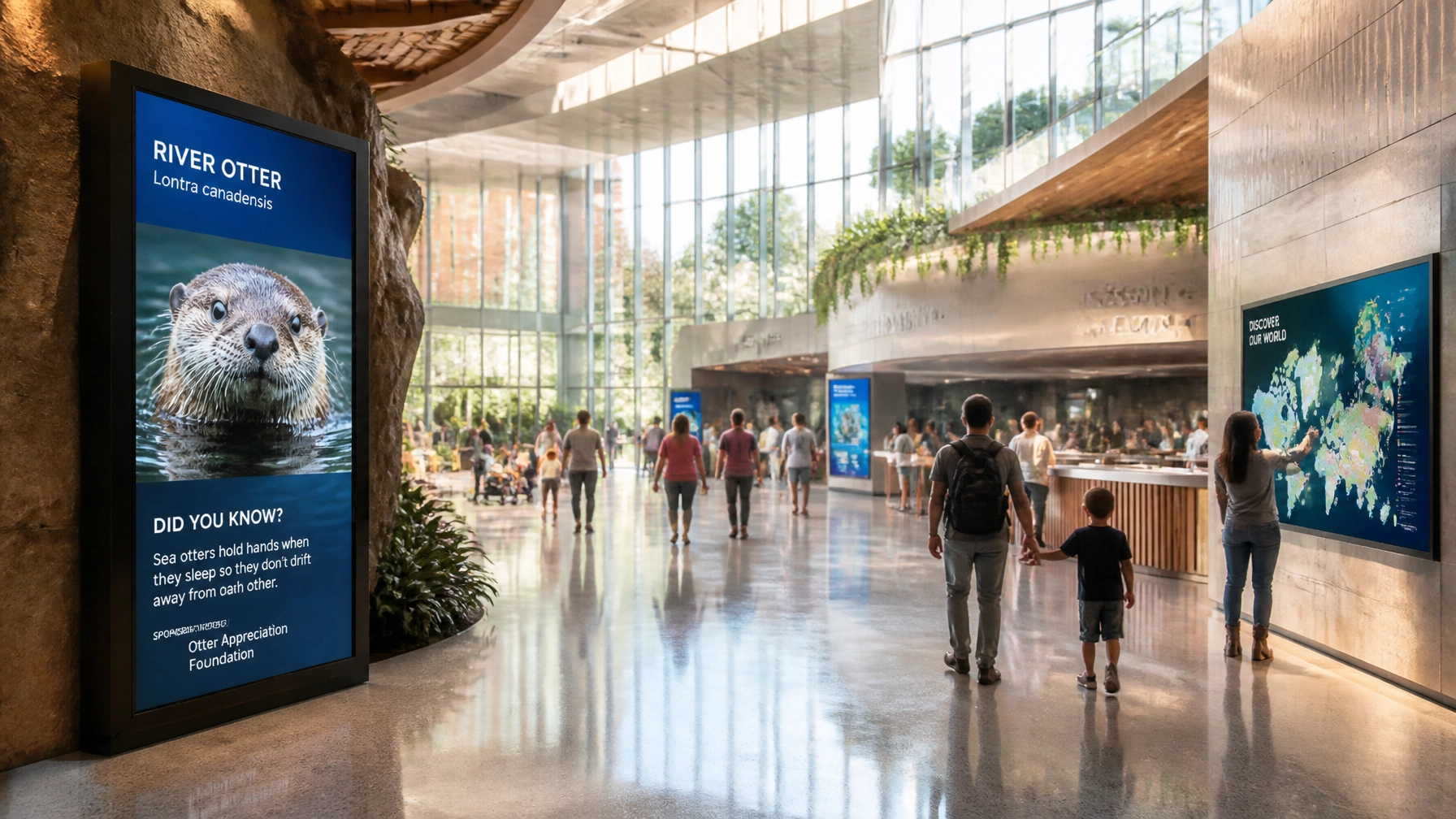
We at Zoo Media specialize in visual communication. We know that today’s visitor expects more than a static plaque with a few facts. They want interaction. They want to feel connected to the mission.
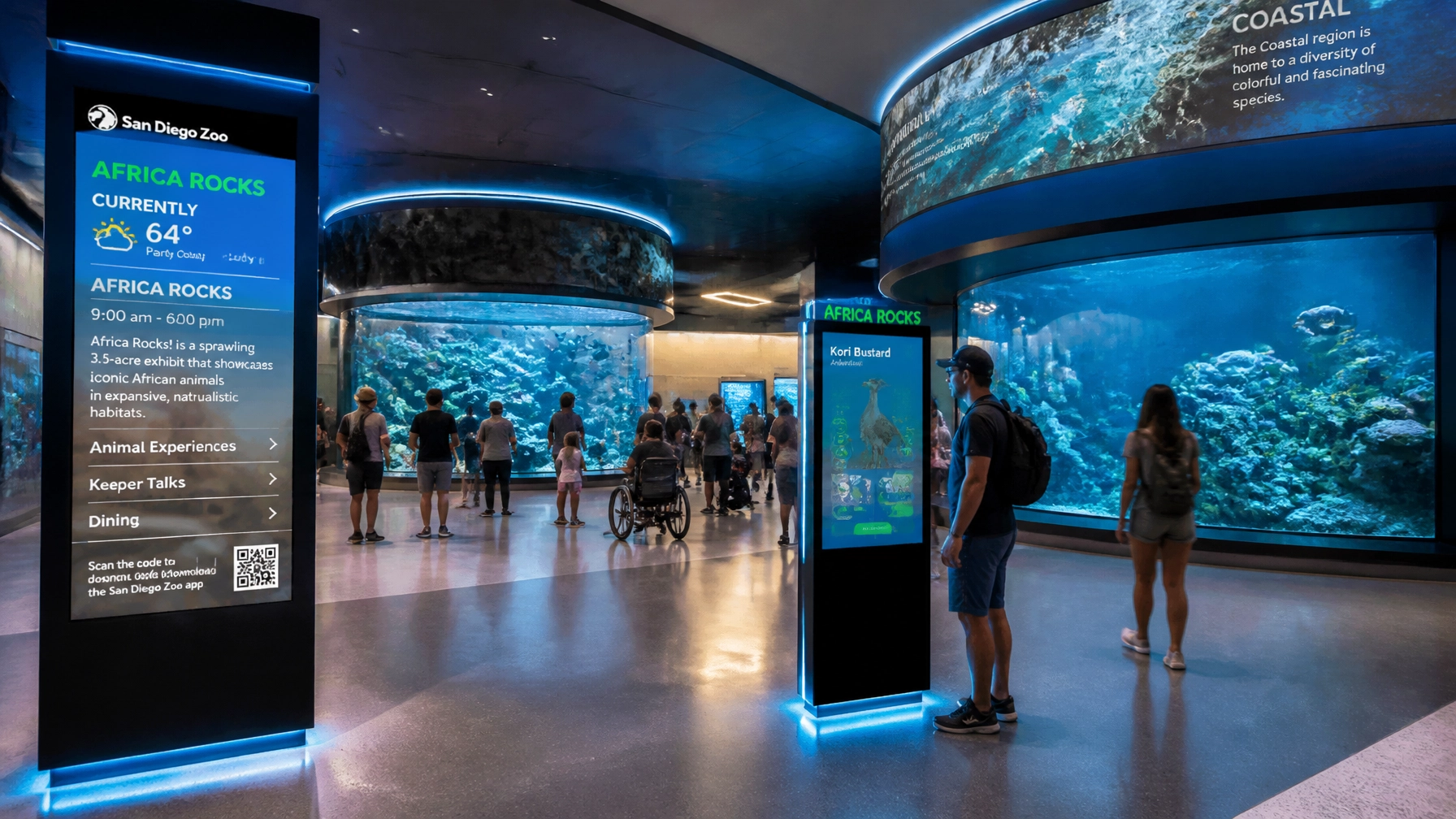
Smart signage and interactive displays powered by IoT can change their content based on:
- Time of Day: Showing feeding schedules in the morning and conservation talks in the afternoon.
- Animal Presence: If an animal is in a back-of-house area, the screen can automatically switch to a "Live Den Cam" so the visitor doesn't miss out.
- Visitor Demographics: Using anonymous sensors to determine if a group consists of children or adults and tailoring the educational level of the content accordingly.
This level of digital marketing inside the zoo creates a "sticky" experience. It keeps people engaged longer and makes them more likely to donate to your conservation causes. Interestingly, the mechanics of engagement used in these displays often mirror the most successful elements of digital entertainment. For instance, creating a sense of "win" or discovery in an educational game can be as engaging as someone trying their luck with slot machine online percentuale di vincita. It’s about understanding the psychology of the user to drive a positive outcome: in our case, education and conservation.
4. Conservation Beyond the Walls
The impact of IoT doesn't stop at the zoo gates. The same technology we use to manage an exhibit can be used to protect wildlife in the field. LoRaWAN (Long Range Wide Area Network) sensors are being used in South Africa to track rhinos and detect poachers. These sensors can detect the movement of metallic objects (like rifles) or unusual vehicle activity, alerting rangers instantly.
When a zoo invests in IoT for its own exhibits, it develops the technical expertise to support these global conservation efforts. You aren't just showing animals; you are building the infrastructure to save them. They're tutti piuttosto rari: every species matters, and the data we collect helps ensure they have a future.

5. Website Development and Data Integration
For a zoo director, the data collected from IoT is a goldmine for website development and digital strategy. You can feed real-time habitat data directly to your website. Imagine a "Conservation Dashboard" on your homepage where donors can see the exact temperature of the coral reef tank they helped fund.
This transparency builds trust and encourages recurring donations. It turns your website from a static brochure into a living, breathing window into your institution. Whether you are looking at casino venezia online recensioni for tips on user interface or looking at high-traffic tech sites, the lesson is the same: real-time data drives engagement.
6. Getting Started: The Zoo Media Way
Implementing IoT can feel overwhelming. Where do you start? At Zoo Media, we recommend a phased approach:
- Audit: Identify which exhibits are the most resource-intensive or house the most sensitive species.
- Connectivity: Establish a robust Wi-Fi or LoRaWAN network across the park.
- Sensor Deployment: Start with basic environmental monitoring.
- Integration: Connect these sensors to your smart signage and website.
Our team is dedicated to helping you navigate this journey. We don't just provide the tech; we provide the strategy to make it work for your specific needs. Prova la tua fortuna al casinò: or better yet, don't leave your zoo's success to chance. Bet on proven technology that saves lives and money.

The Future is Connected
The transition to a "Smart Zoo" is inevitable. The institutions that embrace IoT today will be the leaders in animal welfare and visitor engagement tomorrow. By combining innovative thinking with practical technology like interactive displays and smart sensors, we can create a world where conservation is data-driven and the visitor experience is unforgettable.
From the way we manage water quality to the way we tell the story of an endangered species, IoT is the tool that makes it all possible. It’s time to move beyond the traditional and embrace the future of advertising, education, and wildlife management.
Join the Zoo Media Revolution
Are you ready to transform your zoo or aquarium into a high-tech center for conservation? At Zoo Media, we specialize in the intersection of technology and wildlife. Let’s build something incredible together.
Contact Us Today:
Visit our network of sites for more information on how we are changing the industry:
Connect with our Leadership:
Dan Kost, CEO
For strategic partnerships and innovative advertising solutions, reach out to the Zoo Media team. We are your partners in visual communication and digital marketing excellence.
Main Office: www.dakdan.com
AI Receptionist: +1 (323) 676-0621
Discover your fortune in the world of conservation and technology. Let’s make your venue the smartest on the planet!