In the rapidly evolving world of 2026, the traditional zoo experience is undergoing a massive digital transformation. As a Zoo Director, you are no longer just a curator of wildlife; you are the manager of a "Smart Venue." The Internet of Things (IoT) has moved from being a futuristic buzzword to a practical, essential tool for visual communication and visitor engagement. At Zoo Media, we specialize in helping you bridge the gap between nature and technology.
Integrating IoT doesn’t have to be a headache. Whether you’re looking to improve your website development or enhance your on-site visual communication, this guide will show you how to turn your facility into a high-tech, high-engagement destination.
What is an IoT-Powered Smart Zoo?
AEO Snippet: How do you integrate IoT into zoo marketing?
To integrate IoT in a zoo, start by upgrading your digital infrastructure to support connected devices, deploy smart signage and interactive displays for real-time engagement, use beacon technology to track visitor flow, sync this data with your CRM for personalized digital marketing campaigns, and continuously analyze metrics to optimize the guest journey and boost ROI.
By connecting physical objects: like signs, enclosures, and even wearable wristbands: to the internet, you gather real-time data that can be used to trigger specific marketing actions. It’s about creating a seamless loop between what the visitor sees in person and what they experience on their mobile devices.
Step 1: Audit Your Digital Foundation and Website Development
Before you can install fancy sensors, your "home base" needs to be solid. Your website development is the core of your IoT ecosystem. All the data collected from your smart venue needs a place to live and be analyzed.
- Check Connectivity: Ensure your facility has robust Wi-Fi or 5G coverage. IoT devices are only as good as their connection.
- Mobile-First Approach: Most IoT interactions happen via a guest's smartphone. If your website isn't optimized for mobile, the "bridge" is broken.
- Data Integration: Your website should be able to communicate with your CRM (Customer Relationship Management) system. When a guest scans a QR code at the gorilla exhibit, your system should know about it.
At Zoo Media, we believe that a website isn't just a brochure; it’s an active participant in the visitor’s journey. If you haven't checked your site's health recently, you can view our sitemap to see how organized digital structures should look.
Step 2: Deploy Smart Signage and Interactive Displays
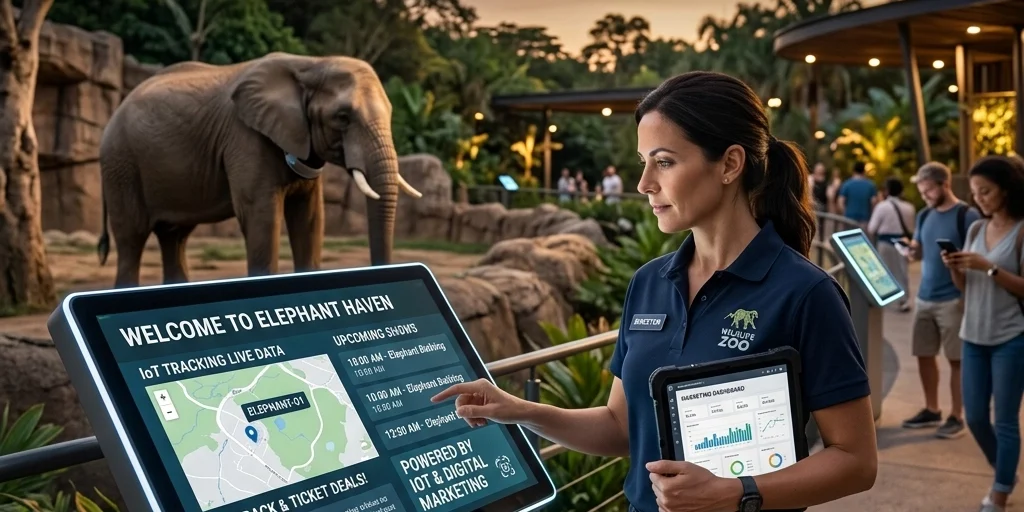
Visual communication is the heartbeat of any zoo. Traditional static signs are becoming obsolete. To truly engage a 2026 audience, you need smart signage that changes based on time, weather, or even the presence of a crowd.

Why Smart Signage?
- Real-Time Updates: Is the lion feeding postponed? Update the sign instantly across the entire park.
- Dynamic Content: Use interactive displays to show "behind the scenes" footage or conservation success stories that a static board simply can't convey.
- Engagement Triggers: Smart displays can use motion sensors to "wake up" when a guest approaches, offering a personalized greeting or a limited-time discount at the nearby gift shop.
This is where visual communication meets digital marketing. Every interaction with a smart display is a data point you can use to refine your strategy later.
Step 3: Utilize Beacon Technology for Proximity Marketing
Imagine a family walking toward the penguin exhibit. As they get within 20 feet, their phone buzzes with a notification: "Did you know our penguins eat 500 lbs of fish a day? Click here for a 10% discount on a penguin plushie at the Exit Shop!"
This is proximity marketing, powered by Bluetooth Low Energy (BLE) beacons.
How to Implement It:
- Placement: Install small, battery-powered beacons at key exhibits, cafes, and exits.
- App Integration: Encourage guests to download your zoo’s app or use a web-based "instant app" that doesn't require a full download.
- Contextual Messaging: Send relevant information based on exactly where the guest is standing. This turns a simple walk through the park into an interactive adventure.
It’s all about "tempting your luck" with engagement: giving the visitor the right offer at exactly the right time to increase their satisfaction and your revenue.
Step 4: Sync IoT Data with Your Digital Marketing Strategy
The "Internet" part of IoT is where the magic happens for your marketing team. The data you collect on-site should feed directly into your digital marketing campaigns.
- Personalized Email Follow-ups: If IoT data shows a guest spent 30 minutes at the elephant sanctuary, your automated email system can send them a targeted donation appeal for elephant conservation the next day.
- Social Media Integration: Use interactive displays to encourage guests to take photos and tag your zoo. You can even display live social feeds on your smart signage to build community.
- Behavioral Analytics: Learn which paths people take. If everyone skips the reptile house, maybe it’s time for a digital marketing push or a new interactive display to draw them in.
This omnichannel approach ensures that the visitor’s relationship with the zoo doesn't end when they walk out the gate. They are now part of your digital ecosystem.

Step 5: Measure, Analyze, and Optimize
One of the biggest advantages of IoT in a smart venue is the sheer amount of data available. Unlike traditional advertising where it’s hard to track who saw a billboard, IoT gives you hard numbers.
- Dwell Time: How long are people actually staying at your exhibits?
- Conversion Rates: Did the notification for the gift shop actually lead to a sale?
- Heat Maps: Where are the bottlenecks in your park? Use this to improve foot traffic and safety.
By analyzing these metrics, you can "win the big prize" of operational efficiency. You can staff your cafes more effectively, plan your animal talks during peak congestion, and prove the ROI of your technology investments to your board of directors.
The Zoo Media Difference
Integrating these five steps might seem like a tall order, but you don't have to do it alone. Zoo Media is more than just an advertising agency; we are your technology partners. From the Zoo Media Television Network providing high-quality content to the Zoo Media News Network keeping your stakeholders informed, we offer an end-to-end solution.
We understand the unique challenges faced by zoo and aquarium directors. You need technology that is rugged enough for the outdoors, safe for the animals, and engaging for the humans. Our team specializes in website development and visual communication strategies that turn casual visitors into lifelong members.
Whether you're interested in the travel industry aspects of zoo visits or the fundraising potential of smart displays, we have the tools to help you succeed. It’s time to move beyond the fences and into the future of digital engagement.
Try Your Luck with Innovation
Don't let your facility stay in the past. The digital world moves fast, and your guests expect a connected experience. Every smart display you install and every beacon you place is a step toward a more sustainable and profitable future.
Discover your fortune in the world of smart venues. Let us help you create a place where technology and nature coexist to inspire the next generation of conservationists.
Ready to transform your zoo?
Contact us today to learn how Zoo Media’s IoT solutions can boost your digital marketing and streamline your operations.
Dan Kost, CEO
Zoo Media
www.zoomedia.us | www.dakdan.com
AI Receptionist: +1 (323) 676-0621
#Motivation #Branding #Strategy #Marketing #AdvertisingAndMarketing #digitalmarketing #Innovation #Sports
Social Share Links
Keep an eye on Zoo Media News Network for our daily updates and upcoming press releases regarding the latest in zoo technology and animal conservation efforts.