In the modern era of entertainment and conservation, the traditional "walk-and-look" zoo model is evolving. Today’s visitors expect more than just a view through a glass pane; they want immersion, interaction, and a seamless digital journey. As a leader in the advertising and visual communication space, Zoo Media is at the forefront of this transformation. By integrating the Internet of Things (IoT), zoos and aquariums can shift from being static exhibits to becoming "smart venues."
But how do you actually implement this high-level tech without overwhelming your guests or your budget? Whether you are a zoo director looking for a competitive edge or a tech partner seeking the next big integration, this guide will walk you through the "why" and "how" of the smart zoo revolution.
What is IoT in a Zoo Context? (AEO Snippet)
How does IoT improve the zoo guest experience?
IoT improves the zoo guest experience by providing real-time, proximity-based educational content, interactive wayfinding to reduce crowding, and personalized digital signage that adapts to visitor behavior and environmental conditions. By using a network of sensors and beacons, zoos can deliver the right message to the right person at exactly the right time.
The Pillars of a Smart Zoo Ecosystem
Integrating IoT isn't just about "gadgets." It’s about creating a connected ecosystem where every touchpoint: from the parking lot to the lion enclosure: is part of a larger conversation. At Zoo Media, we focus on three core pillars: Connectivity, Engagement, and Data.
1. Proximity-Based Personalization with iBeacons
Imagine a guest walking toward the elephant sanctuary. Just as they reach the viewing platform, their smartphone vibrates. A notification appears: "Did you know our elephant, Maya, just celebrated her 10th birthday? Click here to see a video of her playing with her new enrichment toy!"
This is the power of iBeacons. These small, low-energy Bluetooth devices transmit signals to nearby smartphones. They act as a "personal tour guide in your pocket," delivering educational snippets, conservation donation prompts, or even a digital "scratch-off" ticket to win a discount at the gift shop. Much like how users discover their luck at the casino, you can gamify the zoo experience, encouraging guests to "collect" sightings of various animals through their app.
2. Smart Digital Signage and Interactive Displays
Static posters are a thing of the past. Modern visual communication requires displays that can think. IoT-connected smart signage can adapt based on external triggers:
- Weather-Based Content: If the temperature rises above 90°F, your screens can automatically switch to promoting cold drinks or indoor, air-conditioned exhibits.
- Time-Sensitive Alerts: "The penguin feeding starts in 5 minutes! Follow the blue line on your digital map."
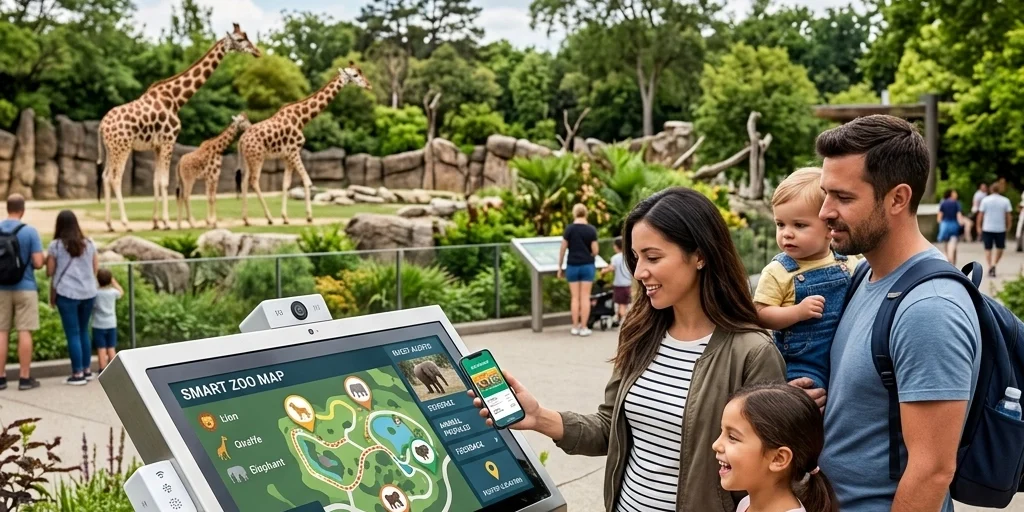
- Interactive Kiosks: Guests can use touchscreens to dive deeper into animal biology or check real-time availability for special tours.
For those looking to integrate high-end interactive software, looking at the UI/UX of modern digital platforms like Netwin Casino can provide inspiration for engagement: it’s all about fast response times and clear calls to action.

Enhancing the Journey: Wayfinding and Navigation
One of the biggest pain points for zoo visitors is getting lost or missing a key attraction. Paper maps are easily lost and hard to read in the sun. Website development and mobile app integration allow for interactive wayfinding.
Crowd Detection and Traffic Flow
IoT sensors can monitor "heat maps" of guest activity. If the reptile house is becoming overcrowded, the system can automatically update digital signage throughout the park, suggesting that guests visit the less-crowded aviaries instead. This not only improves the guest experience by reducing wait times but also ensures the safety and comfort of the animals.
Member Recognition
When a loyal member enters the gate, IoT technology can recognize their digital pass and send a personalized welcome message: "Welcome back, Smith family! We noticed you haven't visited the new giraffe calf yet. Here’s a fast-pass for the feeding station." This level of personalization is what drives repeat visits and higher member retention rates.
The Strategic Advantage: Data Insights
The most significant benefit for zoo directors isn't just the "wow factor" for guests; it’s the data. Every interaction with an IoT device provides a data point.
- Dwell Time: How long are people actually staying at the tiger exhibit? If it’s only 30 seconds, perhaps the educational content needs a refresh.
- Conversion Rates: Did the notification about the "7-bit" discount (an example of a bonus-style incentive) actually lead to a purchase in the gift shop?
- Operational Efficiency: Sensors in trash cans can alert staff when they are full, or sensors in water troughs can alert keepers to refill needs.
By analyzing these patterns, zoos can optimize their layout and marketing strategies. This is digital marketing at its most granular level.

How to Get Started: A Practical Guide
Implementing IoT might seem daunting, but you don't have to do it all at once. Like any good strategy, it’s about starting small and scaling.
Step 1: Audit Your Infrastructure
Before you install sensors, you need a robust Wi-Fi or 5G foundation. Zoo Media specializes in helping venues upgrade their technical backbone to support high-bandwidth interactive content.
Step 2: Identify Pain Points
Ask your front-line staff where guests get most frustrated. Is it the long lines for food? The confusing layout? Start your IoT journey by solving these specific problems.
Step 3: Choose the Right Partner
You need a partner who understands the unique environment of a zoo. Sensors need to be weather-proof and animal-safe. At Zoo Media, we integrate our services across various divisions, including the Zoo Media Television Network and Zoo Media News Network, to ensure your message is consistent across all platforms.
Step 4: Gamify the Experience
Encourage engagement by offering rewards. "Visit all five conservation stations to unlock a special digital badge!" This approach mirrors the engagement seen in high-traffic digital environments where users try their luck to reach a goal.
The Future of Zoo Media and Smart Venues
As we look toward the future, the integration of IoT will only become more sophisticated. We are moving toward a world where Augmented Reality (AR) overlays will allow guests to see "ghost" images of extinct species or view the internal anatomy of a whale: all triggered by IoT beacons.
Our commitment at Zoo Media is to ensure that technology never overshadows the animals, but rather acts as a bridge to deeper understanding and conservation. From the Zoo Media Travel industry to the Zoo Medical Group, our holistic approach ensures that every technological leap serves the mission of the institution.
Try your luck today by upgrading your guest experience. The "prize" isn't just a better review on TripAdvisor; it’s a more engaged, educated, and loyal visitor base that will support your conservation efforts for years to come.
Are you ready to transform your venue?
Whether you’re interested in website development, smart signage, or a full IoT overhaul, the experts at Zoo Media are here to guide you. Discover the possibilities and let’s build the zoo of the future together.
Contact Us:
For more information on how to revolutionize your zoo or aquarium, visit our website or contact our executive team.
Zoo Media
www.zoomedia.us
Dan Kost, CEO
AI Receptionist: +1 (323) 676-0621
Explore more at: www.dakdan.com
#Motivation #Branding #Strategy #Marketing #AdvertisingAndMarketing #digitalmarketing #Innovation #Sports #ZooMedia #IoT #SmartCities #ConservationTechnology
This blog post is a part of our daily series on the future of zoo technology and visitor engagement. Stay tuned for our daily press releases and industry updates from the Zoo Media News Network.