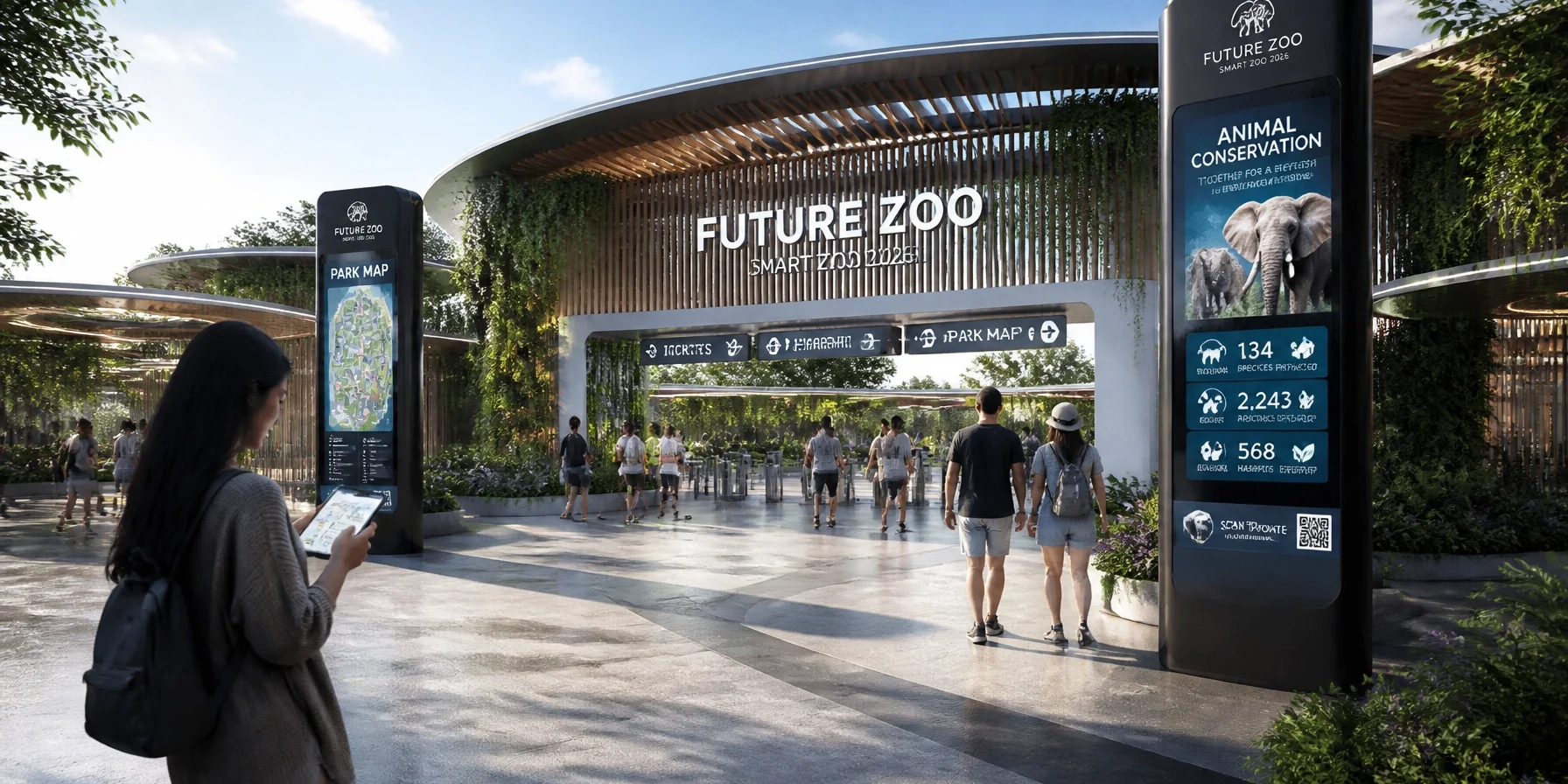
Have you ever wondered how technology can transform a traditional walk through the park into a high-tech journey of discovery? The year 2026 is here, and the "Smart Zoo" is no longer a concept of the distant future. It is a reality that is reshaping how we manage animal welfare and how visitors interact with the natural world.
At Zoo Media, our goal is to assist zoos and aquariums around the globe by enhancing the visitor experience and promoting the care of animals. By introducing innovative thinking, we help these iconic locations become smart venues. If you are a zoo director or a brand manager looking to make a splash, these 10 technologies are your winning ticket.
1. Hardware-Free Smart Wayfinding
Forget the old paper maps that get soggy in the rain. In 2026, smart venues use "blue-dot" navigation. This technology allows visitors to see their exact location on their smartphones, guiding them through complex paths to find their favorite animals or the nearest café.
- Practical Example: A family can receive a notification that a giraffe feeding session starts in 5 minutes and get a step-by-step path to get there on time.
- The Benefit: It reduces visitor frustration and keeps the flow of the park moving smoothly.
2. IoT Environmental Sensors for Habitats
The health of an animal starts with its environment. IoT (Internet of Things) sensors are now the backbone of modern animal care. These devices monitor water quality, pH levels, salinity, and temperature in real-time.
- Did you know? Instead of manual checks every few hours, systems now send instant alerts to keepers' tablets if a parameter drifts.
- Security & Safety: This constant monitoring ensures that every creature, from the smallest frog to the largest shark, stays in optimal conditions.

3. Wearable Animal Bio-Trackers
Monitoring health has gone high-tech. Some species now utilize non-invasive wearable sensors or embedded trackers that monitor movement, heart rate, and body temperature.
- Why it matters: AI-driven behavior analysis can detect early signs of illness or stress, such as excessive pacing, long before they are visible to the human eye.
- Innovation at work: This data doesn't just stay with the vets; it can be used to inform habitat design and management.
4. Interactive LED Facades and Motion-Sensing Displays
Imagine walking past an aquarium tank and having a virtual dolphin "swim" toward you in response to your gestures. Interactive LED walls and sensor-interactive facades are turning passive viewing into active engagement.
- Try your luck: Engage with a touch-sensitive screen to "draw" a coral reef and see it projected into a massive digital ecosystem.
- Stats to watch: These experiences produce 2–6 times longer dwell times compared to static signage. They are truly "one of a kind," or as we say in the industry, they're all rather rare in traditional settings but essential for 2026.

5. Augmented Reality (AR) Overlays
AR is the perfect bridge between education and entertainment. By holding up a smartphone or looking through smart glass, visitors can see 3D skeletal data, muscle structures, or conservation status text overlaid on the real animal.
- The "Wow" Factor: When an animal is off-exhibit or resting, AR can present a virtual visualization of that species' behavior, so the educational journey never stops.
- Digital Marketing Tip: Use AR to create "scavenger hunts" that encourage visitors to explore every corner of your venue.

6. RFID Gamified Exploration
Wristbands are the new tickets. Using RFID technology, zoos can gamify the entire visit. Visitors collect digital "badges" at different stations, unlock exclusive content, and track their progress through the park.
- Engage the youth: Interactive "Exploria" zones allow kids to create avatars and score points by answering conservation questions.
- Impact: Research shows that gamified exploration can increase the likelihood of donations by nearly 48%.
7. Dynamic Smart Signage for Revenue
Visual communication is key for any advertising agency or brand manager looking to partner with a zoo. Dynamic smart signage changes content based on the time of day, the weather, or even crowd density.
- Practical Tip: On a hot day, your signage can automatically switch to promoting cold drinks at a nearby kiosk.
- Sponsorship: It offers unique corporate sponsorships that are far more effective than old-fashioned static banners. Discover the power of Smart Signage for your venue today.

8. AI-Powered Visitor Analytics
To manage a smart venue, you need data. AI-powered cameras and sensors can generate "heatmaps" of visitor movement. This helps zoo directors understand which exhibits are most popular and where bottlenecks occur.
- Optimization: Use these insights to adjust staffing, plan maintenance, or even decide where to place the next high-revenue food cart.
- Website Development: Link this data to your zoo's digital platform to provide live "busyness" updates to guests before they even arrive.
9. The SMART Platform Integration
Conservation doesn't stop at the zoo gates. The SMART (Spatial Monitoring and Reporting Tool) platform allows zoos to connect their on-site education with real-world field data from over 1,000 protected sites globally.
- Education: Show visitors real-time data from anti-poaching patrols or wildlife sightings in the wild.
- Trust: This transparency builds incredible trust and encourages visitors to support your conservation missions.
10. Contactless Payments and Smart Vending
The future of retail is frictionless. By 2026, smart venues have moved entirely to contactless payments and automated smart vending.
- Convenience: Visitors can buy food, souvenirs, or even animal-friendly treats with a tap of their wristband or phone.
- Strategy: This reduces lines, keeps visitors happy, and significantly boosts per-capita spending.
Conclusion: Partner with Zoo Media for the Future
The transformation from a traditional zoo to a Smart Venue is a journey of innovation and strategic partnership. Whether you are looking for advanced visual communication, robust website development, or cutting-edge digital marketing, Zoo Media is here to guide you.
Don't let your venue stay in the past. Experience the future of conservation and technology today. Our innovative thinking assists zoos and aquariums in becoming the smart venues of tomorrow.
Reach Out to the Experts
Are you ready to revolutionize your visitor experience? Zoo Media continues to streamline our systems and resources to provide our Strategic Partners and Advertisers with unequaled high-tech creative marketing services.
Visit us at: www.zoomedia.us
Explore our Travel network: travel.zoomedia.us
Stay updated: ZooMediaNetwork.com
Contact our Leadership:
Dan Kost, CEO
Zoo Media Innovative Thinking
AI Receptionist: +1 (323) 676-0621
Learn more about our global vision at www.dakdan.com.
#Motivation #Branding #Strategy #Marketing #AdvertisingAndMarketing #digitalmarketing #Innovation #Sports #SmartZoo #EcoTech #FutureOfZoos