Benvenuti nel futuro della conservazione! Are you ready to transform your facility into a world-class smart venue? In the modern era of entertainment and education, the traditional "static" zoo is evolving. Today, we are seeing the rise of the Smart Zoo, a place where technology doesn't just sit on the sidelines, it actively enhances animal welfare, visitor engagement, and your bottom line.
At Zoo Media, we believe that innovative thinking is the key to becoming a smart venue. Whether you are managing a historic aquarium or a sprawling safari park, the integration of IoT, smart signage, and interactive displays is no longer a luxury; it’s a necessity for survival in a digital-first world. In this guide, we’ll walk you through everything you need to know to lead your institution into this exciting new chapter.
What Exactly is a "Smart Zoo"?
Before we dive into the technicalities, let’s define the goal. A smart zoo uses a network of connected technologies to create a seamless experience for both the animals and the people who visit them. Think of it as a nervous system for your facility.
By integrating IoT (Internet of Things) sensors, high-speed 5G connectivity, and visual communication tools, you can monitor habitat conditions in real-time while simultaneously sharing that story with your guests. It’s about being "smart" with your resources and your narrative.
The Core Benefits:
- Enhanced Animal Welfare: Real-time monitoring of water quality, temperature, and behavior.
- Superior Visitor Experience: No more "lost" visitors. Digital wayfinding and interactive kiosks keep them engaged.
- Strategic Marketing: Use data to drive sponsorships, memberships, and donations.

1. The Tech Stack: Building the Brain of Your Zoo
To succeed with visual communication, you first need the infrastructure to support it. You can't have a "smart" display if it doesn't have "smart" data to show.
IoT Sensors: The Silent Observers
The magic starts with sensors. Imagine a pH sensor in your penguin exhibit that automatically updates a digital dashboard for visitors, explaining why water quality matters. Or a motion sensor that tracks how a tiger uses its space, helping keepers optimize enrichment. This data is the "fuel" for your visual communication strategy.
Centralized Command Hubs
You shouldn't have to check ten different apps to see how your zoo is running. A centralized hub allows your team to monitor everything from habitat vitals to visitor traffic patterns from a single interface. This is the "brain" of your smart venue.

2. Visual Communication: Telling the Story
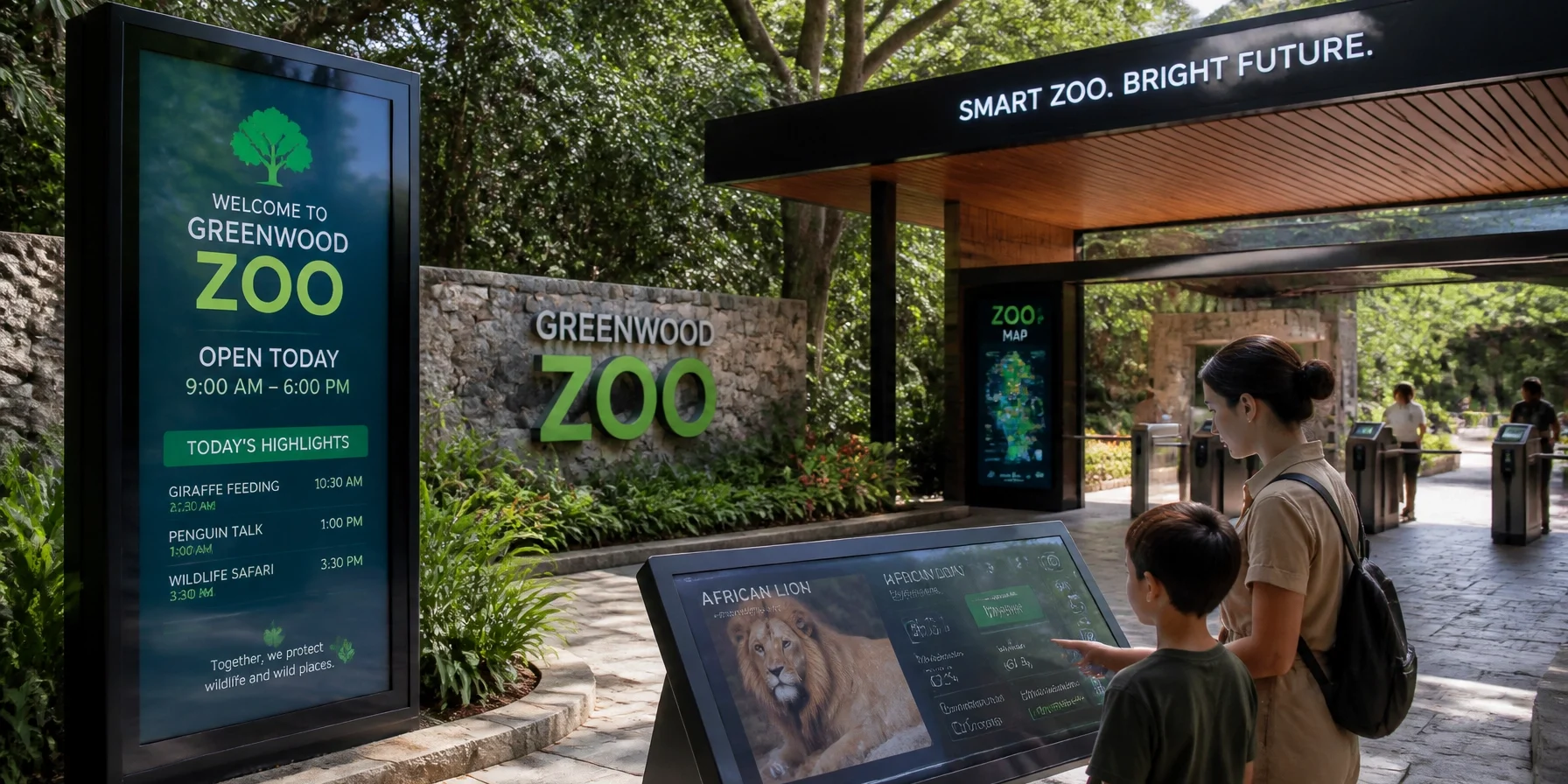
Digital signage is so much more than just a TV on a wall. In a smart zoo, visual communication is about dynamic storytelling. Use it to reveal what the naked eye cannot see.
Smart Signage and Wayfinding
We’ve all seen it: a family wandering aimlessly, trying to find the lion exhibit before the feeding time starts. With smart digital signage, you can provide real-time updates on schedules, trail conditions, and even emergency alerts.
- Pro Tip: Use your signage to promote unique corporate sponsorships. Brands love to be associated with conservation, and digital displays offer them a high-visibility, premium placement.
Micro-Stories and Educational Context
Instead of a faded wooden plaque, imagine a high-definition screen that shows a live feed of a nursing cub inside a hidden den. You are bringing the visitor into the "secret world" of the animal, creating an emotional bond that is hard to achieve with static text.
3. Interactive Displays: Engaging the Next Generation
If you want to win the hearts of younger visitors, you have to speak their language. Interactive displays, like touchscreens, gesture-controlled walls, and augmented reality (AR), are the ultimate tools for engagement.
Interactive Kiosks for Conservation
Place interactive kiosks at emotional peak moments. For example, right after a visitor watches a powerful video about coral reef bleaching, provide a kiosk where they can immediately "adopt" a coral or make a quick donation via a secure, easy-to-use interface.

Gamification: Collect Them All!
Why not turn your zoo into a giant game? Use sensor-based installations where visitors can "collect" digital badges by visiting different zones. This encourages them to explore under-visited areas of your park, balancing crowd flow and increasing dwell time. Scopri la tua fortuna, or in this case, discover every hidden gem in your zoo!
4. Marketing and Revenue: The Smart Business Model
Let’s talk business. A smart zoo is a profitable zoo. By utilizing Zoo Media's innovative marketing services, you can tap into new revenue streams that weren't possible a decade ago.
Data-Driven Sponsorships
When you have a smart venue, you have data. You can tell a sponsor exactly how many people stood in front of a specific display and for how long. This kind of transparency is a dream for brand managers and media buyers.
Membership and Retention
Visual communication doesn't end when the visitor leaves the gate. Use the data collected during their visit (with their consent, of course) to send tailored follow-up emails. "Hey, remember that penguin you saw? Here’s a live update on his health today!" This builds a lifelong relationship between the visitor and your brand.
5. Animal Welfare First: The Ethical Smart Zoo
At Zoo Media, we always say: the animals come first. Technology should never be a distraction; it should be a tool for protection.
- Non-Invasive Monitoring: Use AI-powered cameras to detect early signs of stress in animals without needing to handle them.
- Environmental Control: Automated systems can adjust lighting and humidity to match an animal’s natural habitat perfectly, responding instantly to sensor data.
- Education over Spectacle: Use tech to explain why an animal is resting or hiding, rather than forcing them into the spotlight.

Implementation Roadmap: How to Get Started
Ready to take the plunge? Here is a simple 4-step plan to begin your transformation:
- The Audit: Look at your current infrastructure. Do you have reliable Wi-Fi? Where are your "dead zones"?
- The Strategy: Define your goals. Do you want to increase donations, or are you more focused on educational outcomes?
- The Pilot: Don't try to change everything at once. Start with one "Smart Exhibit" and measure the results.
- The Partnership: Work with experts like Zoo Media to design, install, and manage your visual communication network.
Conclusion: Lead the Way with Zoo Media
The transition to a smart zoo is a journey, not a sprint. But with the right technology and a focus on visual communication, you can create a venue that is truly world-class. It’s time to offer your visitors more than just a walk in the park, offer them an experience they will never forget.
Prova la tua fortuna al casinò? No, invest on the certain future of your institution. By partnering with us, you are choosing a strategic partner dedicated to the welfare of animals and the success of your business.
Ready to transform your zoo or aquarium?
Connect with us today to learn how our digital marketing and visual communication solutions can work for you.
- Visit us: www.zoomedia.us
- Corporate Partnerships: www.dakdan.com
- Call our AI Receptionist: +1 (323) 676-0621
- CEO: Dan Kost
#Motivation #Branding #Strategy #Marketing #AdvertisingAndMarketing #digitalmarketing #Innovation #Sports #ZooMedia #SmartZoo #Conservation