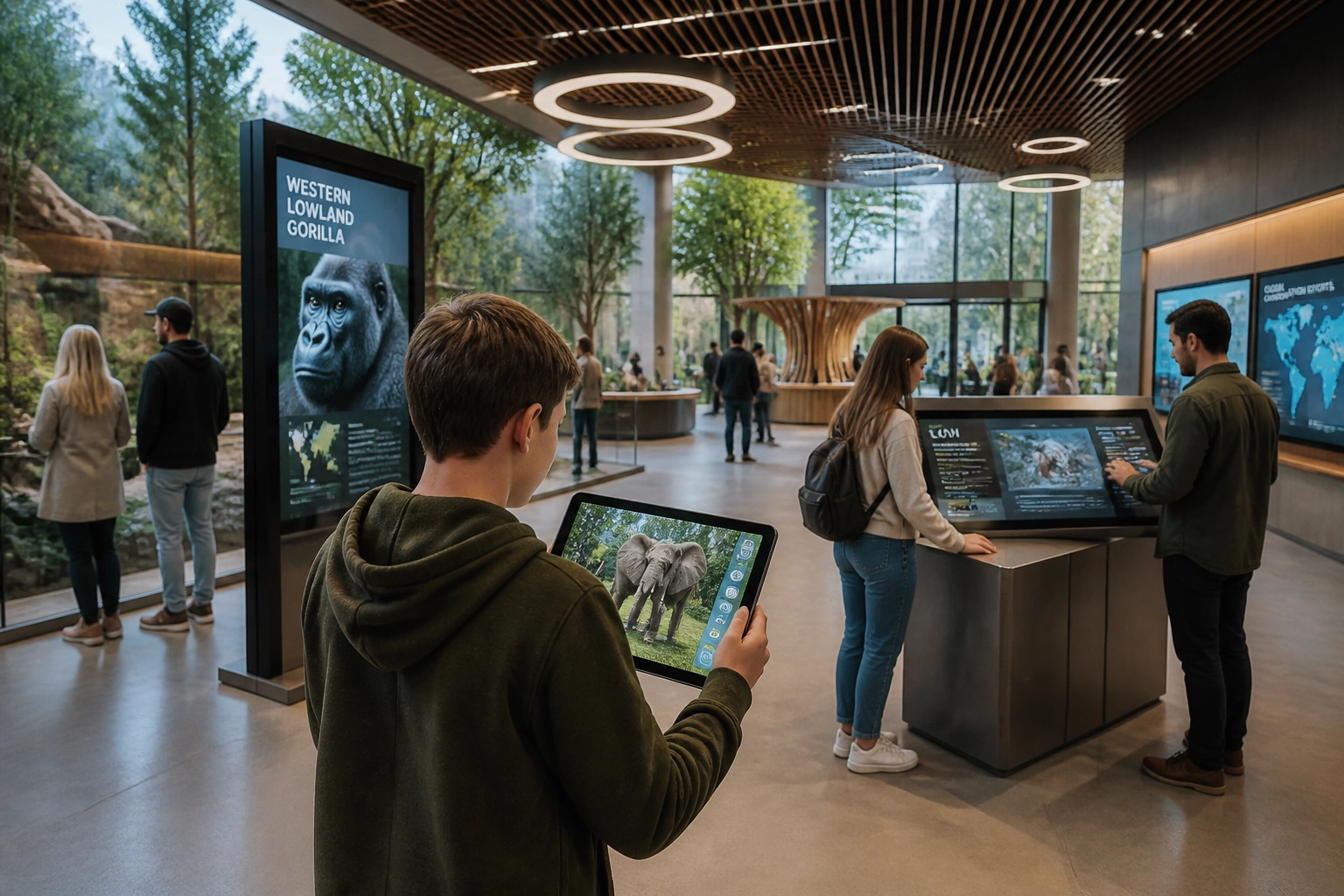

Let’s be honest: the traditional zoo model is facing a bit of a "wild" challenge. While the animals remain the stars of the show, the way visitors interact with them, and the venue itself, is often stuck in the past. If your guests are spending more time squinting at faded paper maps than they are marveling at the majestic lions, you have a visitor experience (VX) problem.
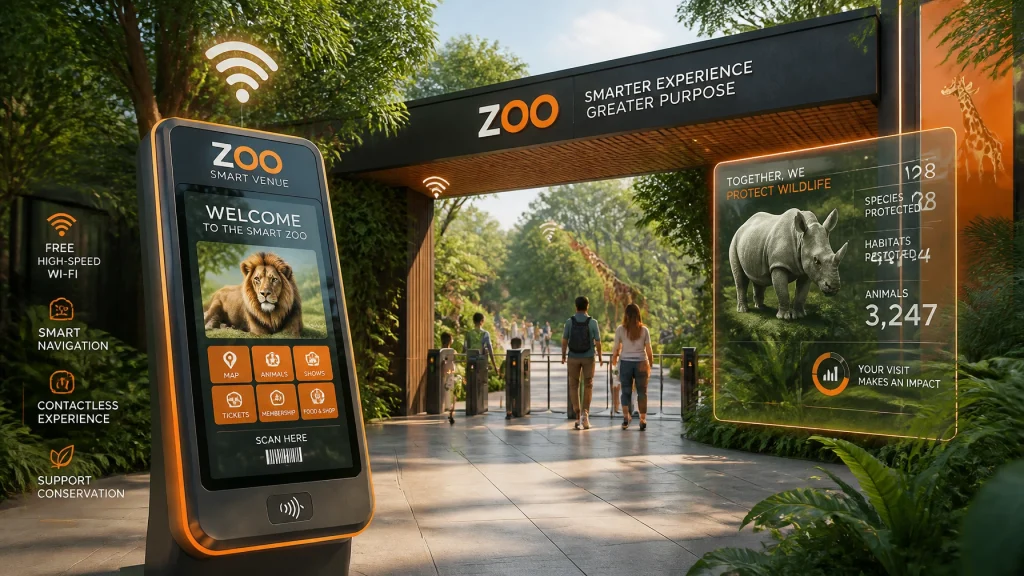
In today’s hyper-connected world, visitors expect more than just a walk in the park. They want seamless navigation, instant information, and a touch of magic. At Zoo Media, we specialize in transforming traditional zoos and aquariums into smart venues. By leveraging cutting-edge digital marketing, IoT, and visual communication, we help you bridge the gap between nature and technology.
Is your visitor experience falling short? Here are 10 common reasons why, and the smart tech solutions that can fix them right now.
1. Your Wayfinding is Static and Confusing
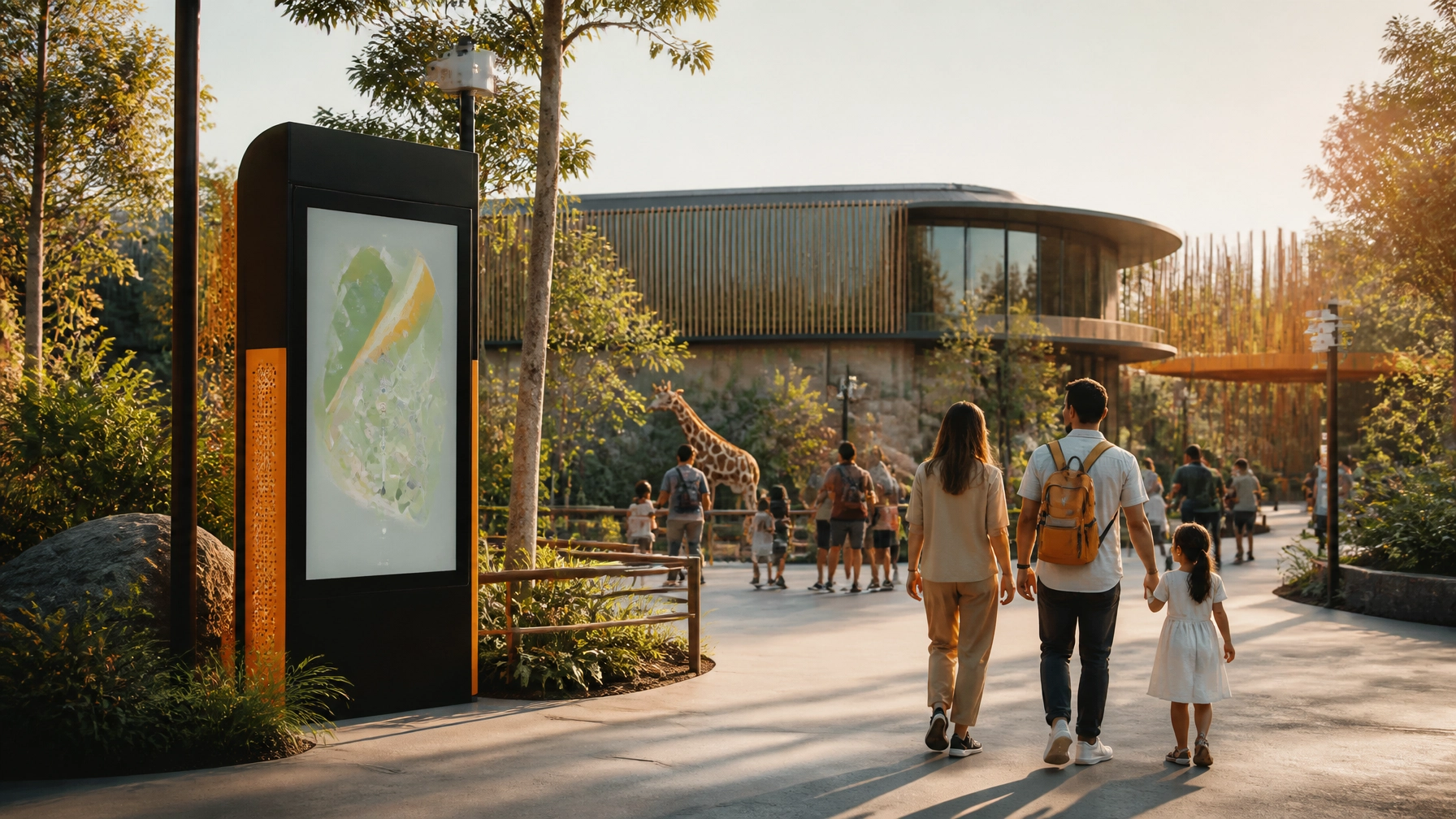
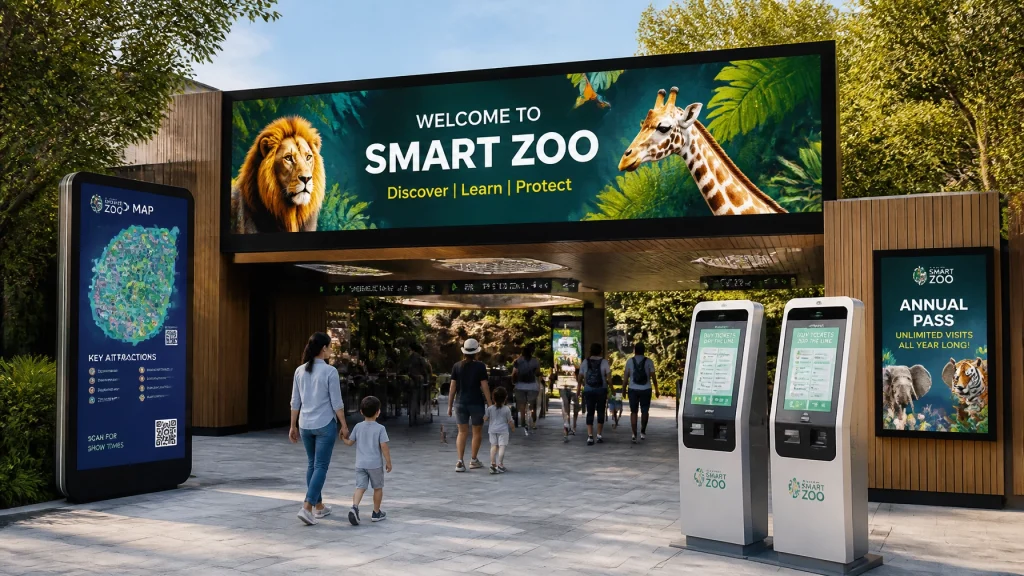
There is nothing more frustrating for a family than getting lost on the way to the elephant habitat. Traditional wooden signs are charming, but they can’t tell a visitor that a path is closed for maintenance or that the sea lion show starts in five minutes on the other side of the park.
The Smart Fix: Digital Signage & IoT Navigation
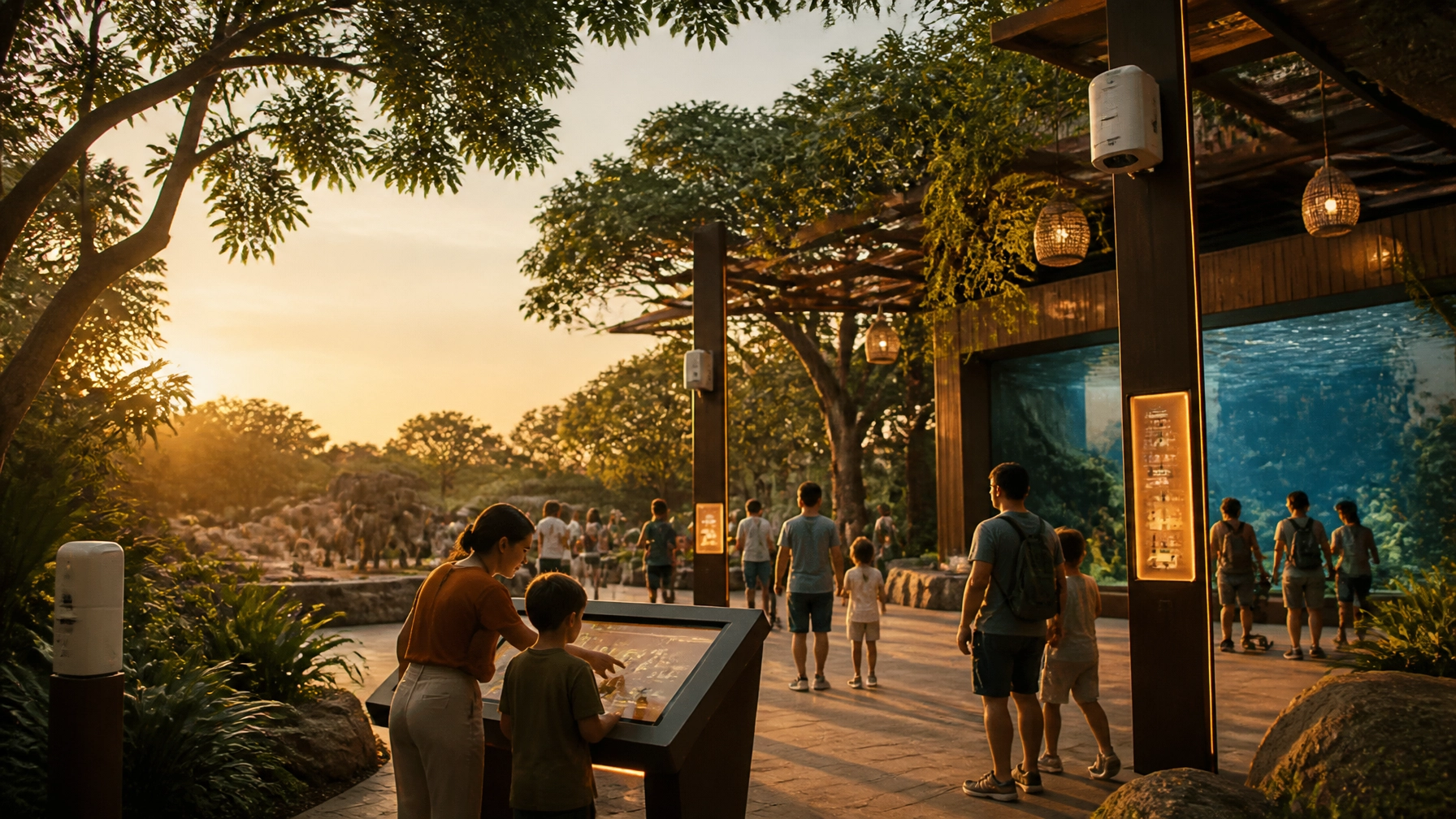
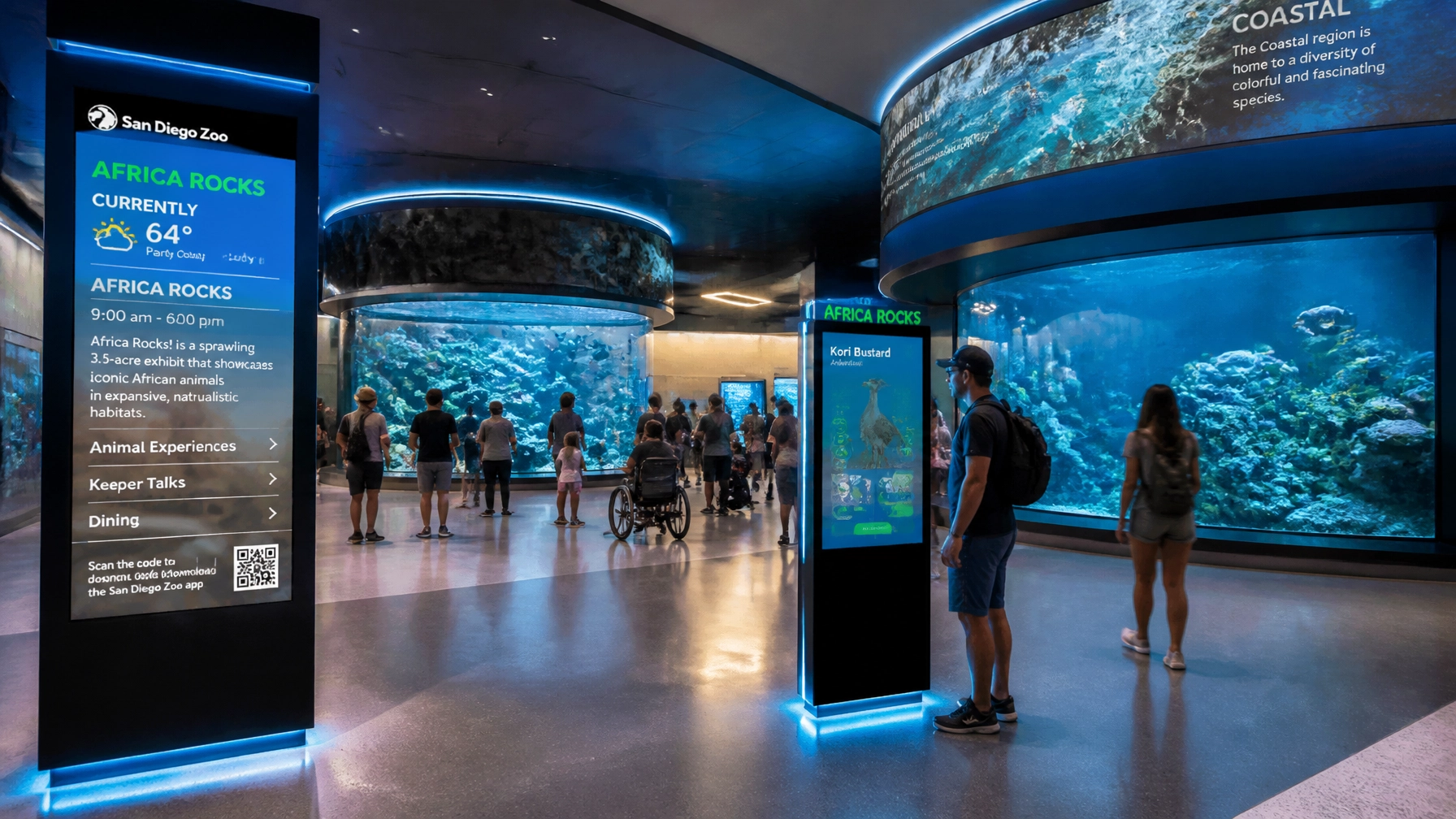
Replace static signs with high-brightness smart signage. These displays can update in real-time, showing walking times, upcoming events, and even crowd density. When integrated with a mobile app using GPS and Bluetooth beacons, your visitors get a "blue dot" navigation experience right on their phones. They're tutti piuttosto rari, well, not anymore with the right partner!

2. The "Invisible Animal" Disappointment
We’ve all seen it: a group of kids crowded around an exhibit, only to find the leopard is taking a nap in a hidden corner. While animal welfare always comes first, "empty" exhibits lead to guest dissatisfaction.
The Smart Fix: Live Cams and AR Overlays
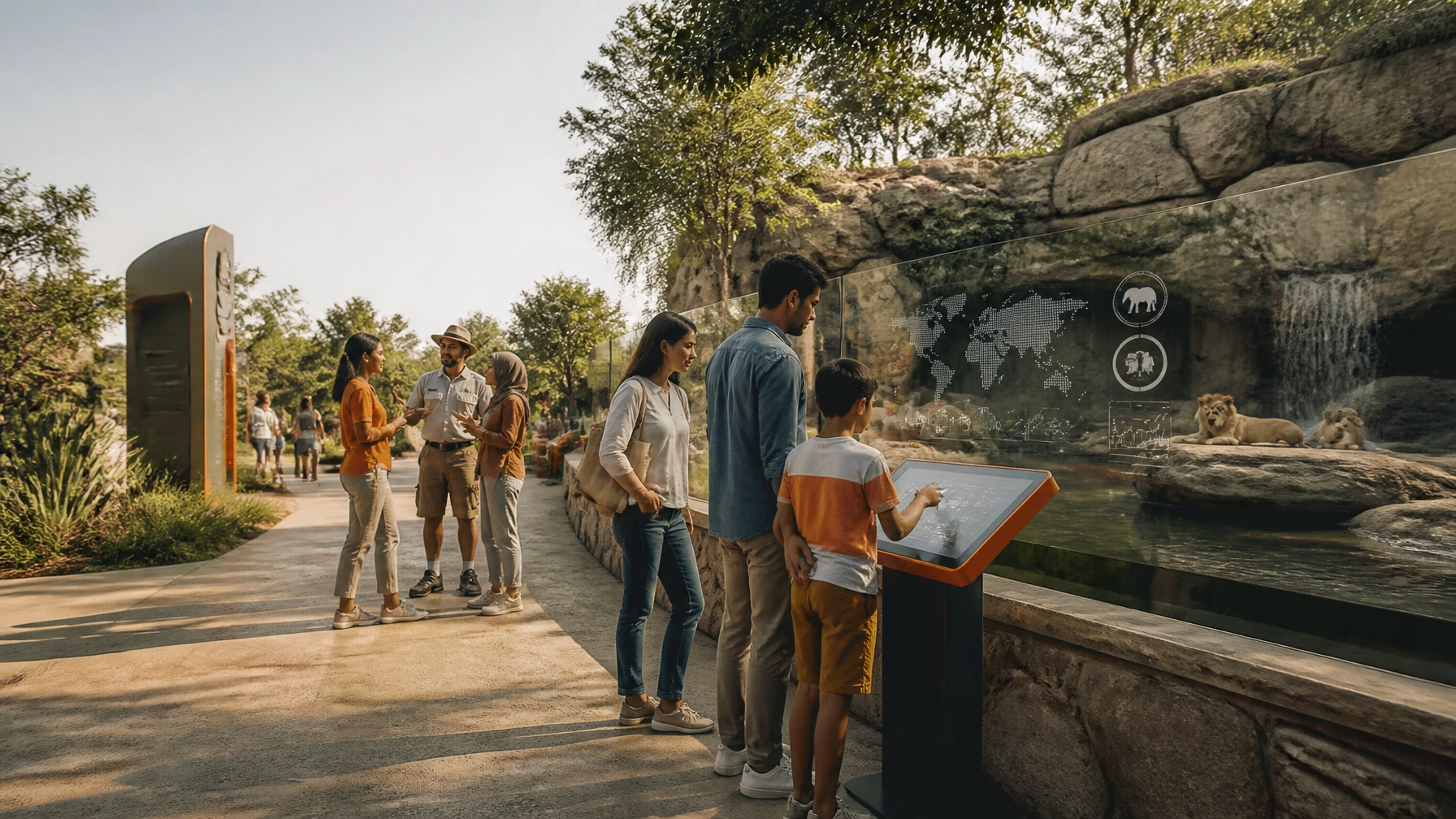
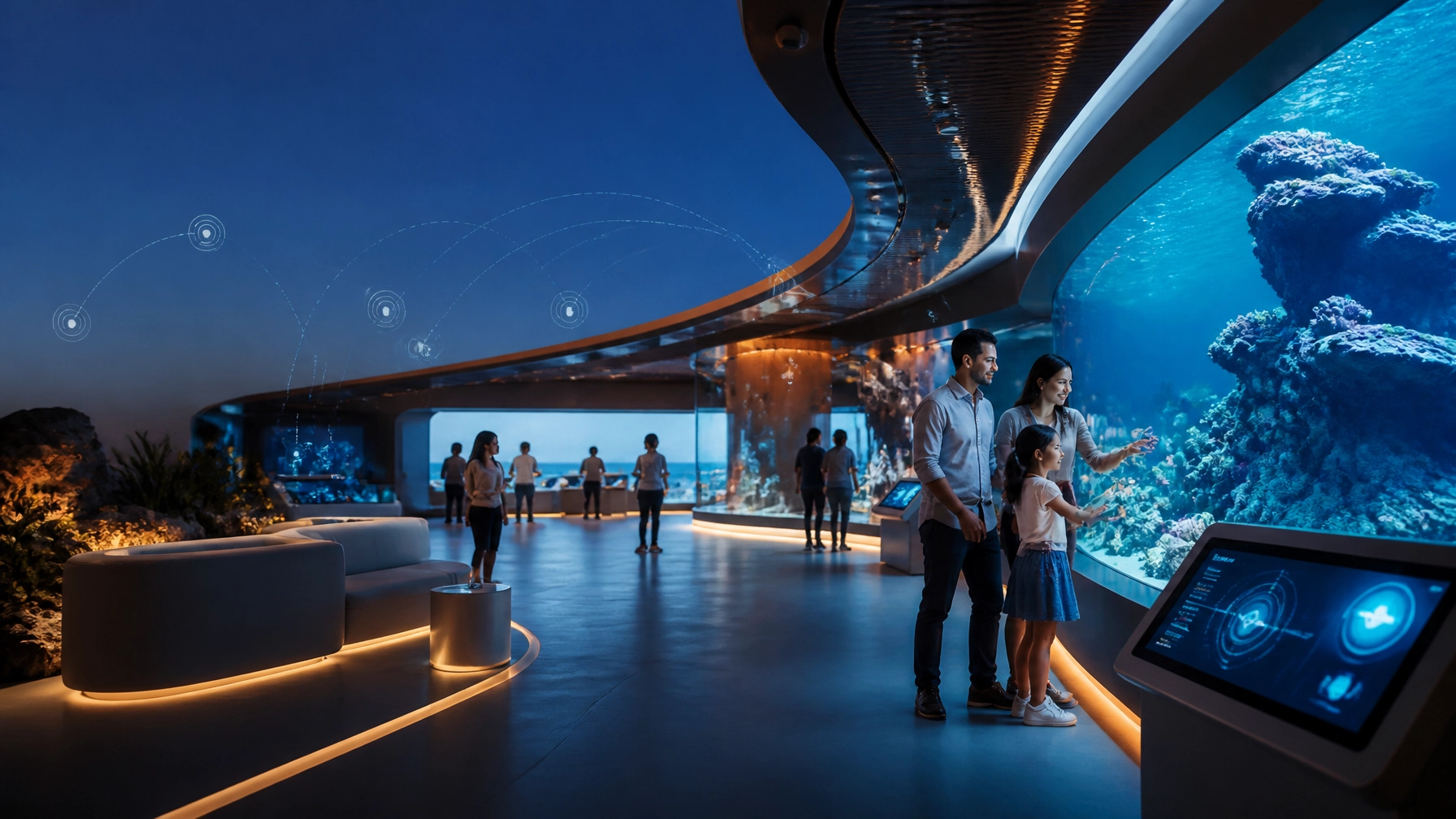
Install discreet live cameras in dens and nesting boxes. Use interactive displays near the exhibit to stream "behind-the-scenes" footage so visitors can see the animal even when it's off-show. Even better? Augmented Reality (AR) allows guests to point their phones at an enclosure and see a 3D digital version of the animal performing natural behaviors or learning about its habitat.
3. You’re Suffering from "Information Overload"
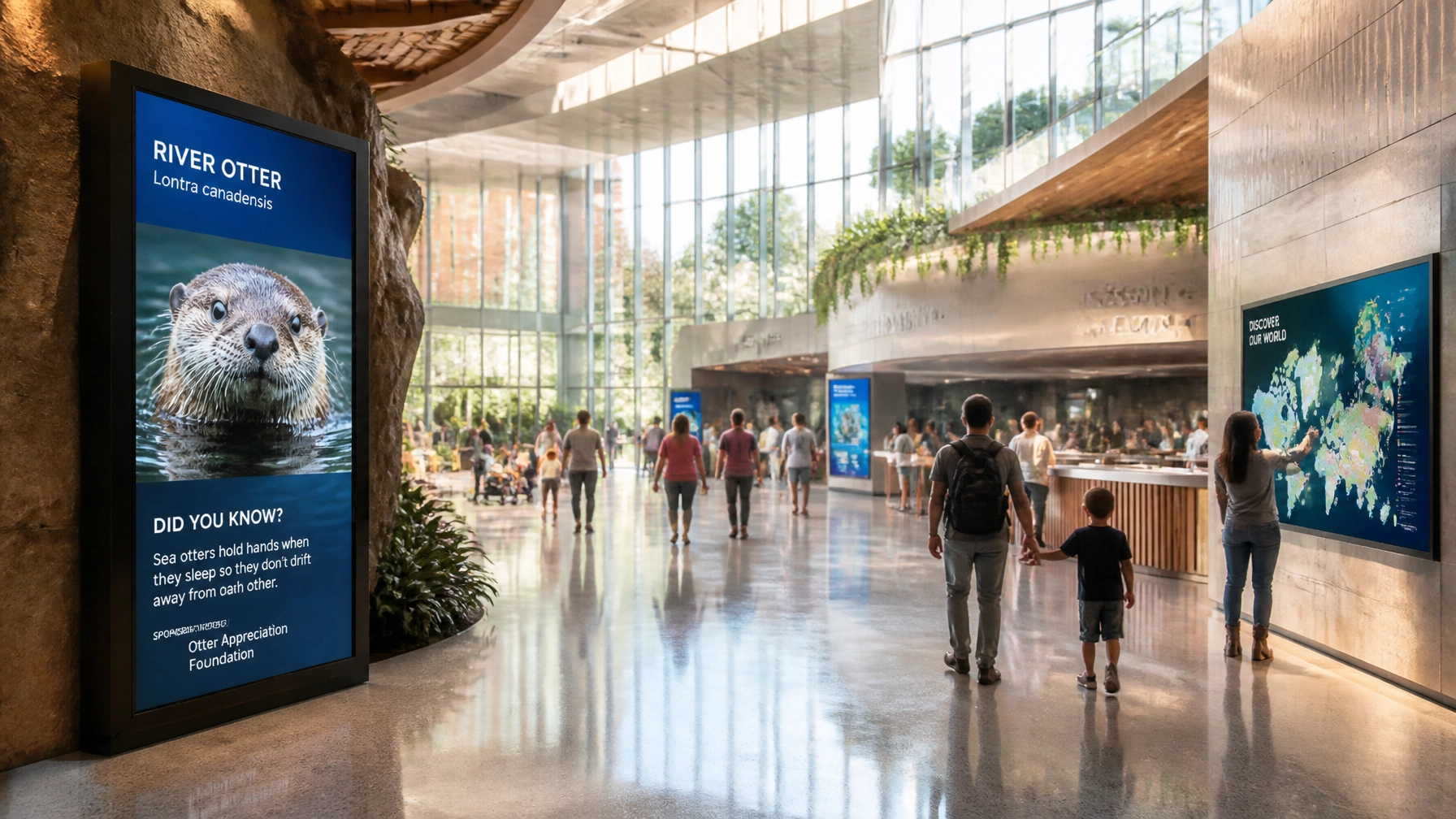
A giant wooden board covered in three paragraphs of small text is rarely read. Visitors, especially those with children, have short attention spans. If your educational content isn't engaging, it’s not working.
The Smart Fix: Interactive Learning Stations
Transform passive reading into active engagement. Large-format touchscreens and visual communication tools can gamify education. Think of a digital "Eco-Challenge" where kids scan QR codes at different exhibits to collect virtual badges. This turns a simple walk into a mission, increasing dwell time and educational impact.

4. Long Queues Are Killing the Vibe
Nothing ruins a day faster than a 45-minute wait for a burger or a ticket. High friction at entry points and concession stands leads to lower "intent to return" scores.
The Smart Fix: AI-Driven Capacity Management & Mobile Ordering
Use AI sensors to monitor queue lengths at gates and cafes. Your smart venue system can send a push notification to visitors saying: "The Savannah Café is busy right now: head to the Tundra Grill instead and get 10% off!" Mobile ordering for food and retail allows guests to schedule pickups, eliminating the wait entirely.
5. Your Pre-Visit and On-Site Experiences are Disconnected
If your website is just a place to check hours, you're missing a massive opportunity. The visitor journey should start the moment they think about visiting.
The Smart Fix: Unified Digital Platforms
Integrate your website development with your on-site tech. A visitor should be able to buy a ticket online, save their interests (e.g., "I love big cats"), and have a custom itinerary waiting for them when they scan their digital ticket at the gate. Check out how we streamline these systems at ZooMediaNetwork.com.
6. Educational Impact is Hard to Measure
Zoos are centers for conservation, but how do you know if your message is actually landing? If you aren't tracking engagement, you’re just guessing.
The Smart Fix: Contextual Content Analytics
By using smart signage and app interactions, you can see exactly which exhibits people spend the most time at and which educational videos are being watched. This data allows you to refine your messaging and prove your conservation impact to stakeholders and sponsors.
7. Accessibility is an Afterthought
For visitors with mobility issues or sensory sensitivities, a zoo can be a challenging environment. Standard maps often fail to show the easiest, step-free routes.
The Smart Fix: AI-Powered Smart Routing
Digital maps can offer "Accessibility Mode," highlighting paths with the gentlest gradients or identifying "Quiet Zones" for visitors with autism. This inclusive approach ensures everyone has a world-class experience.
8. Missed Revenue Opportunities in Retail
Most visitors only visit the gift shop on their way out when they are tired and ready to go. You’re leaving money on the table.
The Smart Fix: Geo-Targeted Promotions
Use IoT beacons to send a "Limited Time Offer" to a visitor’s phone as they walk past the gift shop in the middle of the day. "Love the giraffes? Get a plushie at the nearby stand for 15% off in the next 20 minutes!" This type of targeted digital marketing drives impulse buys without feeling intrusive.

9. The "Visit Ends at the Gate" Trap
Once a visitor leaves, do you ever hear from them again? If you don’t have a post-visit digital strategy, you’re losing potential members and donors.
The Smart Fix: Post-Visit Digital Connection
Automated follow-ups through ZooMedia.news can send visitors photos of their day or updates on the specific animals they saw. This keeps the emotional connection alive and makes the transition from "day guest" to "annual member" much smoother.
10. You’re Operating "Blind"
Many zoo directors rely on "gut feel" for operations. They don't know which paths are congested or why certain areas are ghost towns.
The Smart Fix: Unified Data Dashboards
A smart venue collects data from every touchpoint: ticket scans, app usage, and digital signage interactions. This gives management a "God’s-eye view" of the park, allowing for data-driven decisions that improve both animal welfare and visitor satisfaction.

How can smart technology improve zoo visitor experience?
Direct Answer: Smart technology improves zoo visitor experiences by using IoT-enabled wayfinding to reduce navigation frustration, interactive digital signage to enhance educational engagement, and AI-driven data analytics to minimize wait times and optimize crowd flow. By integrating mobile apps and AR, zoos can provide real-time information and "behind-the-scenes" access, turning a passive walk into an immersive, personalized journey that increases guest satisfaction and revenue.
Conclusion: Step Into the Future with Zoo Media
At Zoo Media, we don’t just provide technology; we provide a vision. Our goal is to assist zoos and aquariums around the globe in becoming smart venues that promote animal welfare, conservation, and unforgettable visitor experiences. Whether you are looking for innovative digital marketing solutions or state-of-the-art visual communication, we are your strategic partner.
Try your luck at transforming your venue today! Discover how our "Zoo Media Innovative Thinking" can elevate your brand and your mission.
Contact Us:
- Dan Kost, CEO
- Website: www.dakdan.com
- AI Receptionist: +1 (323) 676-0621
- Email: Info@ZooMedia.us
Explore our family of networks:
ZooMedia.us | ZooMediaNetwork.com | ZooMedia.Tv | ZooMedia.org | ZooMedia.news | travel.zoomedia.us
#Motivation #Branding #Strategy #Marketing #AdvertisingAndMarketing #digitalmarketing #Innovation #Sports #SmartZoos #ZooMedia #ConservationTech