
Benvenuti! In today’s fast-paced digital world, zoos and aquariums are no longer just places to see animals; they are evolving into Smart Venues. But what does that actually mean for a director or a media buyer? Simply put, it’s about using technology to create a seamless, educational, and high-revenue environment.
At Zoo Media, we believe that innovative thinking is the bridge between traditional conservation and the future of guest engagement. Transforming your facility into a smart venue might sound like a massive undertaking, but it’s actually a journey full of opportunities. "Discover your fortune" in the digital age by embracing the tools that make management easier and visits more memorable.
What Exactly is a Smart Venue?
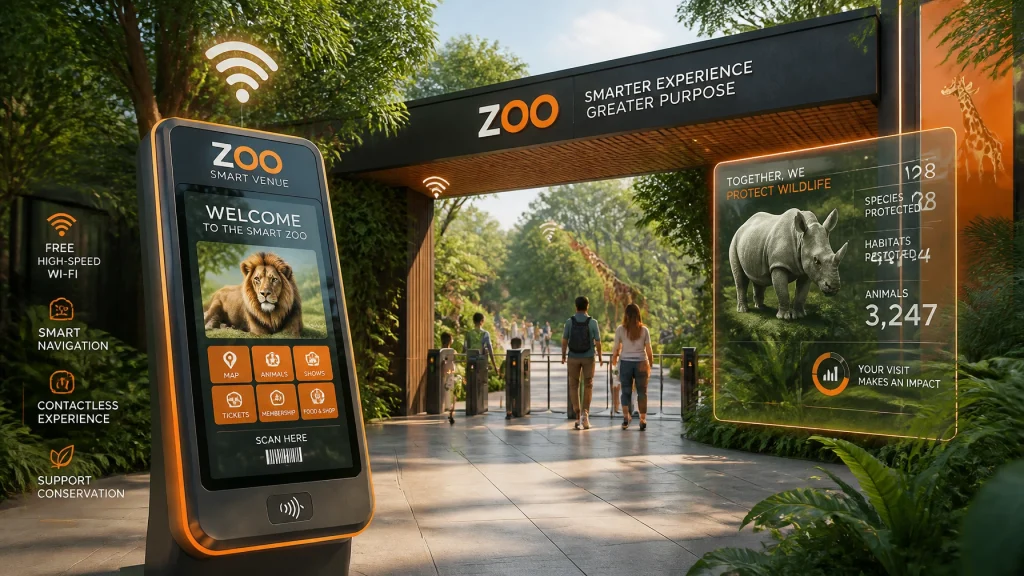
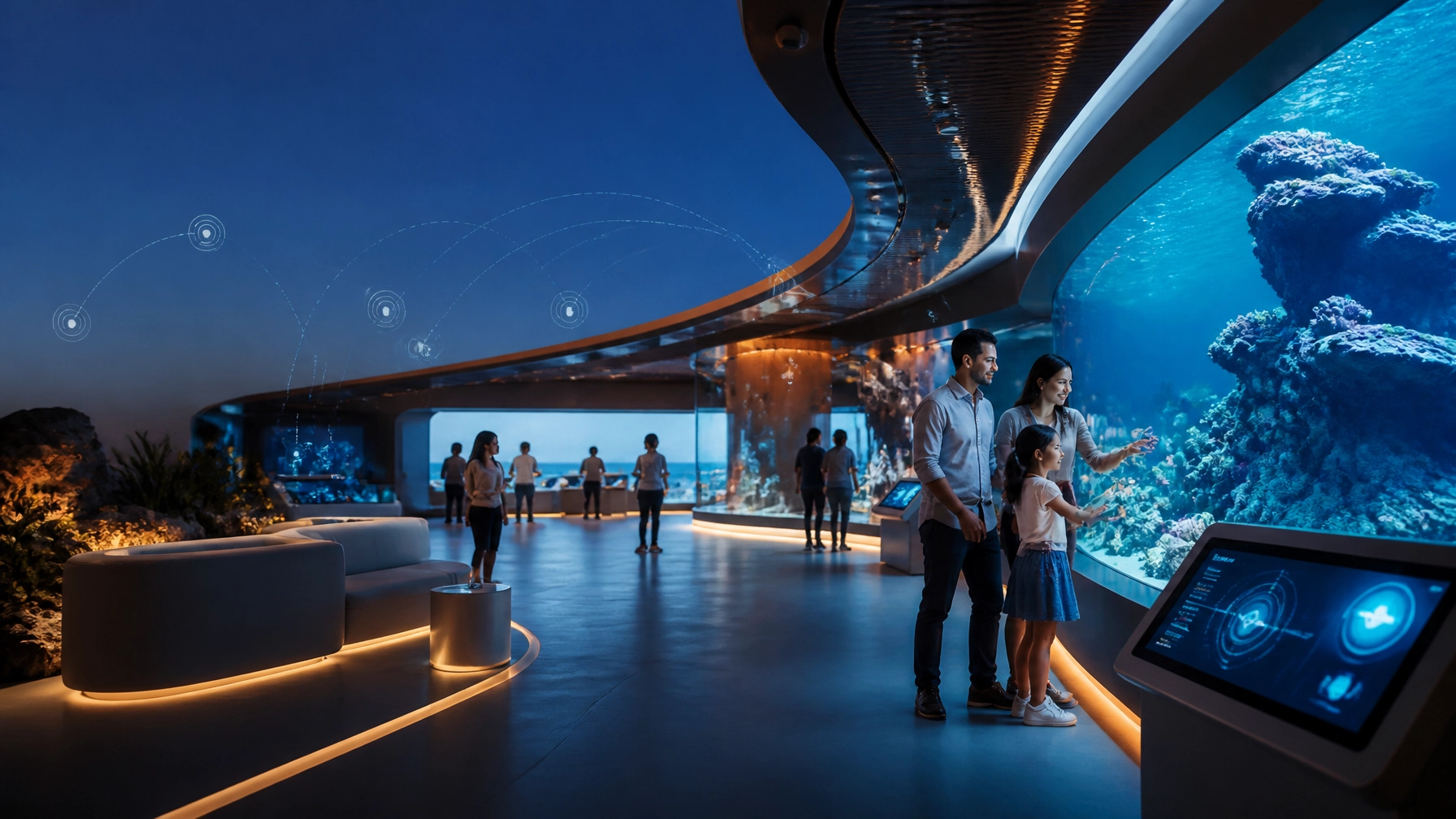
Imagine your zoo as a living organism. A smart venue is one that has a nervous system (sensors and IoT) and a brain (data analytics and CMS). It’s a connected campus where every digital screen, every gate, and even the habitat sensors talk to each other in real-time.
- IoT & Sensors: Collecting data on everything from animal behavior to visitor traffic.
- Connectivity: Robust Wi-Fi and 5G that keep staff and guests connected.
- Centralized Management: One platform to control all your visual communication.
This integration allows you to protect animal welfare while simultaneously boosting your operational efficiency. They’re tutti piuttosto rari: truly modern venues: but they are becoming the industry standard.
Chapter 1: The Invisible Layer: IoT and Smart Connectivity
Before you can have flashy interactive displays, you need the foundation. IoT (Internet of Things) is the "invisible layer" that monitors the health of your park.
Implementing sensors is a smart move for any modern manager. You can track temperature, humidity, and even sound levels in habitats to ensure they are always within the perfect range for your residents. But it’s not just for the animals!
Pro-tip for Managers: Use people-counting sensors at your gates and popular exhibits. If you see a bottleneck forming at the Lion enclosure, your smart signage can automatically update to suggest a "quieter" path toward the Aviary. This keeps the flow moving and the guests happy. It's a win-win!

Chapter 2: Engaging the Modern Guest with Interactive Displays
"Try your luck" at capturing the attention of the Gen Z and Alpha generations! These visitors expect more than just static plaques. They want to touch, swipe, and interact.
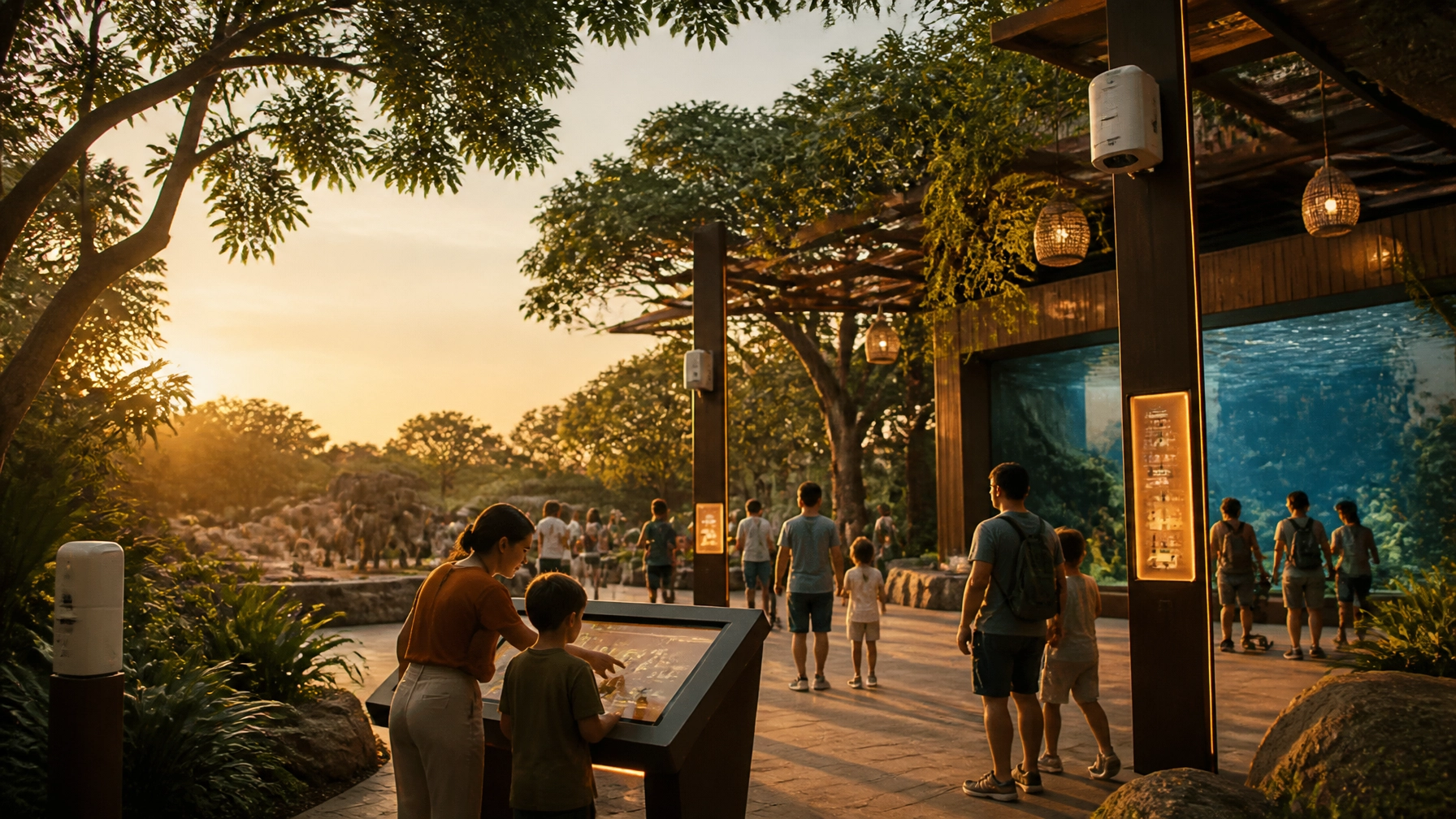
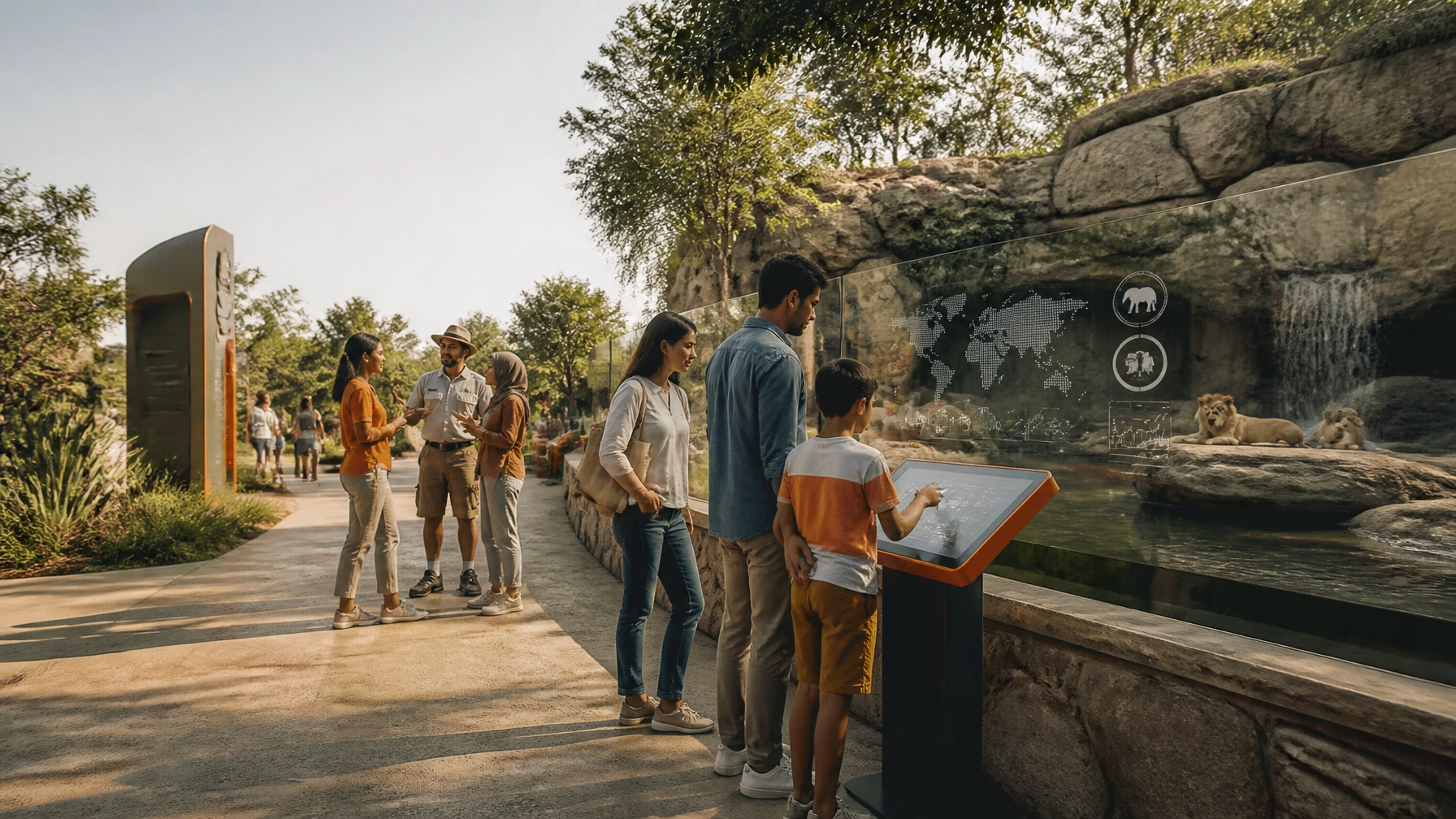
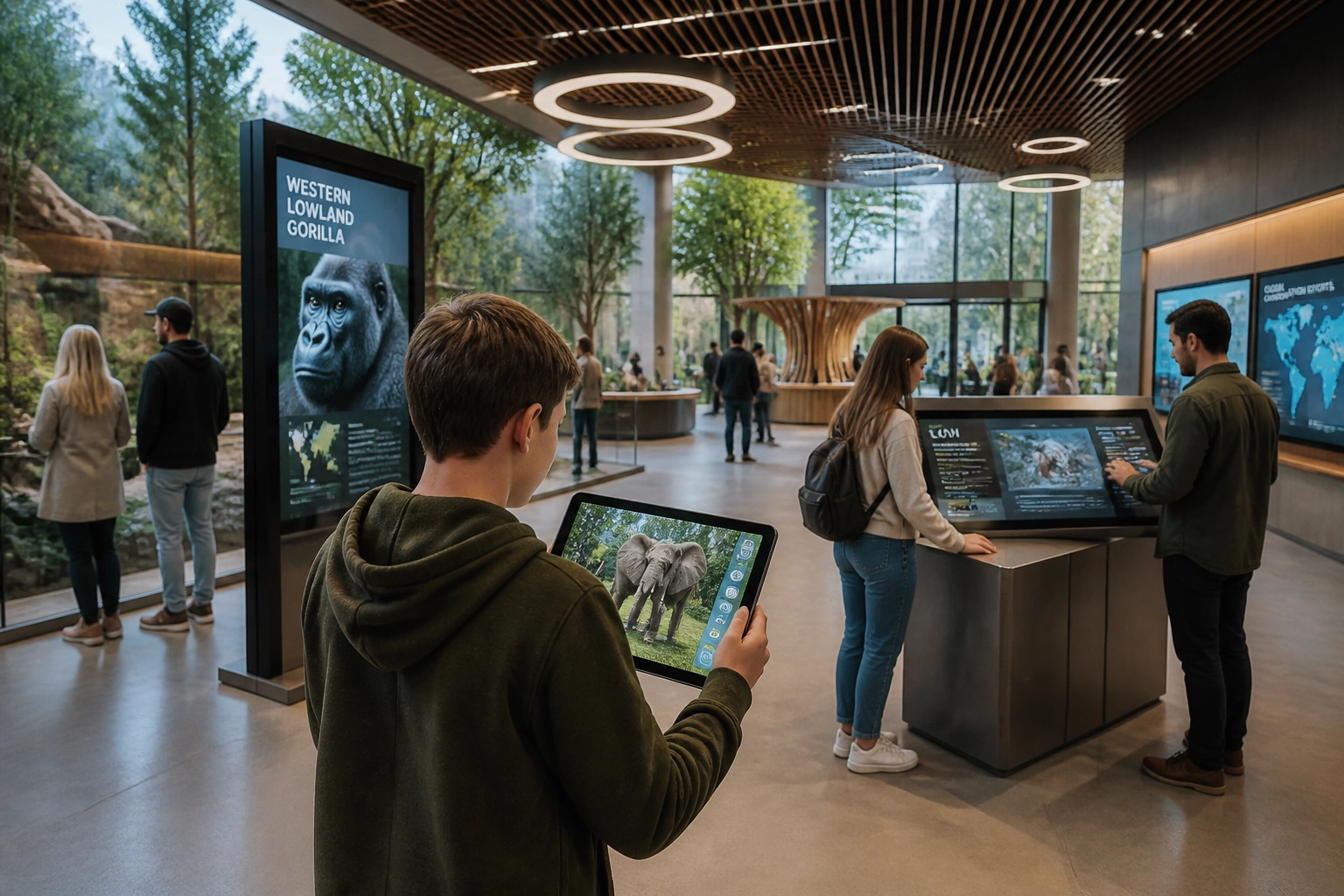
Interactive displays turn a passive walk into an immersive journey. Think about high-definition touchscreens that allow kids to "design a habitat" or see through the eyes of a shark using AR (Augmented Reality).
- Multimedia Panels: Use these to show behind-the-scenes footage of animal care.
- Educational Games: Gamify conservation to make learning "stick."
- Live Feeds: Show live telemetry or camera feeds from field conservation projects.
At Zoo Media Television Network, we specialize in creating content that doesn't just inform: it inspires. By using these tools, you aren't just showing an animal; you're telling a story that stays with the visitor long after they leave.
Chapter 3: Smart Signage: The Pulse of Your Park
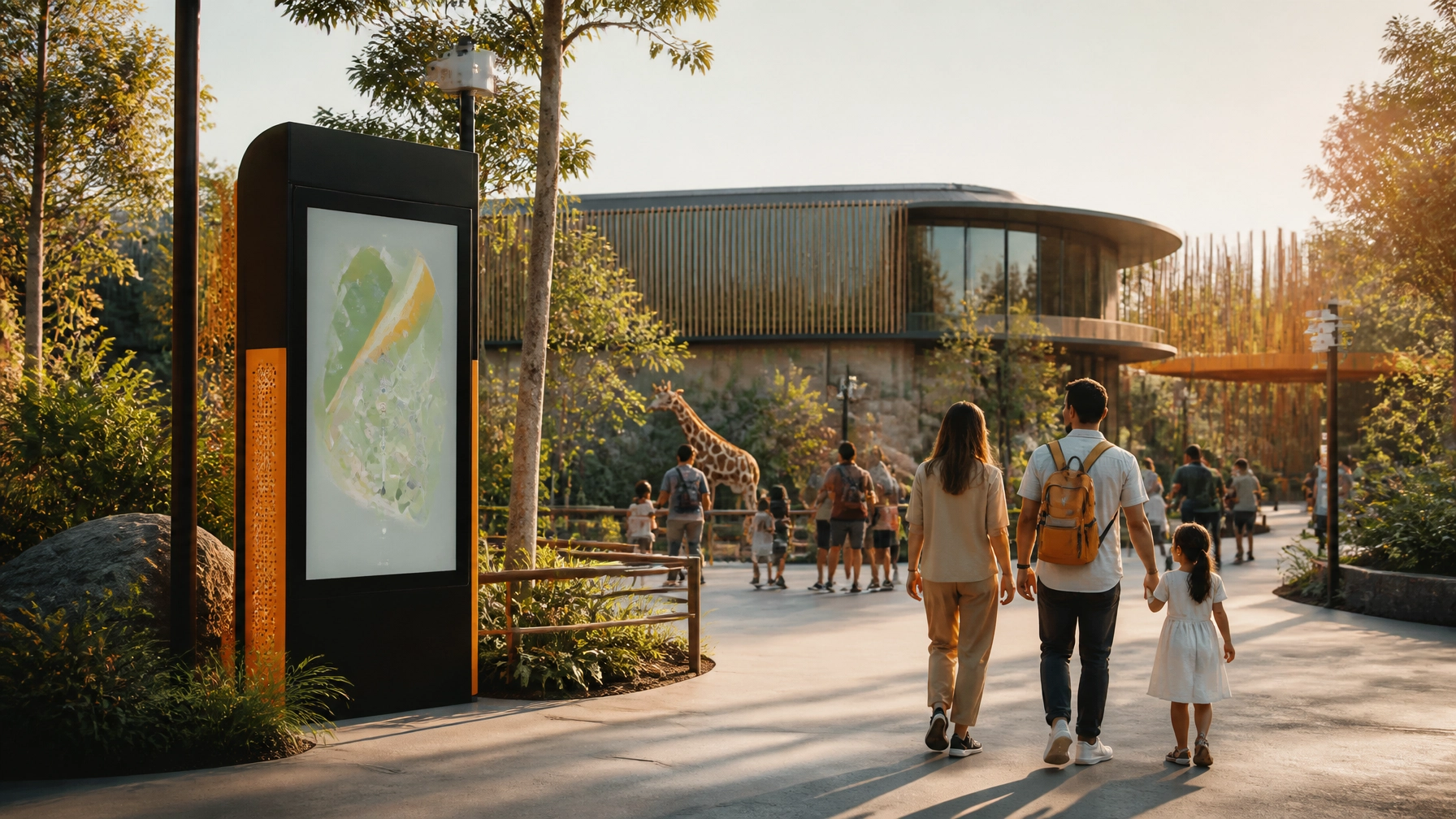
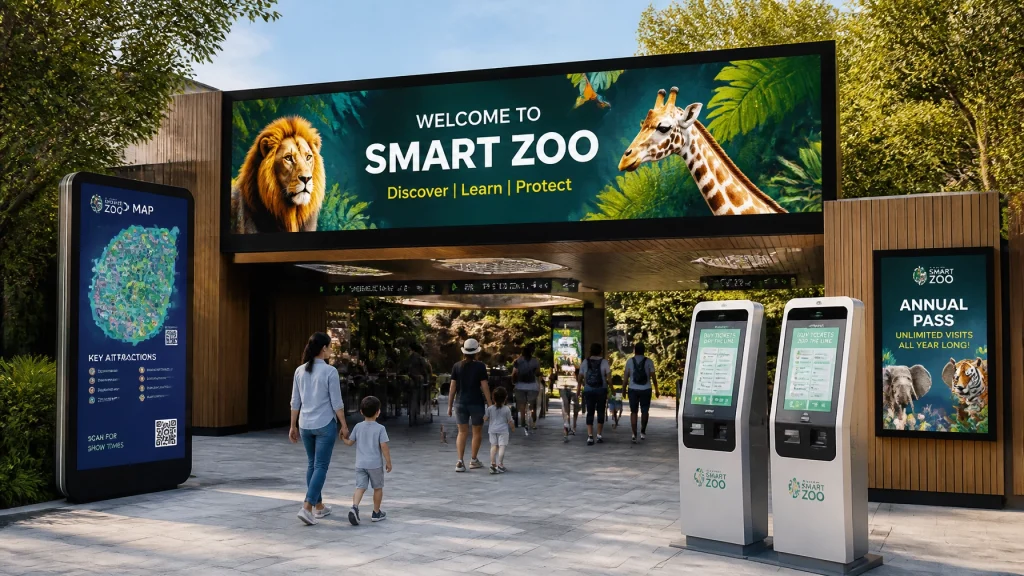
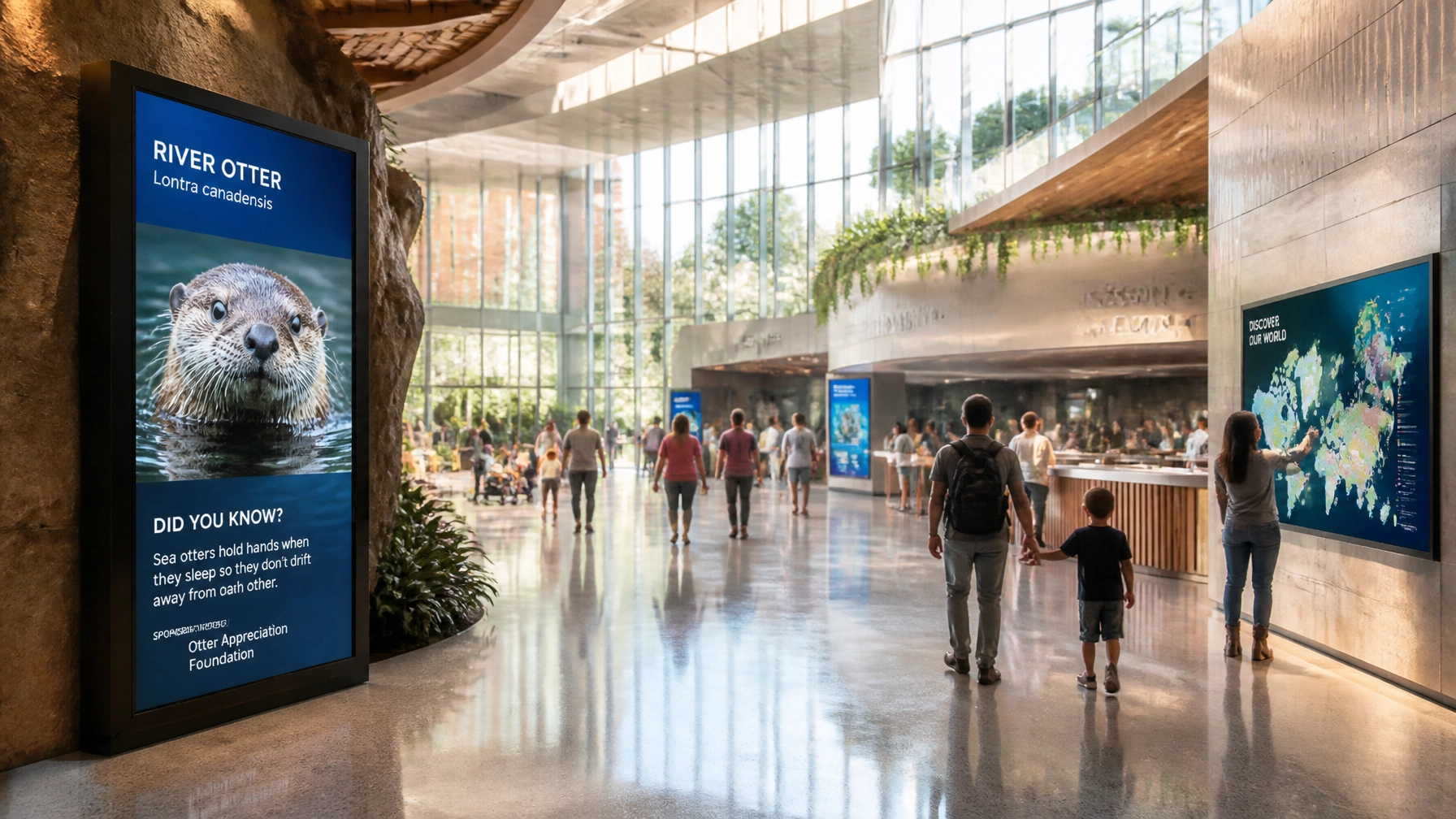
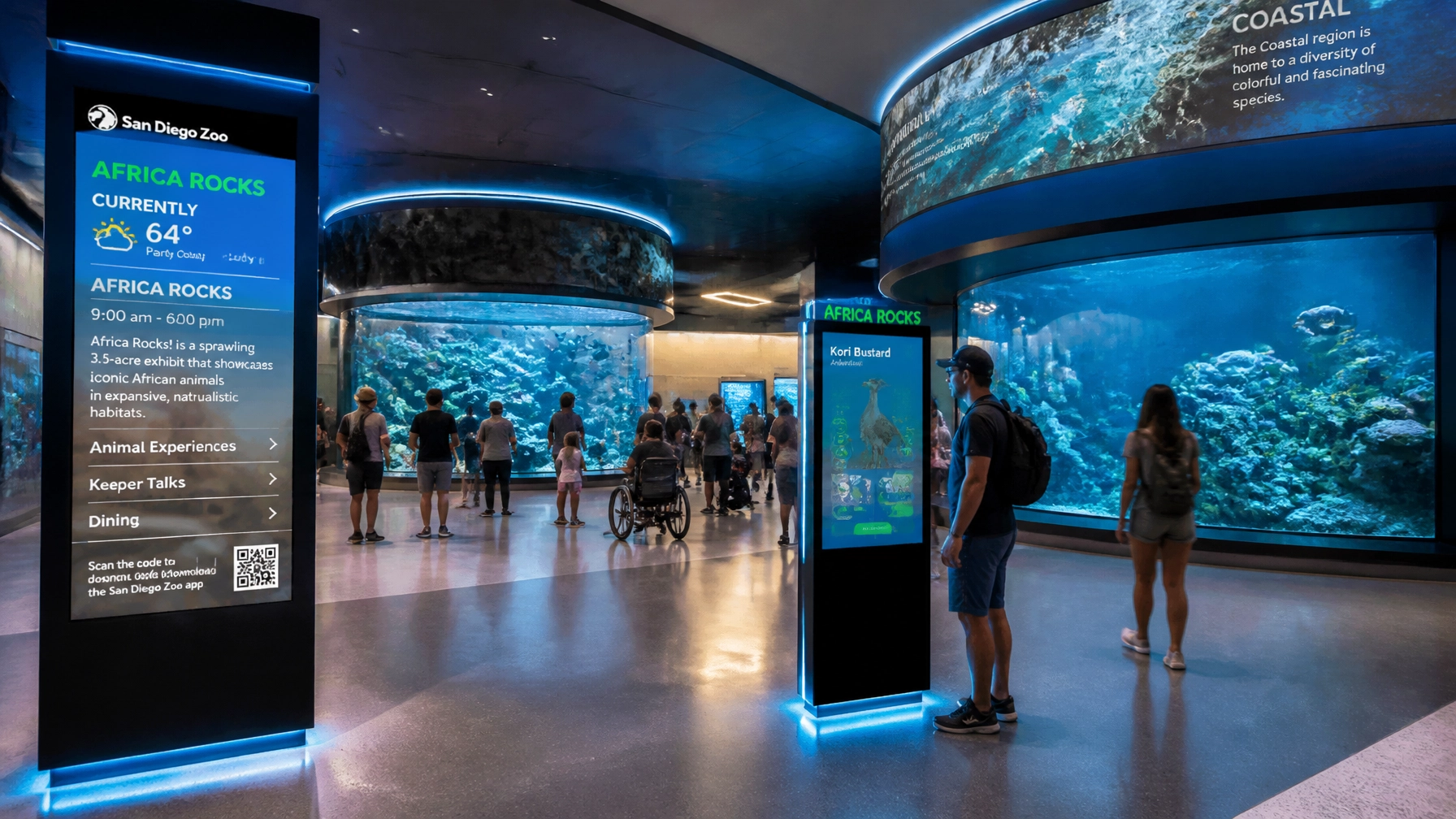
Digital signage is the most visible part of your smart venue strategy. Gone are the days of printing new maps every time a path is closed. With smart signage, you are in total control.
Why you need smart signage today:
- Real-Time Wayfinding: Give directions based on current conditions. "Accessible route to the elephants: 4 minutes."
- Dynamic Queuing: Show wait times for rides or feeding sessions to manage expectations.
- Emergency Alerts: In the unlikely event of a storm, every screen in the park can instantly switch to safety instructions.
- Accessibility: Easily switch languages or activate high-contrast modes for visually impaired guests.
It’s all about creating a rassicurante (reassuring) experience. When guests feel they have all the information they need, they spend more time enjoying the exhibits and less time feeling lost.

Chapter 4: Animal Welfare First: The Soul of the Smart Venue
We must never forget why we do this: the welfare and care of our animals. Technology should never be a distraction; it should be a protector.
By using data-driven management, you can correlate visitor density with animal stress markers. If a particular area gets too loud, your system can trigger "Quiet Mode" signs or even adjust the lighting to give the animals a break.
Smart tools for animal care:
- Acoustic Sensors: Detect unusual noise levels that might distress sensitive species.
- Automated Enrichment: Use sensors to trigger feeders or misters based on animal movement.
- Welfare Dashboards: Give your keepers a clear view of habitat health at a glance.
This level of care is what turns a good zoo into a world-class institution. It’s about using technology to promote a better environment for every living being on your grounds.
Chapter 5: Strategic Partnerships: Unlocking New Revenue
Let’s talk business. For brand managers and creative directors, a smart zoo is a goldmine of targeted advertising. Unlike traditional billboards, digital signage in a smart venue allows for high-precision sponsorships.
Imagine a brand sponsoring the "Penguin Feeding Time" alert that pops up on every guest's phone and on screens throughout the park. This is visual communication at its finest. It’s relevant, it’s timely, and it’s engaging.
- Targeted Ads: Show different content based on the time of day or the location in the park.
- Corporate Sponsorships: Offer unique digital "real estate" to partners who share your conservation values.
- Direct ROI: Track how many people clicked a QR code on a sign to buy a membership or a souvenir.
"Vinci il premio più grande": win the biggest prize: which in this case is a sustainable, high-revenue model that supports your conservation mission. Zoo Media is your invaluable strategic partner in making this happen.

How to Get Started: Your Roadmap to Success
You don’t have to change everything overnight. Success in modern zoo management is about taking measured, smart steps.
- Audit Your Current Tech: What do you have? What’s missing?
- Pick a Pilot Project: Start with one habitat or one zone. Install smart signage and monitor the results for 90 days.
- Focus on the Guest Flow: Use people counters to identify your biggest bottlenecks.
- Train Your Staff: Ensure your keepers and educators know how to use the data to tell better stories.
Mi piacerebbe vedere… I would love to see every zoo and aquarium in the world embracing these tools. It makes life easier for staff and better for the animals.
Conclusion: The Future is Smart
The transition to a smart venue is not just a trend; it's the future of our industry. By integrating digital marketing, website development, and visual communication, you create a venue that is efficient, profitable, and deeply impactful.
Are you ready to take the next step? At Zoo Media, we are here to assist zoos and aquariums around the globe. Our goal is to enhance the visitor experience and promote the welfare of animals through cutting-edge technology.
Try your luck at success! Contact us today to learn how we can transform your venue.
Contact Information:
- Website: www.zoomedia.us
- Corporate Site: www.dakdan.com
- AI Receptionist: +1 (323) 676-0621
- CEO: Dan Kost
#Motivation #Branding #Strategy #Marketing #AdvertisingAndMarketing #digitalmarketing #Innovation #Sports #ZooManagement #SmartVenues #ConservationTech