Welcome to the era of the Smart Venue. In today’s fast-paced digital world, zoos and aquariums are no longer just places to see animals; they are hubs of conservation, education, and high-tech interaction. At Zoo Media, we believe that "innovative thinking" is the bridge between traditional animal care and a world-class visitor experience.
But how do you move from static plaques and manual clipboards to a fully integrated ecosystem? The answer lies in the marriage of IoT (Internet of Things) and Visual Communication. By connecting sensors that monitor habitats with the screens that talk to your guests, you create a living, breathing venue.
In this easy guide, we’ll walk you through the five essential steps to transform your facility into a smart venue. Let’s dive in!
Step 1: Define Your "Mission Control" Goals
Before you install a single sensor or screen, you need to know what you want to achieve. Are you trying to reduce energy costs? Improve animal welfare? Or maybe you want to give your visitors a reason to stay longer and donate more?
At Zoo Media, we recommend picking 3-5 high-impact use cases. Common goals for smart venues include:
- Animal Welfare: Monitoring water quality in real-time.
- Visitor Engagement: Showing "hidden" animal behavior via live feeds.
- Operations: Using heat maps to see where crowds get stuck.
- Revenue: Sending geofenced offers to visitors’ phones when they are near a cafe or gift shop.
By defining these goals early, you ensure that your digital marketing strategy aligns with your operational needs.
Step 2: Build the IoT Layer (The "Brain")
The "Internet of Things" sounds complicated, but it’s really just about gathering data. To make a venue "smart," you need sensors that act as the eyes and ears of your facility.
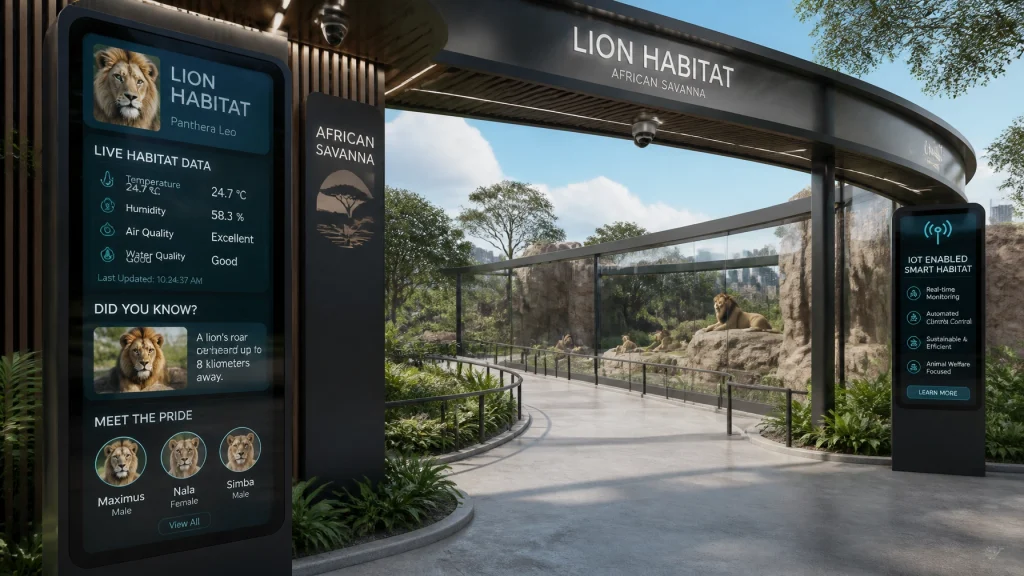
- Habitat Sensors: These track water pH, oxygen levels, temperature, and humidity. For aquariums, this is a literal lifesaver.
- Wearable Tags: Some zoos use tags to monitor animal movement and health patterns.
- Visitor Analytics: Sensors can track foot traffic and dwell times without compromising privacy.
The key is to have a centralized platform: a "brain": that collects all this data. This platform should use open APIs so that your visual communication systems can pull that data and show it to the world.

(Note: Visualizing live data helps staff make faster, safer decisions for animal care.)
Step 3: Turn Data into Visual Stories
Raw data is boring to a visitor. A number like "pH 8.1" doesn't mean much to a 10-year-old looking at a shark tank. This is where Visual Communication comes in.
You need to take that IoT data and wrap it in a beautiful, educational package.
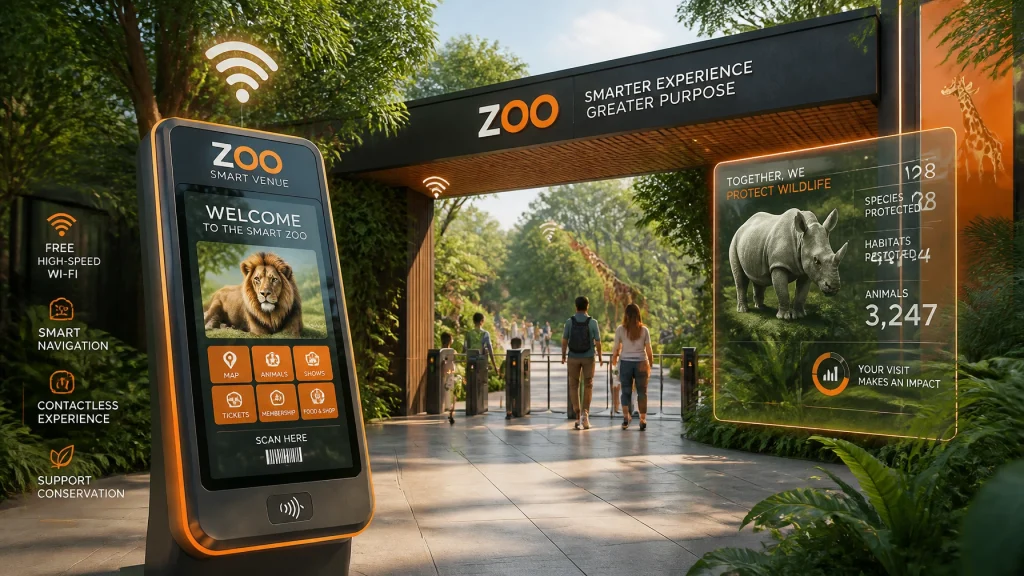
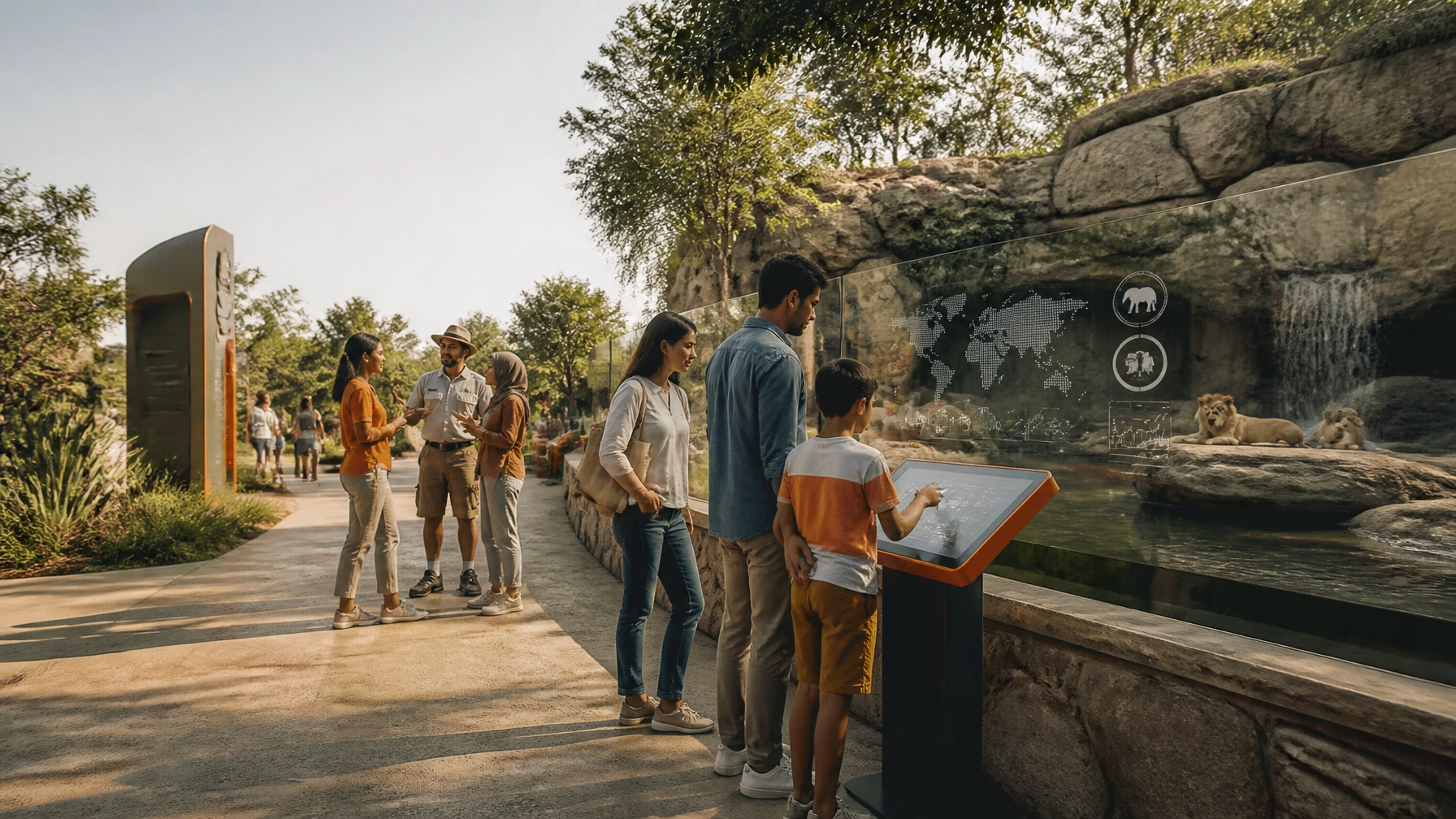
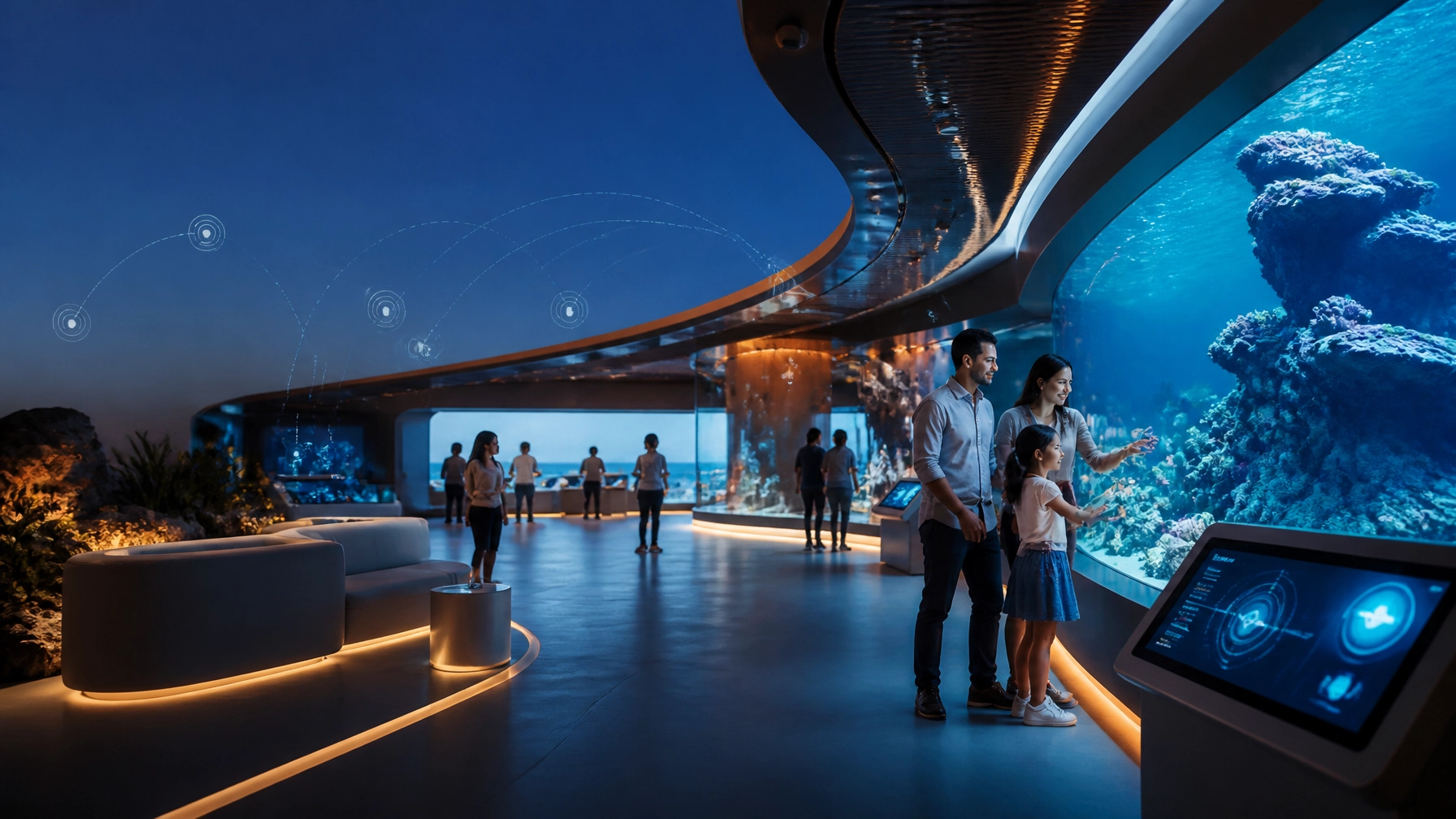
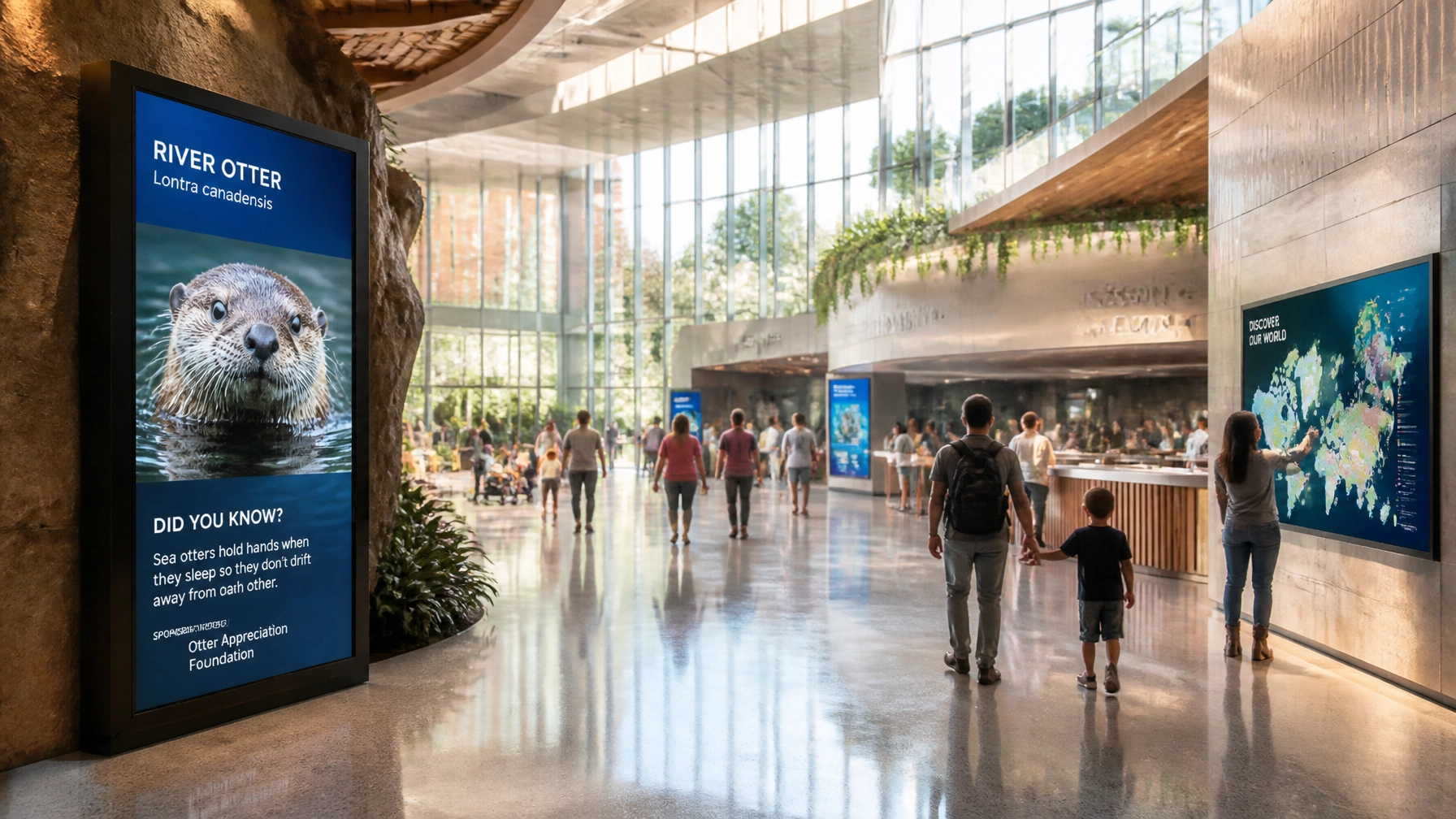
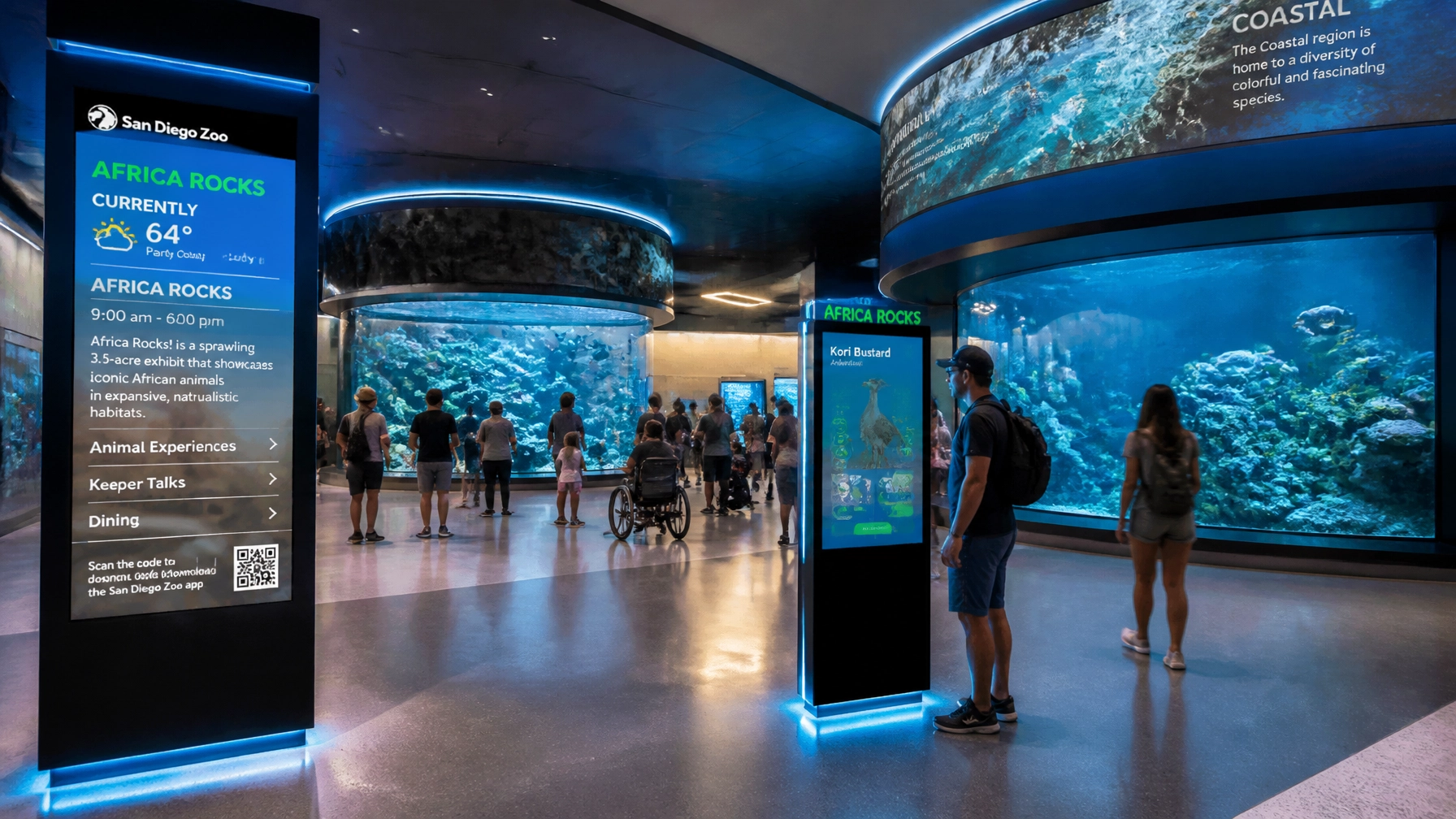
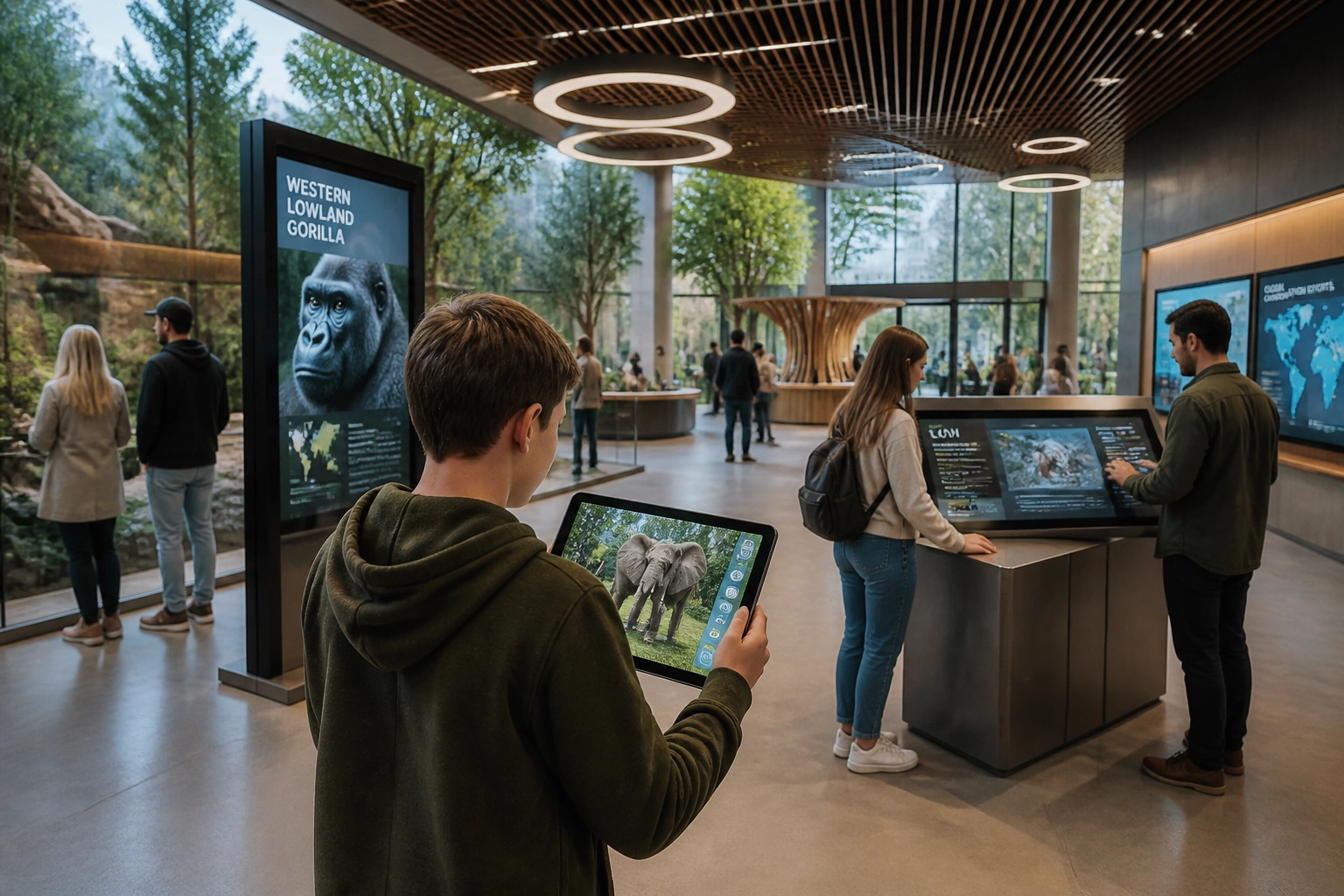
- Smart Signage: Instead of a static sign, use a high-definition screen that shows "Live Tank Stats." Use gauges and animations to show that the water is perfect for the fish.
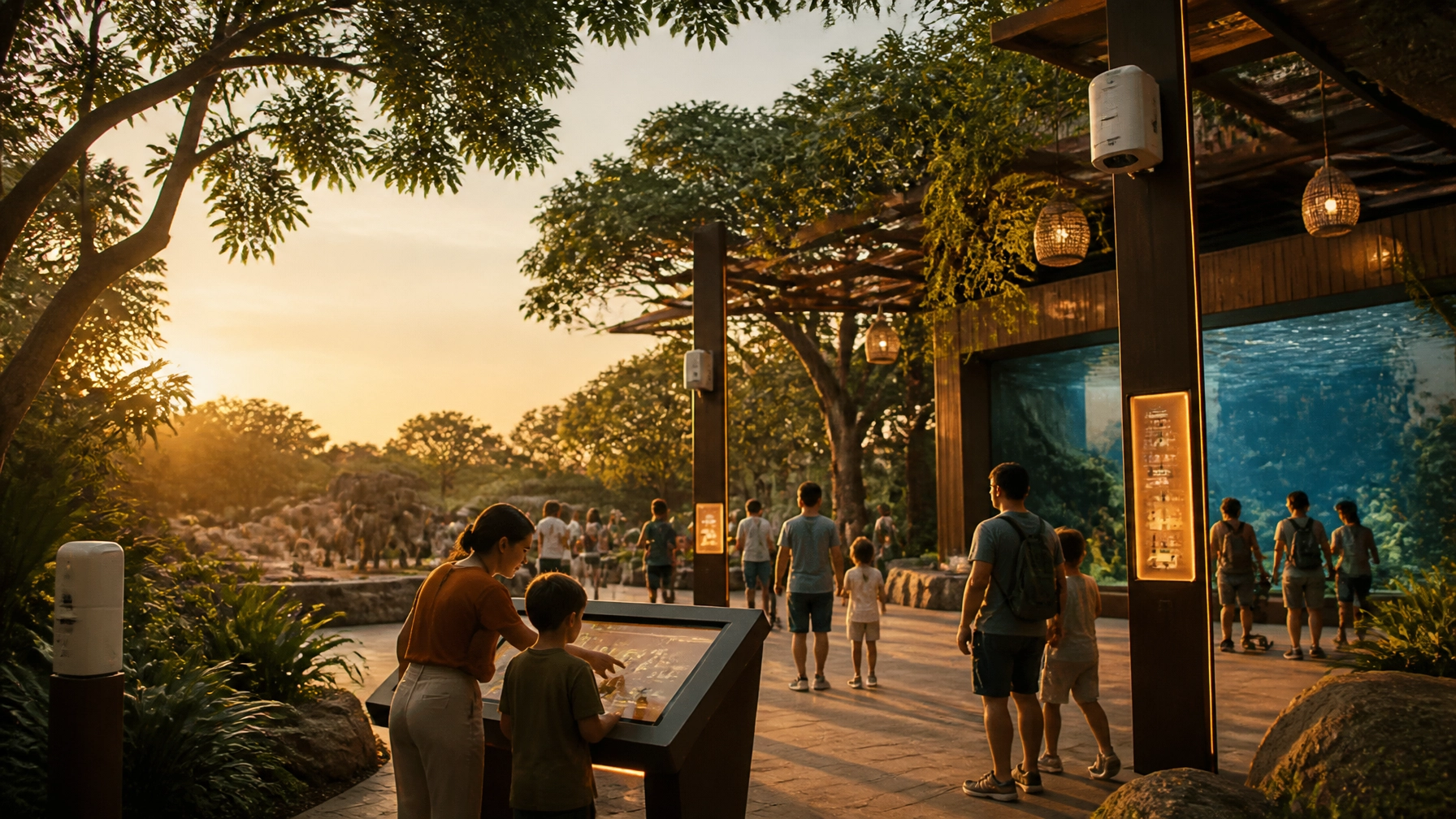
- Interactive Kiosks: Let visitors "toggle" through different data points. Maybe they want to see the temperature of the penguin exhibit vs. the desert habitat.
- Live "Peek-In" Feeds: If an animal is hiding, use a discreet IoT camera to stream a live feed to a nearby screen. Suddenly, the "empty" exhibit is full of life!
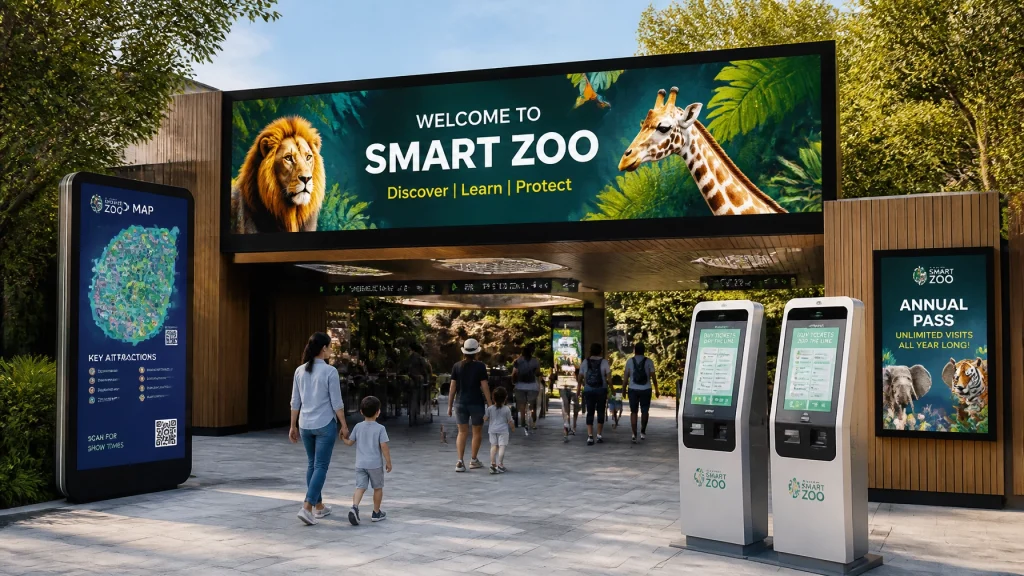
By integrating these visuals, you turn a visit into an educational journey. Check out our Smart Zoo solutions to see this in action.
Step 4: Map the Visitor Journey with Wayfinding
A smart venue is easy to navigate. Integration doesn't stop at the exhibit; it follows the visitor through the entire park.
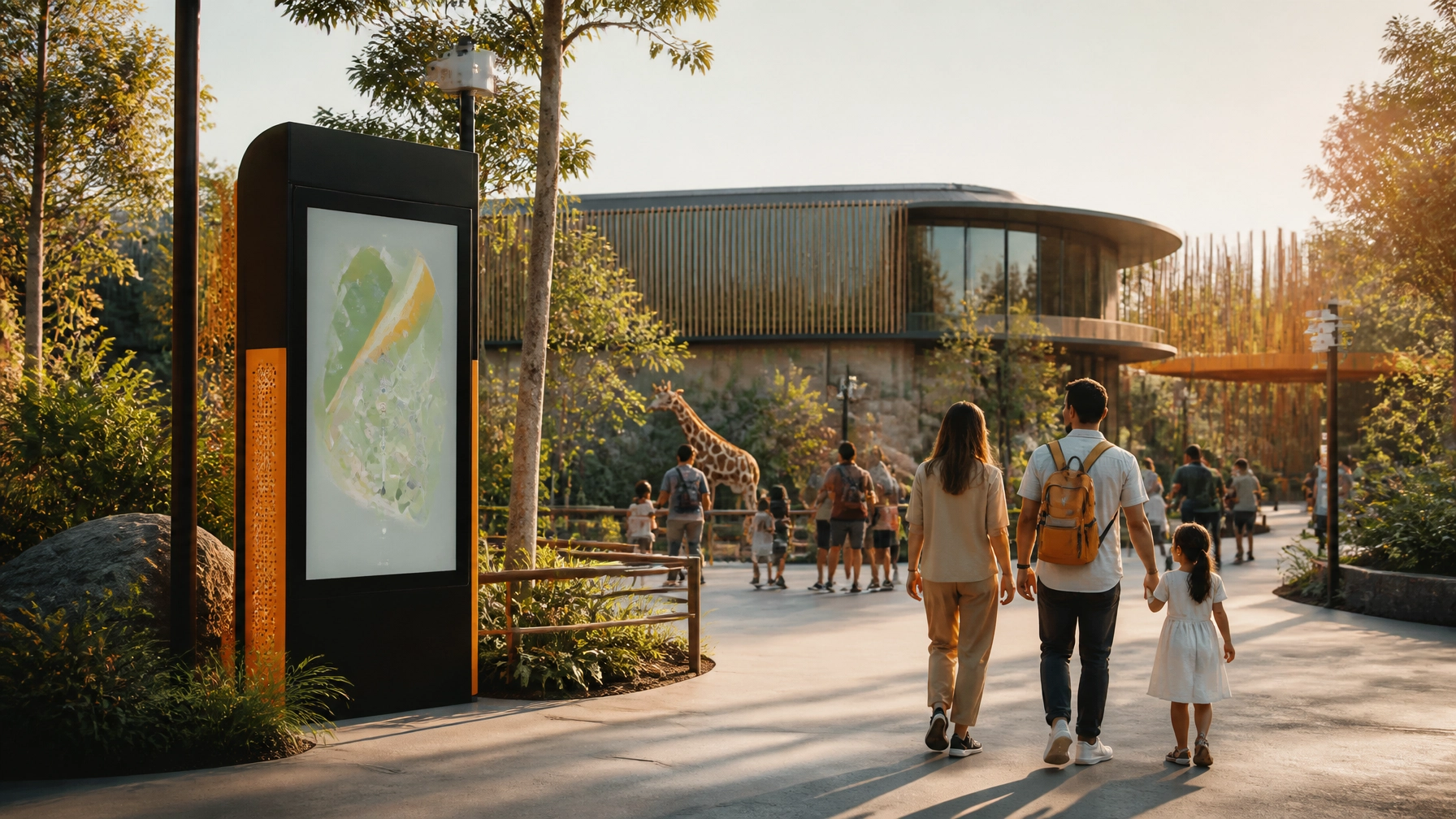
Using blue-dot navigation (hardware-free indoor/outdoor wayfinding), you can guide guests exactly where they want to go. When they get close to a specific zone, the IoT system triggers a push notification on their mobile device.
Pro Tip: Use geofencing to send a "Did you know?" trivia question about the giraffes just as the visitor walks up to the enclosure. It’s personal, timely, and incredibly engaging.

Step 5: Start Small, Then Scale (The Pilot)
You don't have to automate the entire zoo overnight. In fact, we recommend you don't! Start with a Pilot Project.
- Pick one gallery: For example, the Tropical Fish wing.
- Install IoT sensors: Connect them to the water life support systems.
- Deploy Digital Signage: Link the sensors to a public display that explains the conservation efforts behind the scenes.
- Measure the results: Did visitor dwell time increase? Did the staff find the data helpful?
Once you’ve proven the ROI (Return on Investment), you can scale the technology across your entire venue. This phased approach is exactly how Zoo Media assists zoos and aquariums in becoming strategic partners for brands and conservationists alike.
Why Smart Venues Win
Integrating IoT and visual communication isn't just about "cool gadgets." It’s about transparency and trust. When you show visitors the care that goes into monitoring an animal’s environment, you build a deeper emotional connection to your mission.
Plus, from a business perspective, a smart venue is a marketing powerhouse. Brands want to sponsor venues that are innovative, data-driven, and capable of delivering personalized experiences to their audiences.
Ready to start your journey?
Whether you are a zoo director looking to upgrade your exhibits or a brand manager seeking a unique sponsorship opportunity, Zoo Media is here to help. We streamline systems and resources to provide unequaled high-tech creative marketing services.
Discover your fortune in the world of smart technology: it’s time to win the biggest prize: an unforgettable visitor experience!
Contact us today:
- Website: www.zoomedia.us
- Strategic Partner: Dan Kost, CEO
- AI Receptionist: +1 (323) 676-0621
- More Info: www.dakdan.com
#Motivation #Branding #Strategy #Marketing #AdvertisingAndMarketing #digitalmarketing #Innovation #Sports #ZooMedia #SmartVenue #IoT #VisualCommunication