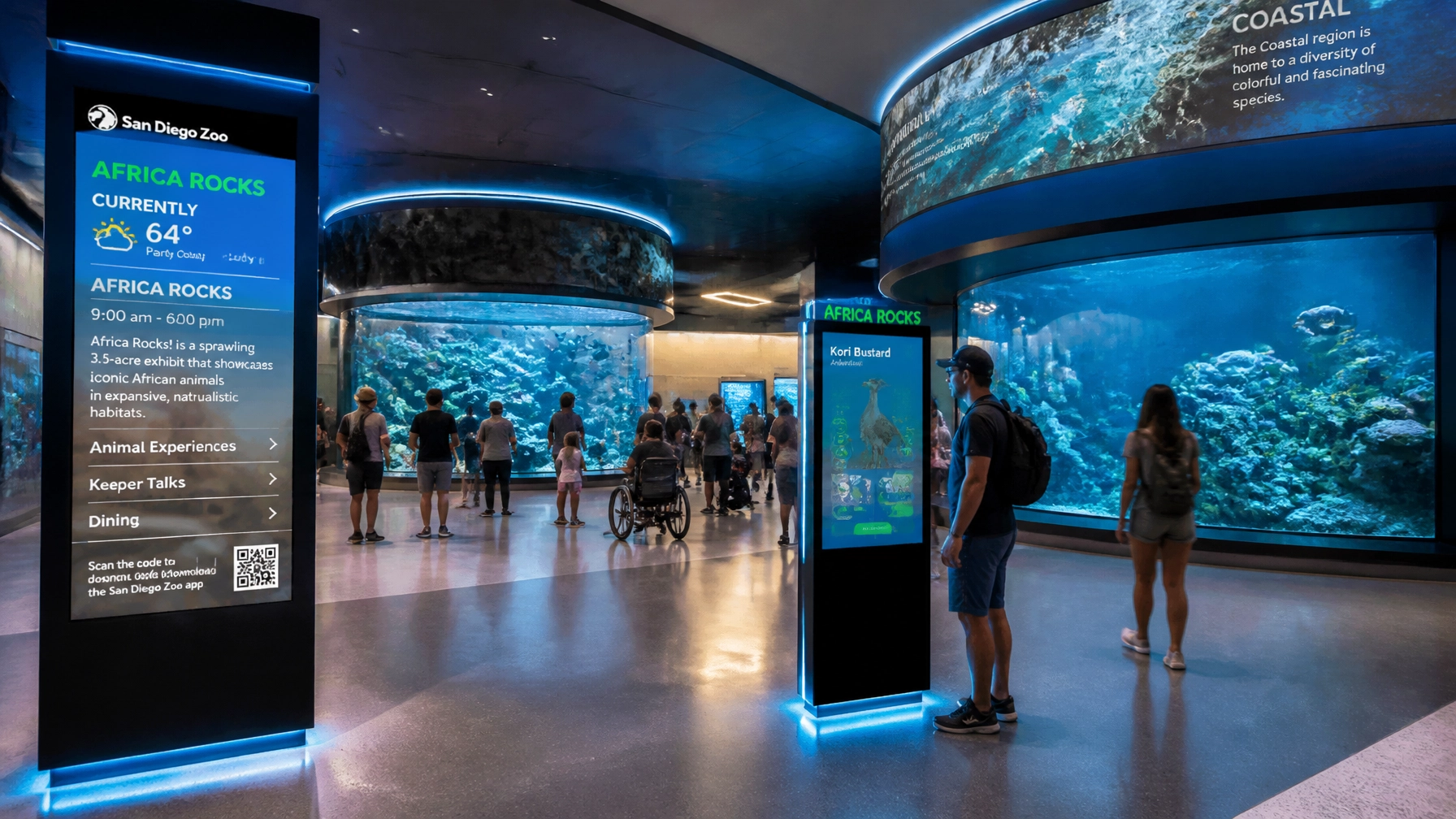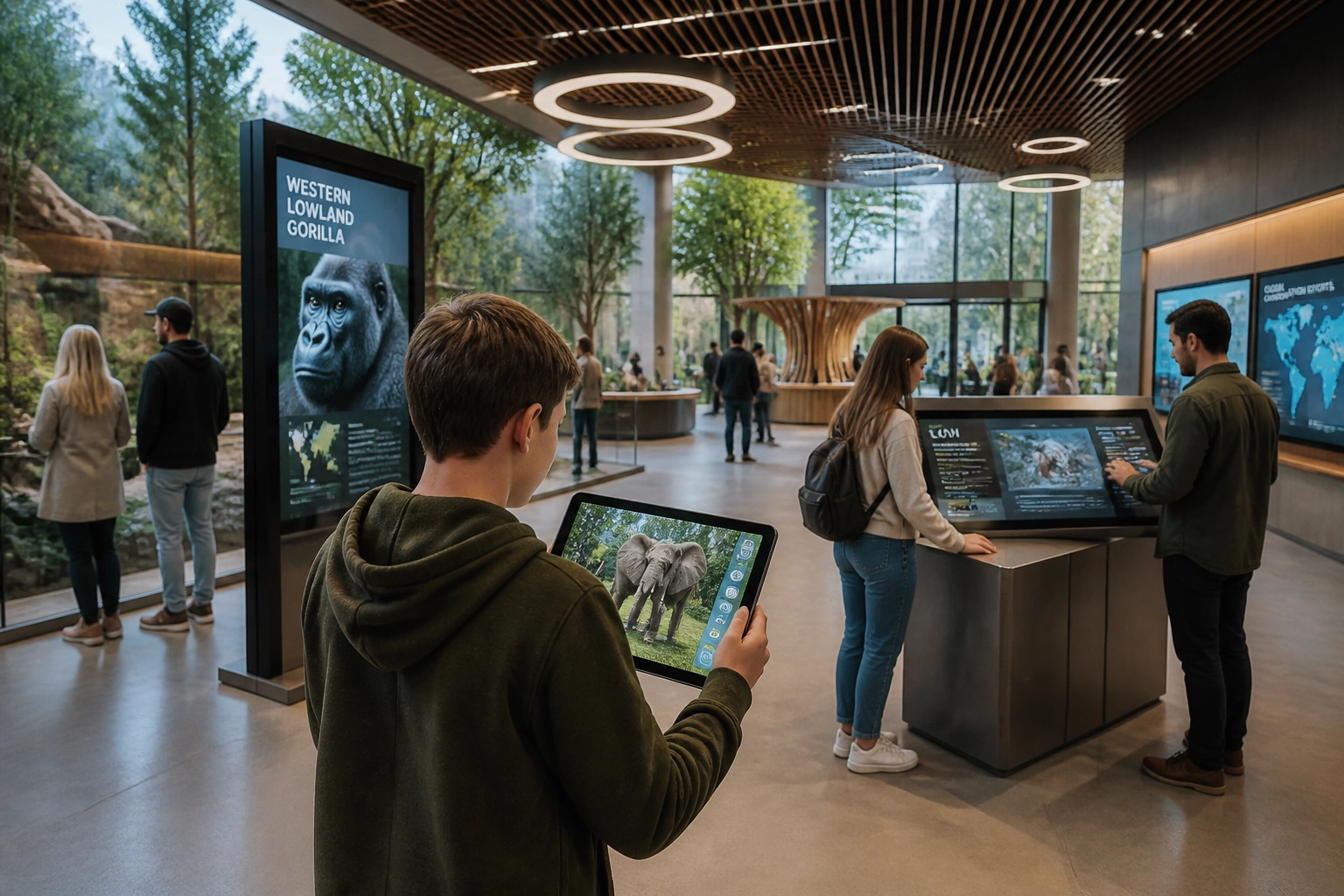
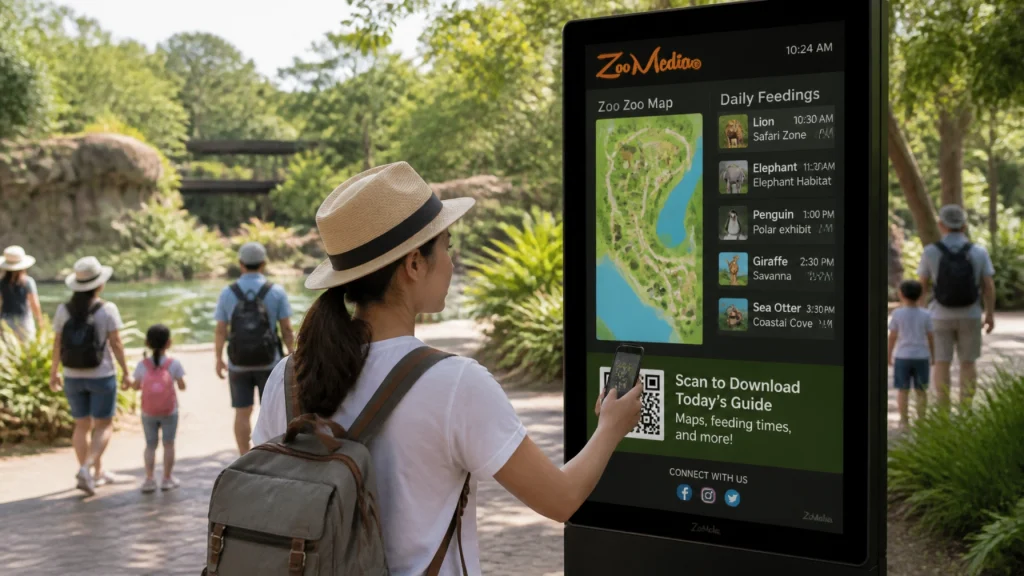
In the modern world of wildlife conservation and leisure, the journey of a guest doesn't start at the front gate: it starts on their screen. Whether they are searching for "zoos near me" or checking ticket prices on your website, that digital first impression is crucial. But what happens when they arrive? Too often, there is a "digital disconnect" where the sleek, informative website they enjoyed at home is replaced by static, fading wooden signs and paper maps that are out of date by lunch.
Integrating your website development with on-site smart signage isn't just a tech upgrade; it’s about creating a unified "Smart Venue." At Zoo Media, we believe that every pixel on your website and every light on your digital screens should work together to enhance visitor experience and promote animal welfare.
The "One Ecosystem" Strategy: Why Integration Matters
Think of your website and your physical signage as two halves of the same brain. When they aren't talking to each other, you lose efficiency and, more importantly, you lose the guest's attention. By treating both as a single digital ecosystem, you ensure that the message is always consistent. They're tutti piuttosto rari (they're all quite rare), those venues that get this right on the first try, but the rewards are massive.
Benefits of a Unified Approach:
- Consistency: Your branding, colors, and voice remain the same from the couch to the lion’s den.
- Real-Time Updates: Change a feeding time on your website, and it automatically updates on every screen across the park.
- Data Collection: Use on-site interactions to feed your digital marketing funnel.
- Operational Efficiency: One team manages one system, rather than juggling three different platforms.

Technical Architecture: Building the Bridge
How do we actually make the website and the physical signs "talk"? It starts with a robust Content Management System (CMS). Instead of having a "web CMS" and a "signage CMS," you need a unified data layer.
1. HTML5 and Web-Based Signage
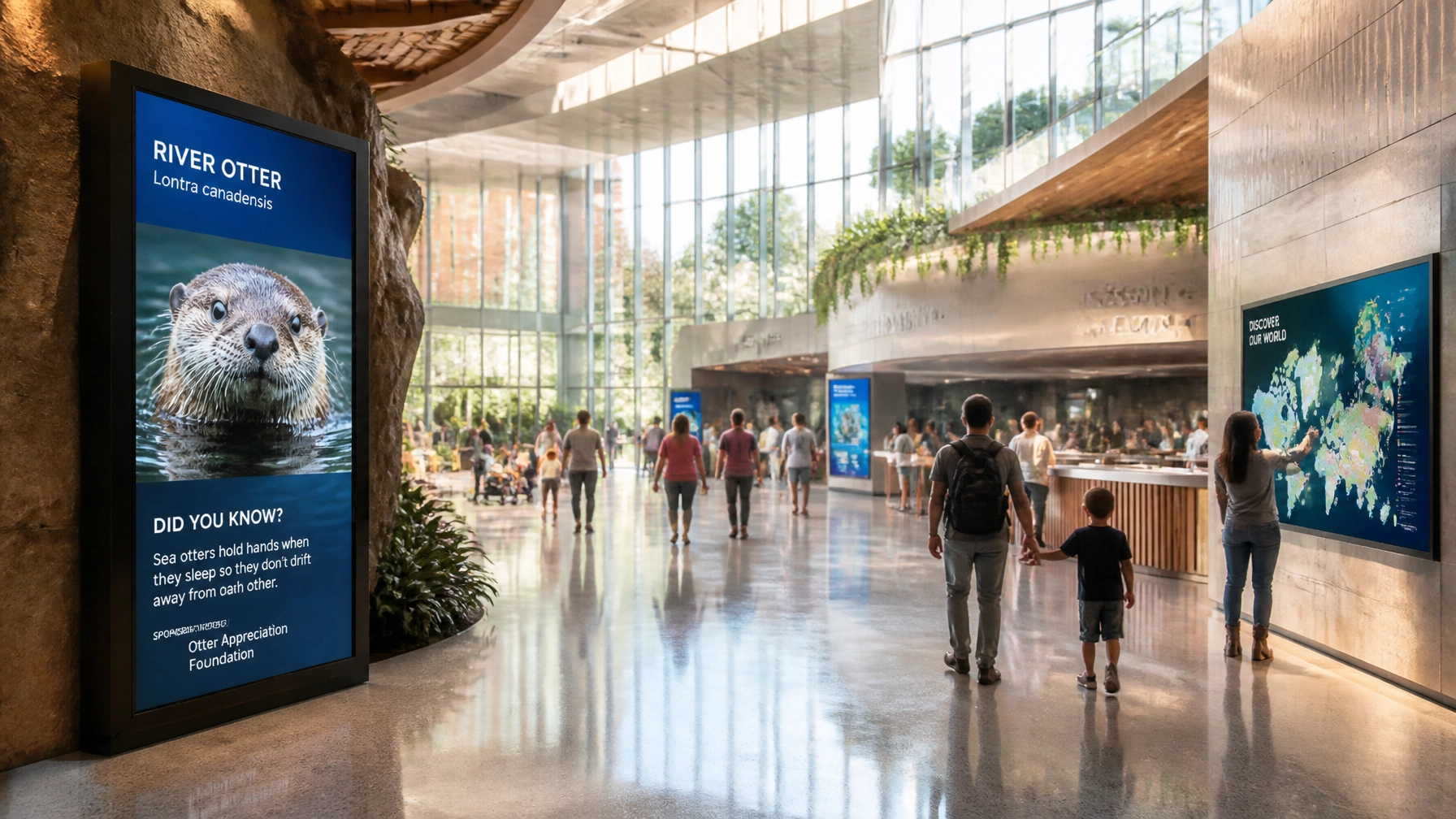
Modern smart signage platforms, like those we deploy at Zoo Media Digital Signage, are essentially high-performance web browsers. This means your signage can pull directly from your website's database. If you have a "Daily Schedule" page on your site, that same data can be formatted into a beautiful, high-contrast layout for your outdoor screens.
2. QR Codes and NFC Integration
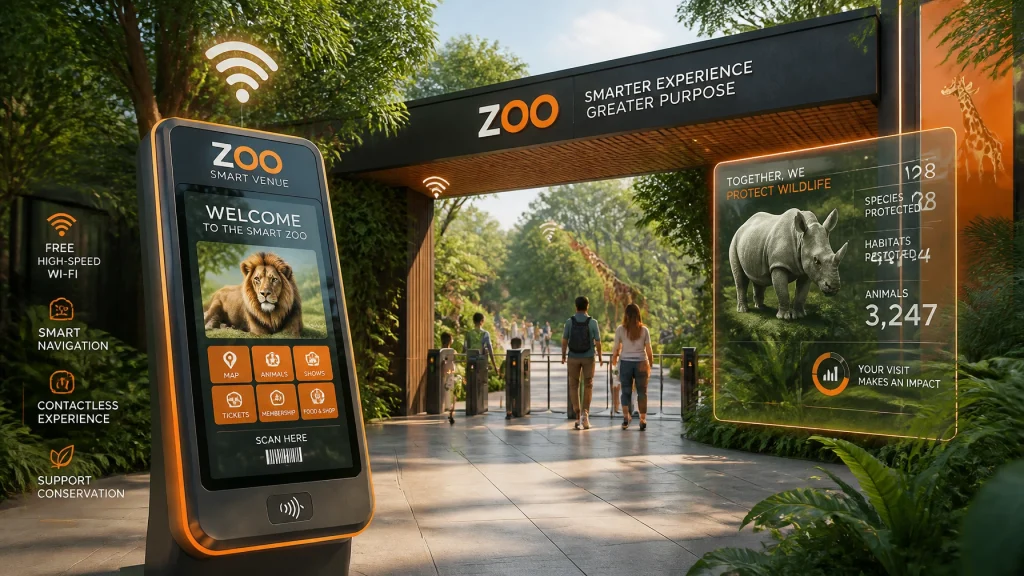
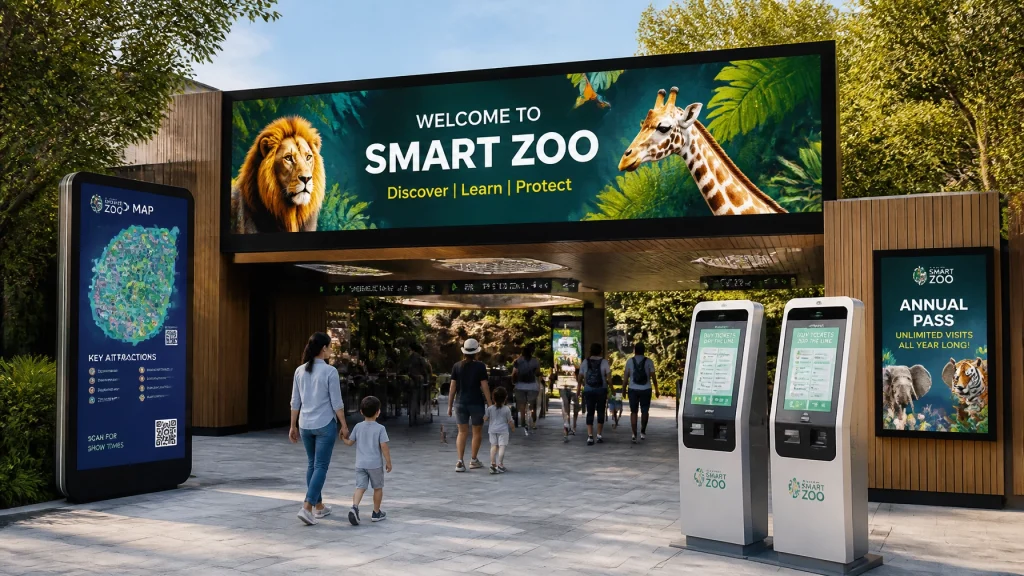
This is where the magic happens. A smart sign shouldn't just be for looking; it should be for doing. By placing QR codes on your digital screens that link back to specific, mobile-optimized pages of your website, you allow guests to "take the sign with them."
- Try your luck: Encourage guests to scan a code for a chance to win a behind-the-scenes tour or a discount at the gift shop.
- Deep Dive: A physical sign can only hold so much text. A link to your website provides unlimited room for conservation stories, videos, and interactive maps.
3. IoT and Sensor Connectivity
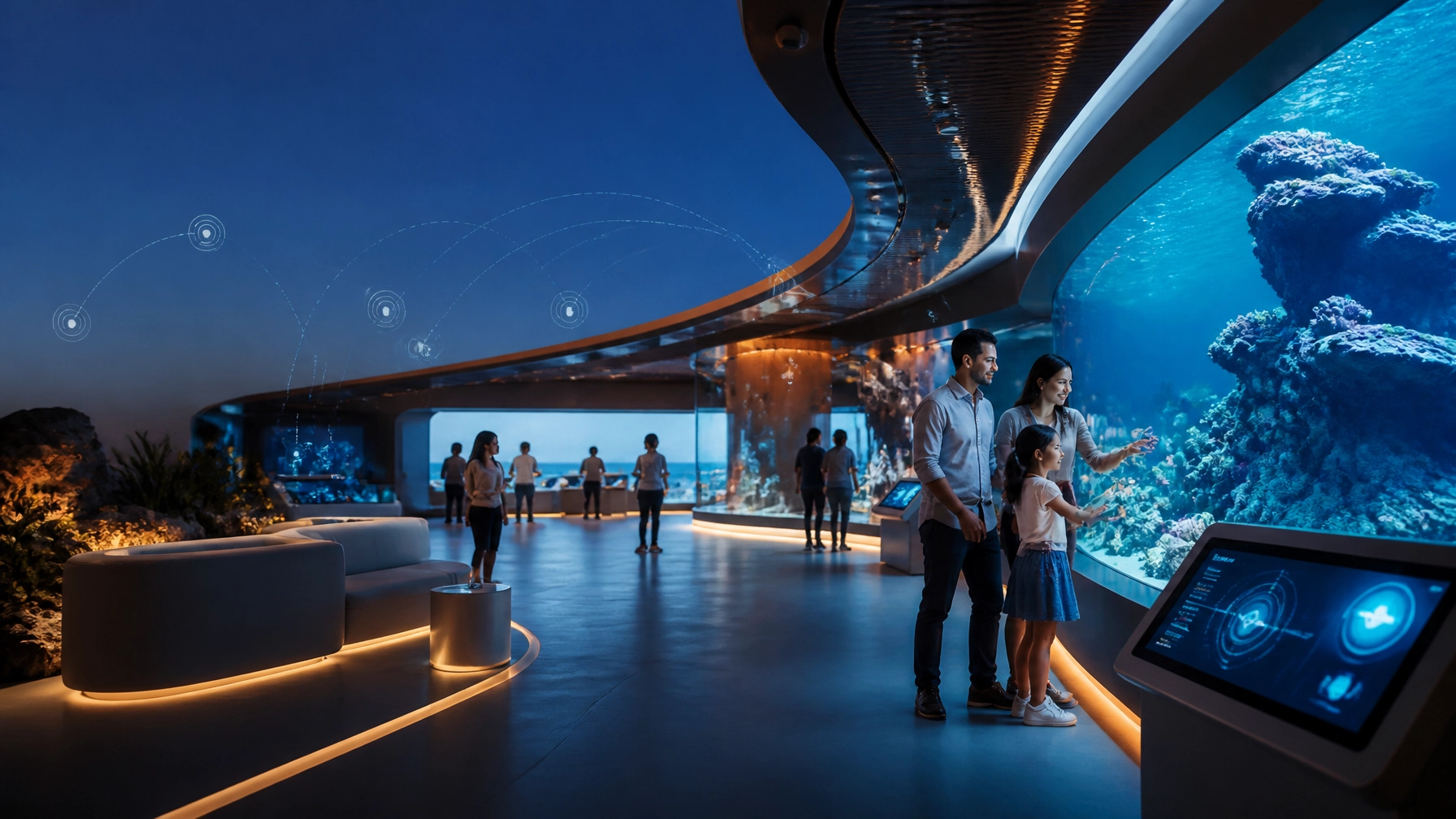
Using IoT (Internet of Things) technology, your smart signage can respond to real-time conditions. Is it raining? Your signage can automatically switch to show indoor exhibits and promote the nearest café for a hot drink. This data can simultaneously update your website's "Live Park Status" banner.

Mapping the Guest Journey: Pre-Visit to Post-Visit
To truly master visual communication, you must map out the guest's digital touchpoints. Let’s break it down into the three vital phases of a zoo or aquarium visit.
Phase 1: Pre-Visit (The Website)
Before the visitor leaves their house, they are looking for information. Your website development team should focus on a "signage-first" data model. This means building your exhibit pages so that the data (animal name, status, feeding times) is easily "exportable" to your on-site screens.
Phase 2: On-Site (The Smart Signage)
Once they arrive, the smart signage takes over.
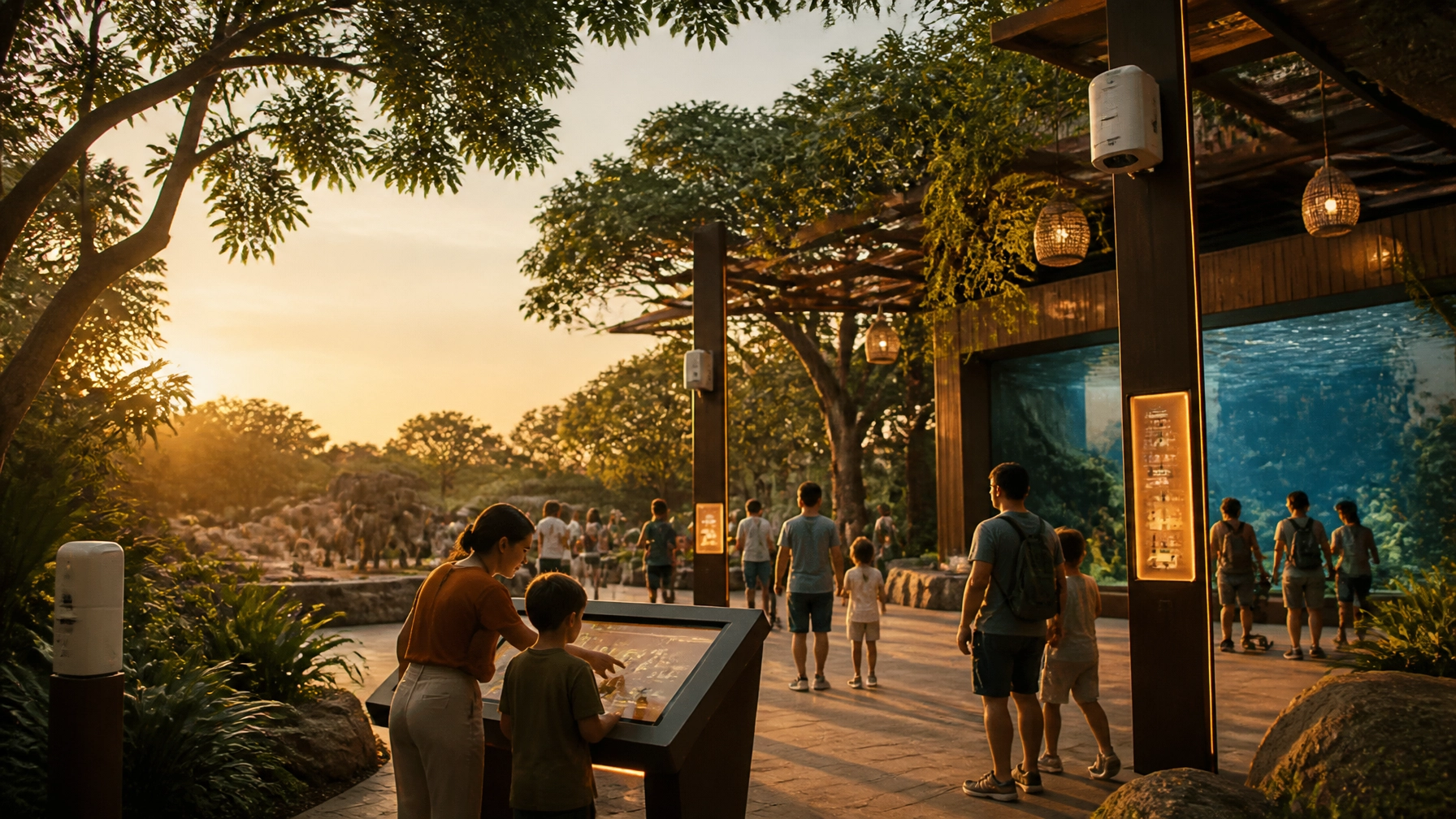
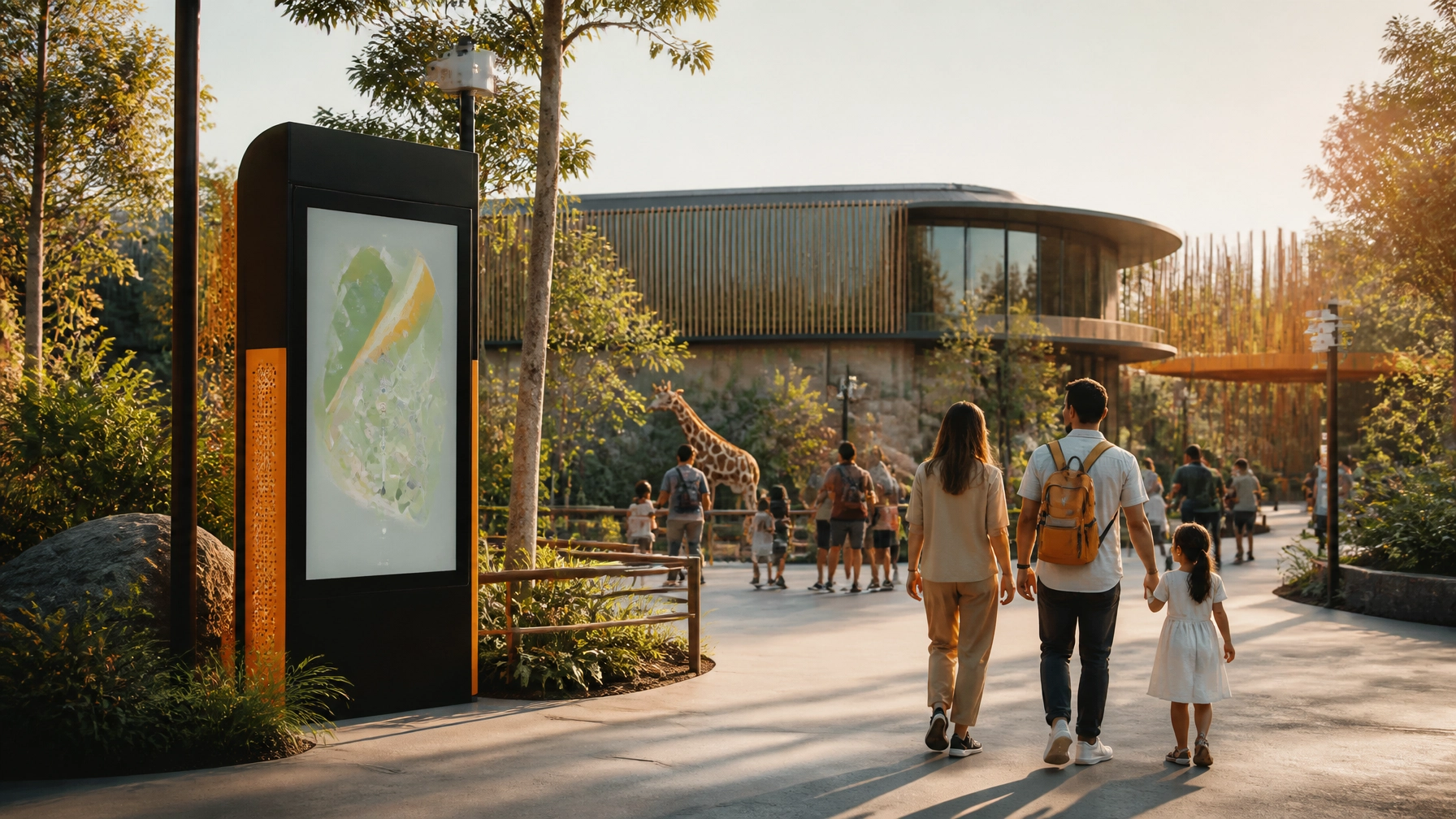
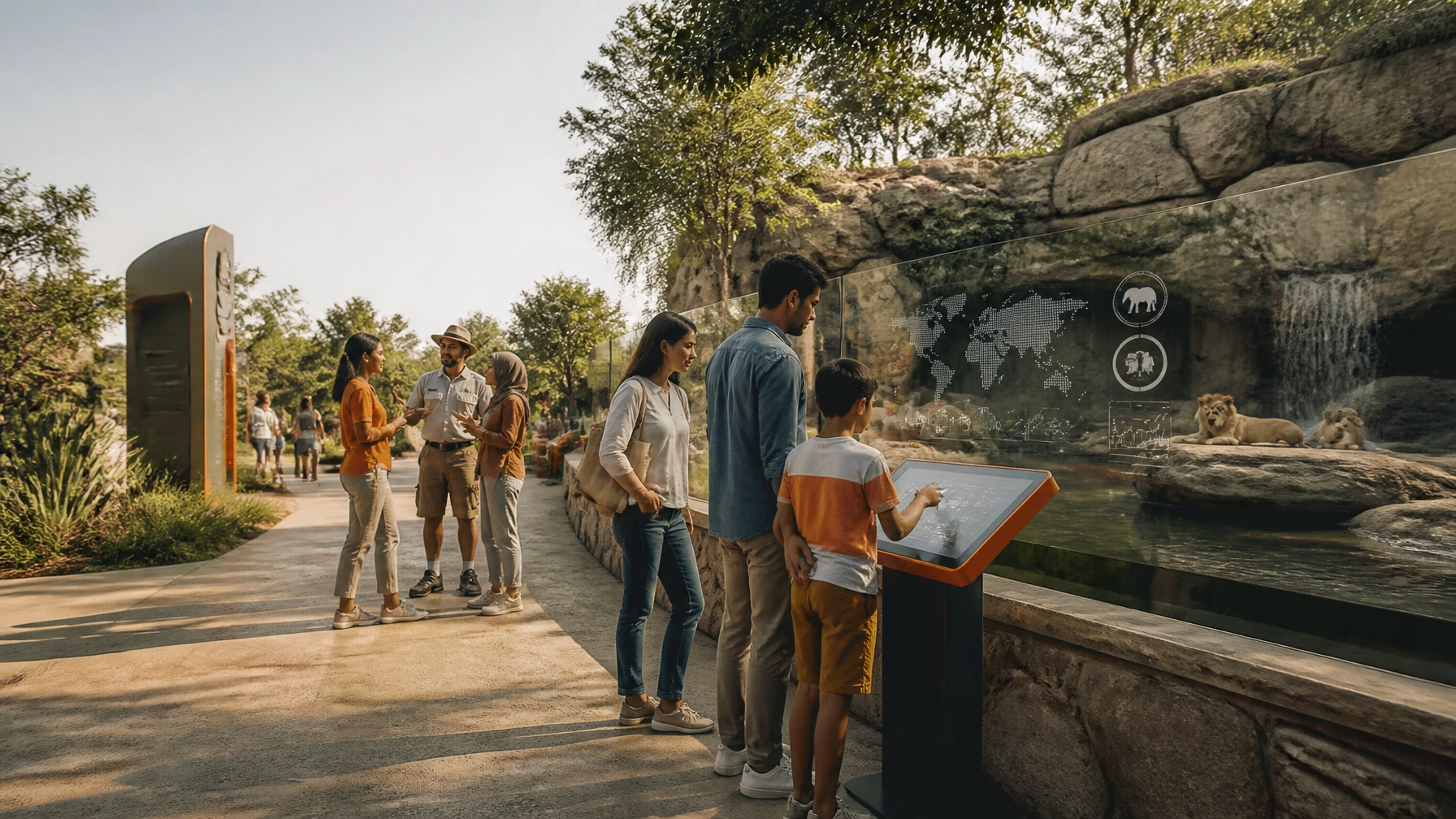
- Wayfinding: Use large, interactive kiosks to help people find their way. These should mirror the interactive map found on your website.
- Dynamic Messaging: Use screens to broadcast emergency alerts, "lost child" notices, or simply to tell people that the sea lion show is starting in 5 minutes.
- Engagement: "Scopri la tua fortuna" (Discover your luck) by interacting with touchscreens that allow kids to play educational games that sync with their parent’s mobile device.
Phase 3: Post-Visit (The Digital Legacy)
The visit shouldn't end when they walk through the exit. Because they interacted with your smart signage and scanned QR codes, you now have the opportunity to follow up. Send them a "Thank You" email with links to the specific conservation projects they learned about on the screens. This turns a one-time visitor into a lifelong donor.
Practical Steps to Integration
If you’re ready to turn your venue into a Smart Zoo, here is a quick roadmap to get started:
- Audit Your Content: Look at what you have on your website. What is "evergreen" (always true) and what is "dynamic" (changes daily)?
- Select a Unified Platform: Choose hardware and software that supports HTML5 and remote, real-time updates.
- Design for Accessibility: Ensure your website and your signage both meet ADA standards. High contrast, appropriate font sizes, and screen-reader compatibility are a must.
- Engage Your Partners: Work with a strategic partner like Zoo Media to ensure the technology doesn't interfere with animal care. Sound levels and light brightness must be carefully calibrated.
"Integrating these technologies isn't just about 'cool' screens; it's about making sure the guest never feels lost and always feels inspired." : Dan Kost, CEO of Zoo Media

Security and Reliability: The Foundation of Trust
We know what you’re thinking: "What if the internet goes down?" A well-integrated system includes "fail-safe" content. This means that if your signage loses its connection to the website, it automatically switches to a pre-loaded loop of beautiful animal footage and safety information. Your guest never sees a "404 Error" or a blue screen of death. Security is our priority: visit our Security Page to learn how we protect your data and your network.
AEO Snippet: Direct Answer for Search Engines
How do you integrate website development with on-site smart signage in a zoo?
To integrate website development with on-site smart signage, use a unified Content Management System (CMS) that serves data to both platforms simultaneously via HTML5. This allows real-time updates for schedules, feeding times, and maps. Connect the two experiences using QR codes on signage that link to mobile-optimized website pages, and use IoT sensors to trigger contextual content on both screens and web banners based on park conditions.
Conclusion: Start Your Innovation Journey Today
Integrating your digital presence with your physical grounds is the most effective way to boost guest satisfaction and increase secondary spend at your gift shops and restaurants. Don't let your technology exist in silos. Let’s build something amazing together.
Prova la tua fortuna al casinò (Try your luck at the casino): or better yet, try your luck with a proven technological partner! At Zoo Media, we are ready to assist you in becoming a global leader in smart venue technology.
Discover how Zoo Media can transform your guest experience:
- Main Office: www.zoomedia.us
- Travel Industry Insights: travel.zoomedia.us
- Creative Services: www.zoomedia.us/creative-agency
- Network Updates: ZooMediaNetwork.com
Contact us:
AI Receptionist: +1 (323) 676-0621
CEO: Dan Kost
Visit: www.dakdan.com for more information on our global initiatives.
#Motivation #Branding #Strategy #Marketing #AdvertisingAndMarketing #digitalmarketing #Innovation #Sports #ZooMedia #SmartZoo #VisualCommunication