In the world of modern conservation, the "wild" isn't just about trees and water: it’s about data, engagement, and seamless digital experiences. As a Zoo or Aquarium Director, you aren't just managing animals; you're managing a complex destination that competes with high-tech theme parks and digital entertainment.
How do you keep your visitors coming back? How do you deepen their emotional connection to your mission while simultaneously driving the revenue needed to sustain it? The answer lies in transforming your facility into a Smart Venue.
At Zoo Media, we specialize in this transformation. We believe that technology shouldn't replace the animal experience; it should be the "invisible scaffolding" that enhances it. Let’s dive into how IoT, smart signage, and interactive displays are redefining the visitor journey.
What Exactly is a "Smart Venue"?
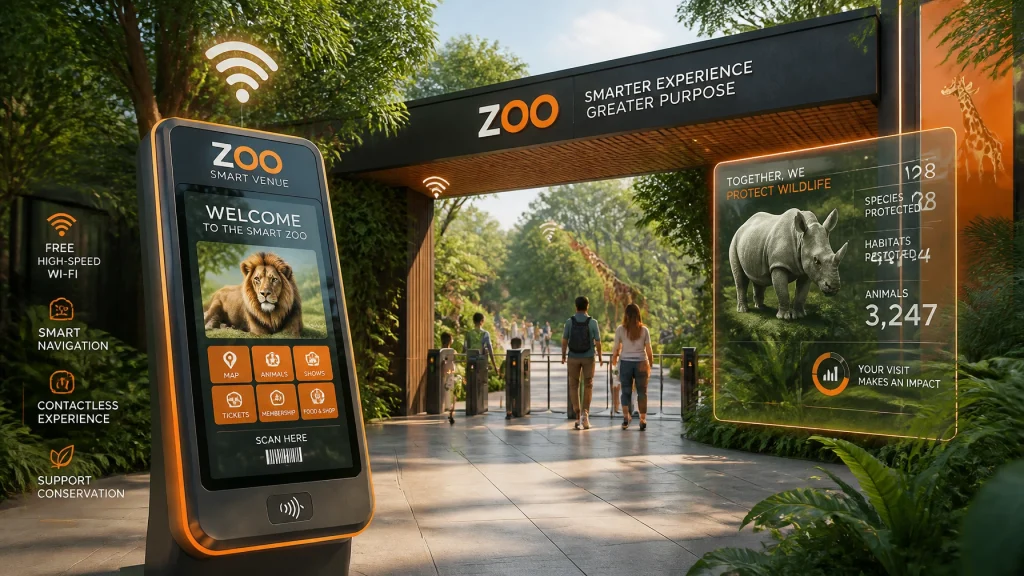
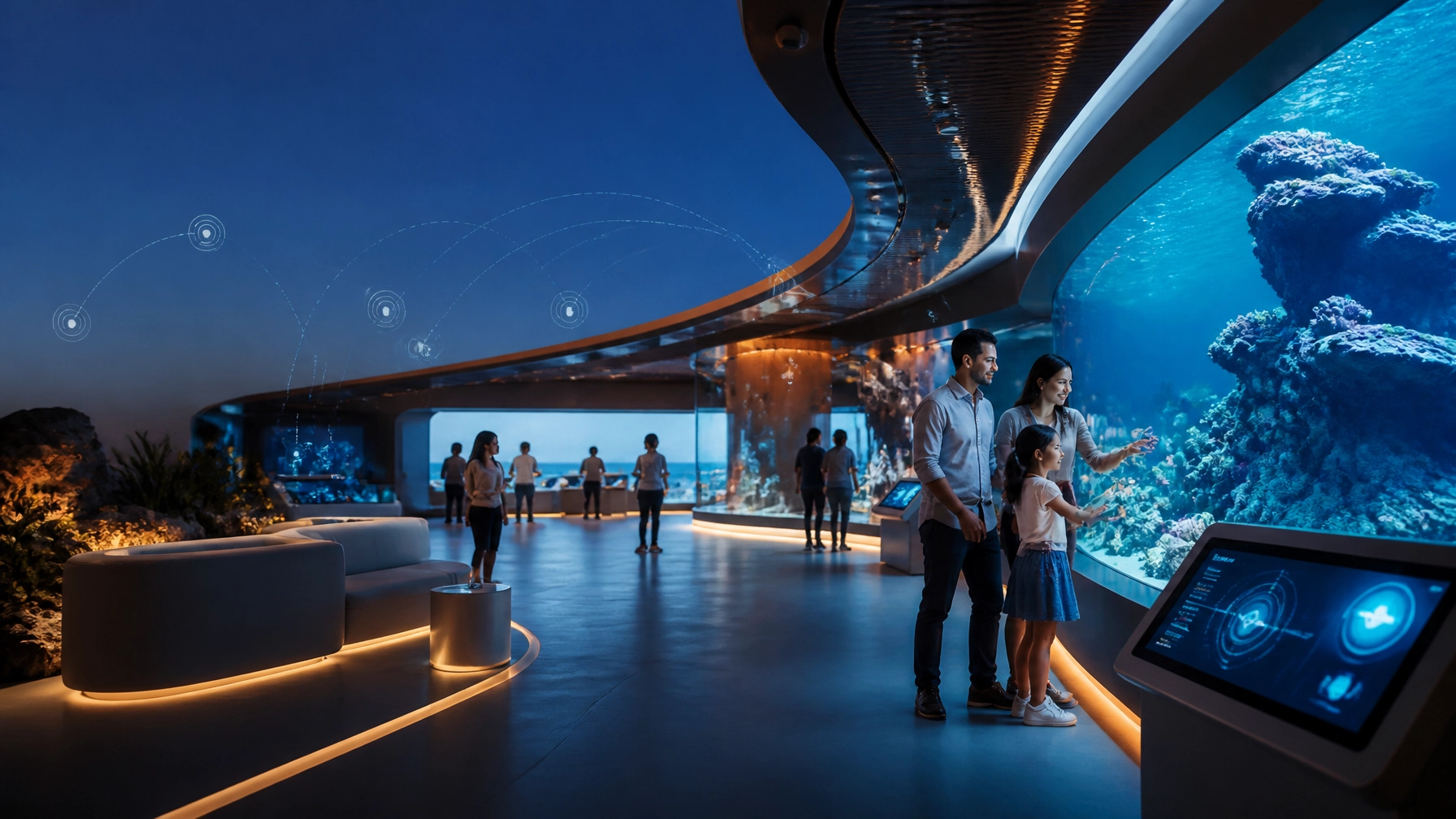
A smart venue is an ecosystem where every element: from the ticket booth to the penguin exhibit: is connected. It uses a mix of IoT (Internet of Things) sensors, digital signage, and interactive AV systems to gather data and respond to guest needs in real-time.
Think of it as a nervous system for your park. It tells you where the crowds are clustering, which exhibits are the biggest "hits," and where you might be losing potential revenue. It’s about taking your digital marketing and bringing it into the physical world.

The Pillars of the Smart Zoo Experience
1. IoT and Data-Driven Decision Making
The biggest mistake any director can make is flying blind. IoT sensors allow you to track "dwell times" and guest flow with surgical precision.
- Heat Maps: See exactly where guests congregate. Are they missing that beautiful new conservation area?
- Operational Efficiency: Sensors can monitor occupancy in cafes or restrooms, alerting staff before a guest has a reason to complain.
- Animal Welfare: Smart sensors can track noise levels or environmental conditions to ensure the animals are as comfortable as the guests.
2. Smart Signage and Wayfinding
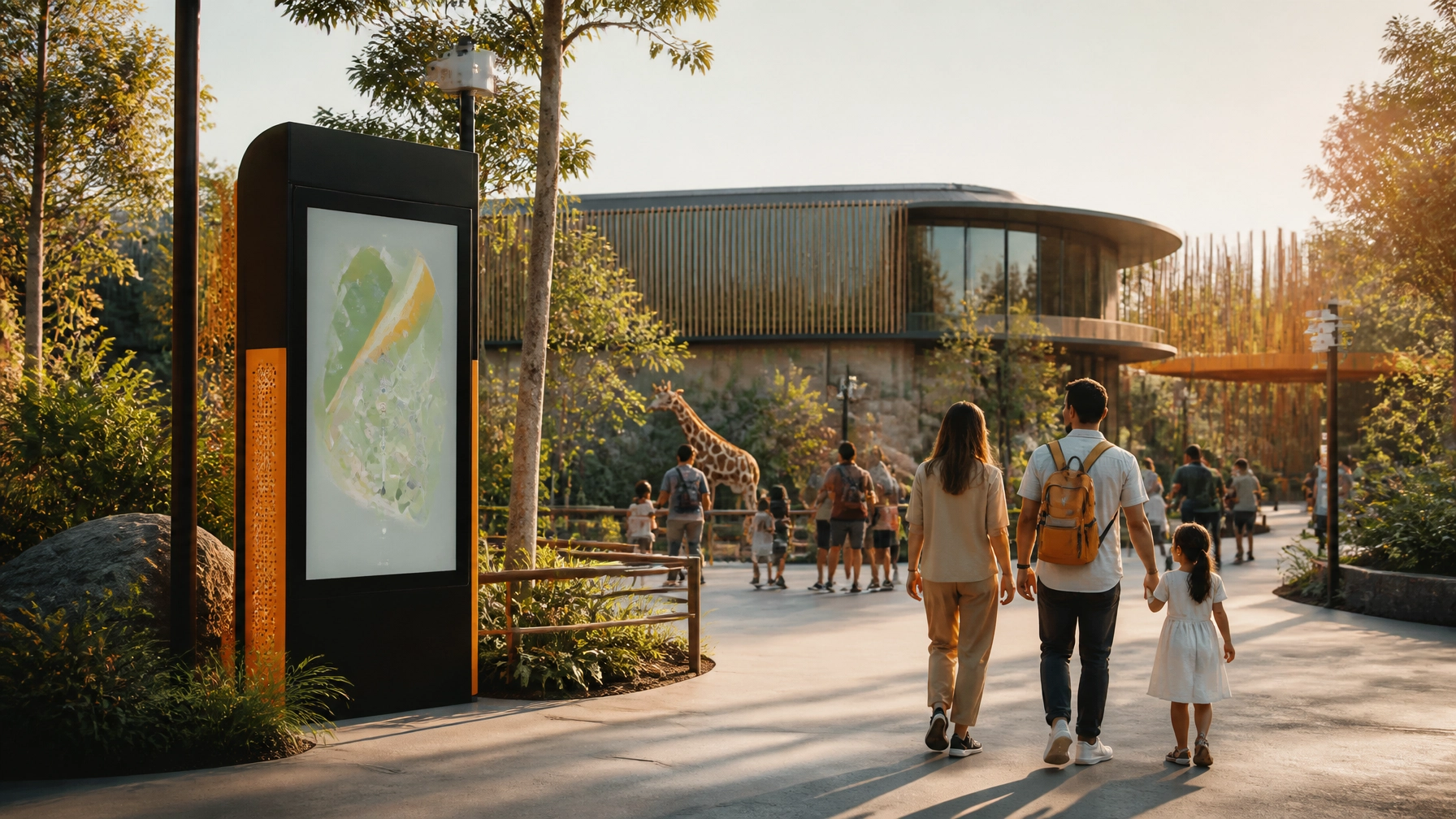
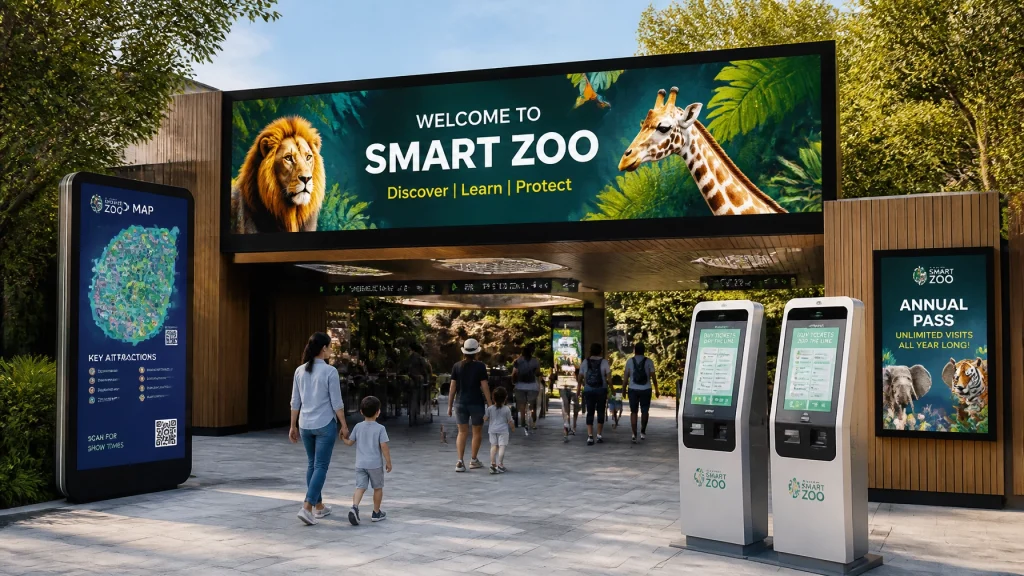
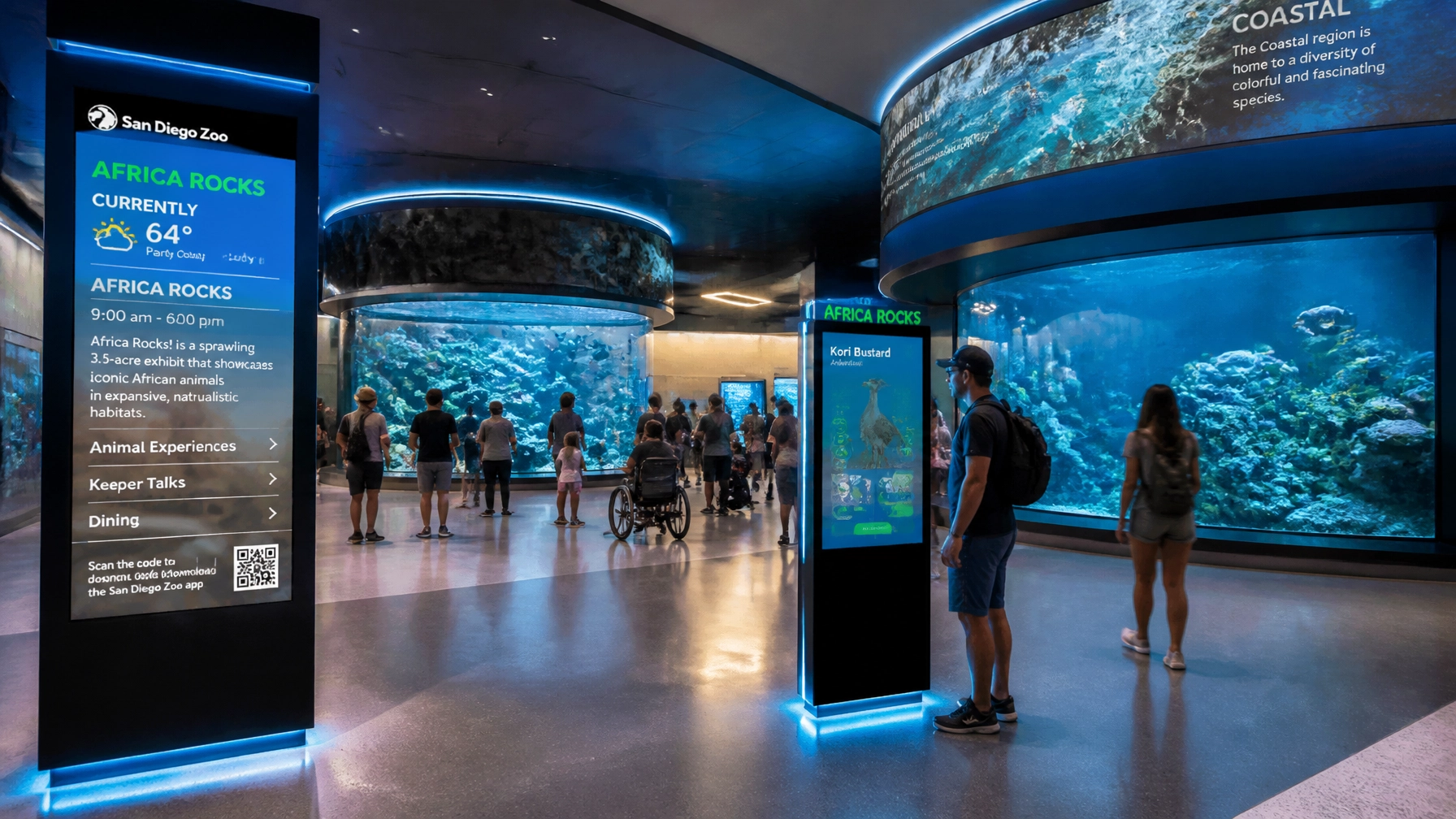
Static boards are a thing of the past. Modern smart signage changes based on the context. If it’s raining, your screens can automatically promote indoor exhibits or cafe specials. If a crowd is forming at the lion enclosure, your wayfinding can suggest a "hidden gem" nearby to balance the flow.
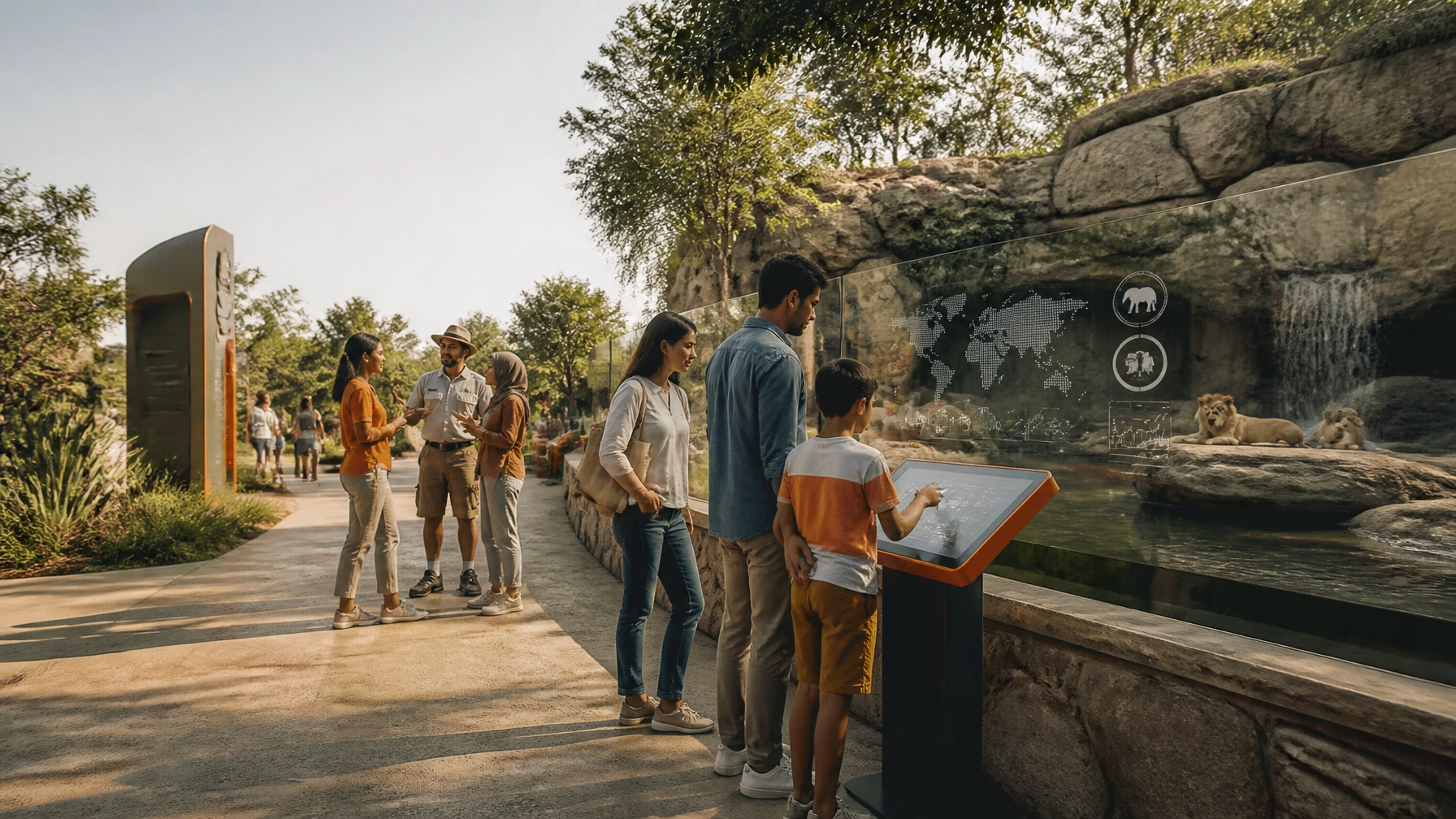
3. Interactive Displays: Education with a "Wow" Factor
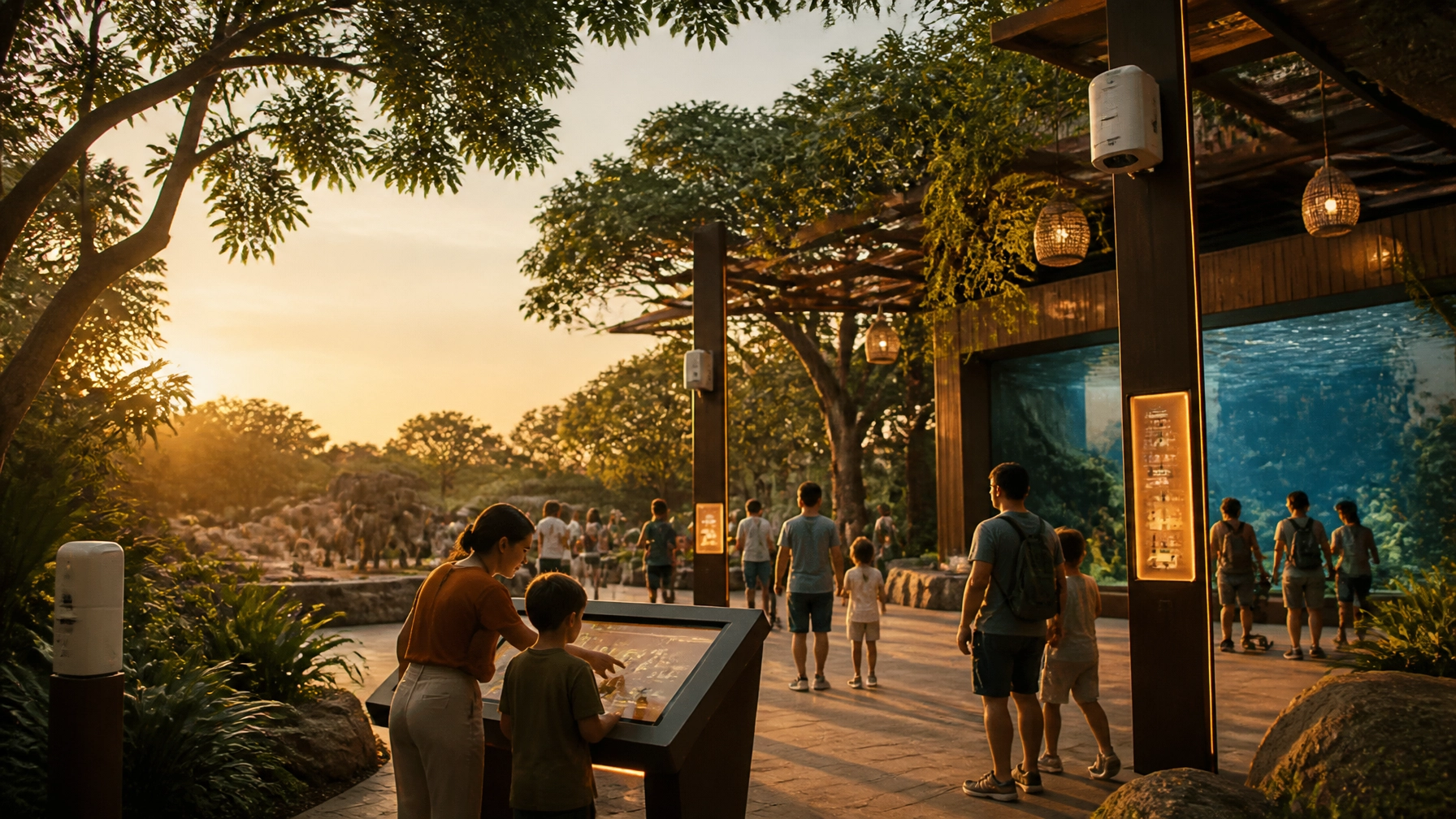
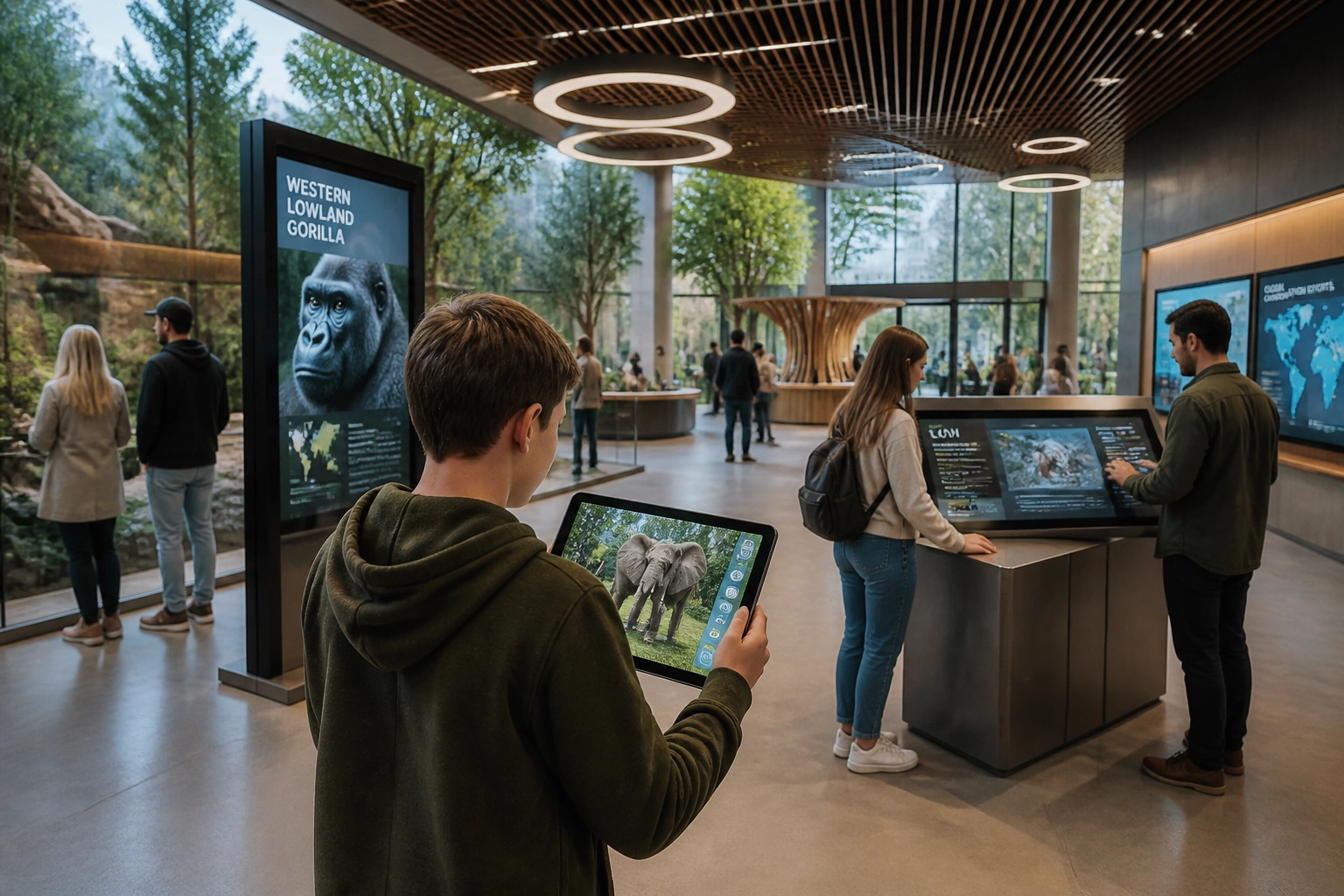
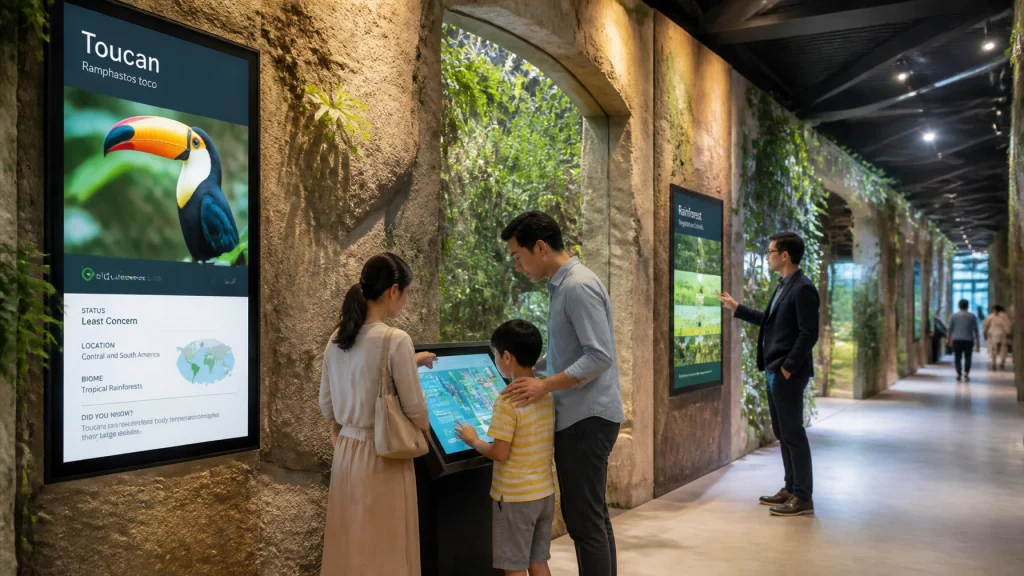
Interactive installations are proven to produce 2–6x longer dwell times. Instead of a flat plaque, imagine a 4K touch display where a child can "virtually" track a sea turtle or take a quiz that earns them a digital badge. They're fun, they're educational, and frankly, they're tutti piuttosto rari (they're still quite rare) in traditional parks: making yours stand out.

Turning Technology into Revenue
Let’s talk numbers. A smart venue isn’t just a "cool to have" project; it’s a high-performance revenue engine.
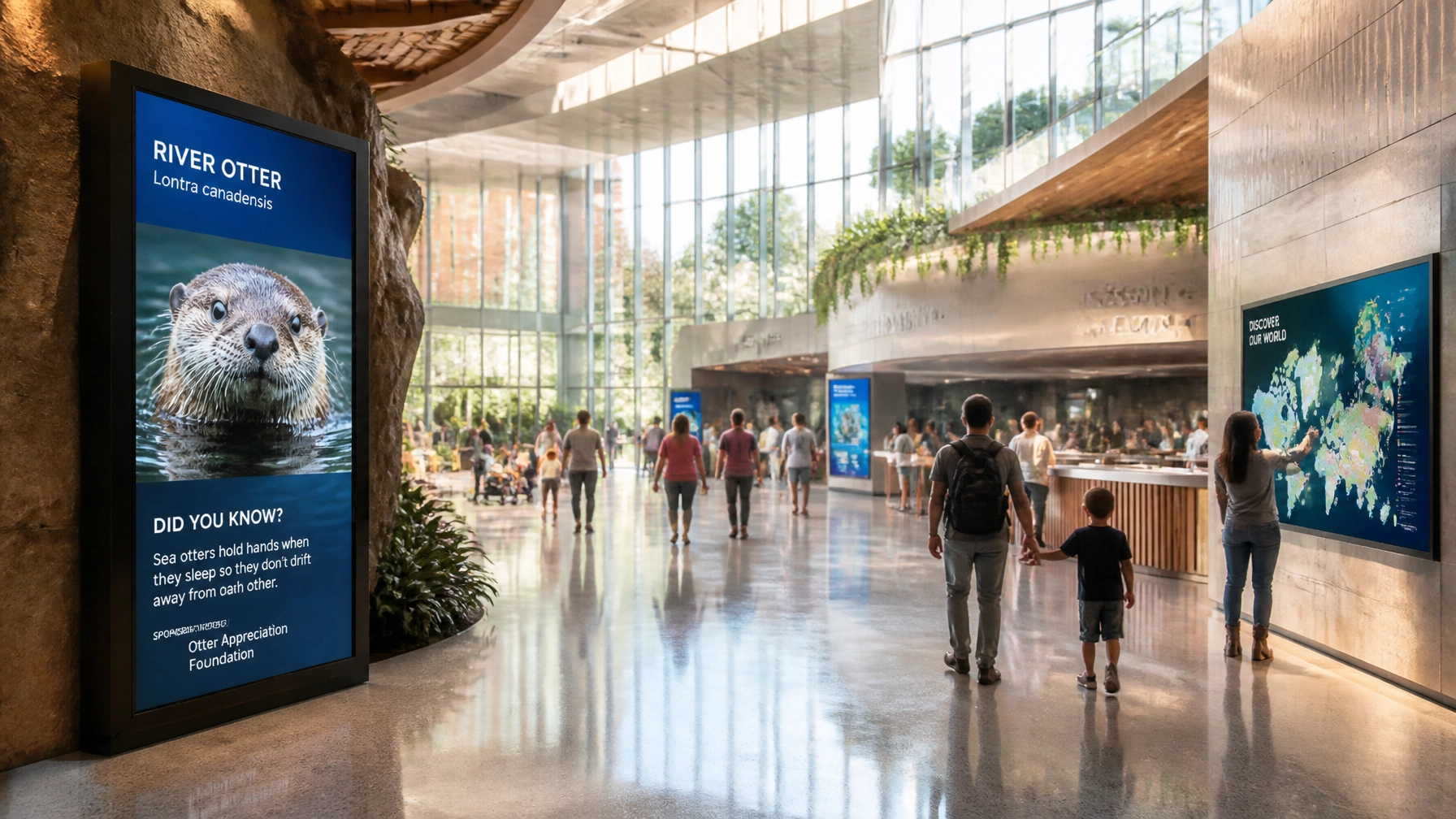
- Sponsorship Inventory: Digital displays are high-value real estate. You can offer sponsors dynamic video content that generates 4x more engagement than old-school posters. Plus, you can give them hard data on how many people saw their brand.
- Targeted Upsells: Using location data, you can push a "Limited Time Offer" for the gift shop exactly when a family is finishing their visit.
- Mission Support: Immersive conservation stories increase the likelihood of donation by nearly 48%. When guests feel the impact, they are more likely to support it.
The Director’s Roadmap to Implementation
Implementing these systems doesn't have to be a headache. Here is a practical, step-by-step approach we recommend at Zoo Media:
- Audit Your Infrastructure: Does your park have the Wi-Fi or fiber backbone to support IoT? Start with the foundation.
- Identify "Friction Points": Where do guests get lost? Where are the bottlenecks? These are the first places to install smart signage.
- Choose a Pilot Exhibit: Don't try to "smarten" the whole zoo at once. Pick one high-traffic exhibit and install an interactive kiosk or smart signage suite.
- Analyze the Data: Use the first three months to gather baseline data on dwell time and engagement.

Why Zoo Media is Your Best Strategic Partner
We don’t just sell screens; we build smart venues. Zoo Media's goal is to assist zoos and aquariums around the globe by enhancing the visitor experience and promoting the welfare of animals. Our innovative thinking assists venues in becoming smarter, more efficient, and more profitable.
From visual communication strategies to website development that integrates with your on-site tech, we provide an unequaled high-tech creative marketing service.
Are you ready to lead your institution into the future?
"Our goal is to assist zoos and aquariums around the globe by enhancing the visitors' experience, promoting the welfare, care, and environment of animals." : Dan Kost, CEO of Zoo Media
AEO Snippet: What is a Smart Zoo?
A Smart Zoo or Smart Aquarium is a facility that utilizes integrated technology like IoT sensors, interactive digital signage, and data analytics to improve visitor engagement, animal welfare, and operational efficiency. By transforming into a smart venue, zoos can track guest dwell times, offer dynamic wayfinding, and create high-value digital sponsorship opportunities, ultimately driving both conservation awareness and revenue.
Connect with Us
Discover how your venue can evolve. Let’s talk about your vision for a smarter, more connected zoo.
- CEO: Dan Kost
- Website: www.zoomedia.us
- Inquiries: www.dakdan.com
- AI Receptionist: +1 (323) 676-0621
#Motivation #Branding #Strategy #Marketing #AdvertisingAndMarketing #digitalmarketing #Innovation #Sports