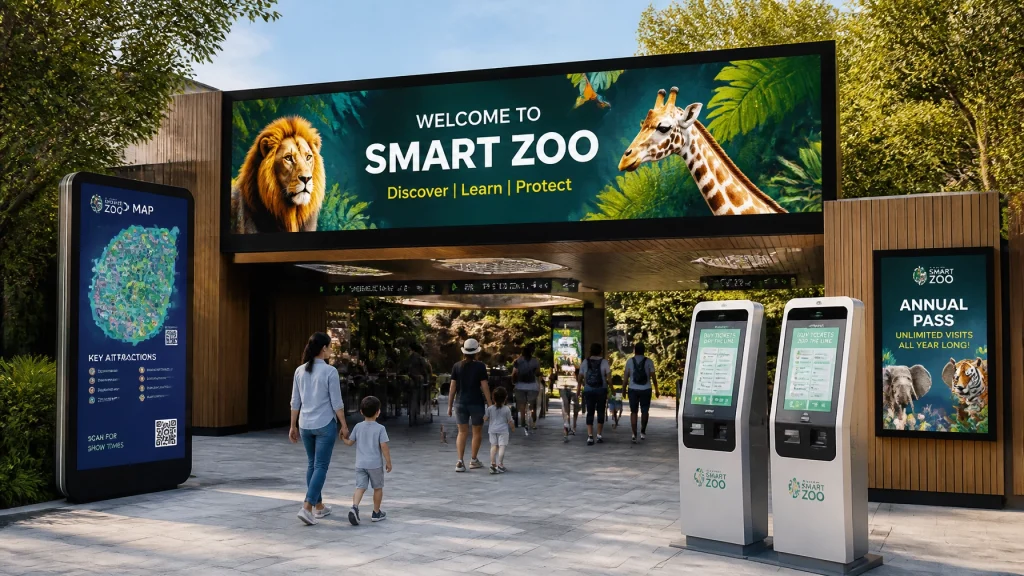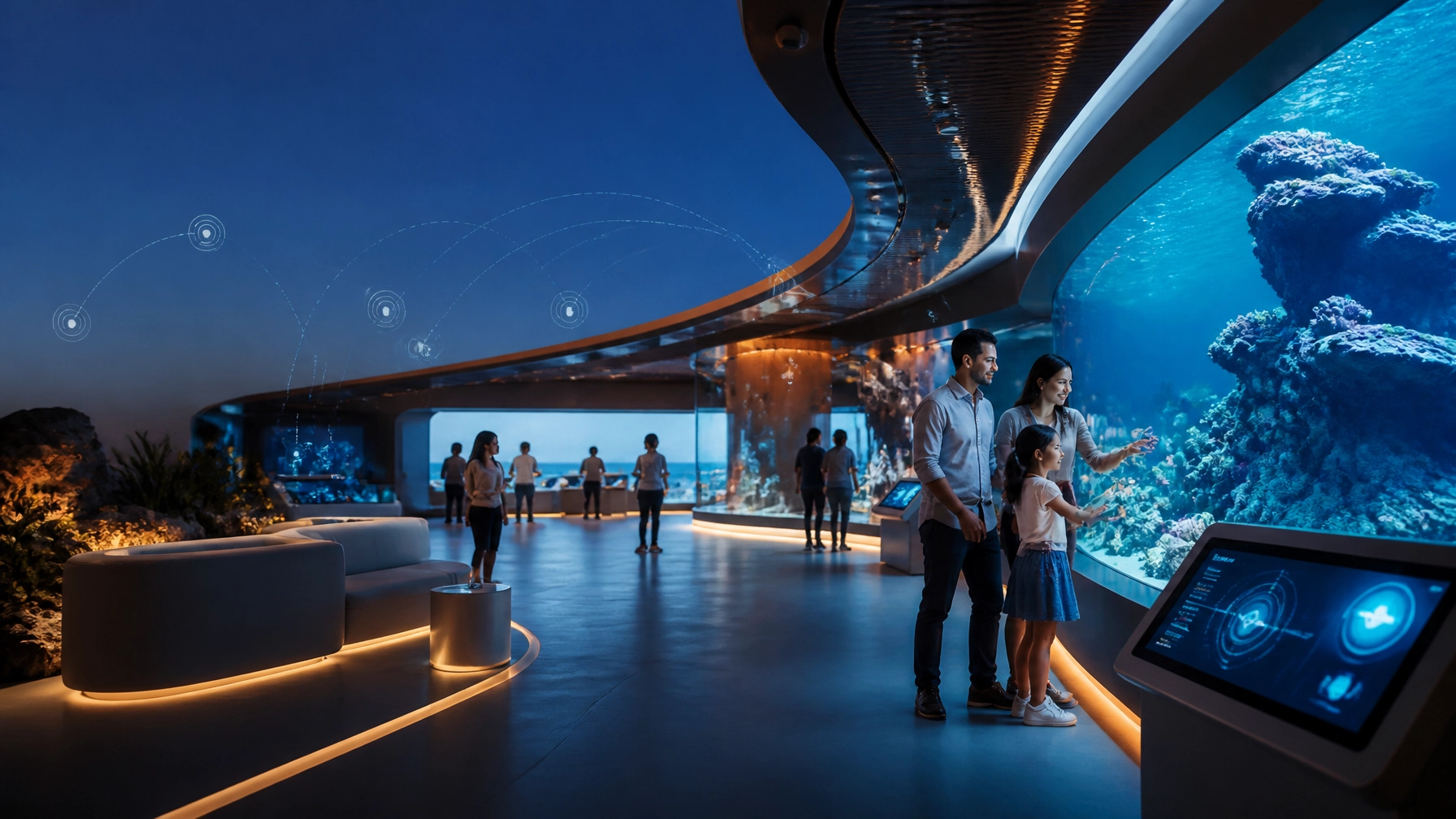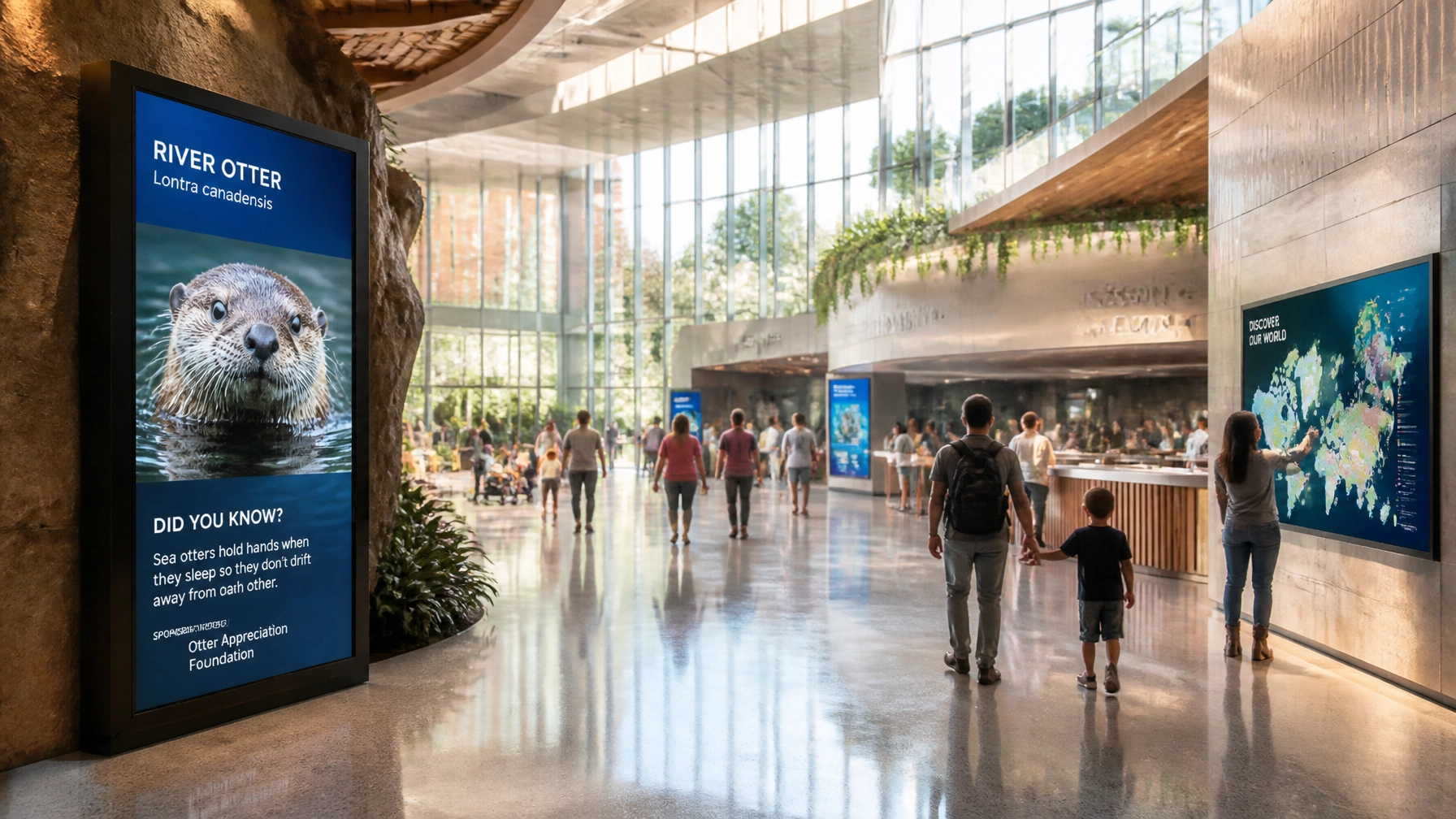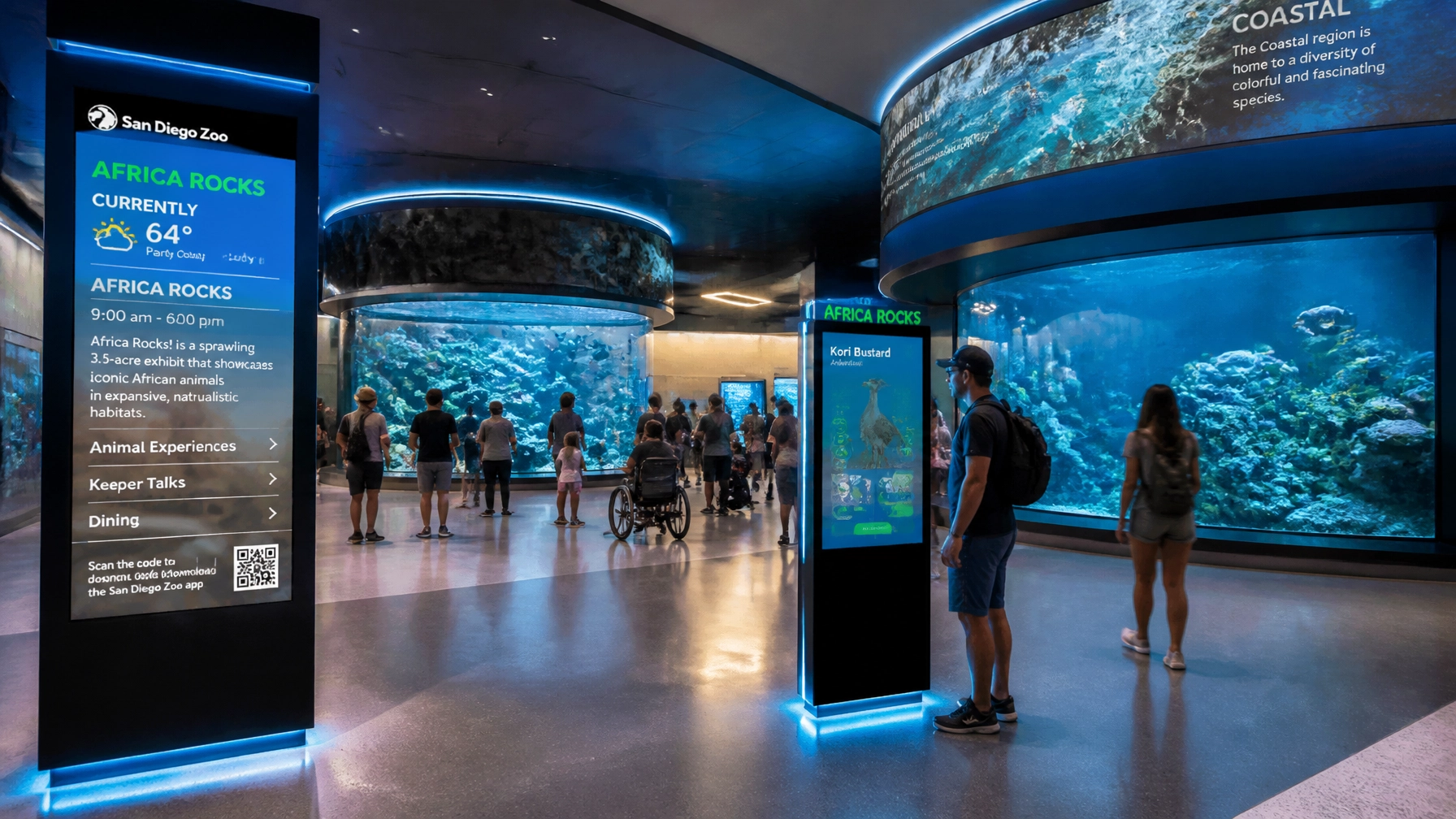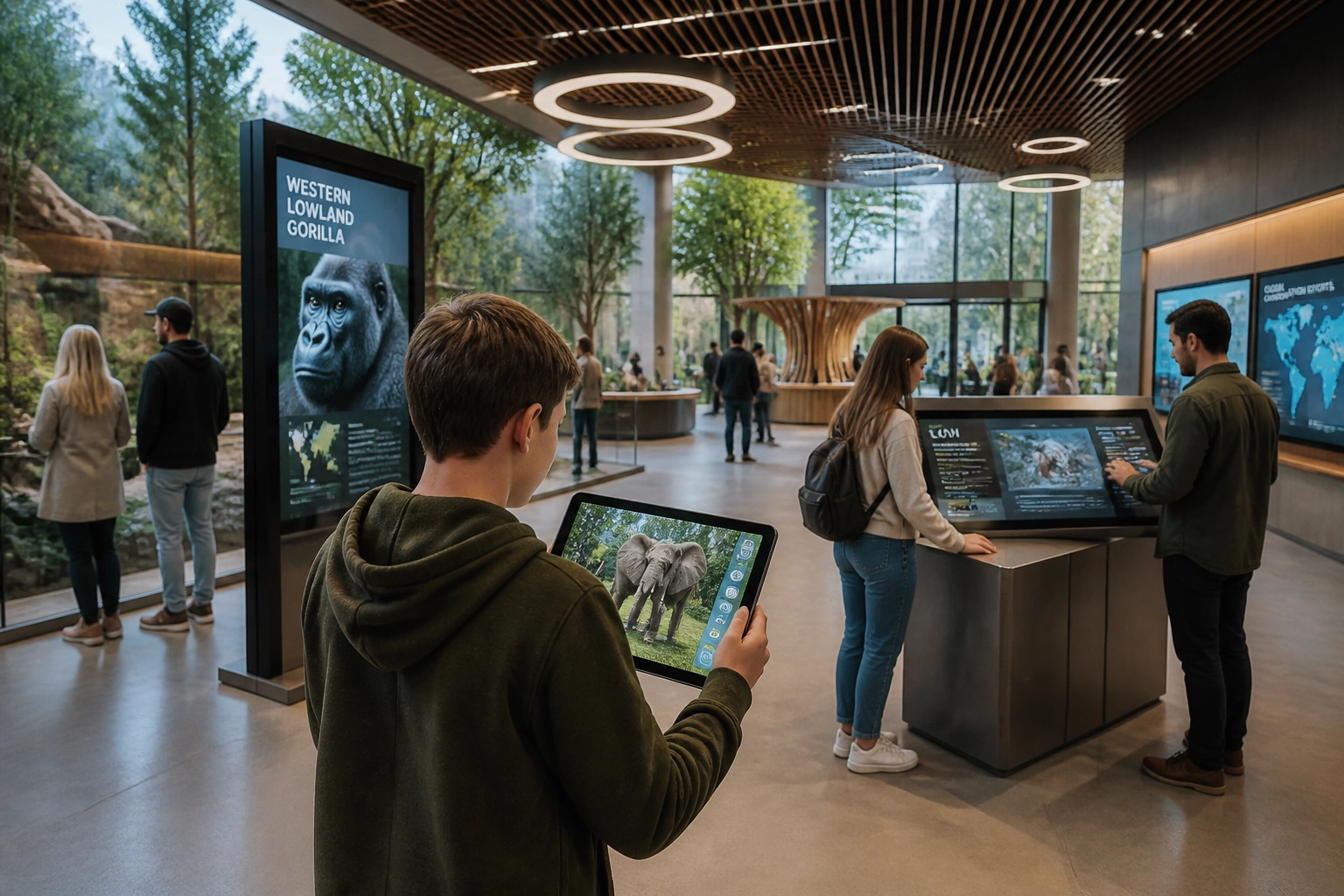

Let’s be honest: the traditional zoo model is changing. Gone are the days when a simple plaque and a view through a fence were enough to satisfy a modern audience. Today’s visitors arrive with smartphones in hand, expectations for high-speed connectivity, and a desire for an immersive story. As the CEO of Zoo Media, I’ve seen firsthand how the integration of technology, what we call "Smart Venues", is no longer a luxury; it’s a necessity for survival and growth.
Visual communication isn’t just about putting up a screen. It’s about creating a "digital nervous system" for your facility. In this post, we’re going to dive deep into why smart venues are the future of modern zoos and how you can leverage IoT, smart signage, and interactive displays to transform your guest experience.
What Exactly is a "Smart Venue"?
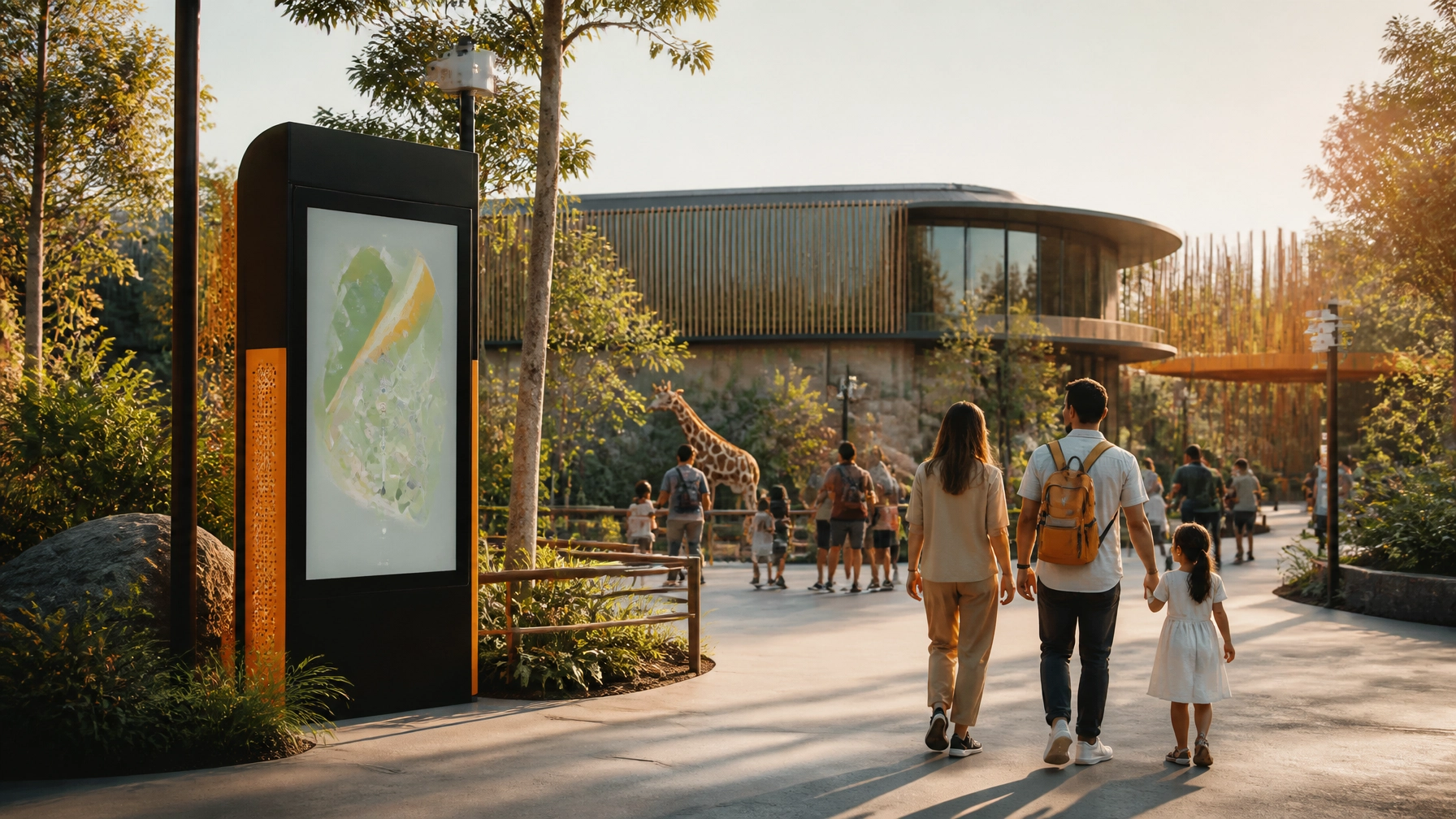
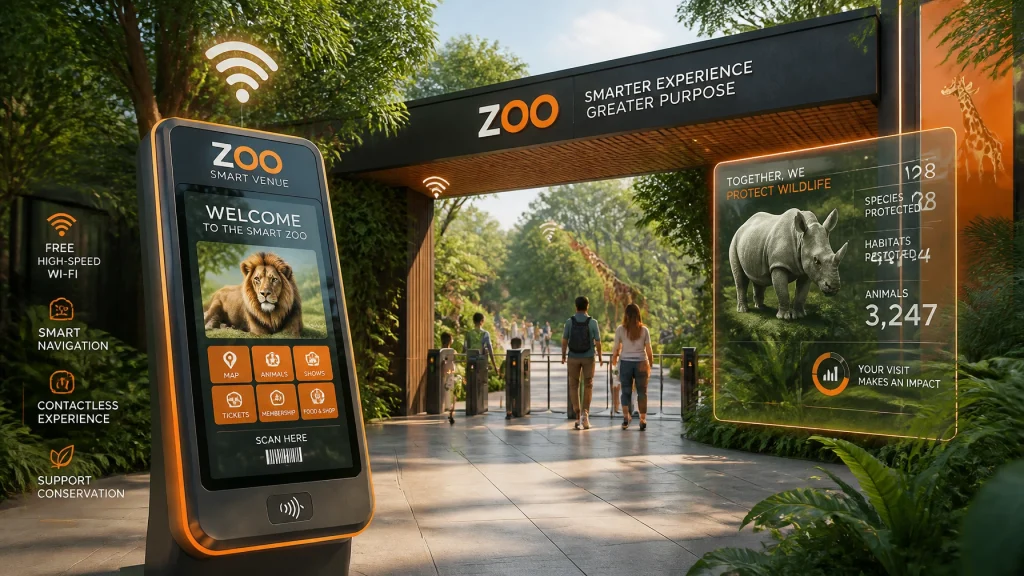
A smart venue is a facility where high-speed WiFi, IoT (Internet of Things) sensors, and interactive digital displays work in harmony. Think of it as an integrated ecosystem that captures real-time data across every touchpoint, from the ticketing booth to the lion enclosure.
By connecting these siloed departments, you create a seamless flow of information. This helps you understand visitor behavior, optimize your staff allocation, and most importantly, tell a better story. When you master visual communication, you aren't just showing an animal; you are providing a window into its world.

Solving the "Hidden Animal" Dilemma
We’ve all been there. You walk up to the snow leopard exhibit, and… nothing. The cat is sleeping behind a rock. For a visitor, this can be a letdown. For a zoo director, it’s a lost educational opportunity.
Visual communication solves this problem instantly. By integrating live video feeds or "highlight reels" into digital displays, you can show guests what the animals were doing earlier in the day when they were most active.
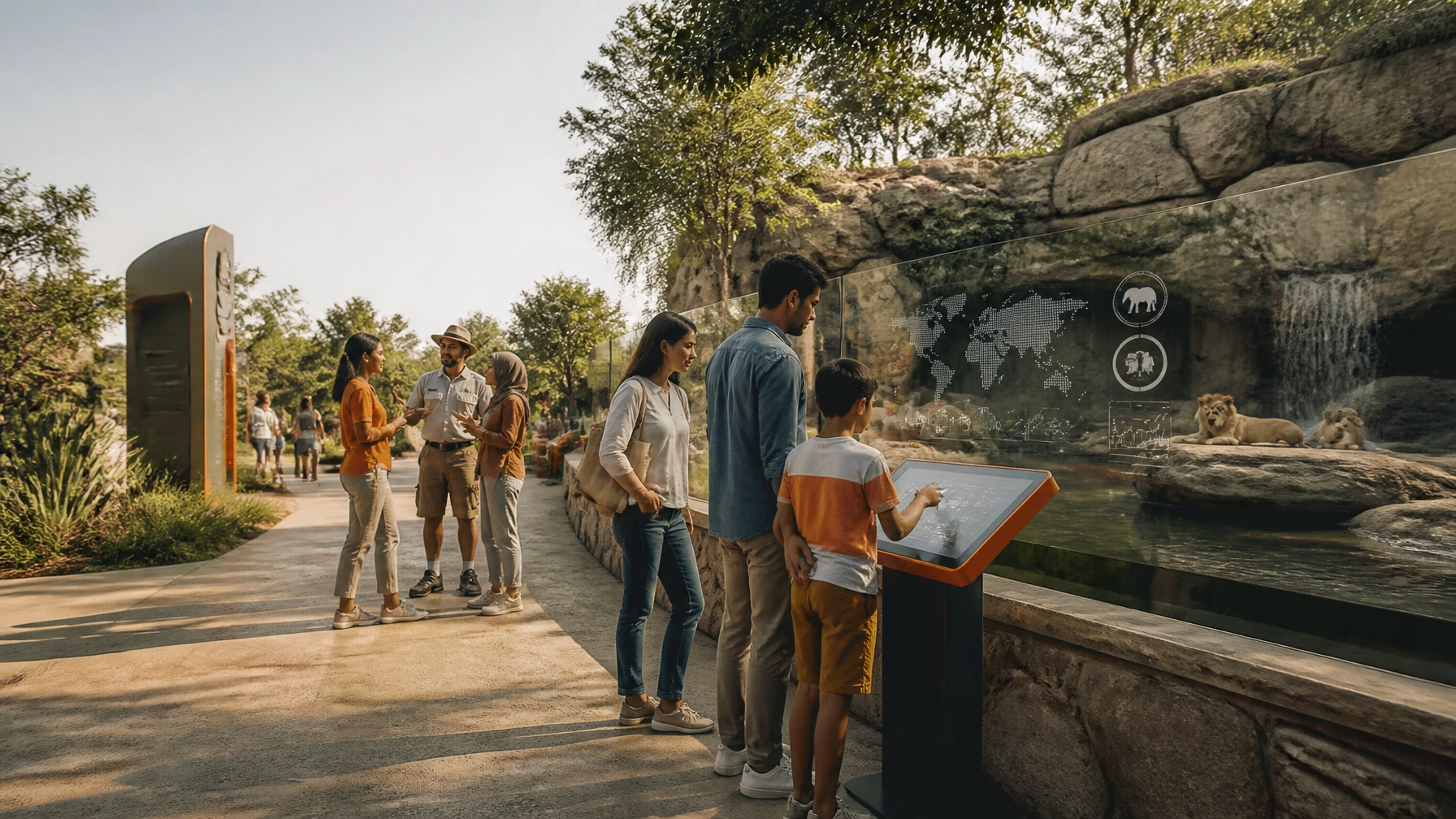
Practical Example: Imagine an interactive display near the tiger habitat. When the tiger is resting, the screen automatically switches to a high-definition video of the tiger’s enrichment session from that morning. You’re not just looking at an empty enclosure; you’re seeing the animal’s personality and the care it receives. This keeps the engagement high, even when the stars of the show are taking a nap.
The Power of IoT: The Digital Nervous System
The "Smart" in Smart Venues comes largely from the Internet of Things (IoT). These are small, connected sensors that track everything. At Zoo Media, we emphasize that these sensors do more than just monitor; they communicate.
- Visitor Heat Mapping: IoT sensors can track visitor flow. Do people skip the bird sanctuary? Does the food court get overcrowded at 1:00 PM? This data allows you to adjust your digital marketing strategy in real-time, pushing notifications to visitors' phones to encourage them to visit quieter areas of the park.
- Environmental Monitoring: Sensors track temperature, humidity, and water pH levels 24/7. This ensures the highest standards of animal welfare and alerts staff immediately if something is off.
- Predictive Maintenance: Smart signage can even tell you when it’s about to fail, allowing for repairs before the guest even notices a blank screen.

Caption: A conceptual dashboard showing real-time IoT data for zoo operations and visitor flow.
Enhancing Engagement Through Interactive Displays
Engagement is the name of the game. Modern zoos are competing with streaming services, video games, and social media for attention. To win, you have to offer something they can’t get on a couch.
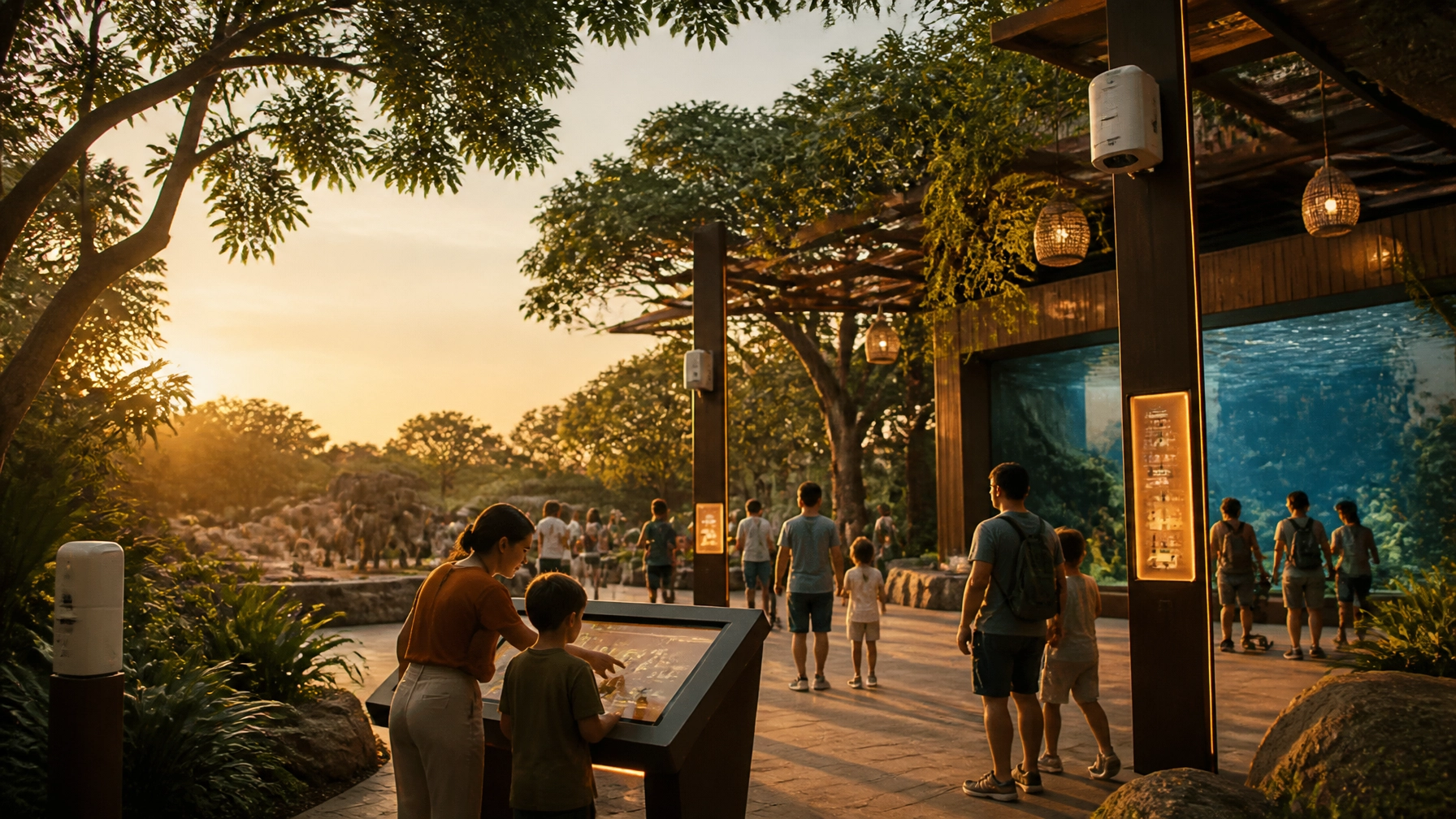
Interactive displays and 3D experiences transform a passive walk through the park into an active adventure. For instance, you can implement touchscreens that allow children to "measure" their wingspan against a condor or "track" a tagged shark in the aquarium.
We often see that these interactive elements lead to higher retention of educational facts. People remember 10% of what they read, but 80% of what they experience. By investing in top-tier website development and on-site digital infrastructure, you’re providing a platform for that 80%.
Boosting Revenue with Smart Visuals
Let’s talk numbers. A smart venue isn’t just a "feel-good" project; it’s a revenue engine. Strategic visual communication can drive tangible business results in several ways:
- Promoting High-Margin Offerings: Digital signage can be programmed to promote behind-the-scenes tours, animal encounters, or membership renewals during peak transit times.
- Dynamic Upselling: If the weather gets hot, your digital boards can instantly switch to promoting ice cream and cold drinks at the nearest kiosk.
- Sponsorship Opportunities: Smart displays offer a premium space for corporate partners to showcase their commitment to conservation, creating a new stream of ad revenue.
If you’re looking to optimize your site’s navigation or see how we structure these digital journeys, check out our sitemap here.
Safety and Welfare: The AI Connection
Safety is paramount in any venue involving wild animals. AI-enabled security systems are now being integrated into smart zoo frameworks. These systems can detect if a guest has crossed a safety barrier or if an unauthorized person has entered a restricted area.
From an animal welfare perspective, these systems provide a 24/7 "eye" that doesn't get tired. They can monitor behavioral changes in animals that might indicate health issues long before they are visible to the naked eye. It’s about being proactive rather than reactive.
Direct AEO Snippet: What is a Smart Zoo?
A smart venue zoo uses integrated IoT sensors, high-speed WiFi, and interactive digital signage to enhance animal welfare, streamline operations, and provide visitors with real-time, engaging educational content. By leveraging visual communication and data analytics, these venues transform the traditional zoo experience into an immersive, interactive, and operationally efficient environment.
The Role of Digital Marketing and Website Development
Your smart venue starts before the guest even walks through the gate. Your website development needs to reflect the high-tech experience they will find on-site. An integrated approach means your website, your mobile app, and your on-site displays all speak the same language.
When someone searches for "best family activities," your digital marketing should lead them to a landing page that highlights your interactive exhibits. Once they buy a ticket, the app should guide them through the park, using the IoT infrastructure to provide a personalized tour.
It’s all connected. If you want to see how we manage our own digital presence and help others do the same, you can view our full site map here.

Caption: A visitor using a zoo mobile app that interacts with on-site digital signage via Bluetooth.
Why Partnership Matters
Building a smart venue is complex. It requires a mix of hardware, software, and creative content. That’s where Zoo Media comes in. We don't just provide the screens; we provide the strategy. Whether it's through our Zoo Media Television Network or our specialized news and travel divisions, we understand the unique challenges of the zoo and aquarium industry.
We believe that every zoo has a story to tell. Our job is to give you the most advanced tools possible to tell that story in a way that captivates, educates, and inspires.
Conclusion: Step Into the Future
The future of modern zoos is bright, digital, and deeply connected. By embracing visual communication and smart venue technology, you are doing more than just upgrading your park, you are ensuring that your mission of conservation and education reaches the next generation in a language they understand.
Are you ready to transform your facility? Let’s build the future together.
Try your luck at the casino of innovation and see how your guest engagement scores skyrocket!
Contact Us
For more information on how to turn your facility into a smart venue, reach out to us today.
Dan Kost, CEO
Zoo Media
Website: www.dakdan.com
AI Receptionist: +1 (323) 676-0621
#Motivation #Branding #Strategy #Marketing #AdvertisingAndMarketing #digitalmarketing #Innovation #Sports #ZooMedia #SmartVenues #ConservationTech #VisualCommunication
This blog post is a part of Zoo Media’s daily commitment to providing the latest insights in zoo technology and marketing. For press inquiries, please visit our News Network section.