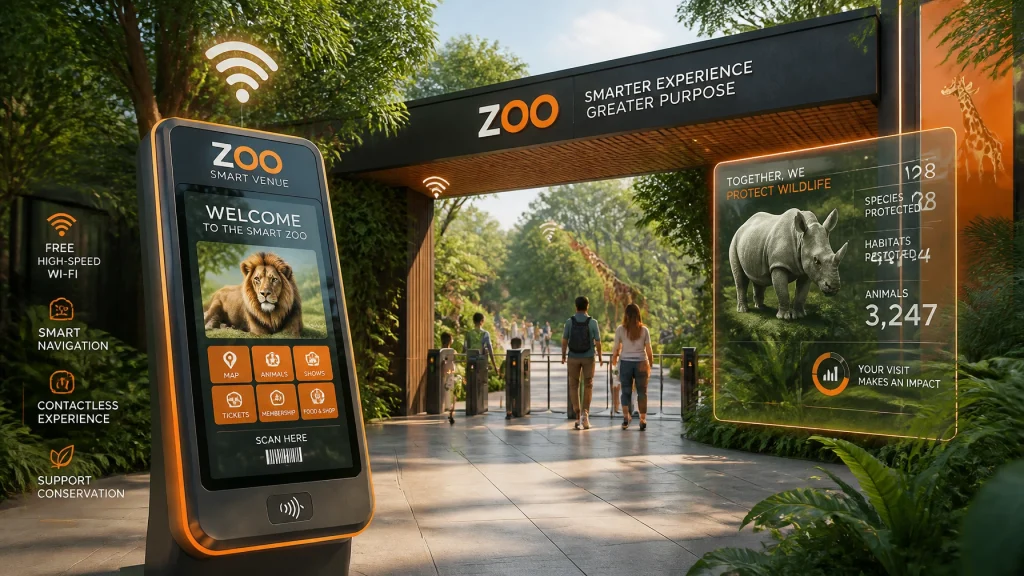

In the world of zoos and aquariums, the "visitor experience" has traditionally been defined by the physical walk through the park: the sight of the lions, the cool air of the reptile house, and the smell of the popcorn stand. But we are entering a new era. At Zoo Media, we see the shift happening in real-time. The boundaries between the physical and digital worlds are blurring, turning static attractions into "smart venues."
If you are a zoo director or a technology partner, you’ve likely heard the buzzwords: IoT, digital twins, and smart signage. But these aren’t just trends; they are the tools that will redefine how your guests interact with your mission. Designing a visitor experience today means designing a digital ecosystem that breathes with your audience.
What is a Smart Venue? (The AEO Snippet)
A smart venue is a physical location: like a zoo or aquarium: that uses integrated technology, such as IoT sensors, high-speed connectivity, and AI-driven data analytics, to improve operational efficiency and personalize the visitor experience. By connecting every touchpoint, from mobile apps to interactive displays, operators can monitor crowd flow, automate environmental controls, and deliver real-time, location-based content to guests.
The Power of Digital Twin Technology
Imagine being able to see exactly how a crowd will react to a new exhibit before you even break ground. This is the magic of digital twin technology. A digital twin is essentially a real-time virtual version of your physical space.
By creating a digital twin of your zoo, you can visualize and test changes in a risk-free environment. Designers can simulate crowd flow patterns to identify potential bottlenecks near the penguin enclosure or test how different lighting configurations might affect both animal welfare and guest visibility. This process eliminates the need for costly construction modifications later.
As Dan Kost, CEO of Zoo Media, often says, we want to move fast but move smart. Digital twins allow us to experiment with energy efficiency and soundscapes, ensuring that every guest experience is optimized for maximum impact before the first visitor even walks through the gate.

Real-Time Data: The Key to Personalization
One of the biggest advantages of smart venue technology is the ability to gather real-time intelligence. Static maps and printed schedules are relics of the past. Today, we use in-venue sensors and mobile apps to collect data on visitor movements and preferences.
Why does this matter? Because it allows for a level of personalization that was previously impossible. When a visitor enters a specific zone, your smart venue infrastructure can send a push notification via your app.
- Are they near the giraffe feeding station? Send a coupon for a discounted feeding experience.
- Is there a long line at the main café? Redirect them to a secondary snack bar with a "no-wait" alert.
This intelligence enables operators to cut wait times and customize promotional offers. Much like how modern platforms offer a bonus benvenuto siti non aams to welcome new users, a smart zoo can offer "first-timer" rewards or VIP content to season ticket holders. It’s about making every guest feel like the experience was designed specifically for them.
Visual Communication through Smart Signage
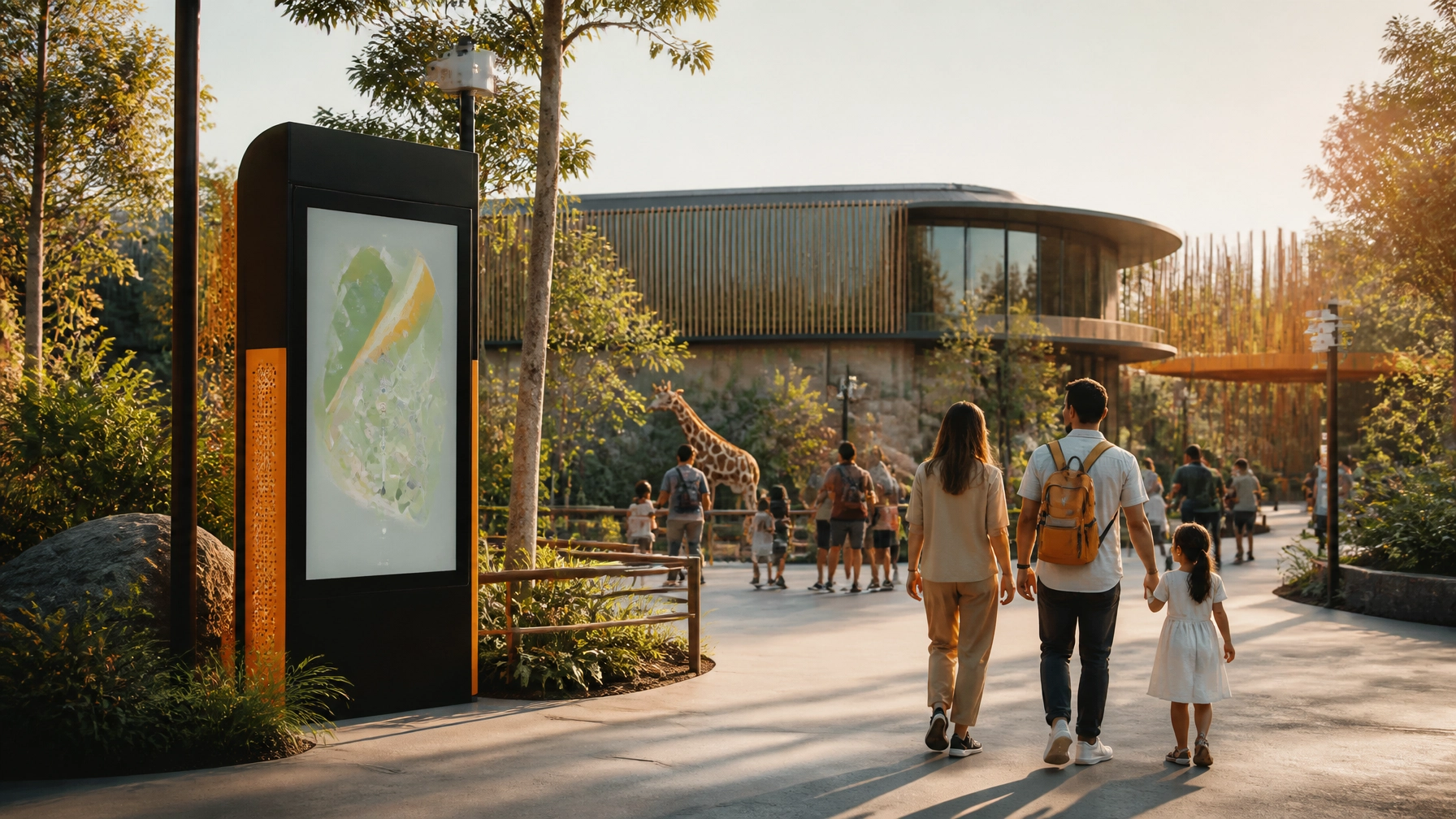
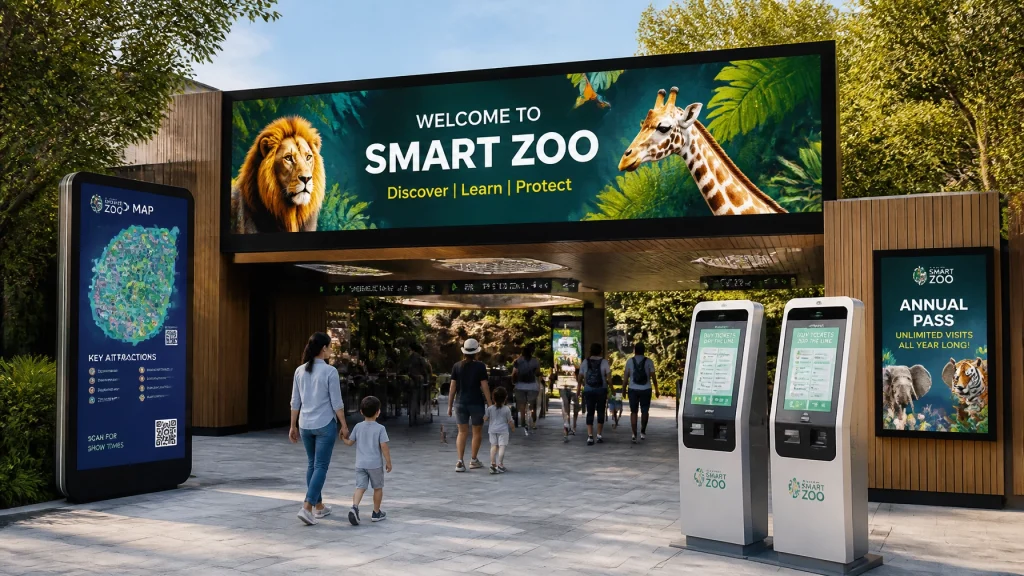
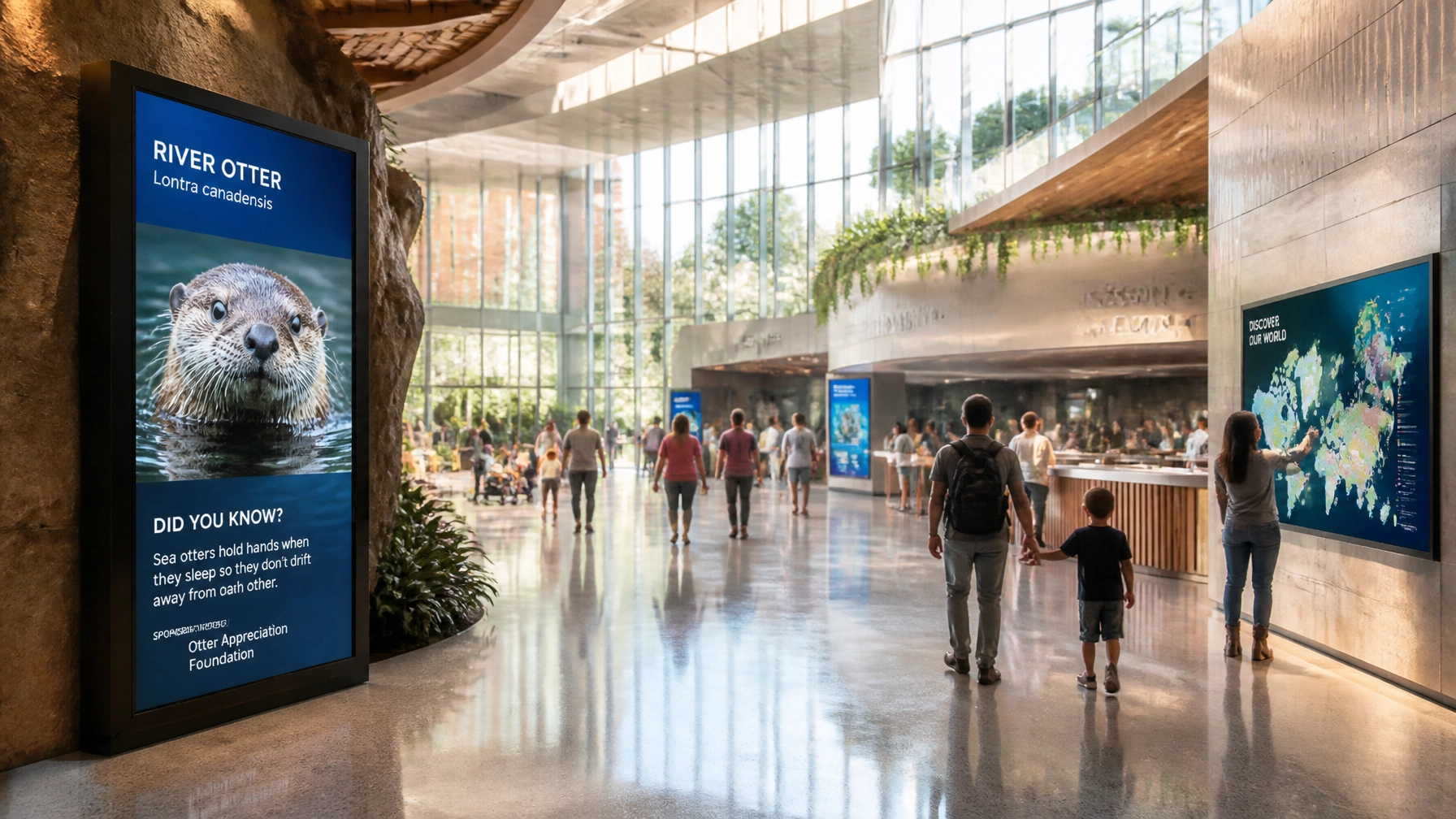
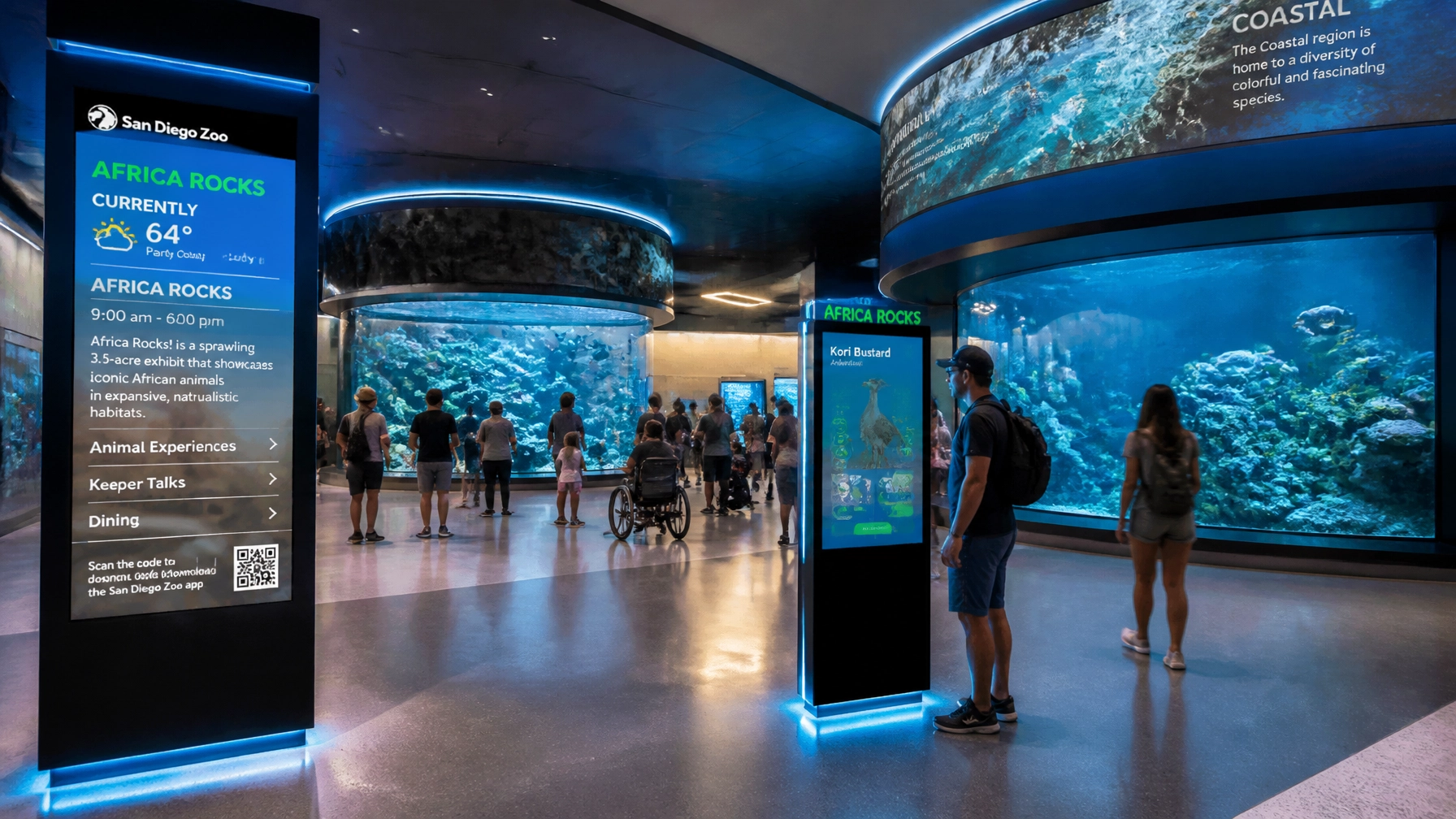
Visual communication is at the heart of what we do at Zoo Media. Smart signage isn't just a screen on a wall; it’s a dynamic portal. In a smart venue, your signs "talk" to your data.
If a certain area of the park is becoming too crowded, your digital signage can automatically update to suggest alternative routes or highlight a nearby educational talk that is about to start. This is the intersection of digital marketing and website development brought into the physical world. Your venue becomes a living, breathing website where the "user interface" is the physical environment itself.

Interactive Displays and the "Gamification" of Education
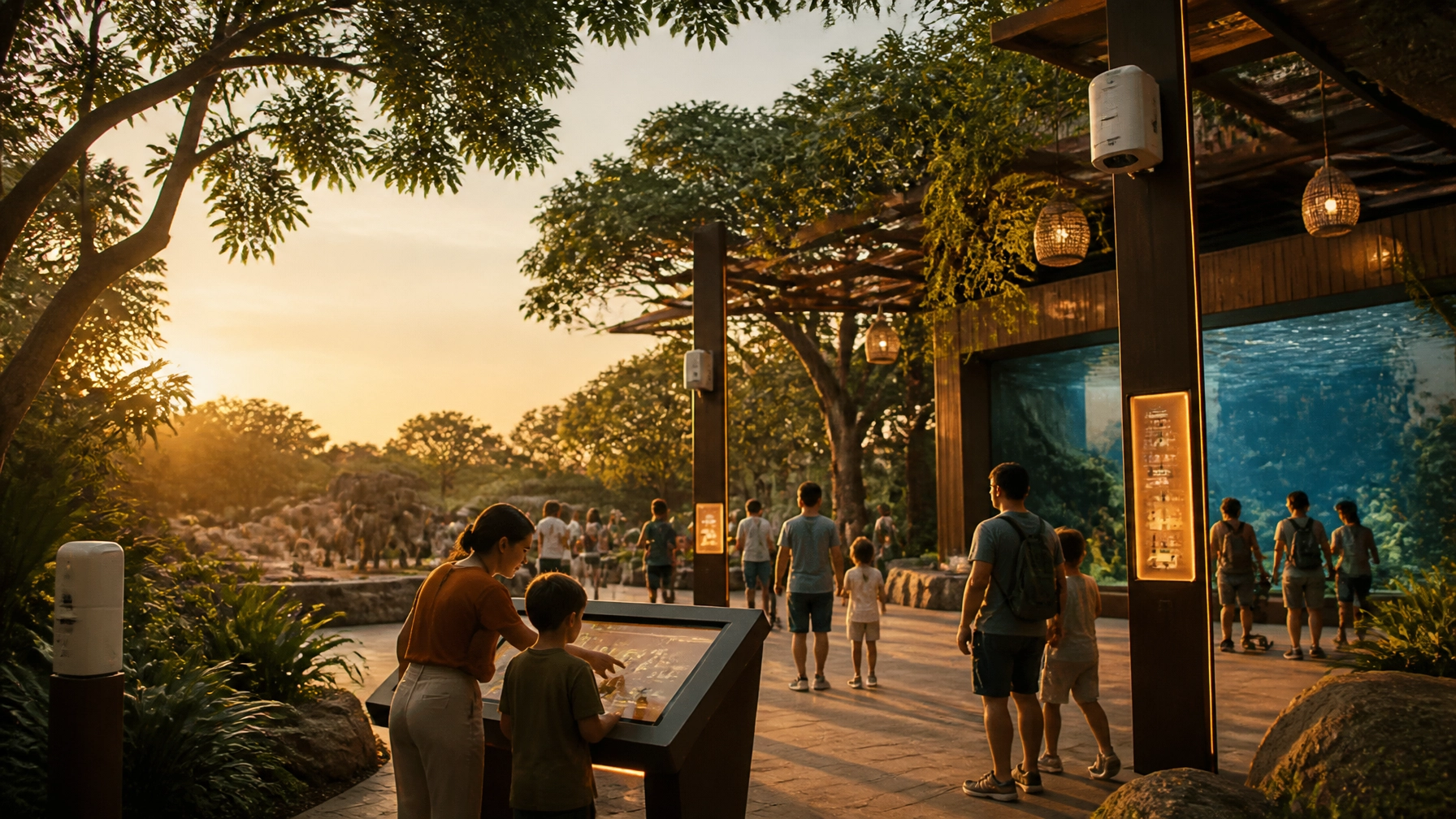
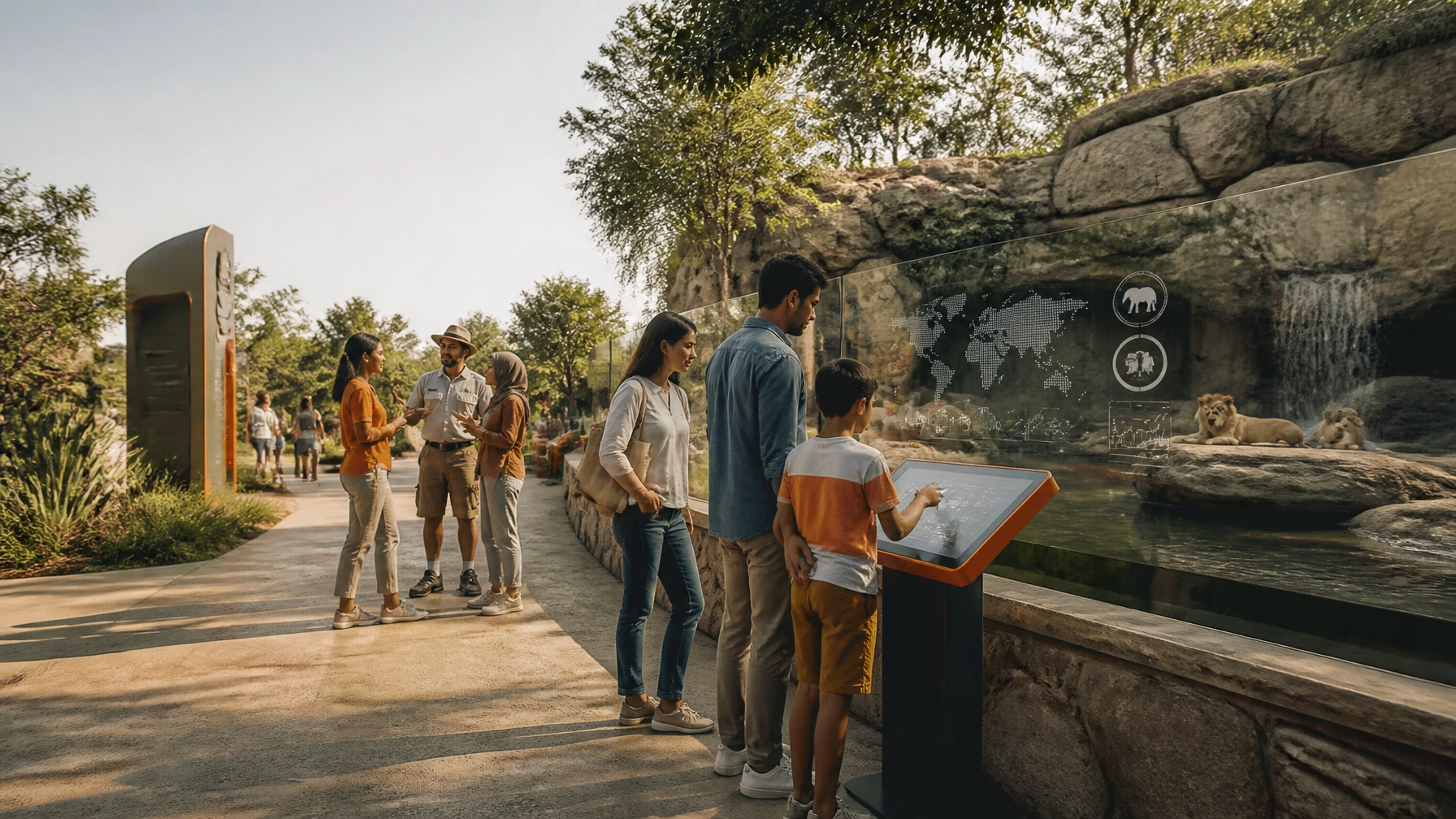
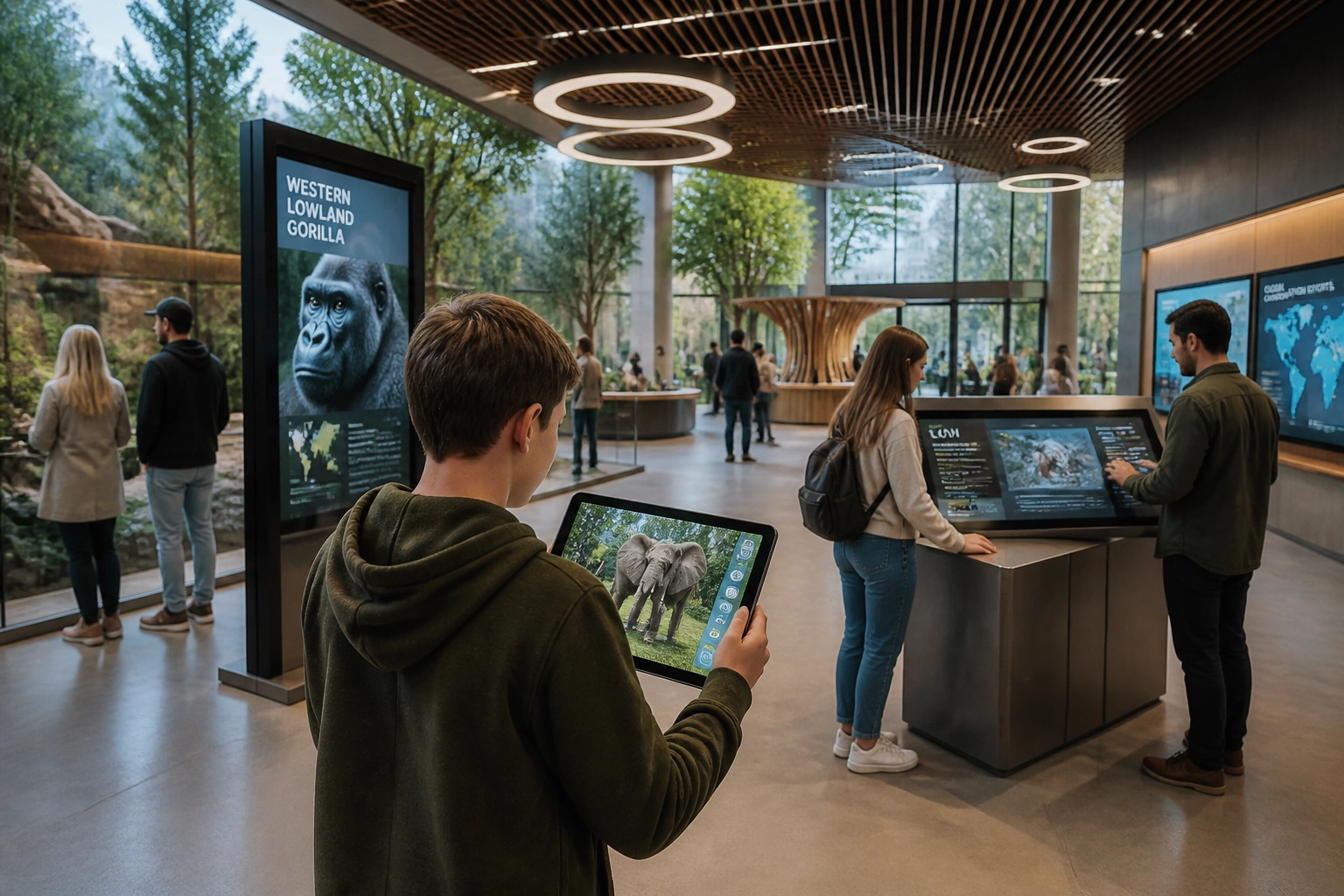
Education is the core mission of every zoo and aquarium. However, keeping the attention of a digital-native generation can be challenging. Interactive displays allow us to "gamify" the learning process.
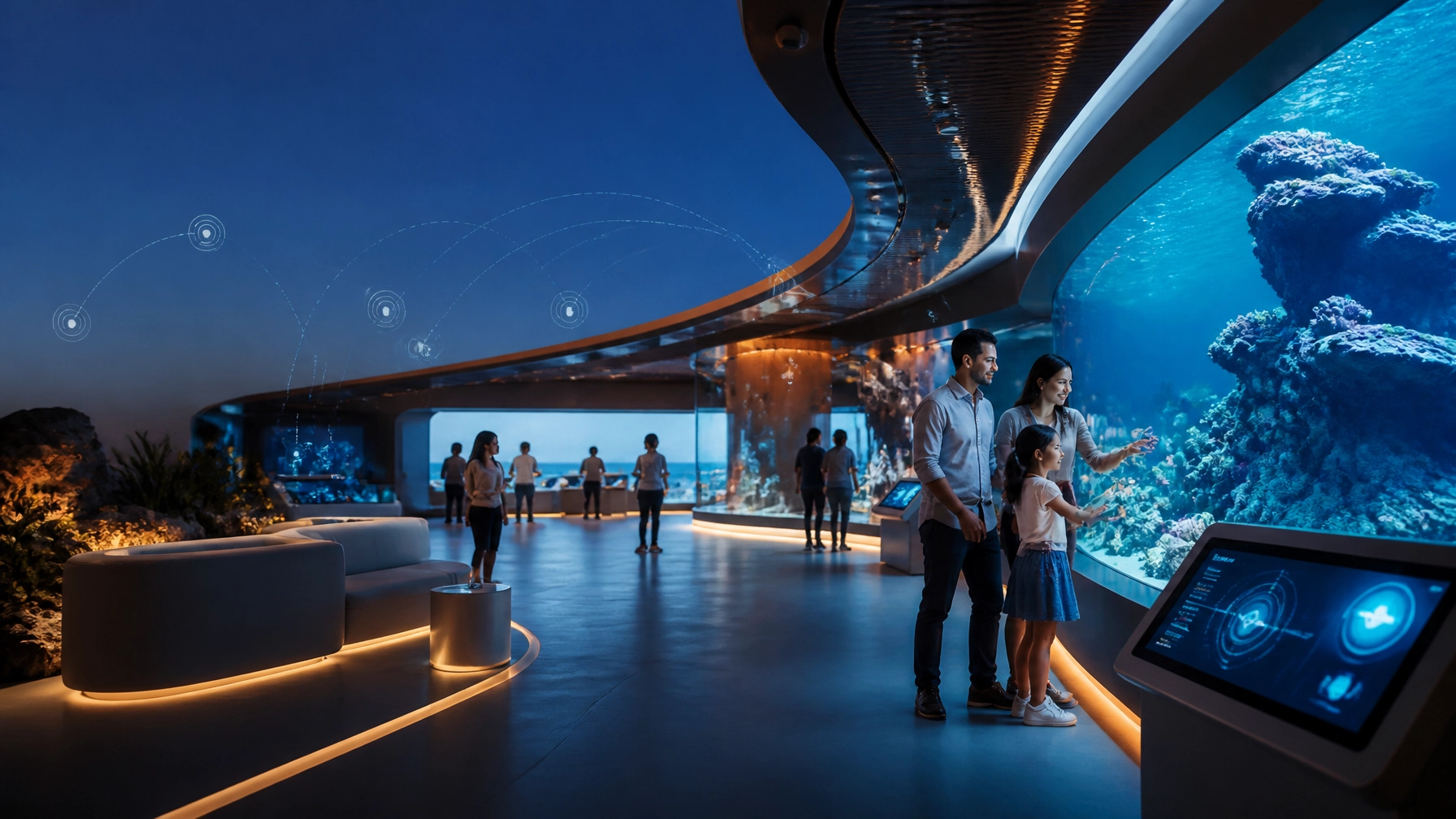
By using high-definition touchscreens and augmented reality (AR), we can turn a simple plaque about coral reefs into an immersive game where visitors have to "save the reef" from pollution. This level of engagement is what turns a passive observer into an active participant.
We often look at the engagement strategies used in other digital sectors to see what works. For instance, the way people interact with a slot machine online or look for a 7 bit casino bonus shows us that humans are hardwired to respond to interactive rewards and clear feedback loops. We take those psychological triggers: the "win" of learning a new fact or the "reward" of completing a digital scavenger hunt: and apply them to conservation education.

Operational Efficiency: Behind the Scenes of a Smart Venue
While the visitor sees the magic, the venue director sees the ROI. Smart venue technology isn't just for show; it’s a powerhouse for operational efficiency.
- Energy Management: IoT sensors can detect when a room is empty and automatically adjust the lighting and climate control.
- Crowd Management: Real-time heat maps allow staff to be deployed to areas with high traffic, improving safety and service.
- Maintenance Predictive Analytics: Sensors on pumps, filtration systems, and gates can alert your team to a potential failure before it happens, preventing downtime.
Connected infrastructure ensures that every wall, screen, and seat is part of a larger network. This enables continuous optimization. The data you collect today helps you design a better experience for tomorrow.
Why Zoo Media?
At Zoo Media, we don't just provide the tech; we provide the strategy. We understand that a zoo isn't a stadium, and an aquarium isn't a retail mall. These are sensitive environments that require a professional touch and an innovative mindset. Our focus on visual communication and website development ensures that your digital presence is as impressive as your physical one.
Whether you are looking to revamp your digital marketing strategy or install the latest in interactive display technology, we are your partners in innovation. They're tutti piuttosto rari: the opportunities to truly revolutionize an industry: and we believe smart venue technology is that opportunity.
Conclusion: Discover Your Future
The transition to a smart venue is an investment in your guests, your animals, and your future. It’s about moving away from "guesswork" and moving toward "data-work." By integrating IoT, digital twins, and interactive technology, you create a space that is more engaging, more efficient, and more effective at spreading the message of conservation.
Discover the future of your venue. Try your hand at these new technologies and watch as your visitor engagement scores soar. The future isn't coming; it's already here.
#Motivation #Branding #Strategy #Marketing #AdvertisingAndMarketing #digitalmarketing #Innovation #Sports #ZooMedia #SmartVenues #IoT #Conservation
Contact Us Today
To learn more about how Zoo Media can transform your facility into a world-class smart venue, reach out to our team.
Dan Kost, CEO
Zoo Media
www.zoomedia.us | www.zoomedianetwork.com | www.zoomedia.org
AI Receptionist: +1 (323) 676-0621
Corporate Site: www.dakdan.com
News & Updates: www.zoomedia.news
TV Network: www.zoomedia.tv
Travel Experiences: www.zoomedia.travel
Transforming zoos and aquariums through innovative thinking, visual communication, and the power of smart technology.